
Cool Tattoos for Men: Styles That Age Well in 2026
 Abdul WadoodLast updated

A mummy who died more than 5,000 years ago is still the most famous tattooed man in the world. Ötzi the Iceman, whose remains were found in the Alps, carried 61 small tattoo marks, most of them simple lines and crosses near his joints. No dragons, no skulls, no script. Just marks that meant something to him and his people.
That detail matters more than most trend articles admit. Tattoos have never been about what looks loudest in a photo. They are about what a man is willing to carry on his skin for decades. The coolest tattoo in the room is rarely the biggest one. It is the one that still looks deliberate ten years later. (Tattoos: Understand risks and precautions)
This guide breaks down the styles that hold up, where they work on the body, what they cost, and the mistakes that turn a good idea into a cover-up job.
What Makes a Men’s Tattoo Actually Cool
Cool is subjective, and anyone who ranks tattoo styles in a strict order is guessing. Still, experienced artists tend to agree on a few markers that separate a strong tattoo from a forgettable one.
Boldness at a distance. A good design reads clearly from across a room. Fine, faint lines blur into gray mush within a few years, especially on areas exposed to sun.
Placement that follows the muscle. Tattoos that flow with the body’s natural lines look intentional. Tattoos stamped across a joint or wrapped awkwardly around a limb look like stickers.
A reason to exist. It does not need a deep story. “I liked the drawing” is a valid reason. But a design chosen on a whim at 2 a.m. is the one most likely to end up under laser treatment.
Restraint. Empty skin is part of the composition. Men who leave space around a piece usually end up with a stronger overall look than those who fill every gap immediately.
The Styles That Hold Up Over Time
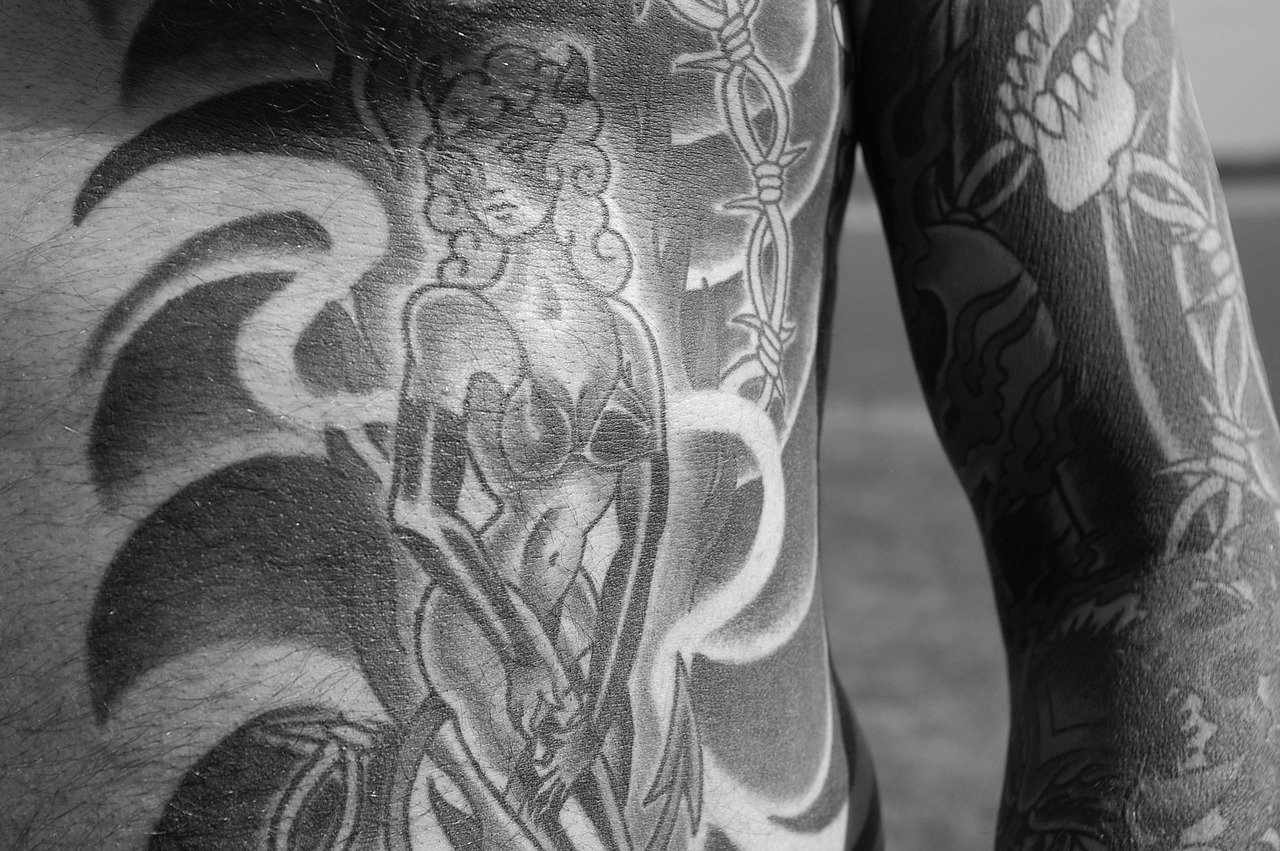
Style choice is the single biggest decision. Below is a practical comparison of the main options, based on how they age, what they cost, and who they suit.
| Style | Look | How It Ages | Typical Session Length | Best For |
|---|---|---|---|---|
| American traditional | Bold outlines, limited color palette | Excellent, lines stay crisp | 2–4 hours | First-timers, arms, calves |
| Japanese (Irezumi) | Large flowing motifs, waves, koi, dragons | Excellent when sized large | 4–8 hours per session, multiple sessions | Back, full sleeves |
| Blackwork | Solid black shapes, high contrast | Very good, but bold blocks can spread slightly | 2–6 hours | Forearms, hands, legs |
| Geometric | Precise lines, symmetry, patterns | Good if lines are thick enough | 2–5 hours | Chest, shoulder, forearm |
| Fine line | Delicate, detailed, minimal | Poor to fair, fades and blurs | 1–3 hours | Small accents only |
| Realism | Photographic shading | Fair, needs touch-ups | 4–8 hours | Upper arm, chest |
| Script and lettering | Text, dates, phrases | Good if large enough | 1–2 hours | Ribs, forearm, collarbone |
American Traditional
This is the workhorse style. Thick black outlines, a tight color range of red, yellow, green, and black, and imagery drawn from sailors, eagles, daggers, roses, and swallows. It is the style most likely to still look sharp at 60 because the lines are heavy enough to survive skin changes.
The trade-off is that it can feel dated to some eyes. The counterargument: it has already survived a century of trend cycles, which is more than most styles can claim.
Japanese Irezumi
Large-scale, flowing designs built around water, wind, and myth. Koi, dragons, hannya masks, and cherry blossoms are common motifs. The style rewards commitment. A proper half-sleeve or back piece takes multiple sessions spread over months, and the composition only works at scale.
The mistake men make here is asking for a small Japanese-style piece on a forearm. Shrinking the style kills what makes it work.
Blackwork and Geometric
Blackwork uses solid black to create high-contrast shapes. Geometric work relies on symmetry and precise linework. Both have grown steadily in popularity because they photograph well and look modern.
The practical warning: solid black blocks can spread slightly over decades as skin loses elasticity. Thick, well-spaced lines age far better than dense, tightly packed patterns.
Fine Line and Realism
These styles look spectacular fresh and are the most likely to disappoint later. Fine lines fade, blur, and sometimes disappear on sun-exposed skin. Realism depends on subtle shading that softens with age.
Neither is a bad choice. They are simply choices that require touch-ups and sun protection to stay sharp.
Placement: Where Tattoos Work Best on Men
Placement decides how a tattoo ages as much as style does. Skin on the inner arm, ribs, and stomach stretches and fades faster than skin on the outer forearm or calf.
| Placement | Pain Level | Visibility | Aging |
|---|---|---|---|
| Outer forearm | Low to moderate | High | Very good |
| Upper arm and shoulder | Low | Hidden under sleeves | Very good |
| Calf | Low | Seasonal | Very good |
| Chest | Moderate to high | Hidden | Good |
| Back | Moderate | Hidden | Excellent |
| Ribs | High | Hidden | Fair |
| Hands and fingers | High | Always visible | Poor |
| Neck | High | Always visible | Fair |
A few practical rules that hold up in real studios:
- Start where you can hide it. The upper arm remains the safest first placement for men who are unsure about workplace norms.
- Avoid the hands and neck until you are heavily tattooed elsewhere. These are still called “job stoppers” for a reason, and they fade faster than almost any other spot.
- Respect the joint. Designs that cross elbows, knees, or wrists distort when the body moves.
- Think in terms of a full limb, not one piece. A forearm piece that leaves room for a future upper-arm addition will look better in five years than a random collection.
Size, Cost, and Realistic Expectations
Tattoo pricing varies enormously by city, artist reputation, and complexity. As a rough guide, most reputable studios charge an hourly rate, with a minimum shop charge for small pieces. Large custom work is often quoted per session or per project.
| Project | Typical Sessions | Typical Range |
|---|---|---|
| Small simple piece | 1 | Shop minimum to a few hundred |
| Medium forearm piece | 1–2 | Mid hundreds to low thousands |
| Half sleeve | 3–5 | Low to mid thousands |
| Full sleeve | 6–12 | Mid to high thousands |
| Back piece | 10+ | High thousands and up |
The cheapest option is rarely the best value. A budget tattoo that needs a cover-up costs more than the original piece plus a good one combined.
What to Ask Before Booking
Most bad tattoo decisions happen before the needle comes out. A short, blunt checklist prevents most of them.
- Ask to see healed work in addition to fresh photos. Fresh tattoos always look good. Healed ones tell the truth.
- Confirm the artist specializes in your style. A brilliant realism artist may be mediocre at traditional work.
- Ask about line weight. Thin lines look elegant on day one and fuzzy by year five.
- Check hygiene visibly. Single-use needles, fresh gloves, sealed ink cups. If anything feels off, walk out.
- Get the placement drawn on and stand in front of a mirror. Look at it from several angles before agreeing.
Health agencies publish clear guidance on tattoo safety and aftercare, and it is worth reading before your appointment rather than after. The U.S. Food and Drug Administration’s tattoo information page covers ink safety and reported reactions, while the NHS guide to tattoo safety explains infection risks and aftercare basics. (Tattoo)
Common Mistakes Men Make With Tattoos
These come up again and again in studios, and each one is avoidable.
Choosing a design from a wall flash sheet without adapting it. Flash exists as a starting point. A good artist will redraw it to fit your body.
Going too small. Detail needs room. A complex design squeezed into a two-inch space becomes an unreadable smudge.
Ignoring sun protection. Ultraviolet light is the single biggest cause of tattoo fading. Sunscreen on healed tattoos is not vanity; it is maintenance.
Rushing the decision. A design that still feels right after a month of looking at it on paper is usually the right one.
Skipping the consultation. A fifteen-minute conversation with the artist often improves the design more than hours of online research.
Aftercare That Protects the Investment
Aftercare is unglamorous and decisive. Keep the fresh tattoo clean, follow the artist’s wrapping instructions exactly, and avoid soaking it in baths, pools, or the sea during the initial healing period. Do not pick or scratch scabs. Moisturize lightly with a fragrance-free product once the artist gives the go-ahead.
Once healed, the routine is simple: sunscreen on exposed tattoos, moisturizer, and a touch-up session every several years if lines soften. For anyone building a larger collection, Voozon Media covers visual culture and design topics that pair well with planning a long-term look.
Do Tattoos Still Carry a Stigma?
Less than they used to, but not zero. Visible tattoos remain more accepted in creative, trades, and tech environments than in conservative client-facing roles. Men working in finance, law, or certain public-facing positions often choose placements that a shirt covers.
The practical answer is not to avoid tattoos. It is to choose placement with your actual career in mind, not a hypothetical one. A forearm piece under a rolled sleeve is a very different decision from a full hand.
Conclusion
The coolest tattoos for men are not the loudest or the most current. They are the ones built on a few boring foundations: a style that suits the body, a placement that respects how skin ages, an artist chosen for skill rather than price, and aftercare that treats the work as a long-term investment.
Ötzi’s marks were simple lines, and they survived five millennia. Yours do not need to last that long. They just need to still make sense to the man wearing them in twenty years. Start smaller than you think you should, ask more questions than feels comfortable, and let the collection grow at the speed of good decisions.
Frequently Asked Questions
What is the best first tattoo for a man?
The upper arm or outer forearm in American traditional or blackwork is the safest starting point. Both styles use bold lines that age well, and both placements can be covered by clothing when needed. Avoid hands, necks, and fine-line detail work for a first piece.
How much should a good tattoo cost?
Most reputable studios charge an hourly rate with a minimum shop charge. Small pieces typically start at the shop minimum, while half sleeves and full sleeves run into the thousands. The cheapest quote is usually a warning sign rather than a bargain, since cover-ups cost more than doing it right once.
Do fine-line tattoos fade badly?
Yes, they fade faster than bold styles. Thin lines blur and lighten within a few years, particularly on sun-exposed skin. They can look excellent in the short term, but anyone choosing fine line should expect touch-ups and be diligent about sunscreen.
Which tattoo placements age the best?
The back, upper arm, shoulder, outer forearm, and calf hold up best. Skin in these areas is thicker and less subject to stretching. Ribs, stomach, hands, and fingers tend to fade or distort more quickly.
How do I choose a tattoo artist?
Look for healed photos of their work, confirm they specialize in your chosen style, and book a consultation before committing. Check hygiene in person: single-use needles, fresh gloves, and sealed ink cups. A good artist will redraw a design to fit your body rather than copying it directly.
Can tattoos affect your career?
They can in some fields. Visible tattoos are widely accepted in creative and trades work but remain less common in conservative client-facing roles. Choosing placements a shirt can cover keeps options open without ruling out visible work later.