
Cat Tattoos: Styles, Symbolism & Ideas That Age Well
 Abdul WadoodLast updated
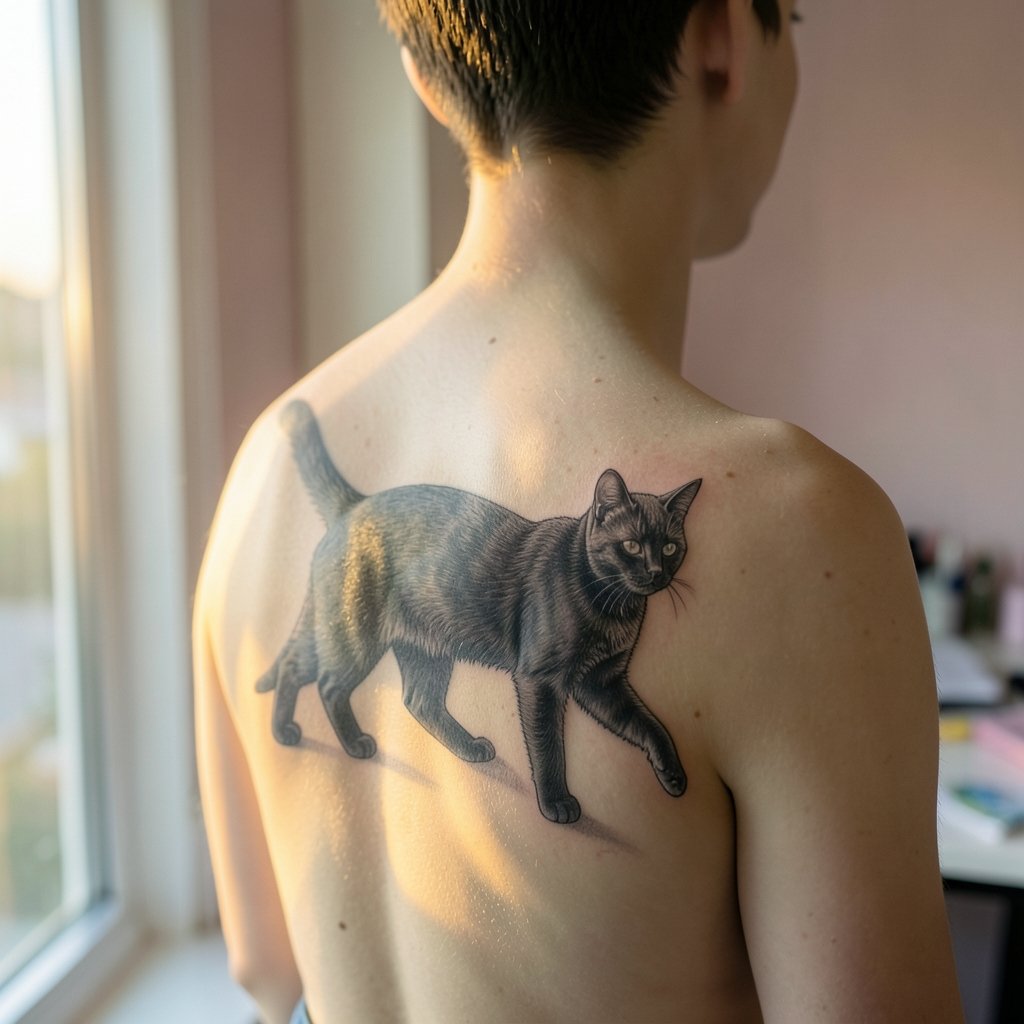
A cat curled around a forearm. A tiny paw print on a wrist. A full Japanese sleeve with a snarling tiger. Cat tattoos show up in nearly every tattoo style, from delicate single-needle linework to heavy traditional color work. The reason is simple: cats carry meaning in almost every culture that has ever kept them, and they give tattoo artists a subject that works at any size, in any placement, on any budget.
The subject also carries a practical trap. A design that looks sharp in a photo can blur, fade, or crowd the skin within a few years. What follows is a grounded look at what cat tattoos mean, which styles hold up, where to put them, and how to brief an artist so the result still reads clearly a decade from now.
Why Cats Work So Well in Tattoo Design
Cats are unusually forgiving as tattoo subjects. Their silhouette is instantly recognizable even at a few centimeters, which means a cat can be scaled down to a fingertip or up to a full back piece without losing its identity. Compare that to a portrait of a person, which needs size and detail to stay legible.
Their body language also does the storytelling for free. An arched back reads as defiance. A curled sleeping shape reads as calm. A single tail curve suggests motion. Tattoo artists lean on those shapes constantly, and clients get a design that communicates an idea without a caption.
Then there is the emotional pull. Cats are the animal most often tied to the home, to solitude, and to quiet companionship. People who want a memorial tattoo for a pet often choose a cat silhouette over a photorealistic portrait, because the symbol carries the feeling without demanding an exact likeness.
What Cat Tattoos Mean Across Cultures
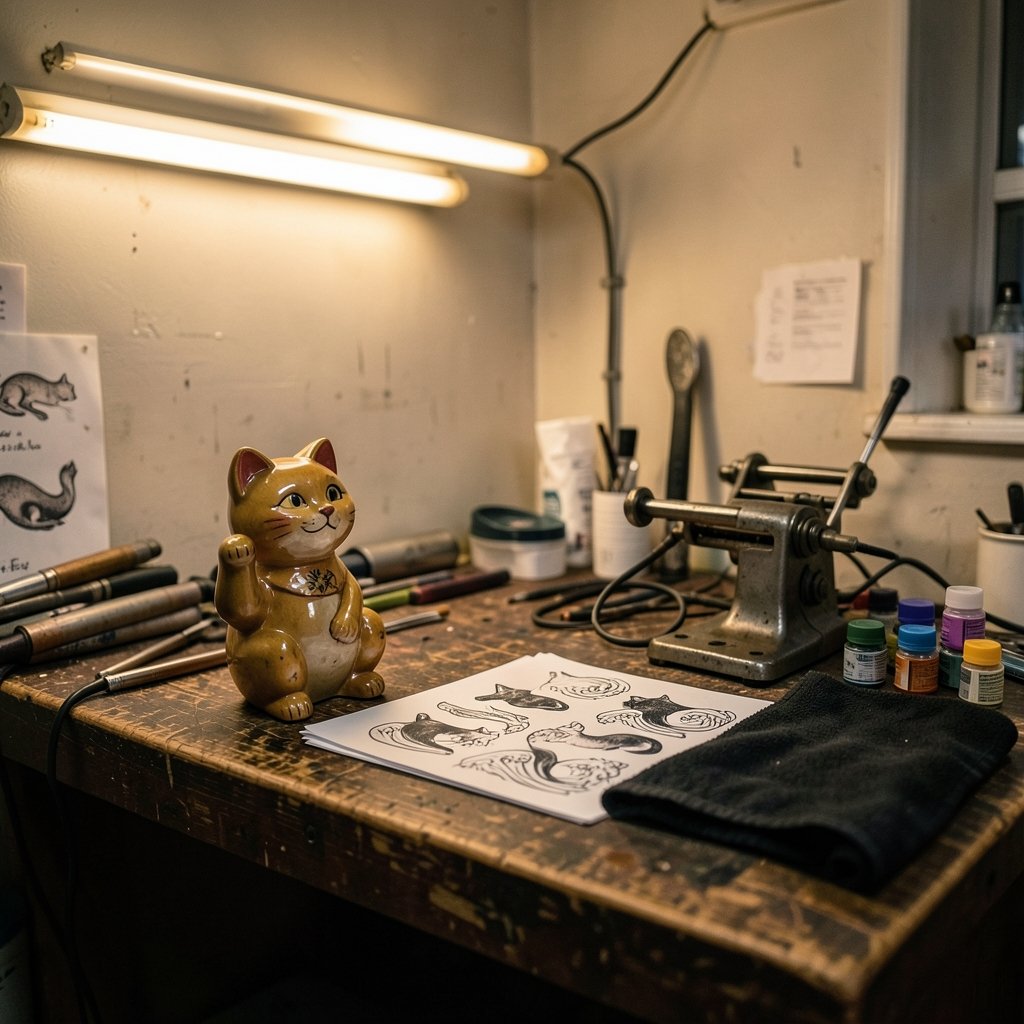
Meaning in cat tattoos is never universal. It shifts with culture, era, and the person wearing it. Anyone claiming a single “official” meaning is overselling it.
Protection and luck
In Japanese tradition, the maneki-neko (beckoning cat) is a figure of good fortune and business success, usually shown with one raised paw. As a tattoo, it is often paired with coins, gold leaf, or traditional wave patterns. In European folk belief, cats were long linked to both household protection and superstition, a duality that shows up in designs mixing a calm cat with something darker. (Cat)
Independence and autonomy
The solitary hunter is the most common modern reading. A cat walking alone, back turned, or sitting in a window frame signals self-sufficiency. This is the meaning most clients ask for when they want something small and personal rather than decorative.
Mystery and the night
Black cats carry the heaviest symbolic baggage. Centuries of folklore tied them to bad luck and witchcraft, which is exactly why many people now wear them as a deliberate reversal: a reclaimed symbol rather than an unlucky one.
Devotion and domesticity
Ancient Egyptian culture associated cats with household protection and reverence, and the cat goddess Bastet is one of the most recognizable figures in that tradition. Modern designs borrow the sleek seated profile and the gold-and-lapis palette without necessarily carrying the religious meaning.
The Main Styles and How They Age
Style choice matters more than most first-timers expect. Line weight, contrast, and detail density all determine whether a tattoo stays crisp.
| Style | Look | Ages well? | Best for |
|---|---|---|---|
| Fine line / single needle | Delicate, thin outlines, minimal shading | Fair — thin lines can fade and blur | Small wrists, ankles, behind the ear |
| Blackwork | Solid black shapes, heavy contrast | Very well | Forearms, calves, larger pieces |
| American traditional | Bold outlines, limited palette, high contrast | Extremely well | Anywhere; built to last |
| Neo-traditional | Traditional bones with richer color and detail | Well, with good color packing | Upper arms, thighs, back |
| Realism | Photographic detail, soft shading | Poorly at small sizes | Large areas only |
| Japanese / Irezumi | Flowing composition, traditional motifs | Very well | Sleeves, back pieces, chest panels |
The honest takeaway: fine line cat tattoos are beautiful but demand realistic expectations. Ultra-thin lines spread slightly as ink settles, and sun exposure accelerates fading. If a design relies on hair-thin whiskers and tiny pupils, expect a touch-up within a few years. Bold traditional work costs more upfront in visual weight but holds its shape for decades.
Placement: Where Cat Tattoos Actually Work
Placement decides whether a design reads as intended. A cat’s proportions are wide relative to its height, which creates problems in narrow spots.
- Forearm and inner forearm: the most versatile zone. Enough length for a full sitting cat, enough width for a curled pose. Easy to cover, easy to show.
- Upper arm and shoulder: good for larger neo-traditional or Japanese pieces that can wrap slightly.
- Thigh: generous space, low sun exposure, and easy to hide. Ideal for detailed realism.
- Wrist and ankle: best for silhouettes, paw prints, and simple line cats. Avoid intricate faces here.
- Behind the ear and fingers: high-friction, high-visibility areas that fade fastest. Choose the simplest possible shape.
- Ribs and spine: dramatic but painful, and the curvature distorts straight lines. Cat designs with flowing tails handle the curve better than geometric ones.
A practical rule that saves a lot of regret: match detail to surface area. A design with nine distinct elements needs room for all nine. Shrinking it does not preserve the composition, it compresses it into mush.
Designing a Cat Tattoo That Still Reads in Ten Years
Most disappointing cat tattoos fail for the same handful of reasons. None of them are about artistic taste.
Mistake one: chasing a trend without a contrast check. A design built entirely from light gray shading has nothing to hold its shape as the ink softens. Ask the artist where the darkest values sit. If the answer is “nowhere,” the piece will fade into a smudge.
Mistake two: too many whiskers and hairlines. Fine whiskers are the first thing to blur. Good artists either thicken them deliberately or leave them out and let the muzzle shape do the work.
Mistake three: copying a tattoo from a photo. A design that suited someone else’s arm length and muscle contour will not sit the same way on a different body. Bring references for style and mood, not for line-by-line duplication.
Mistake four: forgetting the cat’s own anatomy. Cats have distinct shoulder blades, a long flexible spine, and a tail that attaches high. Designs that get these wrong look subtly off even to people who cannot say why.
Mistake five: skipping the stencil conversation. Ask to see the design on your skin before the needle starts. Repositioning a stencil takes two minutes; repositioning ink takes laser sessions.
What actually works: pick one clear silhouette, decide the single dominant reading (calm, fierce, playful, mysterious), and let the artist simplify everything else. The strongest cat tattoos are usually the least busy.
Color, Black and Gray, and the Question of Realism
Black and gray remains the safer long-term choice for cat tattoos, especially small ones. Black pigment holds its structure as it ages, while some color pigments fade at different rates, which can leave a design looking patchy rather than softly aged.
That said, color has real advantages. A ginger cat in warm tones, a calico pattern, or a maneki-neko in red and gold carries meaning that black and gray cannot. The compromise most artists recommend is color as accent, black as structure: keep outlines and shadows in black, and use color to fill rather than to define.
For realism specifically, size is non-negotiable. Photorealistic fur requires space for gradual tonal shifts. Attempting it at five centimeters produces something that looks like a smudge from arm’s length and a cat only up close, which is the opposite of what most clients want.
Memorial and Pet Tribute Tattoos
A large share of cat tattoos commemorate a specific animal. These designs carry extra weight, and they are also the ones most likely to go wrong, because grief pushes people toward maximum detail.
A few things that help in practice:
- Choose one feature over a full portrait — an ear shape, a sleeping pose, a specific marking.
- Add a date or name in a font the artist can actually render at that size. Tiny script under three millimeters is a common source of illegible lettering.
- Consider a paw print taken from an actual ink impression rather than a generic stamp.
- Wait if you can. Decisions made in the first weeks after a loss tend to be the ones people later want changed.
Working With an Artist: A Practical Brief
Bring three things to a consultation: reference images that show the style you like, a clear statement of the one feeling you want the tattoo to convey, and a placement you have actually tested with a temporary marker for a day.
Ask directly about the artist’s experience with the style you want. An artist skilled in realism is not automatically the right choice for bold traditional work, and the reverse holds too. Ask to see healed photos as well as fresh ones. Fresh tattoos always look sharp; healed work shows how the artist’s linework and packing actually hold up.
Expect a deposit, expect a wait for good artists, and expect the artist to redraw your reference rather than trace it. That redrawing is the value you are paying for. For more on visual storytelling and design decisions, voozon.media covers how imagery communicates before words do.
Aftercare Basics That Protect the Design
Cat tattoos are no different from any other in aftercare, but the stakes feel higher because detail is fragile.
Keep the fresh tattoo clean with mild soap and water, pat it dry with a clean paper towel, and apply a thin layer of recommended ointment. Do not soak it in baths, pools, or the sea for the first two weeks. Do not pick or scratch as it peels. And most importantly for long-term appearance: sun protection is not optional. Ultraviolet light breaks down pigment faster than anything else, and a cat tattoo on a forearm or ankle sees a lot of sun. Daily sunscreen once healed preserves contrast for years.
Conclusion
Cat tattoos work because the subject is flexible, emotionally loaded, and visually unmistakable. That flexibility is also the risk. A design with no clear focal point, too much fine detail, or a placement that fights the shape will not survive the years as well as a simpler one built around a strong silhouette.
The pattern that holds up: pick one meaning, choose a style with real contrast, match detail to placement, and let the artist simplify. Whether the result is a bold traditional panther, a quiet blackwork silhouette, or a tribute to a cat that has passed, the tattoos that age best are the ones designed for skin rather than for a photograph.
Frequently Asked Questions
How much does a cat tattoo cost?
Small simple designs typically start around the minimum shop rate, which in most cities falls between 80 and 150 in local currency. Medium pieces with detail run several hundred, and full sleeves or large custom work run into the thousands. Price tracks time and the artist’s demand, not the subject, so a cat tattoo costs the same as any other design of comparable size and complexity.
Do cat tattoos hurt more than other tattoos?
No. Pain depends on placement and skin type, not subject matter. Fleshy areas like the upper arm, forearm, and thigh are generally easier. Ribs, spine, ankles, and fingers are more painful. The only cat-specific factor is size: a small cat on a bony spot is quick, while a large detailed piece on the ribs is a longer, harder session. (Cat Care)
Will a fine line cat tattoo blur over time?
It can. Very thin lines spread slightly as ink settles and skin ages, and sun exposure speeds this up. Fine line cat tattoos usually need a touch-up within a few years to stay crisp. Choosing slightly thicker outlines, avoiding hair-thin whiskers, and using sunscreen daily all extend the life of the design significantly.
What is the best placement for a small cat tattoo?
The inner forearm, wrist, and ankle are the most practical spots for small designs. They offer enough flat surface for a clean silhouette and are easy to cover. Avoid fingers, the side of the hand, and behind the ear for anything beyond the simplest shape, since those areas fade fastest.
What does a black cat tattoo symbolize?
Meanings vary widely by wearer. Historically, black cats were tied to superstition and bad luck in parts of Europe, which is why many people now choose them as a deliberate reversal of that idea. Others read them as symbols of independence, mystery, or quiet protection. There is no single correct meaning.
How do I choose a tattoo artist for a cat design?
Look for an artist whose portfolio matches the style you want, and ask to see healed photos rather than fresh ones. Fresh tattoos always look sharp; healed work shows how the linework and shading actually hold up. Book a consultation, bring style references rather than a design to copy, and let the artist redraw it for your body.