
Flash Tattoos for Men: Bold Designs, Pricing & Tips
 Abdul WadoodLast updated
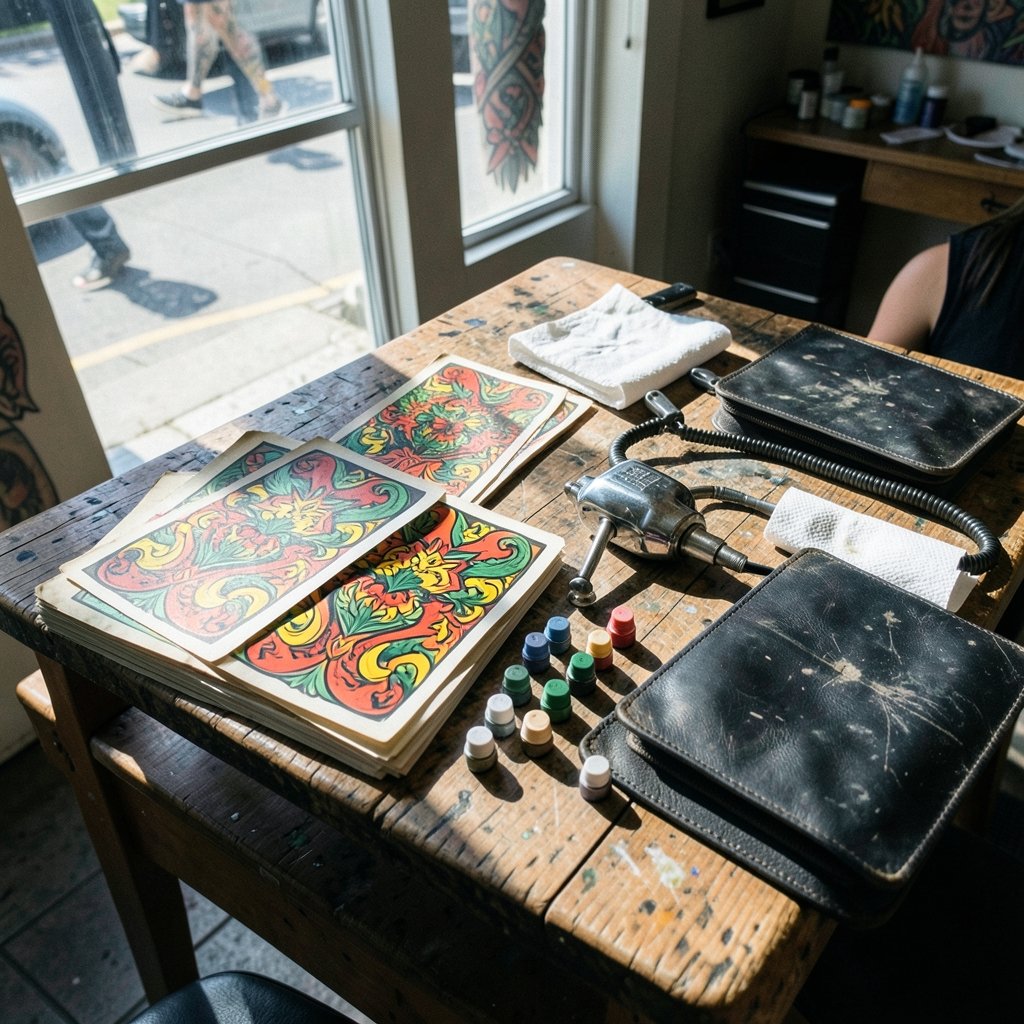
A walk-in customer can leave a tattoo shop with finished ink in under an hour, and that speed is exactly why flash sheets have stayed on parlor walls for generations. For men who want strong traditional imagery without booking months ahead or committing to a full custom piece, flash tattoos offer a practical middle path. The designs are pre-drawn, the prices are usually fixed, and the whole process is built for people who walk in curious and walk out marked.
That said, “flash tattoo” means two different things depending on who is talking. In a tattoo shop, it refers to ready-made designs displayed on sheets or in books. At a festival or party, it often means temporary metallic foil transfers that wash off in a few days. This guide covers both, with a focus on the shop version, because that is what most men searching the term actually want to understand. (Tattoo)
What Flash Tattoos Actually Are
Flash is the industry term for pre-drawn tattoo designs that a shop displays for customers to pick from. Historically, these designs lived on large painted sheets hung on shop walls or bound into reference books, and they were reused across many customers. That reuse is why certain motifs, like anchors, swallows, daggers, and roses, show up again and again in traditional tattooing. The practice is closely tied to early-to-mid twentieth-century American tattoo culture, though exact origin claims are often anecdotal and vary between sources. For background on how tattooing developed as a craft, the Wikipedia entry on tattooing is a reasonable starting point.
Two features define shop flash:
- Fixed designs. You choose from what exists. Custom changes are usually limited to size, placement, and color.
- Fixed or tiered pricing. Many shops price flash by size band rather than by the hour, which makes budgeting simple.
Many shops now run flash days, events where a guest artist or the resident team offers a limited set of designs at reduced rates, often first-come, first-served. These are shop-level practices with no central registry, so details vary wildly from city to city. Always confirm the rules directly with the studio.
The Other Meaning: Temporary Metallic Flash Tattoos

Search results for “flash tattoos” are split, and it is worth naming the confusion. The same phrase describes temporary foil or metallic transfers sold as fashion accessories, popular at festivals and parties. They apply with water, last a few days, and cost a fraction of real ink.
If your goal is a permanent piece, ignore these listings. If you want to test a design before committing, they are a genuinely useful low-stakes trial. A man considering a snake and dagger on his forearm can wear a temporary version for a weekend and see how it reads in photos, in a t-shirt, and at work. That is a practical trick that saves regret later.
Why Men Gravitate Toward Flash Designs
Flash appeals to a specific kind of customer: decisive, budget-conscious, and drawn to classic imagery. The designs are bold, readable, and built to age well. Thick outlines and limited palettes hold up over decades better than fine, delicate work, which tends to blur.
There is also a social element. Flash sheets are conversational. You point at a design, the artist tells you its history, and the piece becomes tied to a moment rather than months of planning. For first-timers, that lowers the pressure considerably. If you are weighing whether ink is right for you at all, reading about body modification and its cultural contexts can help frame the decision.
Common Styles Found on Men’s Flash Sheets
Flash is not one style. Shops group designs loosely, and the categories below are descriptive conventions used in tattoo media rather than any official standard.
| Style | Typical motifs | Look | Best for |
|---|---|---|---|
| American traditional | Anchors, swallows, daggers, roses, eagles | Bold outlines, limited color | Forearms, calves, shoulders |
| Neo-traditional | Ornate animals, portraits, decorative frames | Richer shading, more detail | Upper arms, back pieces |
| Blackwork | Geometric shapes, skulls, abstract forms | Solid black, high contrast | Chest, forearms, hands |
| Lettering and script | Names, dates, short phrases | Clean lines, varied fonts | Ribs, wrists, collarbones |
| Minimal linework | Small symbols, single-line shapes | Thin, understated | Ankles, inner arms, fingers |
Men’s flash tends to skew toward traditional and blackwork, but that is a preference pattern, not a rule. Plenty of men choose floral or script designs, and shops increasingly stock inclusive sheets.
How to Choose a Design That Still Works in Ten Years
The single biggest mistake men make with flash is choosing a design because it looks good on the sheet rather than on their body. A few practical guidelines:
- Match the design to the placement. A wide, horizontal design suits a forearm or chest; a tall, narrow one suits a calf or spine. Ask the artist to stencil it on before agreeing.
- Check the scale. Flash sheets are drawn at a display size. Shrinking a detailed design too far destroys its readability, and enlarging a simple one can leave it looking empty.
- Think about visibility. A neck or hand piece is a career decision in many fields. Forearms and calves are the safer first choices.
- Avoid trend-driven picks. Whatever is viral this year will feel dated eventually. Classic motifs age better than meme-adjacent ones.
- Ask what the shop will not do. Good studios refuse designs they consider technically unsound or culturally insensitive, and that honesty is a green flag.
The best flash piece is the one you would still choose if nobody else ever saw it.
What Flash Tattoos Cost and How Pricing Works
Flash pricing is usually simpler than custom work, but it is not standardized. Shops commonly use size bands, flat rates per design, or event pricing on flash days. Because there is no authoritative dataset on tattoo pricing, treat any figure you see online as a rough guide and confirm with the studio.
A sensible approach is to ask three questions before booking: Is the price per design or per size? Does it include color? Is a deposit required? Getting those answers in writing, even by message, prevents awkward surprises at the counter.
For broader context on how small businesses like studios set and communicate prices, Forbes publishes accessible small-business guidance that translates well to service pricing generally.
Preparing for the Appointment
Preparation matters more than most first-timers expect. A few things that genuinely help:
- Eat and hydrate beforehand. Low blood sugar is the most common reason people feel faint in the chair.
- Skip alcohol for 24 hours. It thins the blood and affects healing.
- Wear clothing that exposes the placement. Rolling up a sleeve is fine; fighting with a waistband is not.
- Bring reference photos if you want a variation on a sheet design.
- Ask about aftercare products at the shop rather than guessing online.
Aftercare is where most problems start. Clean the piece gently, keep it moisturized with a recommended product, avoid soaking it in pools or baths for the first couple of weeks, and resist scratching. If you want a plain-language overview of how skin heals after controlled injury, the Cleveland Clinic maintains patient-friendly resources on wound care that align with standard tattoo aftercare advice.
Flash Days: What to Expect
Flash days compress the whole process. Shops announce a date, publish a sheet of designs, and take walk-ins or short-notice bookings. Lines can be long, and popular designs go fast.
What actually works in practice: arrive early, know your top two or three picks, and have a placement in mind. What does not work: arriving with a vague idea and hoping to negotiate a custom piece. Flash days are not custom consultations, and treating them that way frustrates everyone. If you want flexibility, book a regular appointment instead.
Mistakes Men Make With Flash Tattoos
Some patterns show up again and again, and they are all avoidable.
- Choosing on impulse without checking placement. The stencil stage exists for a reason. Use it.
- Bargaining hard on price. Flash is already the budget option. Haggling signals you are not ready.
- Ignoring the artist’s portfolio. Flash quality varies enormously. Look at healed photos rather than only fresh ones.
- Skipping the size conversation. A design that looks right on paper can be wrong at the chosen scale.
- Underestimating healing time. Plan around workouts, swimming, and sun exposure for at least two weeks.
Cheap ink is expensive to fix, and fixing it costs more than doing it right the first time.
Choosing a Studio and Artist
The studio matters as much as the design. Look for clean premises, visible sterilization practices, and artists who answer questions without pressure. Licensing rules for tattoo studios vary by jurisdiction, so checking local health department requirements is a reasonable step before booking. Government health agencies generally publish hygiene guidance for personal services, and it is worth a quick search for your area.
Red flags include artists who dismiss safety questions, shops with no visible aftercare information, and anyone willing to tattoo someone who appears intoxicated. Walk away from all three.
Conclusion
Flash tattoos give men a fast, affordable, and stylistically safe route into permanent ink. The designs are proven, the pricing is usually clear, and the process rewards decisiveness over endless deliberation. The key is knowing which meaning of “flash” you are dealing with, choosing a design for your body rather than the sheet, and treating aftercare as seriously as the appointment itself. Do those three things, and a walk-in can turn into a piece you are glad you chose for decades.
Frequently Asked Questions
Are flash tattoos cheaper than custom tattoos?
Usually, yes. Flash designs are pre-drawn, so the artist spends no time on custom design work, and many shops price them by size band or flat rate. Flash day events often reduce prices further. However, pricing is a shop-level decision with no industry standard, so confirm the cost, color inclusion, and deposit rules before you book.
How long does a flash tattoo take?
Most small to medium flash pieces take between 30 minutes and two hours in the chair, depending on size, placement, and detail. Simple linework on a forearm can be very quick, while a larger blackwork piece on a chest or back takes longer. Add time for paperwork, stencil placement, and aftercare instructions.
Do flash tattoos have to be small?
No. Flash sheets include designs at many scales, from tiny symbols to large back pieces. What matters is choosing a design that suits your placement and reading well at the size you want. Ask the artist to stencil it first, because shrinking a detailed design too far can destroy its legibility.
Can I change a flash design before it is tattooed?
Minor adjustments, like size, placement, and sometimes color, are usually fine. Substantial redesigns turn a flash piece into custom work, which most shops will price and schedule separately. If you want significant changes, book a consultation rather than a walk-in slot.
What is the difference between flash tattoos and temporary flash tattoos?
Shop flash refers to permanent, pre-drawn designs offered by tattoo artists. Temporary flash tattoos are metallic foil transfers sold as fashion accessories, applied with water and lasting a few days. The names overlap, which causes confusion in search results, but the products and processes are completely different.
How should I care for a new flash tattoo?
Keep it clean and lightly moisturized, avoid soaking it in baths or pools for the first couple of weeks, and do not scratch or pick at it. Follow the specific aftercare instructions your artist provides, since products and wrapping methods vary between studios. Seek medical advice if you notice spreading redness, heat, or pus.