
Ear Tattoos: Placement, Pain & Healing Guide 2026
 Abdul WadoodLast updated

A tattoo on the ear is one of the smallest pieces of ink a person can get, yet it sits on one of the most sensitive and visible spots on the body. The ear contains almost no fat, sits close to bone and cartilage, and heals in a place that rubs against pillows, hair, and headphones every day. That combination makes ear tattoos deceptively tricky. They look simple. They are not. (Tattoos and piercings: What to know)
This guide covers what “ear tattoo” actually means, how much it hurts, how long it takes to heal, how to choose a design, and the mistakes that lead to faded or infected work. It also covers the one version of ear tattooing that has nothing to do with design at all.
What Counts as an Ear Tattoo?
The phrase gets used for several different things, and mixing them up causes confusion when talking to an artist. In practice, ear tattoos usually fall into one of these categories:
| Type | Location | Typical Size | Notes |
|---|---|---|---|
| Lobe tattoo | Fleshy lower earlobe | 1–2 cm | Least painful, easiest to heal |
| Helix or rim tattoo | Outer cartilage edge | Very small | Thin skin over cartilage, high friction |
| Inner ear tattoo | Concha or bowl | Tiny | Hard to reach, awkward to stretch |
| Behind-the-ear tattoo | Mastoid area behind the ear | Small to medium | Hidden on demand, popular for first timers |
| Cosmetic ear tattooing | Lobe or reconstructed ear | Variable | Medical or cosmetic pigmentation, not decorative |
Decorative ear tattoos are what most people mean. Cosmetic ear tattooing is a separate procedure, often used to restore color to an earlobe after surgery or trauma, and it is usually performed in a clinical setting rather than a tattoo studio. If someone is booking an appointment, it helps to say exactly which of these they want, because the technique, aftercare, and even the artist’s specialty can differ.
Why the Ear Is a Demanding Canvas
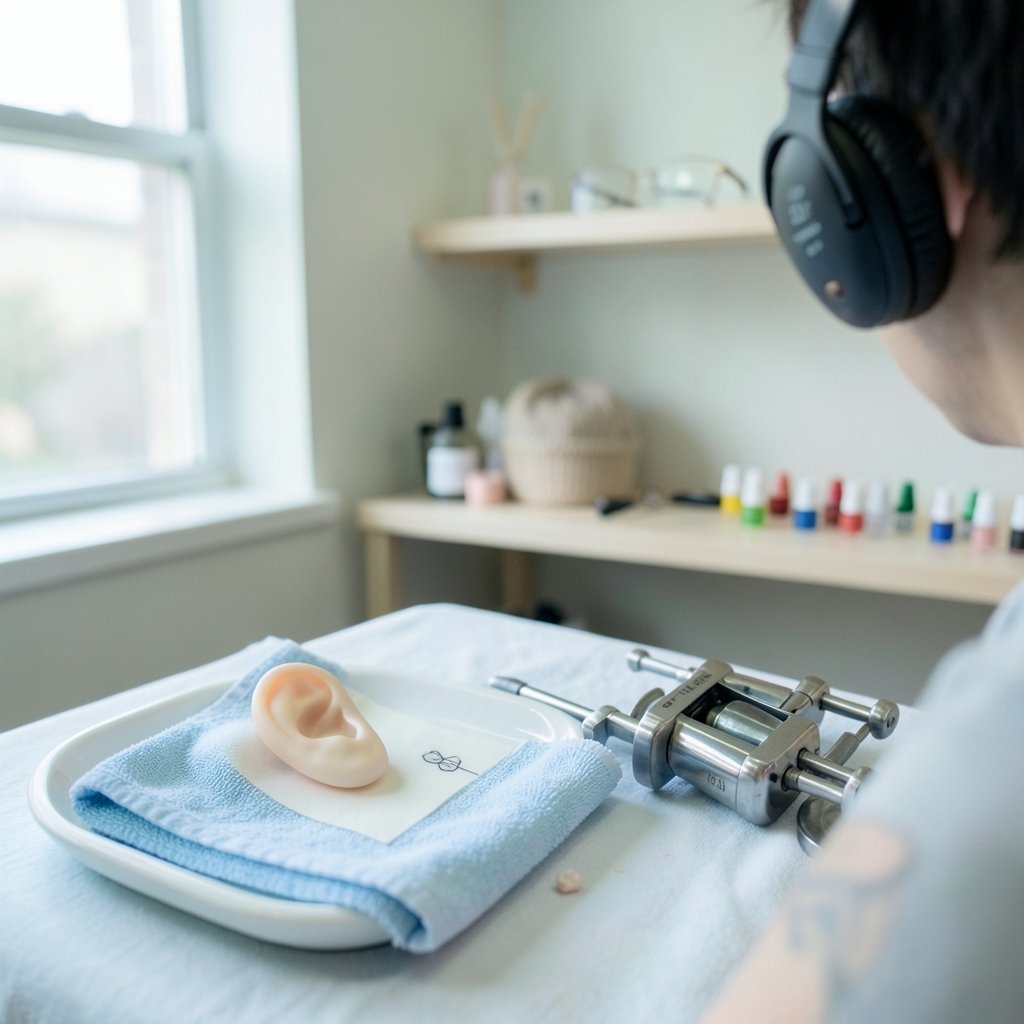
The ear is mostly cartilage wrapped in a thin layer of skin. There is very little subcutaneous fat to cushion a needle, which is why the sensation is sharper than on the forearm or thigh. Cartilage also has limited blood supply compared with muscle or fatty tissue, and reduced blood flow means slower healing and a higher chance of the ink settling unevenly.
Then there is the friction problem. Ears are pressed against pillows for eight hours a night, tucked under hats, and rubbed by glasses, masks, and earbuds. New tattoos heal best when they are left alone, and the ear is rarely left alone. Artists who work on ears regularly often warn clients that the aftercare, not the tattoo itself, is the hard part.
There is also a structural risk. The ear is small and curved, so a stencil can shift as skin stretches. Lines that look crisp on a flat forearm can distort around the helix or the curve of the concha. Experienced artists compensate by keeping designs simple and by working in short, controlled passes rather than long ones.
How Much Does an Ear Tattoo Hurt?
Pain is personal, but the ear consistently ranks high on most tattoo pain charts. The cartilage rim, the inner bowl, and the area right behind the ear all sit over bone or thin tissue with dense nerve endings. Clients commonly describe it as a sharp, hot, drilling sensation rather than the dull ache of a fleshy area.
The earlobe is the exception. It is soft, fleshy, and far less sensitive, which is why lobe tattoos are often recommended for people getting their first small piece.
Duration matters as much as intensity. Most ear tattoos take ten to thirty minutes, so even a sharp sensation stays brief. A common practical tip: ask the artist to work in two or three short passes with a pause between them. It sounds fussy, but it genuinely reduces the “white-knuckle” effect on cartilage.
Choosing a Design That Works at Small Scale
The single biggest mistake people make with ear tattoos is bringing a design built for a larger canvas. Fine detail, tiny lettering, and delicate shading all collapse at two centimeters. What reads well at that size is:
- Bold, simple linework with clear negative space
- Solid black shapes such as small stars, moons, or geometric forms
- Minimal single-needle designs where the artist specializes in fine work
- Floral or botanical silhouettes reduced to their essential outline
Lettering is a frequent trap. A name or date squeezed into a space the size of a fingernail will blur within a year or two as ink spreads slightly under the skin. If text matters, put it behind the ear where there is more room, or accept a much shorter word.
Color is another consideration. Small color tattoos on the ear can look muddy as they age because the pigment sits in thin skin with less cushioning. Black and grey tend to hold up better at this scale, though a single accent color can work if the artist keeps it simple.
Placement Options and What Each One Means in Practice
Earlobe. The easiest option in every respect: lower pain, better blood flow, easier cleaning, and more room for slightly larger designs. Healing is comparatively fast.
Helix and outer rim. Visually striking but heavily exposed. Glasses, hair, and hats all catch this area. Expect more touch-ups over time.
Inner ear (concha). Discreet and unusual, but hard to photograph, hard to heal, and awkward for the artist to reach. Sound and earbuds become a real issue during healing.
Behind the ear. The most practical compromise. It is hidden when hair is down, visible when it is up, offers more surface area, and avoids most of the friction that plagues the rim. It is a strong choice for a first tattoo or a first small piece.
Healing: The Part Most People Underestimate
An ear tattoo typically takes two to four weeks to close on the surface and up to a few months to settle fully. Cartilage heals more slowly than flesh, so the ear often sits at the upper end of that range.
A realistic aftercare routine looks like this:
- Keep the fresh tattoo covered as the artist directs for the first hours.
- Wash gently twice a day with fragrance-free soap and lukewarm water, using clean fingertips only.
- Pat dry with a clean paper towel. Do not rub.
- Apply a thin layer of recommended ointment. Thin is the operative word; smothering the area traps moisture and bacteria.
- Keep hair away from the site, especially at night, and change pillowcases frequently.
- Avoid swimming pools, hot tubs, lakes, and long soaks for at least two weeks.
- Skip earbuds and tight headphones on the treated side until the surface has closed.
The most common aftercare mistakes are over-washing, picking at flakes, and using too much product. Another is assuming a small tattoo needs less care. In practice, small tattoos on high-friction areas need more attention, not less, because there is no margin for error.
Infection Risk and When to Get Help
Any tattoo carries infection risk, and the ear is not exempt. Warning signs that warrant medical attention rather than another round of ointment include spreading redness, increasing warmth, swelling that worsens after day three, pus, fever, or a red streak moving away from the site. A small amount of redness and tenderness in the first day or two is normal. Deterioration after that is not.
Regulation of tattoo establishments varies widely by country, state, and city, and requirements around licensing, hygiene, and age limits differ from place to place. Because rules change and local authorities set them, anyone planning a tattoo should check their own jurisdiction’s health department guidance directly rather than relying on general advice. The same applies to aftercare instructions: an artist’s written guidance should take priority over anything read online, including this article.
Choosing an Artist and Asking the Right Questions
Not every tattoo artist enjoys working at ear scale. Fine-line and micro-realism specialists are the usual fit, but a portfolio with healed close-up photos of small work is a stronger indicator than fresh photos alone. Fresh tattoos always look sharp. Healed ones tell the truth.
Questions worth asking before booking:
- How many ear tattoos have you done, and can I see healed examples?
- What design adjustments would you make for this placement?
- How do you handle touch-ups on cartilage?
- What is your aftercare protocol for high-friction areas?
A good artist will happily talk someone out of a design that will not survive the placement. That reluctance is a feature, not a red flag.
Cost, Touch-Ups, and Long-Term Expectations
Ear tattoos are usually priced at or near a studio’s minimum shop charge, since the time involved is short but the setup is identical to a larger piece. Many studios set minimums between the price of a modest meal and a few times that, depending on city and reputation.
Touch-ups are common on cartilage. Ink can drop out in small patches where blood supply is thin or where friction disrupted healing. Most artists offer one free or discounted touch-up within a few months. Budget for the possibility rather than being surprised by it.
Long term, expect softening. Fine lines blur slightly, solid shapes stay legible longer, and sun exposure accelerates fading. Sunscreen on the ear is easy to forget and worth remembering, since the ear catches daylight year-round.
The Cosmetic and Medical Side
Beyond decorative tattoos, ears are sometimes tattooed for reconstructive or cosmetic reasons, such as restoring pigment to an earlobe after surgery or injury. This is a clinical procedure with different standards, different practitioners, and different risks than a studio tattoo. Anyone exploring it should speak with a medical professional rather than a tattoo artist, and should ask specifically about the practitioner’s training and the pigments used. It is a genuinely different category, and treating it as “just a small tattoo” is a mistake. (Tattoo)
Conclusion
Ear tattoos reward restraint. The best results come from simple designs, honest conversations with an artist who has healed examples to show, and aftercare that treats a two-centimeter tattoo with the same seriousness as a full sleeve. The ear is small, sensitive, and constantly in contact with the world, which makes it unforgiving of shortcuts but genuinely striking when done well. Decide which kind of ear tattoo is actually wanted, check local regulations, pick an artist with proven healed work, and plan for the healing period as carefully as the appointment itself. Done that way, a tiny piece of ink can hold its clarity for years.
Frequently Asked Questions
How painful is an ear tattoo compared to other spots?
The earlobe is one of the milder placements, while the cartilage rim and inner ear rank among the sharper ones because there is little tissue between skin and cartilage. Most ear tattoos are finished in under half an hour, so the intensity is short-lived even when it is high.
How long does an ear tattoo take to heal?
Surface healing usually takes two to four weeks, and cartilage tends to sit at the slower end because blood flow is limited. The tattoo may continue to settle and soften for several months after the skin has closed.
Can I wear earbuds or headphones after getting an ear tattoo?
It is best to avoid earbuds and tight headphones on the treated side until the surface has fully closed. Pressure, sweat, and bacteria from devices are a common cause of irritation and slow healing on ear tattoos.
Will a small ear tattoo blur or fade?
Small tattoos on thin, high-friction skin can blur or lose patches of ink over time, especially fine detail and tiny lettering. Bold linework and solid shapes hold up best, and a touch-up after full healing is common and usually straightforward.
Is it safe to get a tattoo on the cartilage of the ear?
It carries the same general risks as any tattoo, plus slower healing and more friction. Checking local licensing rules and following the artist’s aftercare instructions closely reduces risk. Signs such as spreading redness, pus, or fever should prompt a medical visit rather than more ointment.
What is cosmetic ear tattooing?
It is a clinical procedure that restores or adds pigment to the ear, often after surgery or injury, rather than a decorative design. It should be handled by a trained medical or cosmetic practitioner, and it carries different standards and risks than a studio tattoo.