
Rose Tattoos: Meaning, Styles & Design Guide 2026
 Abdul WadoodLast updated
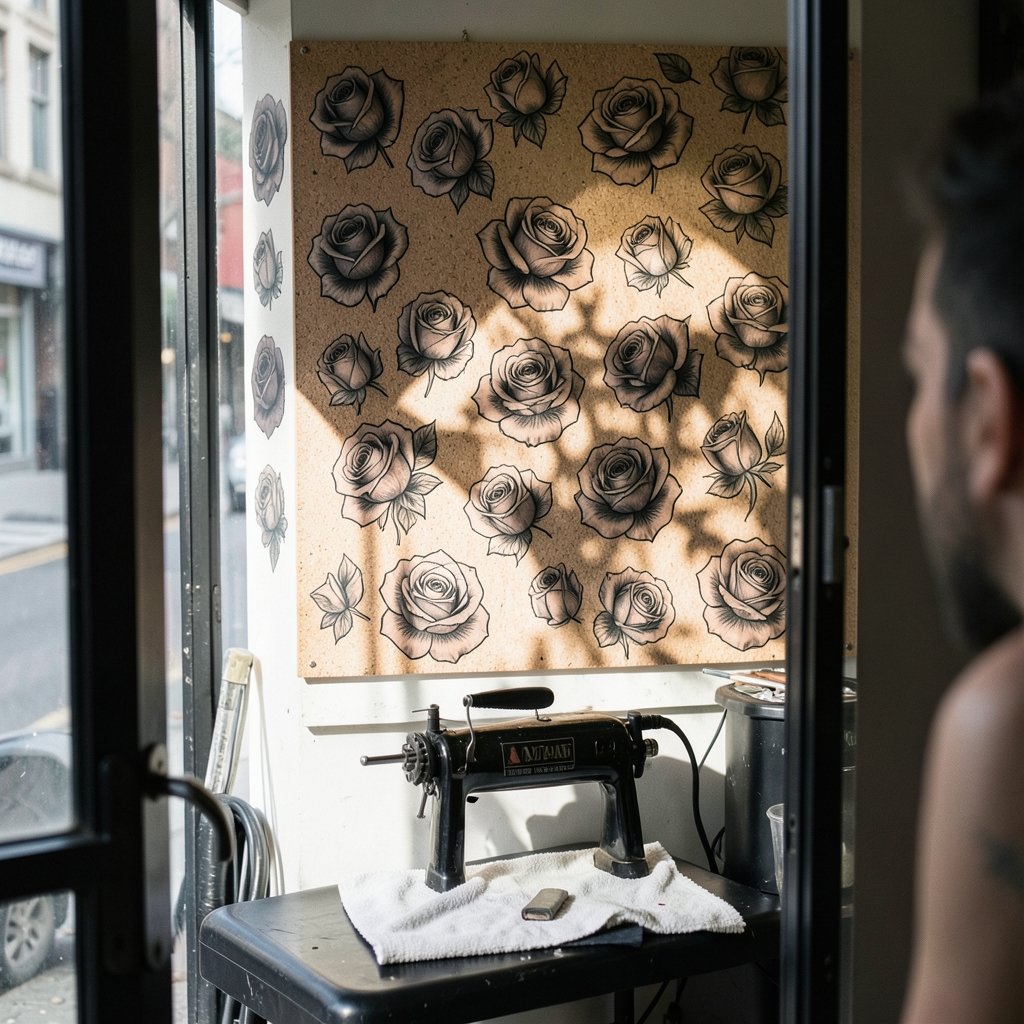
Roses are the most tattooed flower in the Western world, and for good reason. The design has been a staple of tattoo shops for more than a century, and it remains one of the few motifs that works equally well as a tiny wrist piece or a full sleeve. But the rose carries more weight than most people realize. It shows up in religious art, in English political history, and in the personal stories people bring to the chair. That range is exactly why it stays popular, and exactly why it’s easy to get a rose tattoo that looks generic instead of personal.
This guide covers what the rose has meant across cultures, how the major styles differ, where placement goes wrong, and what to plan before you book an appointment.
Why the Rose Became a Tattoo Staple
The rose’s dual nature is the heart of its appeal. It is beautiful and it has thorns. That contradiction gives tattoo artists a symbol that can hold love and loss in the same image, which is why it turns up on memorial pieces, wedding tributes, and “I got through something hard” tattoos alike.
The design also has practical advantages that keep it in demand. A rose reads clearly at almost any size. Its petals create natural shading opportunities. A bold outline holds up well over decades, which matters because tattoos fade and blur as the skin ages. A simple rose with a strong outline and limited color tends to age better than a delicate, low-contrast design.
The History Behind the Symbol
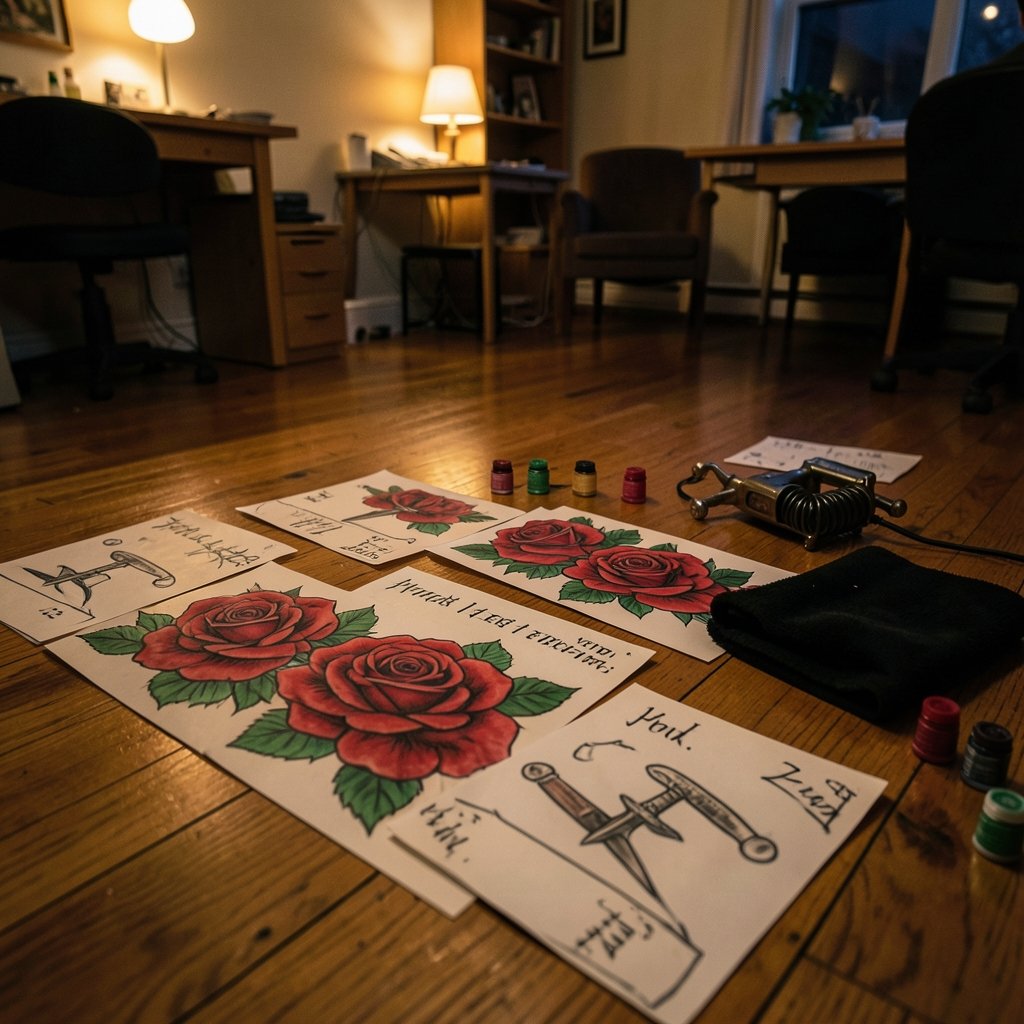
Rose imagery has deep roots in Western culture before it ever reached a tattoo machine. In Christian iconography, the rose is tied to the Virgin Mary, and the word “rosary” comes from rosarium, Latin for rose garden. In England, the red and white roses of the Houses of Lancaster and York gave the Wars of the Roses (1455–1485) their name, and the Tudor rose that combined both became a lasting emblem of English monarchy. (Rose)
In tattooing specifically, the rose is closely associated with American traditional style and with the artist Norman Collins, known as Sailor Jerry, whose mid-20th-century designs helped standardize motifs like the rose and dagger and the rose with a banner. The red-rose-with-green-leaves convention that dominates tattoo flash today is often described as a product of early pigment availability and the bold-outline aesthetic that made tattoos legible from a distance.
What a Rose Tattoo Can Mean
Meanings are personal, and any artist will tell you the same flower means different things to different clients. Still, a few interpretations come up again and again.
| Interpretation | Typical design cues |
|---|---|
| Love and romance | Single red bloom, often paired with a name or date |
| Loss and remembrance | Rose with a banner, birth and death dates, muted color |
| Strength through hardship | Rose with thorns emphasized, sometimes with a dagger |
| Beauty and impermanence | Falling petals, wilting bloom, black and grey |
| Faith | Rose paired with rosary beads or a cross |
| Rebellion or edge | Black rose, heavy contrast, sharp linework |
The black rose deserves a note of its own. It is often read as grief, goodbye, or a deliberate rejection of the sweet, romantic rose. Some clients choose it simply because they prefer the look. Both are valid, and a good artist will ask which one you mean rather than assume.
The Main Styles, Compared
Style choice affects cost, healing, and how the tattoo ages. These are the four most common approaches for roses.
American Traditional
Bold black outlines, a limited palette of red, green, and yellow, and heavy saturation. This is the most durable option over time. Lines stay readable as the skin changes, which is why traditional roses on forearms and shoulders from forty years ago still look like roses.
Black and Grey
Shading replaces color, and the result ranges from soft and realistic to high-contrast and dramatic. Black and grey roses suit fine detail work and portrait-style pieces, but very light shading can blur together after a decade. Ask the artist for enough contrast to survive.
Realism
Photorealistic roses demand a specialist. Petals, dew, and shadow need fine needles and steady layering, and these pieces typically cost more per hour and take multiple sessions. They also need more careful sun protection, because fine detail fades fastest.
Neo-Traditional and Illustrative
Bigger, more decorative, often with unusual color palettes and flowing linework. This style gives the artist room to build a composition, which makes it a favorite for larger pieces on the thigh, back, or upper arm.
If you want a deeper look at how product and care claims stack up in the hair and beauty space, the same skepticism applies to tattoo aftercare marketing: Prose hair review 2026: custom hair care tested is a useful example of how “customized” products get evaluated rather than assumed.
Placement: Where Roses Work Best
Placement drives design more than most people expect. A rose is roughly circular, which makes it flexible, but the body is not a flat canvas.
- Forearm and inner arm. Excellent for medium pieces. Skin is relatively smooth and the tattoo is easy to show or cover.
- Shoulder and upper arm. Classic for traditional work. Curves suit the flower’s shape.
- Wrist and ankle. Popular for small, simple roses, but fine detail here tends to blur faster because the skin moves constantly.
- Ribs and sternum. Dramatic, but painful and hard to heal because clothing rubs the area.
- Hands, fingers, and neck. High visibility and faster fading. Many artists charge extra or decline these placements for first-timers.
- Thigh and back. The best canvas for large, detailed compositions.
A common mistake is choosing a small rose for a large area, which leaves the design looking lost. The reverse is also common: cramming a detailed rose into a two-inch space and losing every petal line within a few years. Size the design to the space, not to the budget.
Practical Tips Before You Book
First-hand advice from the chair tends to repeat itself. Here is what actually helps.
- Look at healed work, not fresh work. A fresh tattoo is at its most vivid. Ask to see photos of the same artist’s pieces at one year and beyond.
- Bring references, not demands. Two or three images showing the mood, color, and level of detail you want give the artist more than a copy-paste design.
- Ask about line weight. Thicker outlines age better. If an artist proposes hairline-thin petals on a high-friction area, ask how it will look in ten years.
- Confirm the meaning. If the rose is for a person, say so. Artists routinely adjust banner placement, dates, and color to fit the story.
- Plan for aftercare before the appointment. Fragrance-free soap, a thin layer of ointment, no swimming, no direct sun. Over-moisturizing is a more common mistake than under-moisturizing.
- Budget for a touch-up. Most reputable shops offer one free or low-cost touch-up within a few months. Take it.
Sun protection is the single biggest factor in longevity. A rose on a shoulder that sees summer sun every year will fade noticeably faster than one that lives under clothing or sunscreen.
Cost, Time, and What to Expect
Prices vary widely by city, artist reputation, and size. A small simplified rose may take under an hour. A detailed black and grey rose on a forearm can run two to four hours. Full-color realistic pieces take multiple sessions.
| Size | Typical session time | Notes |
|---|---|---|
| Small (2–3 inches) | 30–60 minutes | Simple linework, limited shading |
| Medium (4–6 inches) | 1–3 hours | Best balance of detail and durability |
| Large (7+ inches) | 3+ hours, often multiple sessions | Realism, neo-traditional compositions |
| Sleeve or back piece | Multiple sessions over months | Requires planning and consistent aftercare |
Tipping is customary in many countries, and deposits are standard to hold an appointment. Ask about both up front so there are no surprises.
Common Mistakes Worth Avoiding
The most frequent regret is not the rose itself but the execution. Oversized text paired with the flower, a cluttered background, or a design chosen in five minutes at the shop all tend to age poorly. Another common issue is choosing an artist whose portfolio does not match the style you want. A brilliant traditional artist is not automatically the right person for photorealism.
There is also a trend problem. Designs that look modern this year can feel dated in a decade. A rose survives that risk better than most motifs because its form is old, but the surrounding elements, fonts, and flourishes are what date a piece.
If you are the kind of person who researches before committing, treat tattoo care the way you would treat any other long-term body decision. The same evidence-first approach that applies to rosemary oil for hair and what the evidence actually shows is worth applying to aftercare claims you see online. Most of the reliable advice is boring: keep it clean, keep it moisturized lightly, keep it out of the sun.
Conclusion
Rose tattoos endure because they are flexible without being empty. The flower can carry romance, grief, faith, defiance, or nothing more than a love of the design, and it reads clearly whether it is the size of a coin or a shoulder blade. What separates a tattoo someone loves for thirty years from one they cover up is rarely the idea. It is the artist’s linework, the size relative to the placement, and the discipline of aftercare in the first month. Choose the artist for the style, size the design for the space, and protect it from the sun. Do those three things and the rose will hold up the way it is supposed to.
How much does a rose tattoo cost?
It depends on size, style, and location. Small simple pieces often fall in the range of a shop minimum, while medium detailed work is priced hourly and can run several hundred dollars or more depending on the artist. Realistic and large-scale pieces cost the most because they take multiple sessions. Always confirm the shop minimum, hourly rate, and deposit policy before booking.
Does a rose tattoo have to be red?
No. Red is traditional and remains the most common choice, but black and grey, black-only, and unconventional color palettes are all popular. A black rose carries its own symbolism, often tied to grief or farewell. Color choice is aesthetic and personal, and any artist can show you how a design will look in both color and black and grey before committing.
Which placement is best for a first rose tattoo?
The forearm and upper arm are the most forgiving choices. The skin is relatively smooth, the area is easy to keep clean during healing, and the tattoo can be shown or covered as needed. Wrists, fingers, and ankles are popular but fade faster and are harder to heal because of constant movement and friction.
How long does a rose tattoo take to heal?
The surface typically heals in two to four weeks, while deeper layers can take a few months to settle fully. Expect peeling and itching in the first two weeks. Keep the area clean with fragrance-free soap, apply a thin layer of ointment, avoid swimming and direct sun, and do not pick or scratch. Follow your artist’s specific instructions over anything you read online.
Will a rose tattoo fade?
All tattoos fade, but roses with bold outlines and good contrast hold up far better than delicate, low-contrast designs. Sun exposure is the biggest factor. Consistent sunscreen and keeping the tattoo covered during long sun exposure will noticeably extend its life. A touch-up every several years is normal for many people.
Can I get a rose tattoo covered up later?
Yes, and roses are among the easier designs to work with because their organic shape hides old linework well. A darker, denser rose can often cover an older piece, sometimes with the addition of leaves or shading. Cover-ups usually require a larger design than the original, so plan for more space and a higher cost than a fresh tattoo of the same size.