
Wavy Hair Guide: Identify, Care & Style Type 2 Waves
 Abdul WadoodLast updated
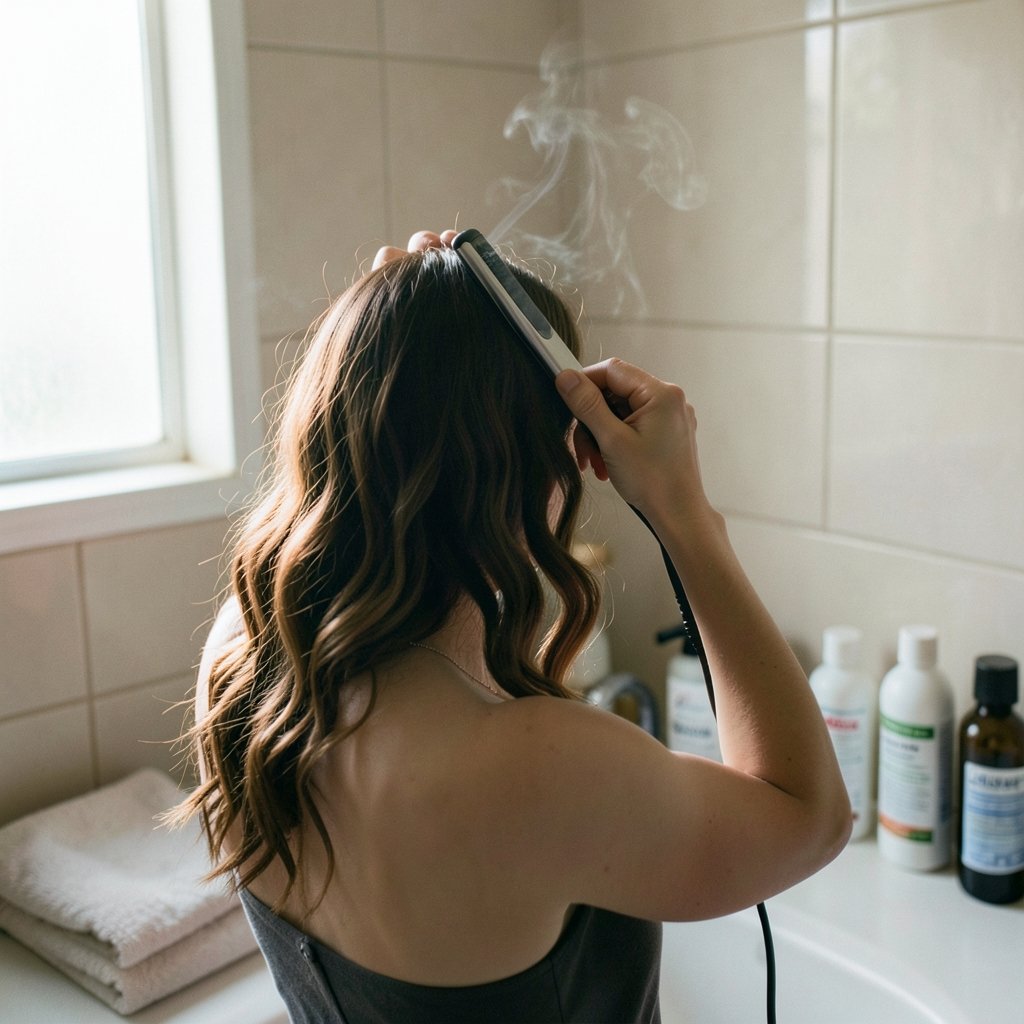
Have you ever brushed your hair straight, only to watch it drift back into loose S-bends an hour later? That quiet rebellion is the signature of wavy hair. It sits in the middle of the texture spectrum, neither pin-straight nor tightly curled, and that in-between nature is exactly why it confuses so many people. Wavy hair often behaves like straight hair at the roots and like curly hair at the ends. It can look sleek one day and frizzy the next, sometimes within the same afternoon. (Hair)
This guide explains what wavy hair is, how to tell whether you have it, and what works for washing, styling, and sleeping on it. It also covers the mistakes that sabotage waves and the limits of the common curl-typing system. The guidance is practical, without promises of miracles.
What Makes Hair Wavy?
Hair texture starts at the follicle. The shape of the hair fiber’s cross-section and the way disulfide bonds link keratin proteins together largely determine whether a strand grows straight, wavy, or curly. Round cross-sections tend to produce straight hair, while more oval or flattened sections are associated with waves and curls. This is well-established structural biology, and it explains why texture is baked in rather than a matter of habit. (Types of Hair)
Wavy hair usually forms a loose S-shape that begins somewhere below the root, not at the scalp. That late start is why the top of a wavy head can look almost flat while the lengths have movement. Many people also carry mixed patterns across the head, with tighter waves underneath and looser ones on top. If your hair seems to have a personality split, that is normal, not a defect.
One more useful fact: water can temporarily reshape hair because it disrupts hydrogen bonds in the fiber. This is the science behind wet-setting, scrunching, and why humidity makes waves swell or droop. It also means your styling routine matters more than your genetics on any given day. For a broader look at how texture shapes visual identity, see Wikipedia’s overview of hair.
How to Tell If You Have Wavy Hair
The simplest test is observation after washing. Skip the brush, let hair air-dry with minimal handling, and look at the shape. If you see soft bends or a loose S-pattern, you are likely in the wavy camp.
Here is a quick comparison to help you place yourself:
| Signal | Wavy Hair | Straight Hair | Curly Hair |
|---|---|---|---|
| Shape after air-drying | Loose S-bends | Falls flat | Distinct spirals or coils |
| Root area | Often flat or nearly straight | Straight throughout | Curl starts near root |
| Response to brushing | Waves flatten, then return | Stays smooth | Turns into frizz |
| Wet texture | Slight bend, slippery | Straight and sleek | Clumps into curls |
| Volume | Medium, uneven | Low to medium | High |
A second check involves wet clumping. Scrunch water into clean hair and see whether strands group together into loose waves. Straight hair tends to stay separate; wavy and curly hair clumps.
Where the Type System Helps and Where It Fails
The widely used curl classification, often credited to hairstylist Andre Walker and popularized from the 1990s, labels waves as Type 2 with subtypes a, b, and c. It is a styling convention, not a scientific taxonomy. Two people with “2b” hair can have completely different porosity, density, and behavior.
Use the system as a rough starting point for product shopping, not as a diagnosis. If your hair sits between categories, that is the norm rather than the exception.
Building a Wavy Hair Routine That Actually Works
Wavy hair responds best to lightweight moisture and gentle handling. Heavy products drag the wave down; rough handling breaks up the pattern. The goal is definition without weight.
Step 1: Wash Less Aggressively
Shampooing daily strips oils and encourages frizz. Most wavy-haired people do well washing two to three times a week with a sulfate-free or low-sulfate shampoo. Focus the lather on the scalp and let it rinse through the lengths. If your scalp gets oily quickly, a co-wash or a gentle cleanser on non-wash days can bridge the gap.
Step 2: Condition With Intent
Conditioner is where waves gain their spring. Apply from mid-length to ends, detangle with fingers or a wide-tooth comb while the product is in, then rinse. A leave-in conditioner applied to damp hair adds lasting softness. People with fine waves should use a small amount, roughly a coin-sized dollop, and build up only if needed.
Step 3: Style on Damp, Not Soaking, Hair
The sweet spot is hair that is damp but not dripping. Apply a lightweight gel or mousse using a scrunching motion, cupping the ends upward toward the scalp. Avoid raking product through the lengths if you want clumps to hold.
Step 4: Dry Without Disturbing
Air-drying preserves the pattern best. If you use a diffuser, keep it on low heat and low speed, and hover rather than pressing into the hair. Resist touching while it dries; every touch breaks a clump.
Step 5: Break the Cast
Many gels form a crisp outer layer as they dry. Once hair is fully dry, gently scrunch to soften that cast. The result is defined waves with movement rather than crunch.
For a sense of how much styling choices shape everyday appearance, Forbes has covered the growing business of hair care and personal grooming, which reflects how seriously people take texture-specific routines.
Common Mistakes That Flatten Waves
Most disappointing wave days trace back to a handful of habits. These are the ones that show up again and again.
- Brushing dry hair. This is the single biggest culprit. Brushing separates clumps and turns waves into a fuzzy cloud. Use fingers or a wide-tooth comb on wet, conditioned hair instead.
- Using heavy oils or butters. Rich products formulated for coily hair can weigh wavy strands down. Look for lightweight formulas with water high on the ingredient list.
- Skipping hold products entirely. Waves need some structure to survive the day. A little gel or mousse does more than a mountain of cream.
- Applying products to soaking wet hair. Excess water dilutes the product and prevents clumps from forming. Squeeze out water first with a cotton T-shirt or microfiber towel.
- Touching hair mid-dry. Hands off is genuinely the rule. Fidgeting creates frizz.
- Overwashing and underwashing. Both extremes cause problems. Find your own cadence rather than copying someone else’s schedule.
The T-Shirt Trick and Other Practical Habits
Regular terry towels roughen the hair cuticle and encourage frizz. Swapping to a cotton T-shirt or microfiber towel for plopping, which means wrapping hair gently to absorb water, makes a visible difference for many people. It costs nothing and takes a minute.
Sleep protection matters too. A loose pineapple (a high, soft ponytail) or a silk pillowcase reduces friction overnight. Wavy hair that looks great at night often looks flattened by morning purely because of friction.
Heat, Treatments, and What They Do to Waves
Heat and chemical treatments work by breaking and reforming bonds in the hair fiber. Perms and relaxers deliberately restructure disulfide bonds, which is why they are permanent. Straightening with flat irons temporarily reshapes hydrogen bonds, which is why humidity can undo the effect.
If you want to wear waves most of the time, minimize repeated high-heat straightening. When you do use heat, apply a heat protectant and keep the iron moving. The U.S. Food and Drug Administration publishes consumer guidance on cosmetic products and ingredients, including hair products, at fda.gov, which is a sensible starting point for checking what is in your shelf.
Layered haircuts generally suit wavy hair better than blunt, one-length cuts. Layers remove bulk from the bottom and let the wave spring up. A stylist who understands texture can cut dry to see the natural pattern, which is far more reliable than cutting wet and hoping.
Wavy Hair Across Cultures and Contexts
Wavy hair carries different meanings depending on where you are. In some communities it is the default texture; in others it is a carefully styled choice. Terminology varies widely, and words like “wavy,” “curly,” and “coily” do not map cleanly onto one another across regions.
The history of hair styling is also a history of labor, identity, and social pressure. Straightening practices in particular have been studied as cultural and political subjects, and institutions such as the Smithsonian Institution hold collections and research on the history of hair and beauty culture in the United States. Understanding that context makes it easier to see texture as something to work with rather than correct.
Practically, this matters for how people shop and style. Someone raised in a household where hair was brushed daily may need to unlearn that habit entirely to see their waves. Someone else may have spent years fighting frizz without realizing the fix was simply less handling.
Frequently Asked Questions
Is wavy hair the same as curly hair?
No. Wavy hair forms loose S-bends that usually begin below the root, while curly hair forms spirals or coils that often start closer to the scalp. Wavy hair tends to be easier to flatten and easier to straighten, but it also loses definition more quickly. Many people have a mix of both patterns on one head, which is completely normal.
Why does my wavy hair turn straight after I brush it?
Brushing separates the clumps that create the wave pattern and disrupts the surface alignment of the strands. The wave is still there structurally, but it needs water and a little product to regroup. Try combing only in the shower with conditioner, then scrunching and leaving hair alone while it dries.
How often should I wash wavy hair?

Most people with wavy hair do well washing two to three times per week. Daily shampooing strips natural oils and increases frizz, while going too long can leave the scalp uncomfortable and weigh roots down. Adjust based on scalp oiliness, activity level, and how much product you use. A gentle cleanser on off days can help.
What products work best for wavy hair?
Lightweight, water-based products generally work best: a gentle shampoo, a moisturizing conditioner, a small amount of leave-in conditioner, and a lightweight gel or mousse for hold. Heavy oils and thick butters often drag waves down. Start with less product than you think you need, then add more if definition fades.
Can wavy hair become curly over time?
Texture is largely determined by the shape of the hair fiber and its internal bonds, so it does not typically shift from wavy to curly on its own. However, hormonal changes, aging, and certain treatments can alter how hair behaves. Better styling and gentler handling often reveal more wave than people realized they had.
Does cutting hair change the wave pattern?
A cut can make waves look much more defined without changing the actual texture. Layers reduce weight, which lets waves spring up, while a blunt one-length cut can pull the pattern straighter. A stylist who cuts dry and works with your natural pattern usually gets the most predictable result.
Conclusion
Wavy hair is not a problem to solve; it is a texture with its own logic. The strands bend in loose S-shapes because of how the fiber is built, and they respond best to light moisture, gentle handling, and a bit of patience while drying. The biggest wins come from small changes: stop brushing dry hair, use lighter products, scrunch on damp strands, and protect the pattern overnight.
The type system can help you shop, but it cannot capture the full range of what wavy hair does from one head to the next. Treat your own hair as the primary source of information. Try one change at a time, give it a couple of weeks, and keep what works. Waves reward consistency far more than they reward expensive products. Once the routine fits, the texture stops being unpredictable and starts being something you can actually rely on.