
Hair Styles Guide 2026: Choose, Style & Maintain Your Look
 Abdul WadoodLast updated

A good hair day and a bad one may depend less on luck than on choosing a style that fits your hair type, face shape, and daily routine. Salon consultations, rushed mornings, and the photos people bring in as inspiration all raise that question. Hair styles are personal, not random: patterns explain what holds up, what falls flat, and what suits whom.
This guide walks through the practical side of hair styling. It covers how to match a style to your hair, the tools and techniques that actually work, the mistakes that quietly sabotage results, and the vocabulary you need to describe what you want. No miracle products, no unrealistic promises, just the mechanics of getting hair to do what you ask.
What “hair style” actually means
The term is broad on purpose. Hair style covers everything from a two-minute ponytail to a structured updo that takes an hour and a team. It includes cut, shape, and finish. A bob is a style. So is a braid. So is the way you tuck one side behind your ear.
Linguistically, “hairstyle” is a compound of “hair” and “style,” with “style” tracing back through Latin stilus, originally a writing implement that came to mean manner or fashion. The French borrowing coiffure is often used for arranged or formal hair, especially in bridal and editorial contexts. Regional vocabulary shifts too: what Americans call bangs, Britons call a fringe. Neither is wrong. Knowing both helps when you are reading tutorials or describing a cut to someone from another country. (Hairstyle)
One caution worth stating plainly: origin stories for style names are frequently folk etymology. The precise dates attached to named looks vary between fashion histories, museum object records, and popular accounts. Treat any single date as contested unless a dated portrait or a catalog entry backs it up.
Match the style to the hair you have, not the hair you want
The single most common mistake in hair styling is choosing a look from a photo without checking whether the hair can support it. Fine hair rarely holds a heavy, blunt fringe without separating. Tight coils do not fall into a sleek, straight curtain without significant intervention. Coarse, dense hair can overwhelm a short, layered crop if the layers are cut too aggressively. (Hair Loss)
A practical starting framework:
| Hair characteristic | Styles that tend to work | Styles that tend to fight back |
|---|---|---|
| Fine, straight | Blunt bobs, short crops, sleek ponytails | Heavy layered shags, voluminous updos |
| Thick, wavy | Long layers, loose waves, half-up styles | Blunt one-length cuts that widen at the ends |
| Curly, coily | Rounded shapes, wash-and-go, protective styles | Tight, sharp geometric lines without shaping |
| Damaged or fragile | Low-tension styles, loose braids, trims | Tight ponytails, daily heat styling, chemical straightening |
Hair density, texture, and porosity matter more than the label on the bottle. High-porosity hair absorbs moisture quickly and loses it just as fast, so styles that rely on smoothness need a leave-in conditioner underneath. Low-porosity hair resists water, which means heavy products sit on top and weigh it down. Test this at home: drop a clean strand in a glass of water. If it sinks quickly, porosity is high. If it floats for minutes, it is low. It is an imperfect test, but it is a starting point.
Face shape is a guide, not a rule
The classic advice about face shapes has real value but limited authority. The idea that oval faces suit everything and round faces must avoid chin-length cuts is a useful shortcut, not a law. What matters more is where the volume sits. A style that adds width at the cheekbones will emphasize them. A style that adds height at the crown will lengthen the face visually. Those two principles explain most of the “flattering” advice without requiring a geometry lesson.
The tools and techniques that hold up in practice
Most styling failures come from technique, not equipment. A cheap dryer used well beats an expensive one used badly.
- Start on damp, not dripping, hair. Rough-dry with a towel and let it air-dry for a few minutes. Styling product applied to soaking hair dilutes and slides off.
- Apply product from mid-length to ends first. Roots need less. Overloading the root area is the fastest route to a flat, greasy look by midday.
- Section before you blow-dry. Clips are cheap and they change everything. Working in four to six sections gives far more control than chasing loose hair around the head.
- Point the nozzle down the hair shaft. This smooths the cuticle. Pointing it upward roughs the cuticle and creates frizz, which is the opposite of what most people want.
- Set with cool air. Heat shapes, cold sets. A final blast of cool air locks the shape in place.
- Use the right brush for the job. A round brush for volume and bend, a paddle brush for smoothing, a vent brush for rough-drying.
For heat tools, the practical rule is lower heat and more passes rather than maximum heat and one pass. Most heat damage accumulates gradually, and it shows up months later as breakage and split ends that no product can reverse.
Short hair, long hair, and the maintenance math
The style that looks best in a salon mirror is not always the style that survives a real week. Maintenance is the hidden cost of every cut. A sharp, one-length bob needs a trim every six to eight weeks to keep its line. A long layered cut can stretch to twelve weeks. A buzz cut needs attention every three to four weeks.
Before committing, ask a blunt question: how many minutes per morning is realistic? If the honest answer is five, a style that requires round-brush work and a curling iron will lose that fight. Wash-and-wear shapes with built-in layers usually win for busy schedules.
Learning from street style and runway trends
Trend cycles move fast, and street photography has become one of the clearest records of what people actually wear, as opposed to what appears in campaigns. Coverage of street style at Milan Fashion Week shows how real attendees adapt runway ideas into wearable shapes, while the second edition of that Milan street style coverage tracks how those looks shift between seasons. Broader fashion trend coverage is useful for spotting which silhouettes are gaining momentum before they reach mainstream salons.
The practical takeaway from runway-to-street translation is usually a single element, not a full look. A slicked-back front with loose length at the back. A visible parting change. A single braid instead of a full braided updo. Adopting one element is cheaper, faster, and far less likely to look like a costume.
Common mistakes that quietly ruin a style
These show up again and again, and each has a straightforward fix.
Cutting layers too short on fine hair. Layers remove weight, which sounds helpful until the shortest layer sticks straight up. Keep the shortest layer long enough to lie down.
Over-washing. Daily shampoo strips oils, and the scalp compensates by producing more. Most people do fine with washing every two to three days, using dry shampoo or water-only rinses in between.
Applying conditioner to the scalp. Conditioner belongs on the mid-lengths and ends. On the scalp, it flattens roots and encourages buildup.
Skipping regular trims to “grow it out.” Split ends travel upward. Trimming a small amount every ten to twelve weeks usually produces more length over a year, not less.
Ignoring the water. Hard water leaves mineral deposits that dull hair and interfere with products. A filtered showerhead or a clarifying rinse once a month makes a visible difference.
Chasing a trend that fights the hair’s natural pattern. Straightening coily hair daily is a maintenance commitment with real damage risk. Working with the pattern, even loosely, is almost always lower effort over time.
Describing what you want at the salon
The gap between what a client says and what a stylist hears causes most disappointing cuts. Words are ambiguous. Photos are better. Photos plus words are best.
Bring two or three images, and point out exactly what you like in each: the length, the fringe, the way the ends sit. Say what you do not want as clearly as what you do. Mention your routine honestly, including how often you actually style it. If you use heat tools daily, say so. If you air-dry and leave, say that too.
Ask what the cut will look like without styling. A good stylist will answer straight. If the answer is “it needs a round brush to look like the photo,” that is important information, not a sales pitch.
Hair care basics that support any style
No style survives poor hair condition. The fundamentals are unglamorous and effective:
- Protein and moisture in balance. Hair needs both. Too much protein makes it stiff and brittle; too much moisture makes it limp and stretchy.
- Gentle drying. A microfiber towel or a cotton T-shirt causes less friction than a rough terry towel.
- Loose ties and silk pillowcases. Both reduce friction and breakage, especially at the hairline and nape.
- Scalp care. A healthy scalp grows healthier hair. Regular cleansing and occasional exfoliation matter more than most people assume.
- Protective styling for fragile hair. Loose braids and low-tension buns give hair a rest from daily manipulation.
Conclusion
Hair styles are a practical negotiation between what looks good, what the hair can do, and what the morning allows. The winning combination is rarely the most dramatic option. It is the one that fits the hair’s natural pattern, survives a real week, and can be described clearly to the person holding the scissors. Start with texture and density, choose volume placement deliberately, invest in technique over tools, and be honest about maintenance. Do that, and the gap between a good hair day and a bad one narrows considerably.
Frequently asked questions
How often should hair be trimmed?
Every eight to twelve weeks suits most people. Short, structured cuts need trimming closer to the six-to-eight-week mark to keep their shape. Long hair can stretch to twelve weeks, but going much beyond that usually means split ends travel upward and more length comes off in the end.
Does cutting hair make it grow faster?
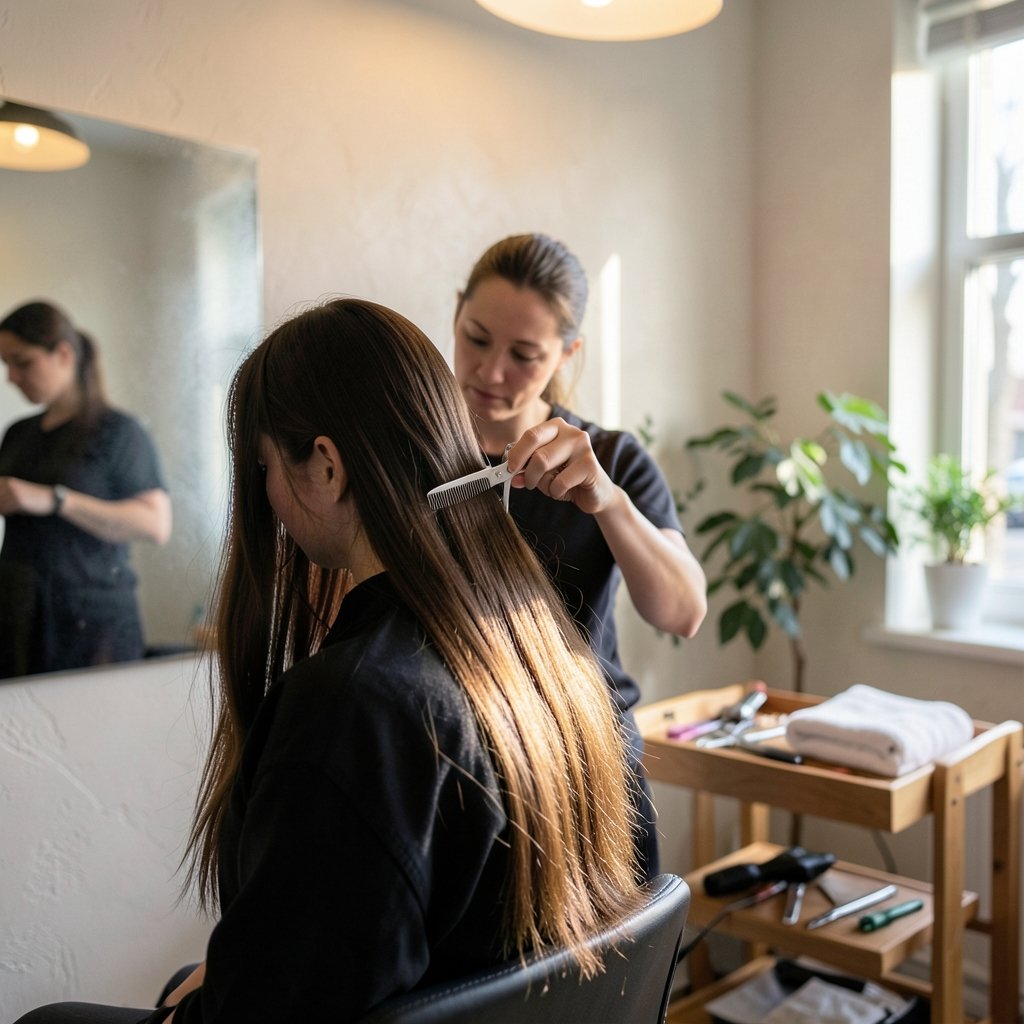
No. Hair grows from the follicle, and trimming does not affect that rate. What trimming does is remove split ends before they travel up the shaft, which keeps the hair looking fuller and healthier and prevents breakage from eroding length.
What is the difference between bangs and a fringe?
They are the same thing. Bangs is the common American term; fringe is the common British term. Both describe hair cut to fall over the forehead. Regional vocabulary varies widely, so it helps to bring a photo rather than rely on a single word.
Can fine hair hold a voluminous style?
Yes, with the right technique. Fine hair holds volume best when it is styled on damp hair with lightweight product applied away from the roots, then set with cool air. Heavy products and too much root application are what cause fine hair to collapse by midday.
Is daily heat styling damaging?
It can be, especially at high temperatures and without heat protection. Damage accumulates gradually and shows up as breakage and split ends months later. Lower heat with more passes, a heat protectant, and occasional styling breaks reduce the risk substantially.
How do I choose a hairstyle for my face shape?
Use face shape as a starting guide, then focus on volume placement. Adding width at the cheekbones emphasizes them; adding height at the crown lengthens the face visually.