
Hair Spray Guide 2026: How It Works & How to Use It
 Abdul WadoodLast updated

Ever wondered why some hairstyles survive a windy commute while others collapse before lunch? The answer usually comes down to one product: hair spray. It is one of the most recognizable items on any bathroom shelf, yet most people use it without understanding what is inside the can or why certain formulas work better than others. This guide breaks down the science, the history, the practical techniques, and the common mistakes that keep people from getting the hold they actually want.
What Hair Spray Actually Is
Hair spray is a cosmetic product made of a polymer or resin dissolved in a volatile solvent, usually alcohol, along with a propellant that pushes the mixture out of the can. When the spray hits your hair, the solvent evaporates quickly and leaves behind a thin, flexible film of polymer that locks strands into place. That film is the entire point of the product. The fragrance, the nozzle design, and every other part exist to help that film form evenly.
The chemistry matters more than most people realize. A good formula needs to dry fast enough to hold a style but not so fast that it clumps or leaves visible white flakes. It needs enough grip to fight humidity and gravity without turning hair stiff or crunchy. Manufacturers spend enormous effort balancing those competing goals, which is why a cheap drugstore can and a salon-brand aerosol can behave very differently on the same head of hair.
A Short History of the Product
Hair spray as a mass-market product took off in the 1950s and 1960s, when aerosol technology made it cheap and easy to deliver a fine mist at home. Early aerosols commonly used chlorofluorocarbons (CFCs) as propellants. That changed after Mario Molina and Sherwood Rowland published research in 1974 linking CFCs to depletion of the stratospheric ozone layer. The United States banned CFC propellants in most aerosols in 1978, and the global picture shifted further with the 1987 Montreal Protocol, which phased CFCs out worldwide.
The industry reformulated. Modern aerosols typically rely on hydrocarbon propellants such as propane and butane, or they skip propellants entirely and use a manual pump. This history is worth knowing because it explains a lot about today’s products: the shift away from CFCs pushed manufacturers toward new propellant systems, and regulators in some regions, including California, now limit the volatile organic compounds (VOCs) that consumer products can emit. If you have ever noticed that a can bought in one state feels different from one bought in another, regulations may be the reason.
The Main Types and How They Compare
Not all hair sprays are interchangeable. The category splits into a few clear families, and choosing the right one is half the battle.
| Type | Hold Level | Best For | Watch Out For |
|---|---|---|---|
| Aerosol, strong hold | High | Updos, structured styles, events | Can feel stiff; flammable |
| Aerosol, flexible hold | Medium | Everyday styling, layered looks | Needs reapplication in humidity |
| Pump spray (non-aerosol) | Light to medium | Fine hair, natural finishes | Less even mist; slower drying |
| Texturizing spray | Low hold, high grit | Beachy volume, grip for pins | Not a true finisher |
| Finishing mist | Light | Setting makeup-adjacent styles | Weak hold on its own |
Aerosol formulas deliver the finest mist and the most even coverage, which is why stylists favor them for complex updos. Pump sprays give you more control and often feel lighter, but the droplets are larger, so you need to spray from farther away to avoid wet spots. Texturizing sprays are a different animal. They add grit and volume rather than locking a style in place. Many people buy one expecting the other and end up frustrated.
How to Apply It So It Actually Works
Technique separates a natural-looking finish from a helmet. The single biggest mistake is spraying too close. Hold the can roughly 10 to 12 inches from your head and use short, sweeping bursts rather than one long blast. Think of it as dusting, not painting.
- Style first, spray last. Hair spray sets what is already there. It will not create shape, only freeze it.
- Section your hair. Lift layers and spray underneath, and also on the surface. The hidden layers do most of the holding.
- Spray in light passes. Two or three thin coats beat one heavy coat every time.
- Let each pass dry. Wait a few seconds between passes so the solvent can evaporate.
- Shield your face. Use your free hand or a piece of card as a barrier.
- Refresh, don’t rebuild. A light mist over a drooping style often revives it without a full redo.
A practical tip that rarely gets mentioned: spray your brush or comb rather than your hair directly when you want control near the roots. You get targeted hold without coating your whole head.
Common Mistakes People Make
The most frequent error is over-application. More product does not mean more hold. Past a certain point, extra spray just adds weight, stiffness, and flaking, and it makes hair harder to brush out later. Another common slip is spraying damp hair. The solvent has to evaporate, and if hair is already wet, the polymer film forms unevenly and can look patchy. (Hair spray)
People also misjudge the role of humidity. A medium-hold spray used in dry weather may fail completely in summer heat. If you live somewhere muggy, look for formulas marketed for humidity resistance and apply in thinner, more frequent layers. And do not ignore the label warnings. Aerosol hair sprays are flammable, and they should be kept away from open flames, hot tools that are still heating, and anything that sparks. That is not legal boilerplate; it is a genuine safety point.
Finally, many people never clean their nozzles. A clogged nozzle spits instead of misting, which dumps product in one spot. A quick wipe with a warm, damp cloth every week or two keeps the spray pattern even.
Choosing the Right Formula for Your Hair
Fine hair tends to drown under heavy formulas. Look for light-hold or flexible-hold aerosols and apply sparingly. Thick or coarse hair can handle stronger hold and often benefits from a texturizing layer underneath for grip. Curly hair needs a formula that does not break up curl definition, so a light finishing mist usually beats a stiff aerosol. Color-treated or dry hair may prefer alcohol-light options, since high-alcohol formulas can feel drying over time.
There is also a practical budget consideration. Drugstore aerosols are perfectly capable of strong hold; the main differences at higher price points tend to be fragrance quality, nozzle engineering, and how cleanly the product brushes out. If you style daily, a mid-range flexible-hold spray is usually the best value. If you only spray for events, a single strong-hold can will last a long time.
For readers who want to dig into how consumer products are regulated and reformulated, the Wikipedia entry on hair spray gives a useful overview of the chemistry and product history, and the U.S. Environmental Protection Agency’s ozone layer protection resources explain why CFC propellants were phased out. Those two sources together cover most of what a curious buyer needs to know about what is actually coming out of the can.
Storage, Safety, and Shelf Life
Hair spray does not last forever. Most cans stay usable for about two to three years, though performance fades before the product becomes unusable. If a can starts spitting, smells off, or leaves visible residue, it is time to replace it. Store cans upright at room temperature and away from direct sunlight. Heat raises pressure inside the can, and while modern cans are engineered for it, there is no reason to test the limits.
Never puncture or incinerate an aerosol can, even an empty one. Dispose of it according to local rules, which usually means taking it to a household hazardous waste facility rather than tossing it in regular recycling. This is one of those small habits that matters more than people think.
Conclusion
Hair spray is a small product with a surprisingly deep story behind it. The polymer film that holds a style is the same basic idea that has driven the category for decades, but the chemistry, the propellants, and the regulations around them have all changed dramatically since the aerosol boom of the 1950s. Getting good results comes down to a few unglamorous habits: choose a formula that matches your hair type, spray from a distance in thin layers, let each pass dry, and keep the can clean and stored sensibly. Do those things and the product stops being a source of frustration and starts being the reliable finishing tool it was designed to be.
Frequently Asked Questions
What is hair spray made of?
Hair spray is a solution of a polymer or resin in a volatile solvent, usually alcohol, plus a propellant in aerosol versions. The solvent carries the polymer onto the hair and then evaporates, leaving a thin film that holds the style. Fragrance, plasticizers, and conditioning agents are often added to improve feel and reduce stiffness.
Is hair spray flammable?
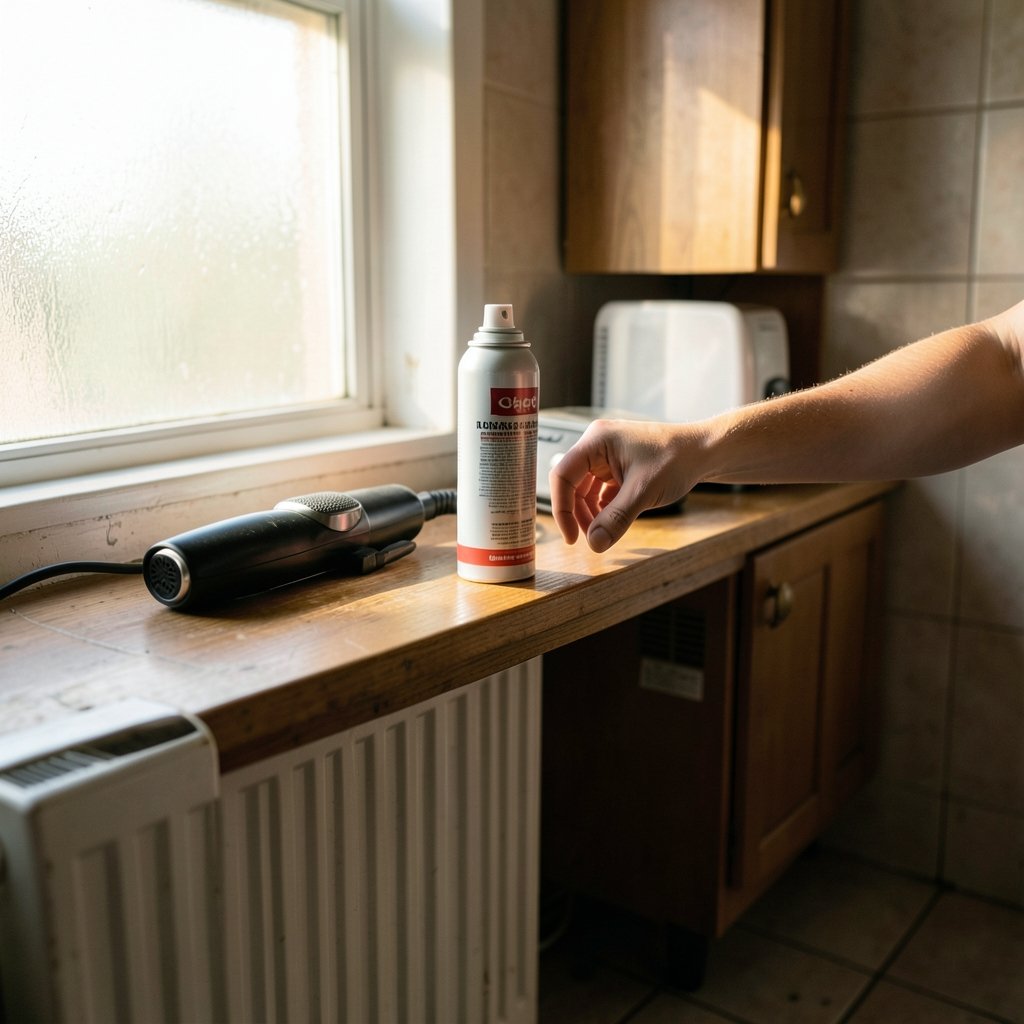
Yes. Aerosol hair sprays contain flammable propellants and solvents, and the label warnings about keeping them away from heat, flames, and sparks are serious. Let hot styling tools cool before spraying nearby, and never store cans near a stove, radiator, or direct sunlight.
How far away should you hold the can when spraying?
About 10 to 12 inches from your head is the sweet spot. Closer than that and the product lands in wet patches and clumps; farther away and too much mist drifts off before it reaches your hair. Use short, sweeping bursts rather than one continuous spray.
Does hair spray damage your hair?
Used in moderation, hair spray sits on the surface of the hair rather than penetrating it, so it does not cause structural damage on its own. Problems usually come from heavy buildup and rough brushing. Wash it out properly at the end of the day, and avoid combing through stiff, heavily sprayed hair, which can cause breakage.
Can you use hair spray on wet hair?
It is not recommended. The solvent needs to evaporate for the polymer film to form evenly, and spraying damp hair can leave a patchy, tacky finish. Style and dry your hair first, then apply hair spray as the final step.
How long does hair spray last?
Most cans remain usable for roughly two to three years, though hold strength and mist quality often fade before that. Store cans upright at room temperature, keep the nozzle clean, and replace the product if it starts spitting, smells unusual, or leaves visible flakes.
One last point worth adding: aerosol cans are pressurized, so altitude and temperature affect performance. A can that sprays perfectly at sea level may dispense unevenly in the mountains, and a cold can loses pressure until it warms up. Letting a chilled can sit at room temperature for a few minutes usually restores a normal spray pattern, while shaking it briefly before each use keeps the polymer and propellant properly mixed. Small habits like these extend a can’s useful life and keep the mist consistent from the first spray to the last.
These details matter most for anyone who travels or keeps a can in a car, where temperature swings are constant. A little forethought about storage and handling pays off in a more predictable, even finish every time you reach for the can. With the right formula, sound technique, and a bit of care, hair spray earns its place as one of the most dependable tools in everyday styling.