
4a Hair Guide: Master Your Tight Coil Routine
 Abdul WadoodLast updated

Ever looked at a photo of a perfect spiral curl and wondered why your own hair refuses to do the same thing? If so, you may have stumbled into the world of 4a hair — one of the most talked-about and least understood categories in the natural hair community. It sits right at the edge of the coil spectrum: tight enough to shrink dramatically, loose enough to show a clear pattern. That in-between status is exactly why so many people misdiagnose their own hair, buy the wrong products, and then blame their curls for “not cooperating.” (Hair and scalp care)
This guide breaks down what 4a hair actually is, how it differs from its neighbors, and what genuinely works in practice — including the mistakes that quietly sabotage routines.
Where the 4a Label Comes From
The term comes from the Andre Walker Hair Typing System, which sorts hair into Types 1 through 4. Type 4 covers coily, kinky textures and is subdivided into 4a, 4b, and 4c. Hairstylist Andre Walker popularized the framework in his 1997 book Andre Talks Hair, and it spread quickly through salons and, later, natural hair forums and social media.
Here’s the honest caveat: the system is a cosmetic and commercial convention, not a scientific or medical classification. There is no government or dermatological standard that defines “4a hair.” Curl pattern alone doesn’t capture density, porosity, strand thickness, or elasticity — and plenty of people have two or three patterns on the same head. Walker’s system has been widely criticized for exactly this reason, and 4c is generally reported as a later addition rather than part of the original framework. So treat 4a as a useful shorthand for shopping and styling, not a diagnosis.
What 4a Hair Typically Looks Like
Type 4a hair is generally described as tightly coiled with a visible, defined S-shaped or corkscrew pattern. Compared with 4b and 4c, it tends to hold definition more readily and lose moisture a little less aggressively. In practice, that means:
- Shrinkage is real. Wet 4a hair can appear half its stretched length or less.
- Definition is achievable with the right gel or cream, without heavy manipulation.
- The coil is small. Think the diameter of a pen spring rather than a finger.
- Moisture is still the priority. 4a may retain hydration better than 4c, but it is still coily hair with a raised cuticle structure that lets water escape fast.
A quick comparison helps clarify where 4a sits:
| Feature | 4a | 4b | 4c |
|---|---|---|---|
| Pattern | Defined S or corkscrew | Z-shaped, less defined | Very tight coil, least defined |
| Shrinkage | High | Very high | Highest |
| Definition ease | Easiest of the three | Moderate | Hardest |
| Moisture retention | Better than 4b/4c | Lower | Lowest |
| Typical styling | Wash-and-go, twist-outs | Braid-outs, twists | Protective styles, stretched sets |
These are tendencies, not rules. Two people with “4a hair” can have completely different routines that both work.
Diagnosing Your Own Pattern Without Guesswork
The most common mistake is typing hair from a photo of wet, product-coated curls. Product can fake definition that disappears the moment hair dries. A more reliable approach:
- Wash and condition with a clarifying or sulfate-free shampoo to remove buildup.
- Skip styling products entirely and let hair air-dry, untouched.
- Look at a single shed strand on a white surface — the pattern is clearest there.
- Measure the coil diameter against a pen, a chopstick, or a straw.
- Repeat on a different section, because pattern often varies from crown to nape.
If the coil looks like a small spring with a clear S-shape, 4a is a reasonable label. If it zigzags and resists definition, 4b is more likely. If you can barely see a pattern at all, 4c fits better.
Porosity Matters More Than the Number
Here’s the practical truth many typing guides skip: porosity and density affect your routine far more than the letter does. High-porosity 4a hair soaks up water fast and loses it just as fast, so it needs heavier sealants and layered moisture. Low-porosity 4a hair repels water and can feel perpetually dry even when it’s well conditioned — it usually responds better to lightweight products and gentle heat during deep conditioning. If you only ever learn your curl number, you’ve learned the least useful half of the picture.
Building a Routine That Actually Works
The core principle for 4a hair is moisture first, definition second. Definition without hydration produces crunchy, brittle coils that break at the ends.
Cleansing and Conditioning
Coily hair is naturally drier, so harsh detergents strip it quickly. A sulfate-free cleanser used once a week, plus a co-wash midweek if needed, is a solid baseline. Deep condition every one to two weeks. One common mistake: applying deep conditioner to soaking-wet hair, which dilutes it. Squeeze excess water out first so the product actually contacts the strand.
The Styling Order That Works
Product layering is where most routines succeed or fail. A reliable sequence for 4a:
- Leave-in conditioner on damp, not dripping, hair.
- Oil or butter on mid-lengths and ends only — not the scalp, and not the roots.
- Cream styler raked through sections for moisture and clumping.
- Gel applied with praying hands, then a light scrunch, for hold.
- Air-dry or diffuse on low heat and do not touch the hair while it dries.
That last step is the one people break most often. Touching drying coils breaks the cast and creates frizz, and then the gel gets blamed.
Nighttime Protection
Cotton pillowcases wick moisture out of hair overnight. A satin or silk bonnet, or a satin pillowcase, is one of the cheapest changes with the biggest payoff. For longer 4a hair, a loose pineapple (a high, gentle ponytail held with a satin scrunchie) preserves definition for day two.
Styling Options for 4a Hair
Because 4a holds pattern relatively well, it’s the most versatile of the Type 4 subtypes for styling:
- Wash-and-go: achievable with a strong-hold gel and patience; expect shrinkage.
- Twist-outs and braid-outs: reliable definition with stretched length.
- Bantu knots: tight, springy results that last several days.
- Protective styles: braids, twists, and cornrows reduce manipulation and retain length.
- Stretched sets: banding or threading to show length without heat.
A Word on Heat and Relaxers
Flat irons and blow dryers can stretch 4a hair, but coily hair is fragile at the bends. A heat protectant is non-negotiable, and heat should stay occasional. Chemical relaxers permanently alter the bond structure of the hair; anyone considering them should understand that the change is irreversible and requires a committed aftercare routine. Neither option is “wrong” — but both demand more care than the typing system suggests.
Common Mistakes and How to Fix Them
Mistake 1: Over-typing. Chasing a label instead of reading your hair’s actual behavior. Fix: track how your hair responds to products for a month, not how it matches a chart.
Mistake 2: Too much product. Heavy butters on fine 4a hair cause buildup and limp coils. Fix: start with less, add water rather than more product.
Mistake 3: Skipping clarifying washes. Silicones and heavy oils accumulate and block moisture. Fix: clarify monthly.
Mistake 4: Detangling dry. Always detangle wet, with conditioner, using fingers first and a wide-tooth comb second.
Mistake 5: Ignoring the ends. Ends are oldest and driest. Fix: seal them every time you style.
Conclusion
4a hair is a useful label, not a verdict. It describes a tight, defined coil pattern within a system that was never designed to be scientific — and it tells you almost nothing about porosity, density, or how your hair will behave on any given day. The people who get the best results from 4a hair are the ones who treat the category as a starting point, then pay attention to what their hair actually does: how fast it dries, how much product it tolerates, and where it breaks. Moisture, gentle handling, consistent nighttime protection, and a little patience with the shrinkage will do more for your coils than any chart ever will.
Frequently Asked Questions
What is 4a hair?
4a hair is a subtype in the Andre Walker Hair Typing System, describing tightly coiled hair with a visible S-shaped or corkscrew pattern. It is generally the most defined and easiest to style of the Type 4 subtypes, though it still shrinks significantly and needs consistent moisture.
Is 4a hair the same as 4b or 4c?
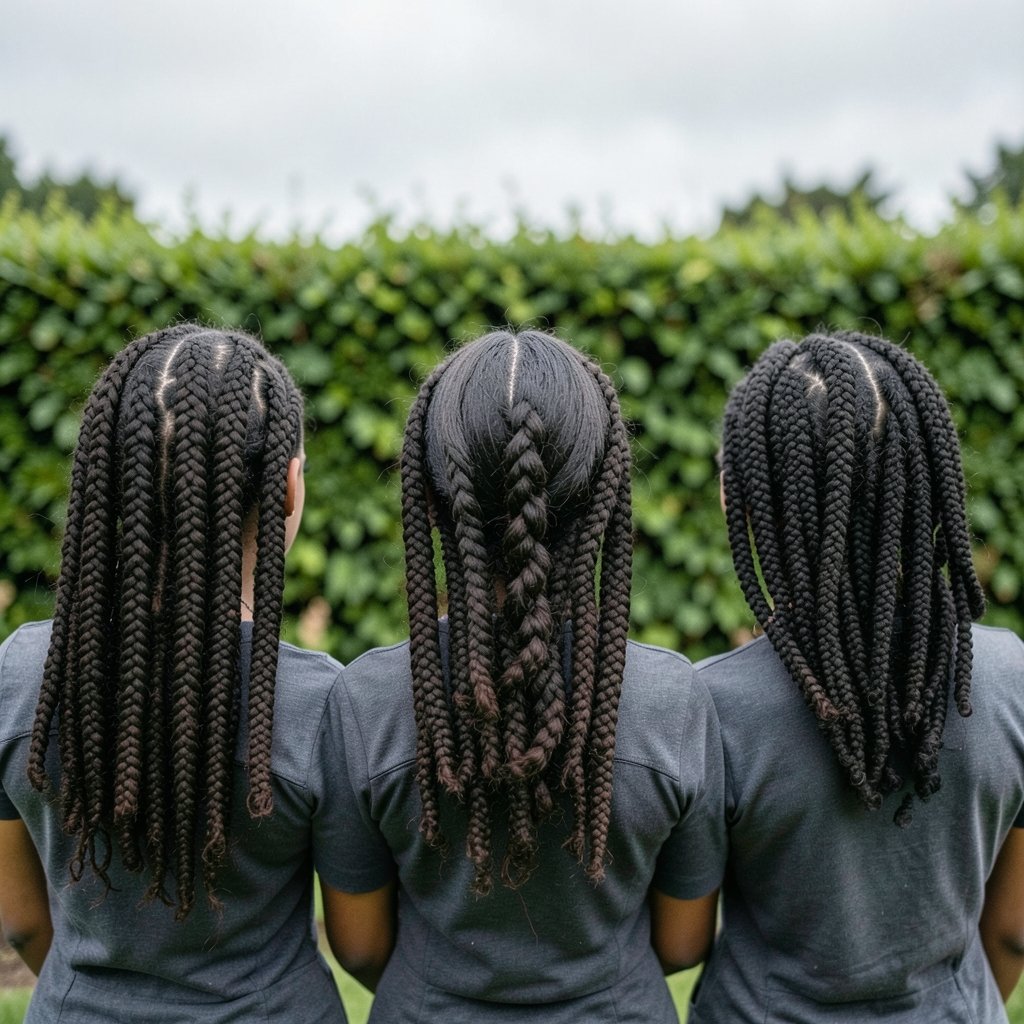
No. All three fall under Type 4 coily hair, but 4a has a clearer S-pattern and holds definition more easily, while 4b forms a less defined Z-shape and 4c has the tightest coil with the least visible pattern. Shrinkage and moisture retention also tend to differ, with 4c generally being the driest and most shrink-prone.
Can 4a hair be styled into a wash-and-go?
Yes, and it’s one of the subtypes best suited to it. A wash-and-go on 4a hair typically needs a leave-in conditioner, a cream, and a strong-hold gel applied to damp hair, followed by air-drying or low-heat diffusing without touching the hair until it’s fully dry.
How often should 4a hair be washed?
Most people with 4a hair do well washing once a week with a sulfate-free cleanser, plus a co-wash midweek if the scalp needs refreshing. Deep conditioning every one to two weeks helps offset the natural dryness of coily hair.
Is the hair typing system scientifically accurate?
No. The Andre Walker Hair Typing System is a cosmetic and commercial convention, not a medical or scientific classification. It describes curl pattern only and does not account for porosity, density, strand thickness, or elasticity, which is why many people have mixed patterns and inconsistent results with type-based product advice.
Does 4a hair grow slowly?
4a hair does not grow more slowly than other hair types, but it appears to because of shrinkage and because breakage at the ends can offset length retention. Gentle detangling, protective styling, and sealing the ends consistently are the practical levers for retaining length.
Does 4a hair need a different routine in humid weather?
Yes, and the adjustment is smaller than most people expect. High humidity encourages coily hair to absorb moisture from the air, which swells the strand and disrupts the cast holding each coil together. The result is frizz at the surface and looser definition at the ends. For 4a hair, the fix is not more product but a firmer hold: a gel with stronger film-forming ingredients, applied to hair that is already fully hydrated underneath. Glycerin-heavy stylers can backfire in very humid conditions because they pull moisture from the air rather than sealing it in, so many people with 4a hair rotate to lighter humectant levels in summer and heavier creams in winter.
How long does a wash-and-go last on 4a hair?
Realistically, two to four days with proper nighttime protection. Day one gives the tightest definition; by day three, the cast softens and the coils expand. A satin bonnet at night and a light refresh — water misted into the hands, smoothed over sections rather than sprayed directly — extends wear without restarting the whole routine. Refreshing with water alone works better than adding more gel, which layers product and dulls the coil over time.
What about protein treatments?
Coily hair benefits from protein more than straight hair, but the margin matters. Hair is largely protein, and 4a strands that have been colored, heat-styled, or frequently manipulated can lose strength at the bends. A light protein treatment every four to six weeks can help; too much protein makes hair stiff and prone to snapping. The test is simple: if hair feels straw-like after washing, pull back on protein and lean on moisture. If it feels mushy and stretches without springing back, it likely needs some. (Hair)
Final thought
None of this replaces observation. A chart can tell you where to start; only your own hair can tell you where to stop.