
Volvo EX90 Review 2026: Pros, Cons & Verdict
 Abdul WadoodLast updated

Volvo’s own research found that most people underestimate how much time they spend in their cars. That small detail explains a lot about the Volvo EX90, the brand’s fully electric three-row flagship SUV. Unveiled in November 2022 as the spiritual successor to the XC90, the EX90 is less a spec-sheet hero and more a statement about how Volvo thinks families should travel in the electric age. It is quiet, roomy, and packed with sensors. It is also expensive, software-dependent, and, at least in its early life, not always on time.
This review takes a balanced look at what the EX90 does well, where it stumbles, and who should actually consider one.
What the Volvo EX90 Is, in Plain Terms
The EX90 is a seven-seat, dual-motor, all-wheel-drive electric SUV built on Volvo’s SPA2 platform. It sits at the top of the lineup, above the smaller EX30 and EX40. Two main powertrains exist: a Twin Motor version and a more powerful Twin Motor Performance variant, with output in the roughly 400 to 510 horsepower range depending on trim.
The battery is a large pack of around 111 kWh gross (about 107 kWh usable). Range claims have hovered in the 580 to 600 kilometer zone on the WLTP cycle for some variants, though official U.S. EPA figures and final numbers vary by model year and trim, so buyers should check the current rating for the exact version they are ordering. (Volvo EX90 official model page)
| Feature | Twin Motor | Twin Motor Performance |
|---|---|---|
| Layout | Dual-motor AWD | Dual-motor AWD |
| Approx. output | Around 400 hp | Up to roughly 510 hp |
| Seating | 7 (three rows) | 7 (three rows) |
| Battery | ~111 kWh gross | ~111 kWh gross |
| Focus | Range and comfort | Acceleration and response |
The interior centers on a 14.5-inch touchscreen running Google built-in, which means Google Maps, Assistant, and the Play Store are baked in rather than mirrored from a phone. A slim driver display and a head-up display handle the essentials. Volvo also stripped away much of the traditional switchgear, which is either refreshing or frustrating depending on your tolerance for menus.
The Safety Story Is the Real Headline
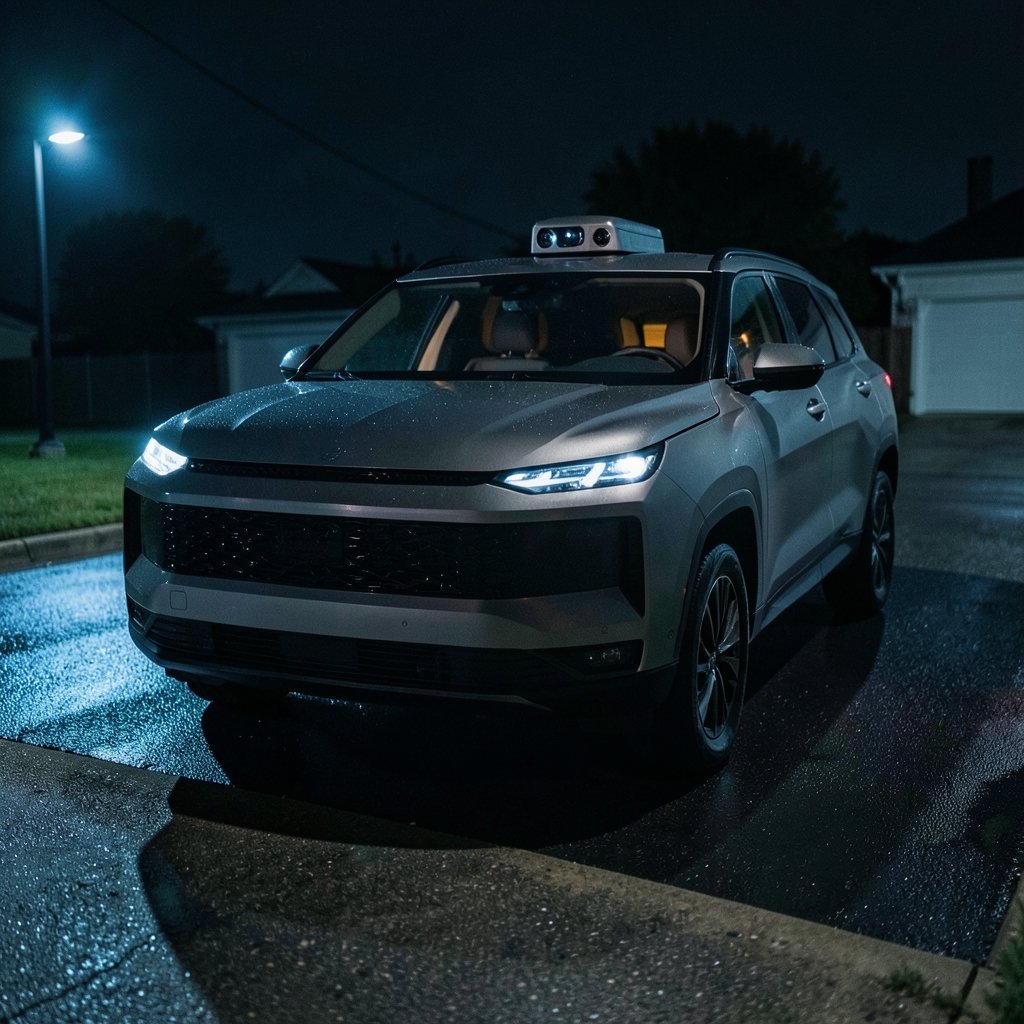
Volvo has marketed the EX90 as its safest vehicle ever, and the hardware backs up the claim. A Luminar lidar unit sits in the roofline, scanning the road ahead for obstacles that cameras and radar alone might miss. An NVIDIA compute platform processes the sensor data, and the car is built around a “software-defined” architecture that can receive over-the-air updates.
There is also an interior radar system designed to detect occupants, including children and pets, left in the cabin after the driver walks away. It is the kind of feature you hope never matters and are glad exists. For a family hauler, this is the most persuasive part of the pitch.
The caveat is that safety features delivered by software sometimes arrive later than the hardware. Buyers should confirm exactly which driver-assistance functions are active on the car at delivery rather than assuming every announced feature is live.
Living With It: Space, Comfort, and the Screen
Up front, the EX90 feels calm and uncluttered. Materials are sustainable-minded without feeling cheap, and the seats are genuinely supportive on long drives. The second row is generous, and the third row is usable for kids and shorter adults, which is more than many three-row EVs can claim. Cargo space behind the third row is modest, as expected, but folds flat when you need volume.
The touchscreen is the friction point. It is crisp and fast, but climate controls and mirror adjustments live inside it. New owners typically spend the first week hunting for functions. The fix is to set up shortcuts and voice commands early, because once configured, the interface fades into the background.
One practical tip: before delivery, ask the dealer to walk you through the screen layout and set up your profile. Ten minutes of setup saves weeks of distraction. The same principle applies to almost any major purchase: a little research up front beats guessing later.
Driving the EX90: Quiet, Quick, Composed
The EX90 drives like a well-insulated lounge that happens to be fast. The Performance variant delivers genuinely brisk acceleration, but the standard Twin Motor is the smarter choice for most buyers. Ride quality is excellent on air suspension, and the cabin stays hushed at highway speed.
The trade-off is weight. This is a heavy vehicle, and while the low center of gravity keeps body roll in check, it does not disguise the mass in quick direction changes. Steering is light and precise rather than chatty. Nobody buys an EX90 for track days, and that is fine. (Light Brown Hair: Shades, Care & Styling Guide 2026)
Charging is the number to watch. The pack supports DC fast charging, and real-world stops depend heavily on preconditioning and charger availability. Owners report the usual EV realities: plan long trips around reliable fast chargers, and precondition the battery before arrival. As with any EV, the published peak charging rate is a best-case figure, not a promise.
Software: The Elephant in the Room
The EX90’s launch was marked by delays and by features shipping later than announced, widely reported during the 2024 and 2025 rollout period. Some of this is normal for a first-generation software-defined car. Some of it was frustrating for buyers who paid flagship money for a vehicle still maturing.
The good news is that over-the-air updates mean the car improves over time. The bad news is that early adopters effectively became beta testers. Anyone shopping a used or early-build EX90 should check the software version and confirm which features are enabled, and should ask about outstanding recalls through the National Highway Traffic Safety Administration’s recall lookup tool.
For buyers comparing premium electric SUVs, the lesson is familiar: check what the car does today, not what the press release promised. That same discipline applies to any major purchase, whether it is a vehicle or a splurge-worthy hotel.
How It Compares to Rivals
The EX90 competes with the Tesla Model X, the Rivian R1S, the BMW iX, and the Mercedes-Benz EQE SUV. Each has a distinct personality.
| Model | Strength | Weakness |
|---|---|---|
| Volvo EX90 | Safety tech, calm cabin, seven seats | Software maturity, price |
| Tesla Model X | Performance, charging network | Complex controls, polarizing design |
| Rivian R1S | Off-road ability, space | Size, efficiency |
| BMW iX | Refinement, driving dynamics | Five seats only |
| Mercedes EQE SUV | Luxury, ride comfort | Less standard safety hardware |
The EX90’s edge is its combination of three rows, serious standard safety hardware, and a genuinely serene interior. Its weakness is that rivals have had more time to polish their software. Expectations in this segment shift quickly, and the EX90 is a reminder of how fast the benchmark moves.
Ownership Realities: Cost, Care, and Common Mistakes
The EX90 is a luxury purchase, and running costs reflect that. Insurance premiums run high because of the sensor hardware and repair complexity. Lidar and camera arrays behind glass are expensive to recalibrate after a windshield replacement. Tires wear faster than on a lighter car.
Common mistakes new owners make:
- Skipping the software walkthrough at delivery. Set up profiles, shortcuts, and voice commands on day one.
- Assuming every announced feature is active. Verify the function list in person.
- Ignoring charging habits. Charge to 80 to 90 percent for daily use and save full charges for road trips.
- Neglecting tire pressure. A heavy EV punishes underinflation with range loss and uneven wear.
- Booking service late. Certified EV technicians are limited, so schedule ahead.
Care extends to the cabin, too. Families with kids and pets will want seat protection and a regular cleaning routine. Small maintenance habits compound over time, and car interiors work the same way.
Who Should Buy One
The EX90 suits families who want three rows, prioritize safety above all, and are comfortable with a car that improves through updates. It rewards buyers who plan charging and who value a quiet cabin over razor-sharp handling.
It suits less well anyone who wants a fully mature infotainment experience on day one, or who expects maximum range per dollar. Those shoppers should look at the BMW iX or wait for later model years with more settled software.
If you are cross-shopping and also considering personal style, the same logic of matching a product to your lifestyle applies to beauty choices: the right pick depends on how much maintenance you want to take on, rather than the brochure photo alone.
Conclusion
The Volvo EX90 is a genuinely impressive electric flagship with a clear identity: safe, calm, spacious, and quietly fast. Its lidar hardware, interior occupant radar, and seven-seat practicality make it one of the most family-focused luxury EVs on sale. The compromises are real, though. The touchscreen demands patience, the price is steep, and the software story is still catching up to the hardware promise.
Buyers who go in with clear eyes, verify current specifications and active features, and plan their charging will find a rewarding vehicle. Those expecting perfection on delivery day may want to wait a model year. Either way, the EX90 signals where Volvo is heading, and that direction is worth watching.
Frequently Asked Questions
How many seats does the Volvo EX90 have?
The EX90 is a three-row SUV with seating for seven. The third row is best suited to children and shorter adults, while the second row offers generous space for full-size passengers. (Copper Hair Color: How to Get, Keep & Love It in 2026)
What is the range of the Volvo EX90?
Range claims have been in the roughly 580 to 600 kilometer range on the WLTP cycle for some variants. Official EPA figures and final numbers vary by model year and trim, so buyers should confirm the current rating for their exact configuration.
Does the Volvo EX90 have lidar?
Yes. A Luminar lidar unit is integrated into the roofline, working alongside cameras and radar to detect obstacles. It is part of Volvo’s push to market the EX90 as its safest vehicle ever.
Why was the Volvo EX90 delayed?
Early production and software development challenges pushed deliveries back in several markets during the 2024 and 2025 launch period. Features also shipped later than originally announced, which frustrated some early buyers.
Is the Volvo EX90 worth the price?
It depends on priorities. Families who value three rows, standard advanced safety hardware, and a serene cabin will find it compelling. Shoppers who want maximum range per dollar or fully mature software may prefer rivals or a later model year.
What should I check before buying a used Volvo EX90?
Confirm the current software version and which driver-assistance features are active. Ask for the full service history, check for outstanding recalls, and inspect the windshield and sensor areas for damage, since recalibration is costly.
The safest approach is to treat the EX90 as a car you verify rather than assume. Ask for the build date, the software release notes, and a written list of enabled features. Take a test drive long enough to use the screen in traffic, and confirm the charging curve on a public fast charger if you can. None of this is unusual for a software-defined vehicle, but the EX90 rewards diligence more than most. Do the homework, and the calm, safe, spacious flagship Volvo promised is genuinely there. (Volvo EX90)