
What Is Savoir Faire in Luxury? Craft Skill & Value
 Abdul WadoodLast updated

Quick Answer: What is savoir faire in luxury?
Savoir faire is the French term for “knowing how to do” something, and in luxury it means the accumulated craft skill, tacit knowledge, and hands-on technique that lets a workshop execute work to an exacting standard. You can see it in how a bag is stitched, how a watch movement is finished, or how a couture seam is pressed, and you can act on it by learning to read the signals of real craft rather than marketing language.
It differs from adjacent ideas: heritage is the history a house claims, quality control is the inspection that catches defects, and savoir faire is the trained ability to do the work correctly in the first place. Before you pay a luxury premium, compare the visible construction, the materials and their origin, the repair and after-sales offer, the transparency of where the item was made, and whether the price reflects labor hours or mostly branding.
A Statistic That Reframes the Whole Conversation
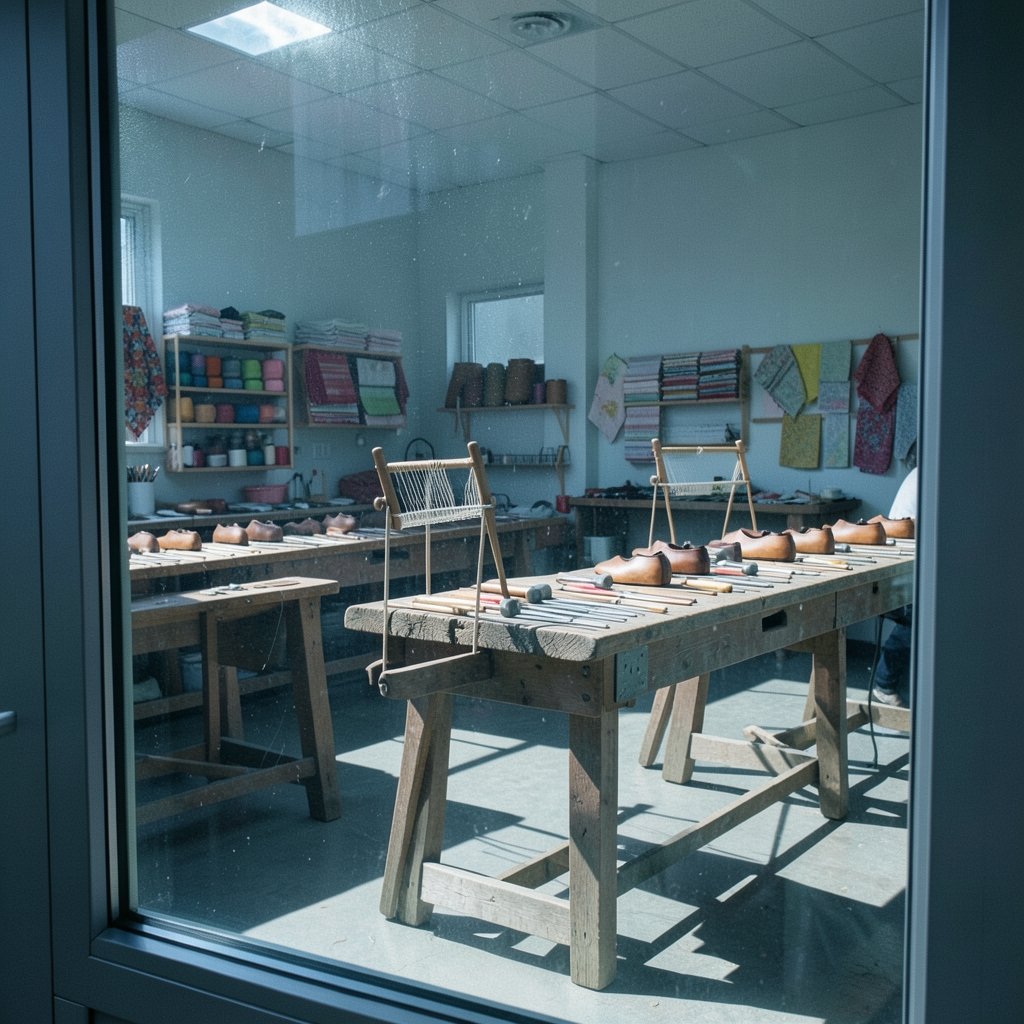
Here is a number worth sitting with: the French luxury and fashion sector’s craft training is organized around métiers d’art, the “art trades,” and the institutional scaffolding around them is unusually formal for an industry built on mystique. The Comité Colbert, a French luxury trade body, was founded in 1954 to protect and promote exactly this kind of know-how. That is more than seventy years of organized effort to keep hand skills alive in a world that keeps inventing machines to replace them.
That longevity tells you something. Savoir faire is not a decorative word. It is a strategic asset that luxury houses defend, fund, and occasionally fight over. And for buyers, it is one of the few genuine ways to tell a well-made object from an expensive one.
The Literal Meaning, and Why It Travels So Well
Strip away the marketing and savoir faire is plain French: savoir (to know) plus faire (to do). Knowing how to do. The phrase entered English largely through craft and cuisine, where it described the difference between someone who follows a recipe and someone who understands why the recipe works. (Savoir-faire)
In luxury, that distinction is the entire product. A machinist can be trained in weeks to run a stitching machine. An artisan who can judge leather thickness by feel, adjust tension mid-seam, and know when a hide will fail in five years has knowledge that takes years to build and cannot be fully written down. That gap between documented process and embodied skill is what the industry means when it invokes savoir faire.
It is also why the word resists a clean legal definition. There is no single certification called “savoir faire.” Usage ranges from genuine craft description to pure rhetoric, and you will find sources that disagree on scope. Treat the term as a claim to be verified, not a guarantee.
What Savoir Faire Actually Looks Like in a Workshop
Practically, savoir faire shows up in decisions that are invisible in a product photo. Consider what a trained hand does that a machine or an untrained worker does not:
| Element | What trained savoir faire produces | What shortcuts produce |
|---|---|---|
| Material selection | Hides and threads chosen for aging behavior | Consistent-looking material with poor longevity |
| Construction | Stitches tensioned by feel, edges finished by hand | Uniform but brittle seams, raw or painted edges |
| Assembly | Components fitted and adjusted individually | Parts forced into tolerance |
| Finishing | Surfaces worked in stages with rest periods | Single-pass polishing |
| Repair thinking | Built so it can be opened and restored | Sealed units designed for replacement |
The repair row matters more than most buyers realize. A workshop with deep savoir faire builds for a second and third life, because the people making the object understand how it will fail. That is a design philosophy as much as a skill.
Heritage, Certification, and the Machinery Behind the Word
France does not leave craft recognition entirely to marketing. The state operates a formal Entreprise du Patrimoine Vivant (Living Heritage Company) label, awarded to firms holding rare and exceptional craft skills. The label is a useful primary-source hook: it is an official recognition that savoir faire can be identified, assessed, and certified, not merely asserted.
At the international level, craft knowledge is treated as cultural heritage. The 2003 Convention for the Safeguarding of the Intangible Cultural Heritage, adopted by UNESCO, established the standard framework for protecting transmitted knowledge, including artisanal skills, and France ratified it in 2006. That framing is important: it treats savoir faire as something that can be lost, which is precisely the anxiety driving luxury houses to fund training programs and internal craft schools.
There is a real tension here. Certification systems reward documented, assessable skill. The deepest savoir faire often lives in tacit knowledge that resists documentation. The two frameworks do not perfectly align, and any claim that they do deserves skepticism.
Why Luxury Houses Treat Craft as a Moat
On the business side, savoir faire functions as a competitive barrier. A competitor can copy a silhouette in a season. Copying a workshop culture, an apprenticeship pipeline, and decades of accumulated technique takes far longer than a product cycle.
This is a familiar pattern in premium markets. Analysts have long studied how luxury brands sustain pricing power through scarcity and perceived authenticity, themes covered in Harvard Business Review’s work on brand strategy and premium positioning. When a house says its value lies in craft, it is making an economic argument disguised as a cultural one.
The Voozon luxury section tracks this territory closely, and its coverage of the new language of modern luxury is a useful companion read on how craft vocabulary has shifted toward transparency and provenance. For a wider view of how houses position themselves, Voozon’s luxury fashion houses and their legacy is worth the time.
Practical Tips: How to Spot Real Savoir Faire
You do not need to be an artisan to evaluate craft. You need to know where to look and what to ask. These habits work in a boutique, at a trunk show, or online.
Look at the places cameras avoid. Turn the item over. Inspect the inside of a seam, the underside of a handle, the back of a clasp. Skilled work is finished where nobody expects to look; rushed work is finished only where the photo will be taken.
Ask where it was made, specifically. “Made in Italy” is a country. A town, a workshop, or an atelier is a fact. A brand that genuinely invests in craft usually enjoys talking about the specific people and place.
Ask what happens in year five. Repair policy is the single best proxy for savoir faire. If the maker can service, resole, re-stitch, or replace components, the object was designed by people who understand how it ages.
Feel for tension and rhythm. Run a thumb along stitching. Hand-tensioned seams have a subtle, consistent rhythm; machine work is often uniform to the point of looking printed. Neither is automatically better, but the difference is real and learnable.
Distinguish craft claims from craft evidence. “Handcrafted” appears on products made almost entirely by machine. “Artisanal” has no legal meaning in most markets. Look for specifics: named techniques, stated hours, identifiable workshops, published material sourcing.
Common Mistakes Buyers Make
The most frequent error is confusing weight with quality. Heavier is not better; correctly specified is better. A thick leather can be poorly tanned and fail faster than a thinner, well-finished hide.
The second is trusting the word over the object. Because savoir faire has no single legal definition, it can be applied to almost anything. Buyers who accept the term as a specification rather than a description will overpay.
The third is ignoring the after-sales relationship. A luxury object without service access is a disposable object with a high price. This is where Voozon’s look at luxury resorts offers an unexpected parallel: in hospitality, as in goods, the real standard shows up in maintenance and repeat visits, not the first impression.
The fourth is assuming heritage equals current skill. A house can own a historic name and outsource production. Heritage is a claim about the past; savoir faire is a capability in the present. They are correlated, not identical.
What Actually Works in Practice
What works is boring and effective: build a small reference set. Handle a handful of objects widely agreed to be well made, then compare everything new against them. Your hands learn faster than your reading does.
Also, ask about training. Brands with serious craft commitments usually have apprenticeship programs, internal schools, or partnerships with craft institutes. A house that can describe how a new artisan is trained over several years is telling you something a slogan cannot. This is the same logic behind the future of luxury living, where long-term stewardship of materials and skills is replacing novelty as the core selling point.
And accept the limits of the term. Savoir faire is a useful lens, not a certificate. It helps you ask better questions. It will not answer them for you.
Conclusion
Savoir faire in luxury means trained, transmitted craft ability: the knowing-how that turns good materials into objects that survive decades of use and can be repaired rather than replaced. It sits at the intersection of skill, heritage, and economics, and it is genuinely valuable precisely because it is hard to fake and slow to build.
The practical takeaway is to treat the phrase as a prompt for verification. Inspect the hidden surfaces, ask where and by whom, ask what happens when the object breaks, and compare against objects you know are well made. Do that, and the vocabulary stops being decoration and starts being a tool. The houses that can answer your questions clearly are usually the ones whose craft claims hold up, and the ones that deflect are telling you something too.
Frequently Asked Questions
Is savoir faire the same as handmade?
No. Handmade describes a production method; savoir faire describes the skill level behind it. A hand-sewn seam can be badly executed, and a machine-assisted process can be supervised by deeply skilled artisans. The meaningful question is not whether hands touched the object but whether trained judgment shaped the decisions behind it.
Does savoir faire have a legal definition in luxury?
Not a single universal one. The term is used loosely in marketing and has no standardized legal meaning across markets. France does operate a state label, Entreprise du Patrimoine Vivant, that formally recognizes firms holding rare craft skills, but that certification covers companies rather than the general use of the phrase.
How can I tell whether a luxury item reflects real craft skill?
Inspect surfaces that photography ignores, such as seam interiors and component undersides. Ask for the specific workshop or town of manufacture. Ask about repair and servicing. Compare stitching rhythm and edge finishing against a reference object you trust. Specific, verifiable answers are the strongest signal.
Why do luxury brands invest so heavily in craft training?
Because the skill is a durable competitive advantage. Technique accumulated over years cannot be copied in a single season, and it supports pricing power and brand authenticity. Craft knowledge is also genuinely at risk of disappearing, which is why it is treated as intangible cultural heritage under the UNESCO framework adopted in 2003.
Is older always better for craft?
No. Age of a brand says little about current capability, since production can be outsourced while a historic name is retained. What matters is present-day evidence: who makes the object, how they were trained, and whether the maker stands behind it with service. Heritage is context, not proof.
Can savoir faire justify a very high price?
Sometimes, but not automatically. Labor-intensive handwork and scarce materials carry real costs, and those costs are legitimate. However, price also reflects branding, distribution, and scarcity marketing. The way to test the claim is to compare construction quality and service access against less expensive alternatives, not to assume price equals craft.