
Quiet Luxury vs Statement Luxury: 2026 Status Signaling
 Abdul WadoodLast updated

In 1899, economist Thorstein Veblen published The Theory of the Leisure Class, arguing that people buy expensive things to prove they can afford to waste money. More than a century later, his idea of conspicuous consumption still explains almost everything about luxury. What has changed is the costume. The same instinct that once produced a gold-plated logo now produces a $900 plain white t-shirt. Understanding quiet luxury vs statement luxury is really about understanding two dialects of the same language: one spoken loudly to everyone, one whispered to a small room. (Luxury Resorts for Your Next Getaway: Edition 2)
The debate exploded around 2023, when the understated, logo-free wardrobe of the television drama Succession became a cultural talking point. Commentators called it “stealth wealth” or “quiet luxury,” and fashion media declared the logo dead. Then logos came back. That cycle tells you something important: this is not a simple story of good taste replacing bad. It is a story about who luxury is signaling to, and why the audience keeps changing.
What quiet luxury actually means
Quiet luxury is a style of consuming that removes the obvious markers of wealth and leaves the quality. No monograms, no oversized logos, no hardware that shouts. Instead you get unusual fabrics, precise tailoring, muted colors, and pieces that look ordinary until you touch them.
The practical logic is straightforward. If a garment has no visible brand, the only way to recognize its value is to already know. That filters the audience. A logo can be read by anyone on the street. A specific cut of cashmere, or a particular shade of beige, can only be read by people who move in the same circles.
This is why quiet luxury often feels exclusionary to outsiders and obvious to insiders. It is not humble. It is selective. The restraint is the point, and the restraint is also the price tag.
The historical roots
Quiet luxury is not new. Aristocratic dress has always favored understatement over display in certain periods, partly because old money has less to prove than new money. What changed in the 2020s was the scale. Social media made visible branding feel noisy and, for some buyers, slightly embarrassing. A reaction followed.
What statement luxury actually means
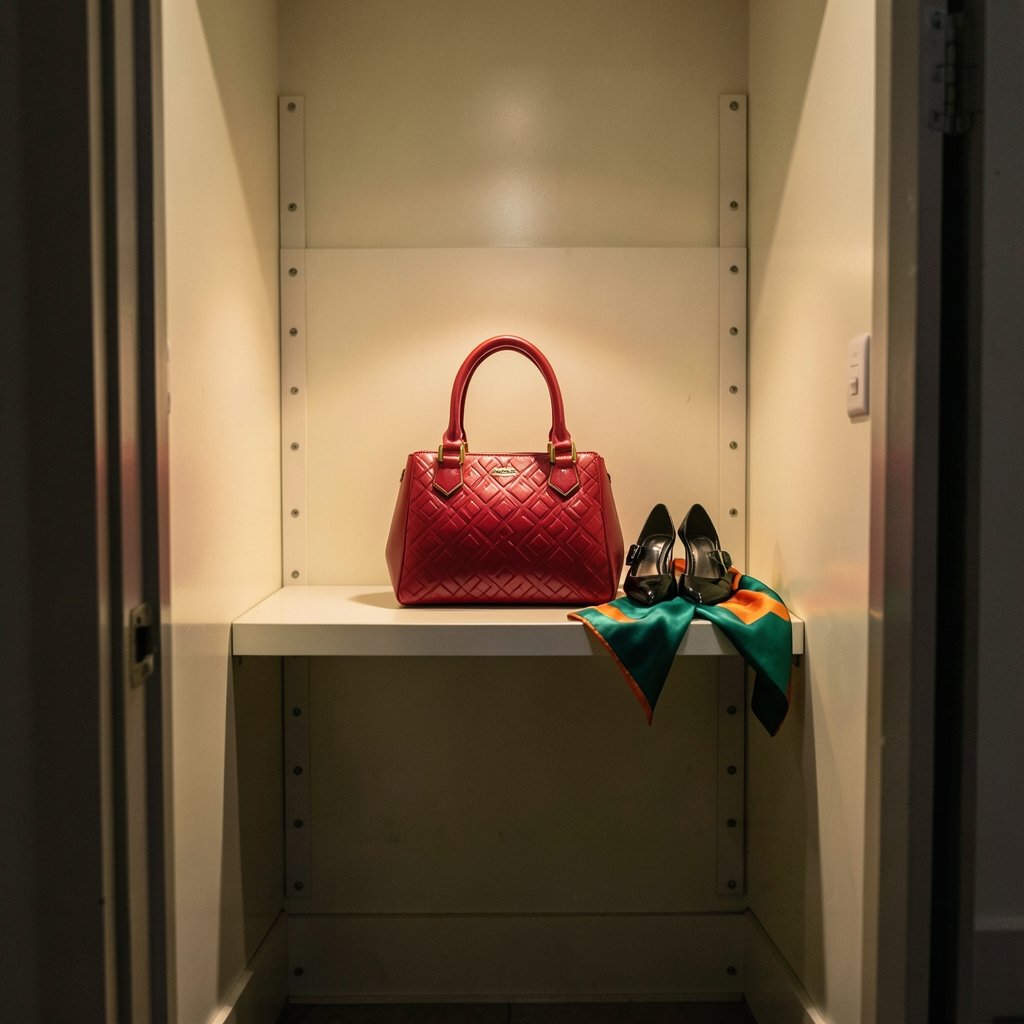
Statement luxury is the opposite approach. The brand is the design. Monograms, bold hardware, recognizable silhouettes, and colorways that announce themselves from across a room. This is the luxury of visible signatures, and it has never really gone away.
The mistake is assuming statement luxury is unsophisticated. It is not. It is a different signaling strategy with a different target audience. A statement piece communicates instantly and to everyone. That speed has value. It works in a photograph, in a business meeting, in a social setting where nobody has time to inspect your stitching.
Statement luxury also carries cultural weight. Many luxury houses built their global reputations on recognizable codes, and those codes became part of fashion history. The monogram is not a failure of taste. It is a design language, and it is still fluent.
The academic framework behind the divide
The most useful lens on this debate comes from a 2010 paper by Young Jee Han, Joseph Nunes, and C. Page Moreau in the Journal of Marketing, titled “Signaling Status with Luxury Goods: The Role of Brand Prominence.” The authors argued that luxury consumers are not one group. They segmented buyers along a spectrum of brand prominence, from loud to quiet, and tied that preference to wealth and to the need for status.
Their typology is worth knowing because it explains the argument better than any style magazine:
| Consumer type | Wealth level | Brand prominence preference | What they signal |
|---|---|---|---|
| Patrician | High | Low | Status to insiders who recognize quality |
| Parvenu | High | High | Status to a broad audience |
| Poseur | Low | High | Aspiration toward higher status |
| Proletarian | Low | Low | Little interest in luxury signaling |
The insight is uncomfortable for both sides. Quiet luxury is not automatically more refined, and statement luxury is not automatically gauche. Each is a tool used by a different buyer for a different job. A patrician buys quiet because they do not need to convince anyone. A parvenu buys loud because the audience matters. Both are signaling. Veblen would recognize the whole exchange instantly.
Why the pendulum keeps swinging
Fashion cycles between these two modes with remarkable regularity, and the reason is structural rather than aesthetic. When a quiet look becomes popular, it stops being quiet. Once everyone knows that plain beige cashmere is the expensive choice, the plainness itself becomes a logo. The signal degrades, and the loud camp gains ground again.
The reverse happens too. When logos saturate a market, they lose their power to distinguish. At that point, restraint looks fresh and confident. This is why the “quiet luxury” conversation of 2023 did not end with logos disappearing. It ended with logos repositioning.
There is also a commercial dimension. Luxury groups manage portfolios that span both ends of the spectrum, and they benefit from whichever mode is trending. The industry does not need a winner. It needs movement.
What the market data suggests
Market sizing for global luxury is tracked annually by major consultancies, and the headline figure has consistently shown a market worth hundreds of billions of euros, with growth that slows and accelerates in cycles. The exact numbers shift year to year, and any single figure ages quickly. The more durable observation is that the overall market keeps expanding while the mix inside it rotates. Quiet and statement are not competing for survival. They are competing for attention within a growing pie.
The practical case for each
Strip away the cultural commentary and both approaches have real, practical advantages. The choice depends on what a buyer actually needs.
When quiet luxury works better
Quiet luxury performs best in environments where longevity matters more than impact. A well-cut navy coat worn for a decade delivers more value per wear than a trend piece. It also travels well, photographs neutrally, and does not date in family photos. For people who dislike being asked about their clothes, it removes a social friction.
The common mistake here is confusing plainness with quality. A cheap unbranded garment is just a cheap garment. Quiet luxury only works when the material and construction justify the absence of decoration. Buyers who chase the aesthetic without the substance end up with a wardrobe that looks expensive in theory and thin in practice.
When statement luxury works better
Statement luxury performs best when visibility is the goal. Creative industries, public-facing roles, and social occasions where personal style is part of the message all reward a recognizable piece. It also delivers immediate emotional payoff, which is not a trivial thing. Fashion is supposed to be enjoyable.
The common mistake here is buying the logo instead of the product. A recognizable item that fits badly or wears out fast is a poor purchase regardless of the label. The logo should be the last reason to buy something, not the first.
How to choose without getting it wrong
The most reliable approach is to separate the signal from the garment. Ask what the piece is doing for you, not what it is saying to other people.
- Identify your actual audience. If the people you want to impress will recognize quality without a logo, quiet works. If they respond to recognizable codes, statement works. Neither is wrong.
- Check the material before the marker. Fabric, construction, and fit determine whether a piece lasts. The branding decision comes after.
- Match the piece to the context. A loud item in a quiet wardrobe looks borrowed. A quiet item in a loud wardrobe disappears.
- Avoid buying the trend rather than the object. The quiet luxury wave produced a lot of beige that will not survive a decade. Buy the coat, not the aesthetic.
- Accept that both are signaling. Nobody escapes Veblen. The only real choice is which room you want to be understood in.
Where the two styles converge
The most interesting development is that the distinction is blurring at the top of the market. Luxury houses now release both quiet, logo-free lines and loud, code-heavy lines in the same season. Buyers mix them. A logo-free coat over a monogrammed bag is a completely normal outfit, and it signals something more nuanced than either pure strategy.
This is arguably where modern luxury is heading. The question is no longer “quiet or loud” but “loud where, and quiet when.” That is a more sophisticated position than either camp admits, and it maps onto how people actually dress. Nobody is one thing all week.
For a deeper look at how these codes are being rewritten across the sector, the analysis in the new language of modern luxury is worth reading alongside this debate.
What this means for buyers and brands
For buyers, the practical takeaway is liberating. There is no morally superior choice here. A person who prefers visible branding is not shallow, and a person who prefers unmarked cashmere is not automatically discerning. Both are making a calculation about audience, budget, and pleasure.
For brands, the lesson is that restraint is a product feature, not a philosophy. Quiet lines require the same investment in materials and finishing as loud ones, sometimes more, because there is nothing else to hide behind. Brands that treated quiet luxury as a marketing mood rather than a manufacturing standard produced forgettable collections.
The broader shift in how luxury defines itself, from scarcity of product to scarcity of taste, is explored in the future of luxury living, which traces how value is being redefined across categories.
Conclusion
Quiet luxury and statement luxury are not opposites in any meaningful moral sense. They are two settings on the same dial, and the dial has been turning for over a century. Veblen described the mechanism in 1899, and the brand prominence research formalized it in 2010. The clothing changes. The logic does not.
What actually works, in practice, is deciding what you want a purchase to do and then buying accordingly. If you want longevity and a private signal, go quiet and insist on quality. If you want immediate recognition and visible style, go loud and insist on fit. The expensive mistakes happen when people buy the trend instead of the object, or when they assume their preference says something about their character rather than their circumstances.
The most confident dressers tend to ignore the debate entirely. They wear what suits them, mix codes freely, and let the label stay out of the conversation. That is not quiet luxury or statement luxury. It is just taste, and it has always been the harder thing to buy.
Frequently asked questions
What is the difference between quiet luxury and statement luxury?
Quiet luxury removes visible branding and relies on material, cut, and craftsmanship to signal value to people who recognize it. Statement luxury uses recognizable logos, monograms, and design codes to communicate status quickly to a wide audience. Both signal status. They differ in who is meant to receive the message.
Is quiet luxury just a trend?
Partly. The label became a major cultural talking point around 2023, tied to media coverage of understated fashion. But the underlying behavior is much older, and aristocratic understatement has appeared in many periods. The trend cycle is real, but the strategy of signaling to insiders is not going away.
Why did quiet luxury become so popular?
Several forces converged. Visible branding began to feel noisy in an era of constant photography and social media. Understated style was amplified by television and film coverage. And luxury buyers, particularly wealthier ones, increasingly wanted to distinguish themselves from aspirational buyers who could access the same logos.
Does quiet luxury mean cheaper clothing?
No. Quiet luxury is often more expensive per item, because the value sits in fabric and construction rather than decoration. The absence of a logo does not indicate a lower price. It simply moves the cost from the visible marker to the invisible one.
Can you mix quiet and statement luxury in one outfit?
Yes, and most people already do. A logo-free coat with a recognizable bag, or a plain shirt with a statement shoe, is a common and effective combination. Mixing codes lets a person control how loudly the outfit speaks and to whom.
Which approach is better for investment pieces?
It depends on the piece and the purpose. Coats, tailoring, and knitwear tend to reward the quiet approach because they last longer and date less. Bags and shoes often reward recognizable design codes because resale value and cultural recognition are part of the purchase. In both cases, material and construction matter more than the branding decision.