
Pink Cars: Costs, History & How to Own One in 2026
 Abdul WadoodLast updated
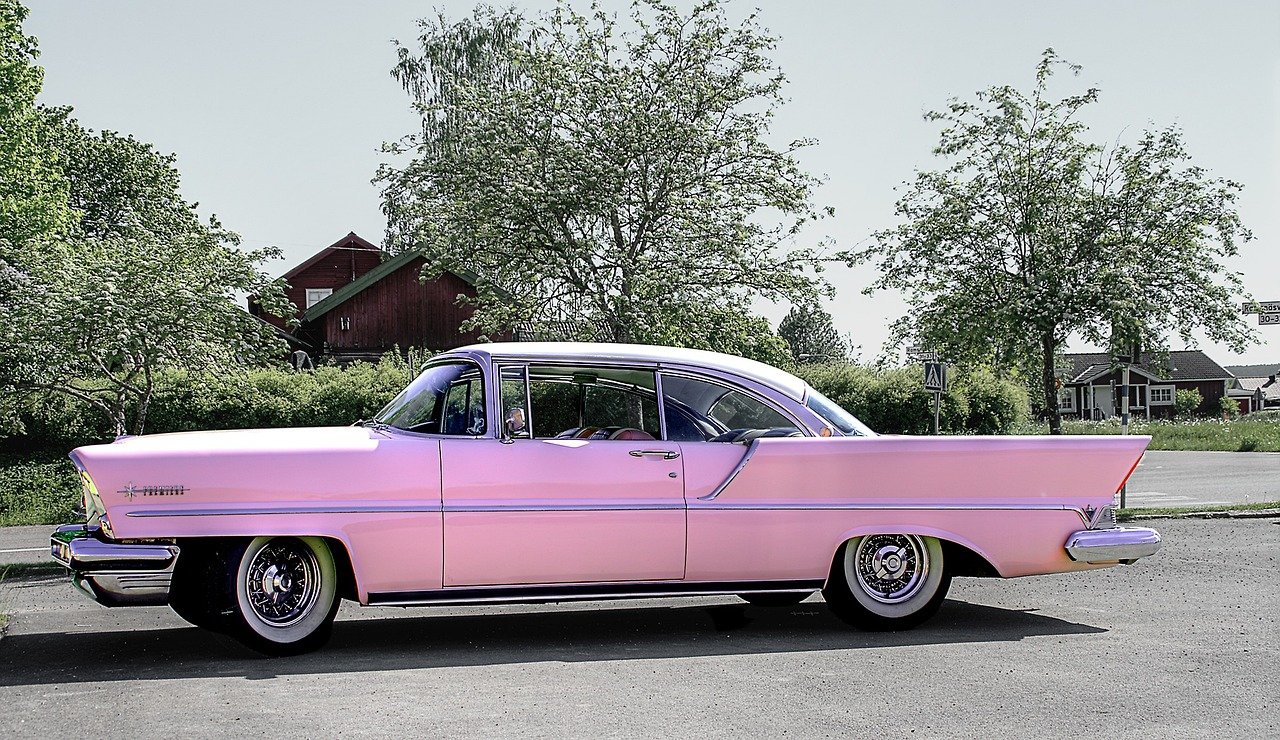
Pink is the rarest color on the road for a reason. Fewer than one in a thousand new cars leaves a dealership in any shade resembling pink, yet a pink car can dominate a parking lot faster than a vehicle costing ten times as much. That mismatch between rarity and attention is the whole story of pink cars. It runs through 1950s marketing experiments, Elvis Presley’s garage, taxi fleets built around women’s safety, and a modern resale market where a factory pink paint code can add thousands to a car’s value. This guide covers where pink cars came from, which models actually wore the color, what it costs to join them, and the practical mistakes people make when they try. (Pink)
The 1950s Made Pink a Car Color
Before the 1950s, pink was a fabric color, not a paint color. Car buyers wanted conservative shades, and dealers feared anything that might sit unsold on the lot. That changed when postwar American manufacturers started chasing female buyers with dedicated models and dedicated palettes.
The most famous attempt was the Dodge La Femme, offered for the 1955 and 1956 model years. It came only in a two-tone pink-and-white scheme, with a matching pink purse included. It was a bold idea and a commercial failure, partly because it assumed women wanted a “women’s car” rather than simply a good one. The La Femme is now a collector curiosity, and its pink-and-white combination is one of the most recognizable color schemes of the decade.
Dodge was not alone. Several American marques offered pink or rose tones in the 1950s, though exact color names and availability varied by brand and year. This is where a lot of online misinformation creeps in: people quote paint codes and production numbers from memory, and the numbers drift. If you are buying a classic and the seller claims a specific factory pink, ask for a period brochure or a build sheet. Enthusiast forums are useful for leads, not for proof.
Elvis, the Cadillac, and the Myth Machine
No single figure did more for pink cars than Elvis Presley. Presley owned pink Cadillacs in the 1950s, and the best-documented example is a 1955 Cadillac Fleetwood Series 60 Special that he reportedly had repainted pink. The story has multiple versions, and details about which car was repainted and when differ between accounts. Treat the popular version as folklore with a solid factual core, not as a verified timeline.
What is not in dispute is the cultural effect. Presley’s pink Cadillac became shorthand for success, excess, and a certain kind of American confidence. It also cemented an association that still shapes how people read a pink car today: the color signals that the owner is making a statement on purpose.
Pink Cars Around the World

Pink cars carry American nostalgia, and different countries have adopted the color for entirely different reasons.
| Country or region | Pink car use | Why it matters |
|---|---|---|
| Mexico | “Taxi Rosa” services in Mexico City, introduced around 2009–2010 | Designed for women passengers and drivers; a safety and branding decision |
| United States | Elvis-era Cadillacs, custom builds, charity-wrapped vehicles | Cultural icon and marketing tool |
| Japan | Pink vehicles in some taxi and promotional fleets | Brand differentiation in a crowded market |
| Europe | Pink liveries in motorsport charity campaigns | Visibility for breast-cancer awareness |
| Global | Pink special editions from mainstream brands | Limited-run color options that boost showroom traffic |
The Mexico City pink taxi program is the most cited example of pink used as a public-safety measure rather than a fashion choice. Reporting on the program has been inconsistent over the years about its exact launch date and whether it still operates in its original form, so treat any specific claim about current fleet size with caution. The broader point holds: pink has been used for function, not decoration alone.
Pink in Motorsport and Marketing
Pink shows up in racing as a sponsor and charity color more than as a factory livery. Breast-cancer awareness campaigns have wrapped cars in pink across multiple series, and the color reads instantly on television. These campaigns are scattered and poorly documented in any central place, which means most claims about “the first pink race car” are unverifiable. If a brand tells you it pioneered pink in motorsport, ask for a date and a series.
On the consumer side, pink has appeared as a special-edition color on mainstream models, most notably on the Volkswagen Beetle. Pink Beetles also appear on film, including a pink convertible in Herbie Goes to Monte Carlo (1977). Special-edition details differ by market and year, so avoid any single global claim about which pink Beetle existed when.
What It Actually Costs to Own a Pink Car
There are three routes to a pink car, and they have very different price structures.
- Buy a factory pink car. Rare, and usually commands a premium because supply is tiny. Expect to pay above market for an equivalent car in a common color, sometimes substantially.
- Wrap an existing car. A full vinyl wrap typically runs a few thousand dollars depending on size, film quality, and labor. It is reversible, protects the original paint, and is the most popular route for people who want pink without committing.
- Repaint. The most expensive and least reversible option. A quality respray costs more than most wraps and can hurt resale if the color is not original to the car.
There is a fourth route that people forget: buying a car that was already wrapped or repainted pink. Sellers often price these at a discount because the buyer pool is smaller. If you like the color, that discount is free money. If you do not, budget for removal.
The Practical Mistakes People Make
A few patterns show up again and again among first-time pink car owners.
Choosing a shade from a screen. Pink is unusually sensitive to lighting. A shade that looks dusty rose on a phone can look bubblegum under dealership lights and salmon in direct sun. Always see the actual film or paint sample outdoors before committing.
Ignoring resale before you start. A pink wrap is easy to remove. Pink paint is not. If you plan to sell within a few years, wrap it.
Forgetting the paperwork. A wrapped car should be disclosed at sale, and some insurers want to know about modifications. A repaint in a non-original color can raise questions at resale. Keep receipts.
Underestimating maintenance. Light pink shows road tar, bird droppings, and brake dust more than white does, and matte pink finishes cannot go through a standard car wash. Budget for hand washing or a ceramic coating.
Confusing the “pink tax” with pink cars. The pink tax is a term for gender-based pricing of products and services. It has nothing to do with car paint, but the two get mixed up in search results and in conversation. If someone warns you about a pink tax on a car, they are using the phrase loosely.
Pink Cars and Safety: What the Evidence Supports
There is a persistent claim that pink cars are safer because they are more visible. The honest answer is that visibility helps, but color is a minor factor compared with lighting, road design, and driver behavior. Pink emergency and police vehicles exist in some jurisdictions as local branding decisions, and they are not standardized anywhere. No reliable body of research shows that a pink passenger car is meaningfully safer than a white or yellow one.
What the evidence does support is that high-contrast, light colors are generally easier to see in low light than dark colors. If safety is your reason for choosing pink, choose a bright, saturated pink rather than a dusty pastel, and treat it as a small bonus rather than a safety feature.
Buying and Living With a Pink Car
The buying process for a pink car is mostly the same as for any other car, with a few extra steps.
- Verify originality. If the seller claims factory pink, ask for the build sheet, window sticker, or a period brochure. Paint code databases online are useful but not authoritative.
- Inspect the wrap or paint in person. Look at panel edges, door jambs, and the underside of the hood. Poor wrap work peels at the edges within a year.
- Check insurance before you buy. Some insurers treat wraps and custom paint as modifications. Get a quote in writing.
- Plan for resale from day one. Keep the original color intact if you can, and keep every receipt.
- Join an owner community. Pink car owners tend to be organized, and forums and clubs are the fastest way to find a specific shade or a trusted installer.
For buyers comparing models and trims before committing to a color, a broader roundup of car reviews, comparisons and car guides is a sensible starting point, and the idea that a car should be built around an experience rather than a spec sheet is worth keeping in mind when you are choosing something as personal as a paint color. If you are weighing a bold color against a practical daily driver, reading about the cars built around experience can help you decide how much of your decision should be emotional. And if you are the kind of person who goes all-in on a strong color choice, the same instinct shows up in other style decisions, from car color guides to something as committed as a pink hair shade and care routine.
Pink Cars in the Collector Market
In the collector world, pink is a double-edged sword. A factory-original pink car with documentation is rare and desirable to a specific buyer. A repainted pink car is a harder sell, because the buyer pool shrinks and originality is gone. The rule of thumb: originality beats color every time. A documented factory pink car in average condition will usually outperform a beautifully restored car in a non-original pink. (Pink)
The La Femme is the clearest example. Its value comes from being a documented, limited-production oddity, not from the color alone. The same logic applies to any 1950s pink model: provenance first, paint second.
Conclusion
Pink cars sit at an unusual intersection of marketing history, personal expression, and practical compromise. The color was tried as a sales strategy in the 1950s, became a cultural icon through Elvis Presley’s Cadillacs, was repurposed as a public-safety and branding tool in cities like Mexico City, and now survives mainly as a wrap, a special edition, or a documented collector’s item. The practical advice is straightforward: see the shade in person, wrap rather than repaint if you might sell, keep your receipts, and verify any claim about factory originality. Pink will never be a common car color, and that is exactly why it works. The people who choose it are not confused about what they are doing. They are paying for attention, and they are getting it.
Frequently Asked Questions
What is the most famous pink car in history?
The most famous is almost certainly one of Elvis Presley’s pink Cadillacs, most often identified as a 1955 Cadillac Fleetwood Series 60 Special that he reportedly had repainted pink. The story has several versions, so details about which car and when vary between accounts. The Dodge La Femme, sold in 1955 and 1956 in a pink-and-white two-tone scheme, is the most famous pink car built that way from the factory.
Are pink cars more expensive?
Not inherently, but the routes to owning one usually cost more. A documented factory pink car often sells above market because supply is tiny. A quality vinyl wrap typically costs a few thousand dollars, and a full respray costs considerably more. The exception is buying a car that is already wrapped or repainted pink, which can sell at a discount because fewer buyers want it.
Is a pink car safe?
Color is a minor safety factor compared with lighting, road design, and driver behavior. Bright, light colors are generally easier to see in low light than dark ones, so a saturated pink may offer a small visibility advantage over black or dark blue. No reliable research shows pink passenger cars are meaningfully safer than other light colors.
Can I wrap my car pink instead of painting it?
Yes, and for most people a wrap is the better choice. It is reversible, protects the original paint, and costs less than a quality respray. The catch is that wrap quality varies enormously. Inspect edges, door jambs, and the underside of the hood before you accept the work, and expect a lifespan of roughly five to seven years depending on sun exposure and care.
What is the “pink tax” and does it apply to cars?
The pink tax refers to gender-based pricing of products and services, where similar items marketed to women cost more than equivalents marketed to men. It is a consumer-pricing issue, not a car-paint issue. It does not apply to pink cars, though the two terms are sometimes confused in conversation and search results.
Why did the Dodge La Femme fail?
It failed for a simple reason: it assumed women wanted a separate “women’s car” rather than a good car. The pink-and-white two-tone scheme and the matching purse were marketing choices, not features buyers had asked for. It sold poorly in both 1955 and 1956 and is now remembered as a case study in how not to design a product around an assumption.