
Mercedes-Benz EQS Review: Electric Luxury Done Right
 Abdul WadoodLast updated
The Mercedes-Benz EQS arrived with a drag coefficient of roughly 0.20 Cd — a figure so low that, at launch, it made the electric sedan one of the slipperiest production cars ever built. That single number tells you a lot about the car’s philosophy. This isn’t an electric car designed to shout. It’s an electric car designed to glide.
But a low drag number doesn’t answer the questions most buyers actually have. Is the EQS a real S-Class replacement, or a tech showcase wearing a sedan body? Does the ride live up to the badge? And who should actually buy one?
This review walks through the EQS as a complete package — design, cabin, driving behavior, practicality, and the compromises that don’t show up in the brochure.
What the EQS Actually Is
The EQS is a fully electric luxury sedan built on Mercedes’ dedicated EVA2 platform. It went on sale in Europe and the US in late 2021 as a 2022 model year vehicle, positioned as the electric counterpart to the S-Class.
That positioning matters. The EQS isn’t a converted gasoline car with a battery stuffed underneath. It was engineered as an EV from the start, which is why the proportions look the way they do — a cab-forward shape, a long arched roofline, and a short hood that trades classic sedan proportions for aerodynamic efficiency.
The original lineup included:
| Variant | Drive | Character |
|---|---|---|
| EQS 450+ | Rear-wheel drive | Range-focused entry point |
| EQS 580 4MATIC | All-wheel drive | More power, more grip |
| AMG EQS 53 4MATIC+ | All-wheel drive | Performance-tuned flagship |
Later model years brought additional variants and updates, so buyers shopping used examples should check the specific trim and model year rather than assuming a single specification.
Design: Form Follows Efficiency
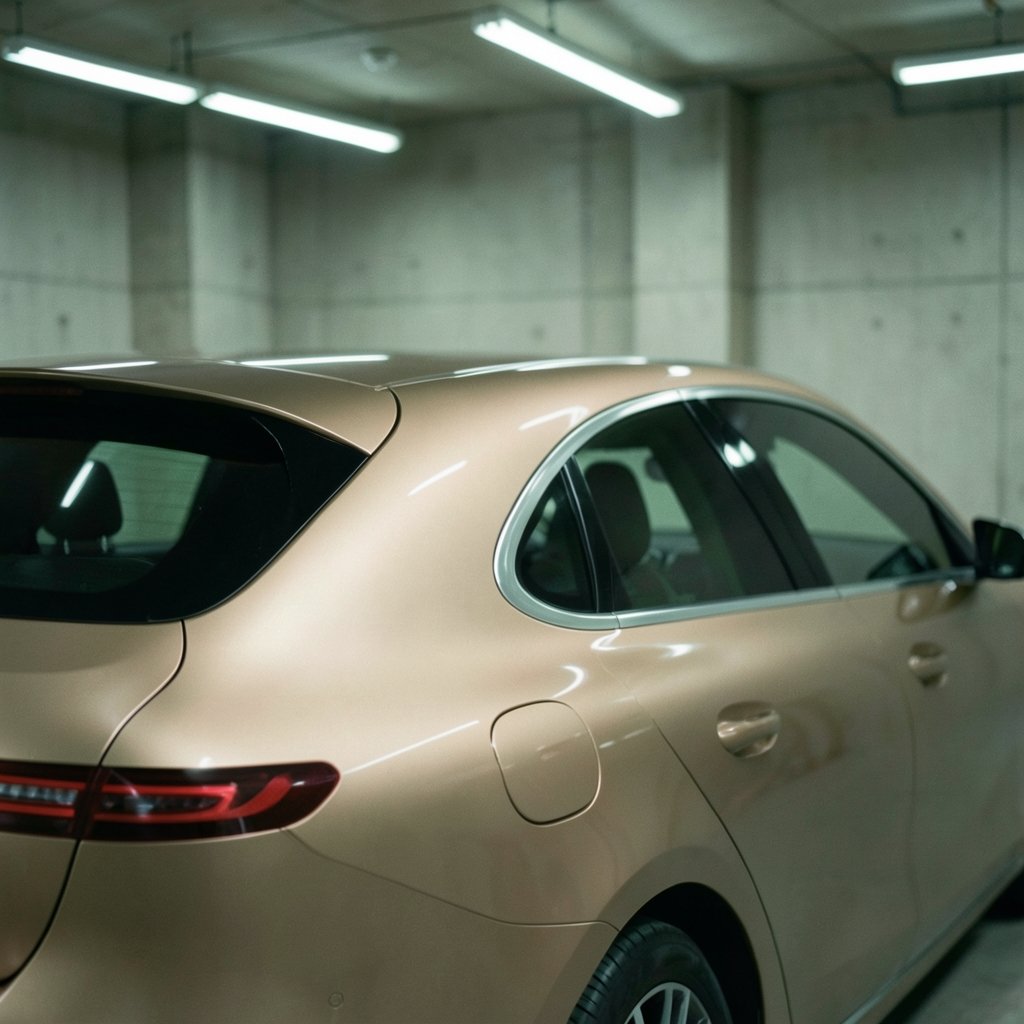
Most luxury cars are styled first and aerodynamically optimized second. The EQS flips that order, and you can see it.
The one-bow roofline — a single continuous arc from windshield to trunk — is the defining gesture. It looks futuristic in photos and slightly unusual in person, especially from the rear three-quarter angle. Some observers love it. Others find it less stately than a traditional S-Class.
The trade-off is real, though. That shape is a big part of why the EQS can cover long distances on a charge. Mercedes quoted WLTP range figures north of 700 km for some variants at launch, with US EPA estimates around 350 miles for the 450+. Real-world results vary considerably with wheel size, temperature, and driving style — as they do with every EV.
If you’re comparing the EQS against other body styles and color treatments, the same principle applies across the market: proportion and finish do a lot of the visual work. A guide like this breakdown of light brown hair shades and styling makes a similar point in a completely different context — the details carry the impression.
The Cabin: Where the EQS Makes Its Case
Step inside and the argument becomes clearer.
The headline feature is the MBUX Hyperscreen, a single curved glass panel that spans nearly the entire dashboard, integrating the driver display, central infotainment, and a passenger display. It was standard on some trims and optional on others, so verify before buying.
Is it good? Mostly. The glass surface looks spectacular, the interface is fast, and the “zero layer” concept — keeping key functions on the home screen rather than buried in menus — genuinely reduces distraction once you learn it. The passenger screen can play video while the car is moving, with privacy filtering so the driver can’t see it.
The criticisms are fair too:
- Fingerprints. A giant glossy surface shows every touch.
- Menu depth. Some climate and drive-mode functions still require a few taps.
- Visual weight. The screen dominates the cabin in a way that some passengers find cold compared with traditional wood and leather.
Material quality is otherwise excellent. The seats are superb over long distances, rear legroom is generous, and road noise is well suppressed — which is exactly what you’d expect from a car wearing this badge.
How It Drives
Here’s where the EQS divides opinion, and where a balanced review has to be honest.
What works: The ride is quiet and composed. The air suspension smooths out highway expansion joints beautifully. Acceleration in the 580 and AMG versions is genuinely rapid, delivered with the seamless, silent surge that makes electric drivetrains so satisfying. Straight-line refinement is exceptional.
What doesn’t fully convince: Steering feel is light and somewhat isolated. The car prioritizes comfort over engagement, and on a winding road it feels its size. The brake pedal — blending friction braking with regenerative deceleration — takes adjustment, and some drivers find the transition less natural than in rival EVs.
The honest summary: the EQS is a magnificent long-distance car and a merely competent enthusiastic one. If you want a luxury EV that rewards a Sunday morning back road, look elsewhere. If you want to arrive fresh after 400 miles, it’s hard to beat.
That comfort-first philosophy extends beyond cars. The best hotels understand the same thing — that the feeling of arrival matters more than the spec sheet. There’s an interesting parallel in how hotels that feel like a destination are designed around atmosphere rather than amenities lists.
Technology and Safety
The EQS launched with a deep suite of driver assistance systems: adaptive cruise with lane centering, automatic lane changes, evasive steering assist, and a sophisticated parking package with a surround-view camera.
Independent crash testing has been strong. The EQS has been evaluated by Euro NCAP, which publishes detailed adult occupant, child occupant, vulnerable road user, and safety assist scores for the model. Buyers in the US can cross-reference ratings and recall history through the National Highway Traffic Safety Administration at nhtsa.gov.
For range and efficiency figures by model year, the US Environmental Protection Agency publishes official estimates at fueleconomy.gov — the most reliable way to compare variants without relying on marketing claims.
One practical note: over-the-air software updates have become a normal part of EV ownership, and features can change after purchase. Check the current software state of any used EQS you’re considering.
Living With It: Charging and Practicality
The EQS supports DC fast charging, and Mercedes quoted competitive peak charging rates for the model. Exact charging curves, peak kW, and 10–80% times vary by model year and battery specification, so confirm against official manufacturer documentation for the specific car you’re evaluating.
Practical observations that hold across variants:
- Home charging changes everything. If you can charge overnight, the EQS becomes genuinely effortless. If you can’t, the ownership experience is meaningfully harder.
- Real-world range drops in cold weather. Expect a noticeable reduction in winter, as with all lithium-ion EVs.
- Wheel size affects efficiency. Larger wheels look better and cost range. This is not a small effect.
- Cabin storage is adequate, not generous. The trunk is decent but not class-leading.
- Tire wear is worth watching. A heavy, torquey sedan goes through rubber faster than you might expect.
EQS vs. the S-Class: The Real Comparison
This is the question most shoppers actually ask.
| Factor | EQS | S-Class |
|---|---|---|
| Powertrain | Fully electric | Gasoline / mild hybrid |
| Cabin quietness | Exceptional | Exceptional |
| Ride comfort | Very good, occasionally firm | Benchmark-setting |
| Rear-seat luxury | Strong | Stronger |
| Running costs | Lower (fuel, servicing) | Higher |
| Long-distance convenience | Depends on charging | Effortless |
| Steering feel | Isolated | More communicative |
The pattern is clear. The S-Class remains the more polished luxury object in absolute terms, particularly for rear-seat passengers. The EQS wins on running costs, silence at low speed, and the satisfaction of never visiting a fuel station.
Neither is objectively “better.” They suit different lives. If you drive long routes through areas with thin charging infrastructure, the S-Class still makes more sense. If you charge at home and mostly drive regionally, the EQS is the more relaxing daily companion.
Who Should Buy One
The EQS suits a specific buyer:
- Someone with reliable home or workplace charging
- A driver who values silence and comfort over engagement
- A buyer who wants a technology-forward cabin
- A household that already has a second car for edge cases
It suits less well:
- Drivers who regularly tow or cover very long rural routes
- Enthusiasts who want steering feedback and chassis playfulness
- Buyers who need maximum rear-seat opulence above all else
If you’re also shopping for a used example, it’s worth knowing how to vet a seller. The same diligence that applies to finding a hair salon near you — checking reviews, verifying credentials, asking direct questions — applies to inspecting a used EV’s battery health report and service history.
Common Mistakes Buyers Make
A few patterns come up repeatedly with cars like this.
Skipping the charging audit. Before buying, map your actual weekly routes against real charging locations. Not the ideal ones. The ones you’d actually use at 11pm.
Over-specifying wheels. Big wheels photograph well and cost range. If efficiency matters, stay smaller.
Ignoring the software version. Features and behavior can differ between software states. Ask for the current version and whether updates are available.
Assuming all trims drive alike. The 450+, 580, and AMG versions feel meaningfully different. Drive the one you’re buying.
Forgetting insurance and tire costs. Luxury EV running costs aren’t just electricity. Premium tires on a heavy sedan add up.
Conclusion
The Mercedes-Benz EQS is a genuinely impressive piece of engineering that makes one clear bet: that luxury buyers care more about serenity than sensation. On that bet, it largely delivers. The cabin is a calm, beautifully finished space. The aerodynamics are extraordinary. The drivetrain is smooth and, in higher trims, seriously quick.
It is not, however, a car without compromises. The steering isolates rather than involves. The Hyperscreen dazzles and smudges in equal measure. And the whole proposition rests on charging access that many buyers simply don’t have.
The fairest verdict is this: the EQS is one of the best long-distance electric cars you can buy, and a slightly less compelling luxury sedan than the S-Class it sits beside. Buy it for the quiet, the range, and the technology. Don’t buy it expecting a sports sedan in a tuxedo.
For shoppers weighing color and finish choices on a new car, the same logic that governs copper hair color and how to keep it looking right applies — the shade you choose changes the whole impression, and maintenance is part of the deal.
Frequently Asked Questions
How far can a Mercedes-Benz EQS go on a single charge?
Mercedes quoted WLTP range figures above 700 km for some early variants, with US EPA estimates around 350 miles for the EQS 450+. Real-world range varies with wheel size, temperature, speed, and driving style. Always check the official EPA or WLTP figure for the exact model year and trim you’re considering. (EPA Green Vehicle Guide)
Is the EQS better than an S-Class?
It depends on use. The S-Class remains more polished for rear-seat passengers and easier for long rural routes. The EQS wins on running costs, low-speed silence, and technology. Neither is universally better.
What is the MBUX Hyperscreen?
It’s a single curved glass panel spanning the dashboard, combining the driver display, central infotainment, and a passenger screen. It was standard on some trims and optional on others, so confirm the specification of any specific car.
Is the EQS good in winter?
It handles well thanks to all-wheel drive on 4MATIC versions, but expect reduced range in cold weather, as with all lithium-ion EVs. Preconditioning the battery and cabin while plugged in helps significantly.
How much does it cost to maintain an EQS?
Routine maintenance is generally lower than a gasoline S-Class because there’s no oil, transmission fluid, or exhaust system to service. However, tires wear faster on a heavy, high-torque sedan, and premium rubber is expensive.
Should I buy a used EQS?
A used EQS can be excellent value, but verify battery health, software version, service history, and recall status. Cross-reference safety and recall data through NHTSA and confirm the original specification, since options vary widely between cars.