
How Luxury Embroidery Is Made: Inside Hand-Finished Ateliers
 Abdul WadoodLast updated
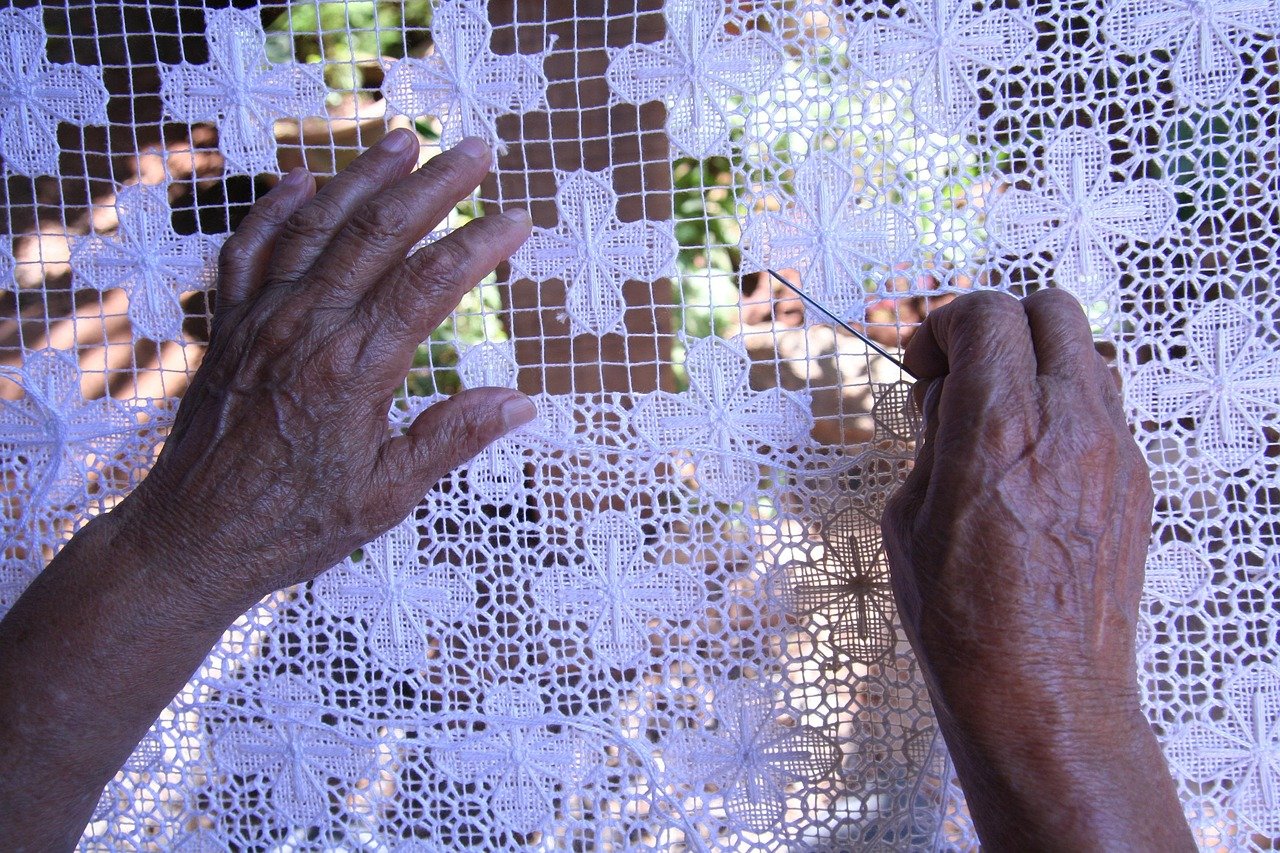
Quick Answer: How luxury embroidery is made?
Luxury embroidery is made almost entirely by hand, with skilled artisans stitching threads, beads, sequins, pearls, and feathers onto stretched fabric such as tulle or organza, often using a crochet-like hook called a tambour. The work usually happens in specialist ateliers that supply couture houses, where one garment can pass through several pairs of hands before it is finished.
There are important distinctions within the craft. Tambour beading applies beads or sequins from the reverse side of the fabric, while Lunéville embroidery is named for the French town associated with that technique. Surface embroidery, gold-thread work, and feather application are separate specialties, each with its own tools and training path. (Embroidery)
Before commissioning or evaluating a piece, compare the technique used, the threads and beads involved, the atelier’s training background, the hours of handwork required, and how the piece is conserved over time.
Why Hand Embroidery Still Defines High Luxury

Walk into a couture atelier and the first thing you notice is not the fabric. It is the quiet. Dozens of artisans sit bent over frames, moving a single hook through stretched tulle, one bead at a time. A single evening piece can absorb hundreds of hours of this work, and no machine has yet replicated the way a hand-placed sequin catches light at a slightly different angle from its neighbor.
That irregularity is the point. Machine embroidery produces uniformity; hand embroidery produces life. The slight variations in tension, spacing, and angle create a surface that shifts as the wearer moves, which is exactly what couture clients pay for. It also explains why the craft has survived industrialization largely intact, and why the ateliers that practice it are treated as cultural assets rather than suppliers.
The broader luxury world has noticed. As the industry rethinks what premium actually means, craftsmanship has become a central argument, a shift explored in pieces like the new language of modern luxury. Embroidery sits right at the center of that conversation.
The Atelier System: Where the Work Actually Happens
Most people assume the fashion house makes the embroidery. It usually does not. Couture houses design the motif, then hand the commission to a specialist atelier that may have served the same house for decades. These ateliers sit within a network of artisan suppliers, and several have been brought under corporate umbrellas precisely to keep their skills alive.
The workflow typically looks like this:
- Design translation. The house supplies a sketch or artwork. The atelier’s studio head interprets it into a stitch plan, deciding which elements will be beaded, which embroidered, and which left as bare fabric.
- Sampling. A small test piece is stitched on the actual fabric to check weight, drape, and color response under atelier lighting.
- Fabric stretching. The garment panel or a full-length tulle is stretched taut on a wooden frame. Tension is critical; too loose and the fabric puckers, too tight and it distorts.
- Hand application. Artisans work the motif, often in teams, with the most complex sections reserved for the most experienced hands.
- Finishing and inspection. Loose threads are secured, the piece is checked against the sample, and it returns to the house for cutting and construction.
The system matters because it concentrates skill. A single atelier may hold techniques, pattern archives, and material knowledge that would take a newcomer decades to rebuild. That concentration is also a vulnerability: when a senior artisan retires, an entire vocabulary of stitches can leave with them.
Tambour Beading and Lunéville: The Two Techniques You Should Know
If you learn only two terms in this field, make them these.
Tambour beading uses a small hook mounted in a wooden handle. The artisan holds the hook in one hand beneath the stretched fabric and feeds thread, sequins, or beads from above with the other. The hook catches the thread and pulls a loop through, creating a chain stitch that locks each bead in place. It is fast by hand-embroidery standards, which is why it dominates couture beading.
Lunéville embroidery applies beads and sequins from the reverse side of the fabric, so the artisan works blind and sees the result only when the frame is turned. It demands spatial memory and years of practice. The technique takes its name from the French town associated with its development, and it remains a benchmark skill in French ateliers.
| Feature | Tambour Beading | Lunéville Embroidery |
|---|---|---|
| Working side | Front, hook from beneath | Reverse side of fabric |
| Main materials | Beads, sequins, pearls | Beads, sequins, sometimes cord |
| Skill barrier | Moderate to high | High |
| Typical use | Dense allover patterns, borders | Fine motifs, scattered detailing |
| Common base fabric | Tulle, organza, silk | Tulle, chiffon, fine silk |
Both techniques reward patience over speed, and both are taught primarily through apprenticeship rather than classroom study. The Voozon luxury section covers adjacent craft disciplines where the same apprenticeship logic applies.
Materials: Where the Cost and the Character Come From
The material list in high-end embroidery is short but expensive. Silk threads in matte and glossy finishes. Metallic threads wrapped around a core, which tarnish if handled carelessly. Sequins in sizes down to a millimeter. Glass and crystal beads. Freshwater and faux pearls. Feathers, applied in a discipline of their own. Ribbons and passementerie trims for structured effects.
Three practical realities shape how these materials behave:
Weight changes drape. A densely beaded bodice can weigh several times what the same panel weighed bare. Ateliers sample specifically to catch this before the final piece is built.
Metallic threads are fragile. They fray against the eye of a needle and kink if pulled too fast, so artisans work them in shorter lengths and slower rhythms than silk.
Sequins are directional. The same sequin reads matte or brilliant depending on which way it lies, so placement is a design decision, not a mechanical one.
Material choice also drives conservation. Beaded and metallic embroideries are typically stored flat, padded, and away from light, because gravity and UV exposure are the two forces most likely to undo decades of handwork.
Training, Apprenticeship, and the Heritage Label
Becoming an embroidery artisan is not a matter of a weekend course. The standard route is a vocational qualification followed by years of atelier apprenticeship, during which a junior learns tension, material behavior, and pattern reading under supervision. Specialist schools exist, but most working artisans describe the atelier itself as the real classroom.
France has built formal scaffolding around this. The Métiers d’Art designation groups the craft professions, and the Entreprise du Patrimoine Vivant label recognizes companies holding rare industrial and artisanal skills. Both are official French designations rather than marketing terms, and they function as a signal that a workshop’s knowledge is genuinely inherited rather than assembled.
For anyone evaluating a claim of “hand-embroidered,” these labels are more useful than adjectives. They indicate an inspected workshop with documented technique, not a supplier who bought a machine and a thesaurus.
What Actually Works in Practice: Tips From the Craft
A few practical points come up again and again among people who work with or commission embroidery.
Ask what the base fabric is before discussing the design. Tulle and organza behave completely differently from silk crepe, and a motif that works on one will distort on the other. Most disappointing commissions trace back to this conversation happening too late.
Judge samples, not sketches. A rendering can suggest density and shine that the actual stitched sample will not deliver. Reputable ateliers expect to be asked for a stitched test.
Expect lead times measured in weeks, not days. Hand application cannot be compressed without visible cost to quality. Rush requests usually mean either a simpler motif or a machine-assisted compromise, and both should be disclosed.
Ask how the piece is finished on the reverse. The back of an embroidery tells you more about the maker than the front. Neat, secure finishing means the piece will survive wear; loose threads and glue mean it will not.
Store beaded work flat. Hanging a heavy beaded garment stretches the ground fabric and can pull stitches over time.
Common mistakes are equally consistent: assuming “hand-finished” means hand-embroidered (it often means a machine base with hand-applied accents), treating bead count as a quality proxy, and ignoring how a piece will be cleaned. Beaded and metallic embroideries generally require specialist care, and a dry cleaner unfamiliar with the work can flatten sequins or dull metallic threads permanently.
The same principle of material honesty runs through other luxury categories, from watch finishing to leather goods, as covered in the watches, brands and design archive.
Machine Versus Hand: An Honest Comparison
Machine embroidery is not the enemy. Modern multi-head machines produce excellent work at speed, and much of what is sold as embroidered is machine-made to a high standard. The distinction is about capability, not morality.
| Dimension | Hand Embroidery | Machine Embroidery |
|---|---|---|
| Setup cost | Low tools, high labor | High setup, low marginal cost |
| Per-unit time | Hours to hundreds of hours | Minutes |
| Detail ceiling | Individual bead placement, feather work | Limited by hoop and needle count |
| Surface character | Slight irregularity, depth | Uniform, flatter |
| Repair | Localized, often invisible | Difficult without rehooping |
| Typical application | Couture, bespoke, restoration | Ready-to-wear, uniforms, accessories |
The practical takeaway: hand work dominates where the design requires individual placement, unusual materials, or three-dimensional effects. Machine work dominates where repetition and volume matter. A well-made garment can use both, and often does.
Why the Craft Is a Business Story, Rather Than Only an Art Story
Hand embroidery sits at an awkward intersection. It is slow, expensive, and dependent on a small pool of trained people, yet it carries enormous brand value. That tension is why luxury groups have spent decades acquiring ateliers and why craft credentials now appear in investor materials alongside margins.
It also connects to a broader shift in how luxury is sold. Heritage stories only hold up if the production behind them is real, a theme that runs through the future of luxury living. Buyers increasingly ask who made a piece and how, and embroidery ateliers are unusually well placed to answer, because their output is literally visible stitch by stitch.
For the fashion houses themselves, the strategic question is succession. Apprenticeships take years, and the number of people who can execute a complex Lunéville motif is finite. Protecting that pipeline is now treated as an operational priority rather than a romantic side project.
Conclusion
Luxury embroidery is made by hand, in specialist ateliers, by artisans who have spent years learning how thread, beads, and fabric behave under tension. The techniques have names worth knowing, tambour and Lunéville chief among them, and the materials are chosen for how they drape, catch light, and age rather than for how they photograph. The system that produces this work is small, formal, and increasingly protected by heritage designations, which is precisely why the results remain difficult to imitate.
For buyers, the useful lesson is simple. Ask about the base fabric, request a stitched sample, look at the reverse, and treat “hand-finished” as a question rather than an answer. The craft rewards informed attention, and so does the market around it.
Frequently Asked Questions
How long does it take to embroider a couture garment by hand?
It varies enormously with density and technique, but complex couture pieces routinely absorb hundreds of hours of handwork spread across a team. A small motif might take an afternoon; a fully beaded bodice can occupy an atelier for weeks. Because ateliers rarely publish exact figures, treat any specific number you encounter as an estimate rather than a standard.
Is hand embroidery always better than machine embroidery?
No. Machine embroidery is precise, durable, and far more affordable, and it suits many applications better than handwork. Hand embroidery wins where individual bead placement, unusual materials, or three-dimensional effects are required. The right question is which method suits the design, not which one is inherently superior.
What is the difference between tambour beading and Lunéville embroidery?
Tambour beading uses a hook held beneath stretched fabric to pull thread and beads through from the front, creating a chain stitch. Lunéville embroidery applies beads and sequins from the reverse side of the fabric, so the artisan works without seeing the front. Both are hand techniques, and many ateliers use them together on the same piece.
What does “hand-finished” actually mean on a clothing label?
It usually means a machine-made base with hand-applied details such as beading, trims, or closures. It does not mean the entire embroidery was stitched by hand. If handwork throughout matters to you, ask specifically whether the embroidery itself was executed manually, and request documentation from the atelier.
How should beaded or metallic embroidery be cleaned and stored?
Specialist dry cleaning is the safe default, and some pieces should not be cleaned conventionally at all. Store beaded garments flat and padded rather than hanging, keep metallic threads away from prolonged light, and avoid folding directly along embroidered areas. Always disclose the embroidery to whoever handles the piece.
Can embroidery skills be learned outside an atelier?
Yes, but the ceiling is lower. Short courses teach tension, basic stitches, and tambour fundamentals, and they are a genuine entry point. Professional-level fluency in Lunéville work and complex material handling generally comes from sustained apprenticeship, because it depends on repetition under supervision rather than instruction alone.