
What Is Haute Horlogerie? Watchmaking’s Top Tier Explained
 Abdul WadoodLast updated
Quick Answer: What is haute horlogerie?
Haute horlogerie is the French term for “high watchmaking,” describing the top tier of mechanical watchmaking built around hand-finished movements, traditional decorative crafts, and long-term serviceability rather than mass production. You will encounter it in auction catalogues, brand marketing, and specialist retailers, where it signals a watch made to be maintained and passed on.
It is not a legal category. The Geneva Seal is a voluntary finishing certification for watches made in Geneva, while COSC certifies precision only, so neither one defines haute horlogerie on its own. A watch can carry both and still sit outside the top tier, or carry neither and qualify comfortably.
Before treating the label as a promise, compare finishing quality under magnification, whether the movement is made in-house or heavily modified, the brand’s servicing record, and the actual retail price against comparable references.
The Swiss watch industry shipped goods worth roughly 26 billion Swiss francs in a single year at its recent peak, and a disproportionate share of that value came from a small number of very expensive mechanical watches. That gap between volume and value is where the phrase haute horlogerie lives. It describes the end of the market where a watch is judged less by how many it sells than by how it was made.
The Definition Nobody Owns
There is no law, treaty, or international standard that defines haute horlogerie. Unlike “champagne,” which is protected by appellation rules, or “organic,” which is regulated in most major markets, haute horlogerie is a descriptive industry term. Brands use it freely. Auction houses use it as shorthand for a price bracket and a level of craft. Collectors use it to separate serious watchmaking from fashion watches with mechanical movements inside.
What the term actually points to is a cluster of practices:
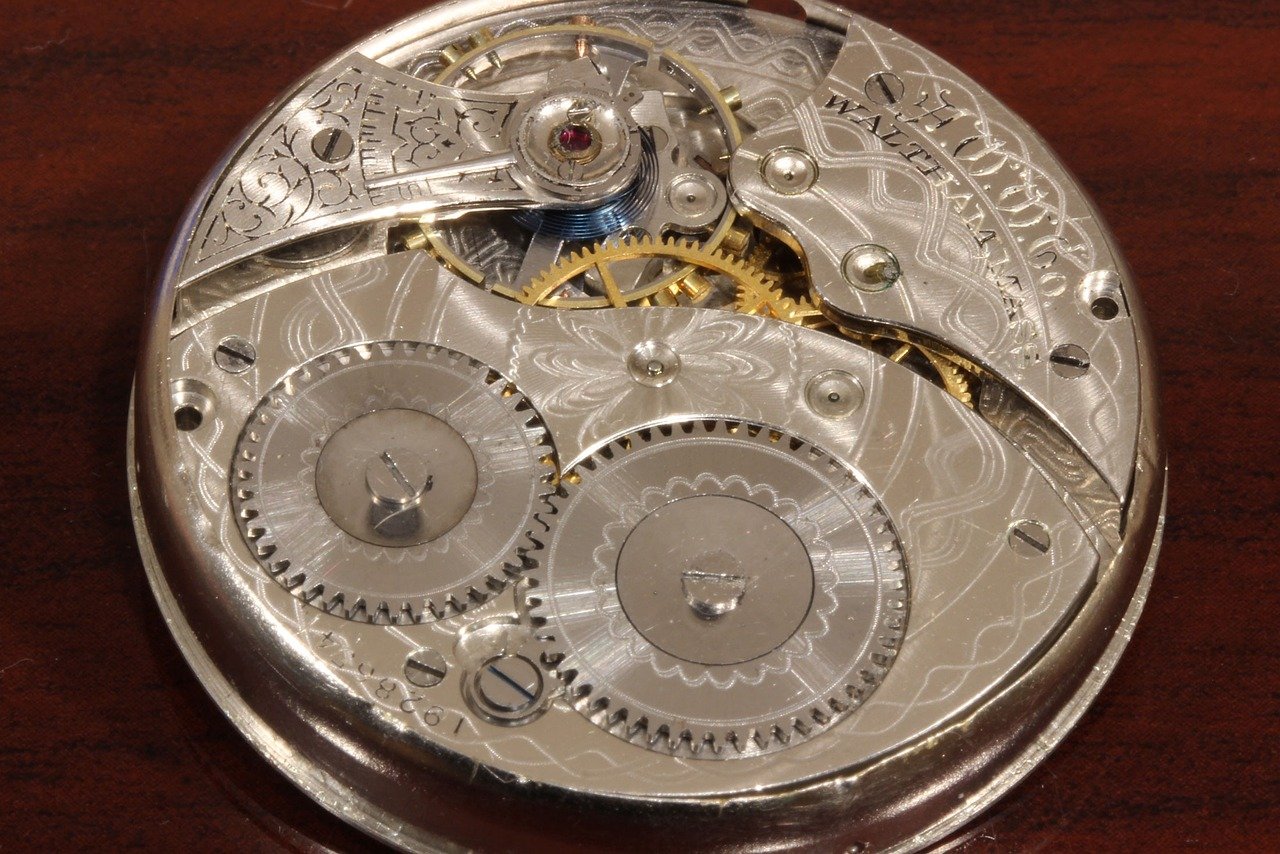
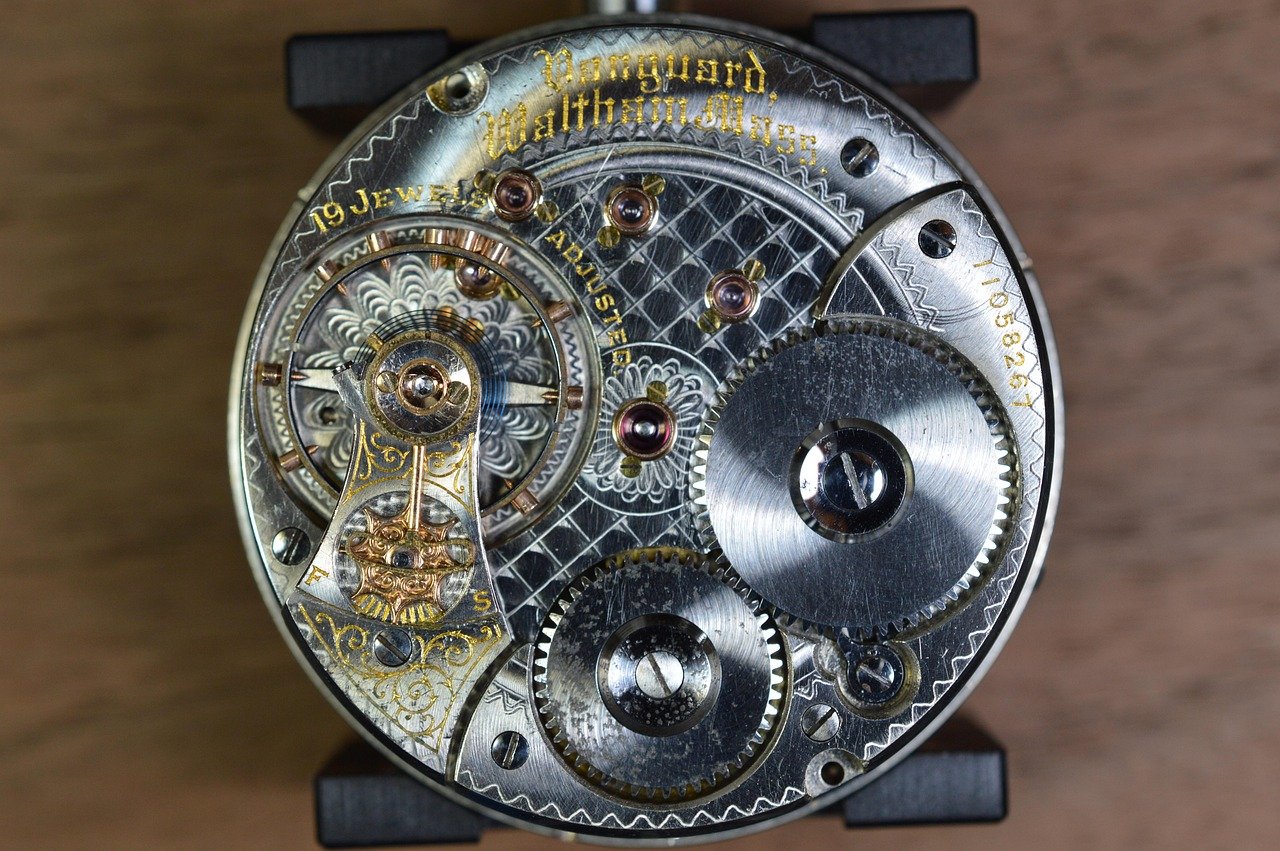
- Hand finishing on components that will never be seen once the caseback is closed, including chamfered bridges, polished screw heads, and circular graining on plates
- In-house or heavily modified calibres, rather than stock movements dropped into a case
- Traditional decorative techniques such as Côtes de Genève striping, perlage, guilloché dials, enamel, and hand engraving
- Low production volumes and assembly by a small number of watchmakers
- Long-term serviceability, meaning parts and skills exist to keep the watch running for decades
The closest thing to a formal quality benchmark is the Poinçon de Genève, or Geneva Seal, created by the Grand Council of Geneva in 1886 and revised in 2011 to cover the whole watch rather than just the movement. It is a local, voluntary certification tied to watches made in the canton of Geneva. It is respected, but it is not a definition of haute horlogerie, and plenty of exceptional watchmaking happens outside Geneva’s borders.
Where the Term Comes From
The phrase took on its modern meaning in the aftermath of the quartz crisis of the 1970s and 1980s. When cheap, accurate battery-powered watches flooded the market, Swiss mechanical watchmaking lost most of its functional argument. The industry survived by repositioning mechanical watches as objects of craft, heritage, and scarcity rather than instruments of timekeeping.
That repositioning needed vocabulary. “Haute horlogerie” gave brands and retailers a way to describe watches whose value lay in finishing, tradition, and human skill. The Fondation de la Haute Horlogerie was founded in Geneva in 2005 by Richemont, Audemars Piguet, and Girard-Perregaux to promote fine watchmaking through training and cultural programmes, cementing the phrase as an industry category rather than a casual compliment.
It is worth remembering that the term is descriptive, not protective. Anyone can print it on a box.
The Certifications People Confuse With It
Three names come up constantly in conversations about high watchmaking, and they are routinely mixed up. Here is how they actually differ.
| Certification | What it covers | Who issues it | What it does not prove |
|---|---|---|---|
| Poinçon de Genève | Finishing and construction of the whole watch, for watches made in Geneva | A voluntary Geneva-based body | That the watch was made in-house, or that it is haute horlogerie |
| COSC | Precision of a movement, tested in five positions and at three temperatures | Contrôle Officiel Suisse des Chronomètres, established 1973 | Any finishing standard whatsoever |
| Manufacture status | That the brand makes its own movement | The brand itself, usually | That the movement is well finished |
The COSC distinction trips up more buyers than any other. A chronometer certificate is a precision test. It says nothing about whether the bridges are chamfered by hand or stamped by machine. Plenty of mid-priced watches carry COSC certification, and plenty of six-figure watches do not bother with it.
The Geneva Seal is stricter and more relevant to haute horlogerie, but it is geographically limited. A watch made in the Vallée de Joux to extraordinary standards cannot carry it. Geography is not quality, and treating the seal as the only measure will cause you to miss a great deal.
What Actually Separates the Top Tier
Strip away the marketing and the differences come down to a handful of observable things. They are not mystical, and with a loupe and some patience, most of them can be checked in person.
Finishing you can see under magnification
Anglage, the hand-chamfering of bridge edges, is the single clearest tell. On a high-end movement, the bevel is wide, polished to a mirror, and drawn consistently along every edge, including the ones hidden under the dial. On a lesser movement, edges are rounded by machine or left sharp. Screw heads should be polished or blued, with slots that line up neatly. Wheels should show circular graining. None of this improves timekeeping. All of it takes hours.
Movement architecture
An in-house calibre is not automatically better, but it usually means the brand controls finishing standards and can supply parts decades later. Heavily modified ébauches can reach the same level. What matters is whether the architecture was designed to be beautiful and serviceable, or designed to be cheap and then decorated.
Métiers d’art
Enamelling, hand engraving, gem-setting, and marquetry are commonly cited as defining features of the category. A grand feu enamel dial can take multiple firings and a high failure rate. These crafts are labour-intensive, hard to scale, and increasingly rare, which is precisely why they carry weight.
Production volume and serviceability
A workshop making a few thousand watches a year can afford to hand-finish. One making hundreds of thousands cannot. Ask about servicing intervals, parts availability, and whether the brand still supports watches from thirty years ago. A watch nobody can repair is not a high-horology object, whatever the dial says.
Practical Tips and Common Mistakes
Most people encounter haute horlogerie at a boutique or an auction preview, and most make the same avoidable errors.
Do not shop by logo. Brand hierarchy is real, but every major house has entry-level lines that are finished to a lower standard than its flagship pieces. Judge the specific watch.
Do not equate weight with quality. Solid gold cases are heavy. That tells you about the metal, not the movement.
Do not assume a display caseback means fine finishing. Open casebacks became fashionable, and some brands decorate only the visible areas. Look at the parts you can see around the edges of the movement.
Ask to see the movement through a loupe. A good retailer will hand one over without hesitation. Reluctance is information.
Check the service cost before you buy. A high-complication watch can cost a meaningful fraction of its price to service every five to seven years. That is part of the ownership cost, and it is rarely mentioned at the point of sale.
Ignore the phrase on the box. It is unregulated. Look at the watch.
What It Costs and Who It Is For
Prices in this segment start in the low five figures and climb steeply. Complications like perpetual calendars, minute repeaters, and tourbillons push into six and seven figures, and independent watchmakers with tiny output can command more than established houses.
That pricing reflects labour more than materials. A hand-finished movement can involve dozens of hours of decorative work by skilled craftspeople, and the training pipeline for those skills is thin. The Fondation de la Haute Horlogerie runs programmes aimed at keeping those crafts alive, which is a quiet acknowledgement that the knowledge is not self-sustaining.
For buyers, the honest framing is this: haute horlogerie is a craft and collecting category, not a value proposition. A quartz watch keeps better time. A mid-range mechanical watch delivers most of the daily experience. What the top tier offers is finishing, rarity, and the satisfaction of owning something made with deliberate care. Whether that is worth the premium is a personal question, and no certification answers it for you. (Hodinkee)
How to Learn More Without Getting Sold To
The most reliable education is looking at watches in person, ideally side by side. Auction previews are free, well lit, and full of pieces spanning every price bracket, which makes them the best comparison tool available to a curious buyer. Watch fairs and specialist retailers serve a similar purpose, though with more sales pressure.
Reading helps too, provided you read critically. Brand catalogues are marketing. Independent forums contain real expertise mixed with strong opinions. Museum collections, particularly those focused on decorative arts and industrial design, often display historic watchmaking alongside the craft techniques that surround it, and they tend to explain the how rather than the why buy.
The single most useful habit is asking what a given feature actually does. If the answer is “it looks beautiful,” that is a legitimate answer in this category. If the answer is vague, the feature probably is too.
Conclusion
Haute horlogerie means high watchmaking, and it describes the top tier of mechanical watchmaking defined by hand finishing, traditional decorative crafts, in-house or heavily modified movements, and long-term serviceability. It is a trade and marketing term with no legal force, which is exactly why buyers need to look past the label. The Geneva Seal and COSC certification are useful reference points, but neither one defines the category, and neither one substitutes for examining a movement under magnification. The practical path is straightforward: learn what hand finishing looks like, compare watches side by side at auction previews, ask about servicing before you fall in love with a dial, and treat every claim on a box as a claim rather than a fact.
FAQ
Is haute horlogerie a legally protected term?
No. There is no Swiss law or international standard that defines or protects the phrase, so any brand can use it in marketing. That is why collectors rely on observable evidence such as finishing quality, movement architecture, and servicing records rather than the label itself.
What is the difference between haute horlogerie and a chronometer?
A chronometer is a movement that has passed a precision test, most commonly COSC certification, measuring accuracy across positions and temperatures. Haute horlogerie refers to a standard of finishing and craft. A watch can be a certified chronometer with machine-finished components, or a hand-finished piece with no certification at all.
Does a watch need the Geneva Seal to qualify as high watchmaking?
No. The Geneva Seal is a voluntary certification limited to watches made in the canton of Geneva, and it covers finishing and construction of the whole watch. Excellent watchmaking happens throughout the Vallée de Joux, Neuchâtel, and beyond, none of which can carry the seal regardless of quality.
How can I tell if a movement is hand-finished?
Look at the edges of the bridges through a loupe. Hand chamfering produces a wide, mirror-polished bevel drawn consistently along each edge, including edges hidden under the dial. Screw heads should be polished or blued, and wheels should show circular graining. Machine finishing leaves rounded or sharp edges and inconsistent polish.
Is an in-house movement always better than a supplied one?
Not automatically. What matters is whether the movement was designed for beauty and serviceability, and whether the brand can supply parts decades later. A heavily modified supplied calibre finished to a high standard can outperform a basic in-house design.
How much does it cost to service a high-complication watch?
Servicing a complicated mechanical watch can run into thousands and is typically recommended every five to seven years. The exact figure depends on the complication and the brand. Always ask for a service estimate before buying, because the cost is a real part of ownership and is rarely mentioned at the point of sale.