
How to Choose a Hostess Gift: 2026 Guide
 Abdul WadoodLast updated

A bottle of wine is the most common hostess gift in America, yet it’s also the one most likely to sit unopened for months if your host doesn’t drink. That mismatch captures the whole challenge: a good hostess gift isn’t about price or polish. It’s about matching the object to the person, the occasion, and the practical reality of their evening.
Get that right and a small, thoughtful gift lands better than an expensive one that creates work. Get it wrong and you’ve handed your host a vase to find, a food item that conflicts with a guest’s allergy, or a candle that smells like a department store. This guide walks through what actually works in practice, what to avoid, and how to handle the awkward edge cases. (BBC Food)
Start With the Occasion, Not the Object
The single most common mistake is shopping for a thing before deciding what the evening actually calls for. A backyard barbecue, a formal dinner party, a weekend stay, and a holiday open house are four different social contracts.
| Occasion | What works | What backfires |
|---|---|---|
| Casual dinner party | Consumables: good olive oil, chocolate, a dessert | Large decorative items the host must store |
| Formal dinner | Wine, flowers already arranged, fine sweets | Anything requiring immediate prep |
| Overnight or weekend stay | Something for the house plus a thank-you note | A gift that feels like payment for the room |
| Holiday open house | Small seasonal food or drink | Anything bulky, since many guests bring gifts |
| New neighbor’s first dinner | Something useful and modest | Overly personal or expensive items |
The pattern is consistent: the more casual the event, the more a consumable works. The more formal the event, the more a classic token (wine, flowers, sweets) fits. The longer the stay, the more the gift should lean toward gratitude rather than decoration.
The Consumables Rule and Why It Holds Up
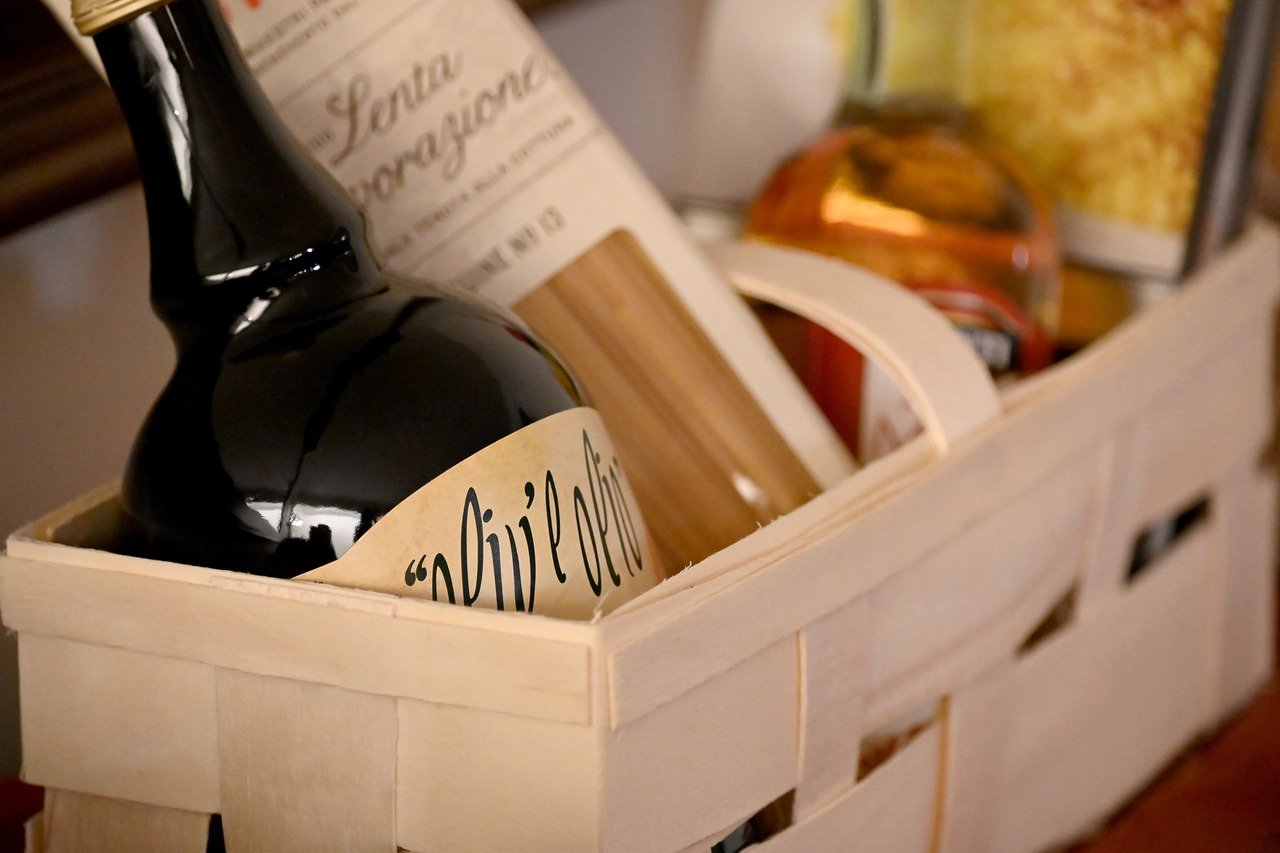
Food, drink, flowers, and candles dominate hostess-gift advice for one practical reason: they don’t create long-term clutter. Your host can enjoy them and then they’re gone. That’s a real kindness when most people already own too much.
Within consumables, a few practical filters matter more than the category:
Check dietary reality before you buy. Food gifts fail when they ignore allergies, religious restrictions, or sobriety. A tin of almond cookies is a poor choice for a household with a nut allergy. A bottle of wine is a poor choice if your host doesn’t drink. If you don’t know, ask the host directly or choose something universally safe, like a good coffee, tea, or high-quality chocolate.
Avoid gifts that create work. A bouquet in a paper sleeve forces your host to hunt for a vase mid-party. Flowers already in a vase, or a potted plant, solve that problem. The same logic applies to food: a dessert that needs refrigeration the moment you walk in is a small burden.
Skip anything that implies intimacy you don’t have. Perfume, clothing, and personal-care items are generally discouraged because they read as too familiar. Stick to things a host would happily receive from a colleague or an acquaintance.
What Actually Works in Practice
Practical experience points to a handful of gift types that consistently land well, regardless of budget.
Good olive oil or vinegar. Useful, shelf-stable, and consumed eventually. It reads as thoughtful without being fussy.
Quality chocolate or a local specialty. Almost universally welcome, easy to share with other guests, and doesn’t require storage.
Wine or a non-alcoholic alternative. Classic, but only if you’re confident about the host’s drinking habits. A nice sparkling water or artisanal soda is an increasingly common substitute.
Flowers in a vase. Solves the vase problem and looks polished on arrival. If you’re unsure, ask where the host would like them placed.
A candle in a neutral scent. Works well, but avoid heavily perfumed options, which can clash with food smells or trigger sensitivities.
Something small and useful for the kitchen. A good kitchen towel, a set of nice napkins, or a small serving piece. These feel generous without demanding space.
Notice what these have in common: modest price, no assembly required, and no obligation on the host’s part. That last point matters more than people realize. A gift that requires a thank-you note and a display space and a follow-up conversation is a gift with strings.
Budget: What’s Actually Normal
Price norms vary widely by source, region, and era, so treat any single number with suspicion. Broadly, etiquette guidance tends to land in a modest range for a dinner host gift, often cited somewhere between roughly $10 and $25, with some writers stretching toward $50 for a closer relationship or a longer stay.
The more useful principle: spend enough that the gift feels considered, not enough that it feels like a transaction. An expensive gift can embarrass a host who now feels they owe you something. A cheap, well-chosen one rarely does.
For an overnight stay, the calculus shifts. You’re receiving considerably more hospitality, so a slightly more substantial gift, plus a written thank-you afterward, is the conventional move.
Timing, Presentation, and the Follow-Up
How you give the gift matters nearly as much as what it is.
Present it on arrival. Handing over a gift as you walk in is the standard. Sending something afterward is a nice gesture but isn’t a substitute for bringing something to the door.
Keep it simple. No elaborate wrapping, no card that requires a response. A small note is plenty.
Don’t make it a production. The moment a gift becomes a scene, it shifts attention away from the host’s hospitality and onto you.
Follow up in writing. A short thank-you note after being hosted is a standard courtesy in many traditions. A text works for casual occasions; a written note suits formal dinners and overnight stays.
One underrated tip: if you’re bringing flowers, ask on arrival where they’d like them placed, or bring them pre-arranged. It’s a small courtesy that saves your host a mid-party scramble.
Cultural and Religious Sensitivity
Gift norms are not universal, and treating one tradition’s rules as global is a reliable way to get it wrong.
Alcohol, pork, and certain flowers carry specific meanings in various cultures and religions. In some traditions, alcohol is entirely inappropriate as a gift. In others, particular flowers are associated with funerals or mourning. Even the concept of a hostess gift varies: some cultures consider bringing a gift to a dinner party expected, while others consider it slightly formal or unnecessary. (Gift)
The practical move is straightforward: if you know your host’s background, let it inform the choice. If you don’t, choose something neutral and consumable, and avoid alcohol unless you’re confident. When in doubt, a food item that’s easy to share and free of common allergens is the safest bet.
Common Mistakes That Undermine a Good Gift
Even well-intentioned gifts fail for predictable reasons. Watch for these:
- Buying for the occasion instead of the person. A generic wine bottle says “I stopped at a shop.” A specific choice says “I thought about you.”
- Ignoring allergies and restrictions. This is the most common practical failure and the easiest to avoid with one question.
- Over-spending. It creates obligation rather than warmth.
- Choosing decor. Unless you know the host’s taste well, decorative items are a gamble that ends up in a cupboard.
- Bringing something that needs immediate attention. A hot dish, a bouquet needing a vase, or a dessert needing fridge space all add work at the worst moment.
- Forgetting the follow-up. The gift gets you through the door; the thank-you note is what people remember.
How This Fits With the Rest of Your Grooming and Style Choices
Hostess gifts are a social-skills question, but they overlap with the same principle that governs personal style: match the choice to the context rather than following a generic rulebook. The same logic applies when you’re picking a hair gel that actually works for your hold and finish or deciding which hair mask suits your hair type — the right answer depends on the specifics, not the marketing.
If you’re hosting rather than attending, the same care applies to how you present yourself. A hair brush guide for your hair type is the kind of small, practical decision that makes getting ready for an evening less stressful. And if you’re planning a hairstyle you can actually maintain for a dinner party, choosing something that holds up through the evening beats something that requires constant fixing.
The through-line is the same: thoughtful choices beat expensive ones, and context beats convention.
A Simple Decision Framework
If you want a repeatable process rather than a list of items, use this sequence:
- Identify the occasion. Casual, formal, overnight, or holiday.
- Ask one question if you can. “Is there anything you’d like me to bring?” often solves the whole problem.
- Filter for restrictions. Allergies, alcohol, religious considerations.
- Choose a consumable. Something that disappears after use.
- Check the practical burden. Does it need a vase, fridge space, or assembly?
- Present it on arrival, simply.
- Follow up with a short thank-you.
That framework handles most situations. The exceptions — a very close friend, a family member, a host who has explicitly said “don’t bring anything” — are handled by trusting the relationship rather than the rulebook.
Conclusion
Choosing a hostess gift is less about finding the perfect object and more about reading the situation accurately. The gifts that work are modest, consumable, restriction-aware, and easy for the host to receive without effort. The ones that fail are expensive, decorative, or demanding.
The best test is simple: imagine your host at the end of the evening. Does your gift make their night easier, or does it add one more thing to manage? If it’s the former, you’ve chosen well — regardless of what it cost.
Frequently Asked Questions
What is an appropriate hostess gift for a dinner party?
A modest consumable is the standard choice: good olive oil, quality chocolate, wine (if the host drinks), or flowers already in a vase. The key is that it doesn’t require effort or storage. Price norms vary by source, but a modest spend in the range of roughly $10 to $25 is commonly cited for a dinner host gift.
Is it rude to bring a gift when the host says not to?
Not rude, but it’s worth respecting the request. Some hosts genuinely prefer no gifts, especially for casual gatherings or when space is tight. A small consumable — a box of chocolates or a bottle of something — is a low-burden way to acknowledge the invitation without contradicting them.
Should I bring wine if I don’t know whether the host drinks?
No. Sobriety, religious restrictions, and simple preference all make wine a risky default. Choose a non-alcoholic alternative like good coffee, tea, sparkling water, or chocolate unless you’re confident about the host’s habits.
What’s the difference between a hostess gift and a thank-you note?
The gift is presented on arrival as a token of appreciation for the invitation. The thank-you note comes afterward and acknowledges the hospitality itself. Both are conventional courtesies, and the note matters more than most people assume — it’s what hosts remember.
How much should I spend on a hostess gift for an overnight stay?
More than for a dinner party, since you’re receiving substantially more hospitality. Etiquette guidance varies widely, so the practical rule is to spend enough that it feels considered without creating obligation. Pair it with a written thank-you note afterward.
Are flowers always a good hostess gift?
They’re classic but not foolproof. Bring them already arranged in a vase, or ask on arrival where the host would like them placed, so you don’t force a mid-party search for a container. Also consider cultural associations — certain flowers carry specific meanings in some traditions.