
Best Beaches in Portugal: 2026 Guide to Swim, Surf & Avoid Crowds
 Abdul WadoodLast updated
What if the single best beach day of your European summer was hiding behind a cliff arch, at the bottom of a wooden staircase, or beside a fishing village where the only sound is a moped and the Atlantic?
Portugal has roughly 800 kilometres of mainland coastline, plus the archipelagos of Madeira and the Azores, and the range is genuinely wild. You can float in bath-warm, cliff-shadowed water in the Algarve in the morning and watch a 20-metre wave break against a headland in Nazaré the same afternoon. The tricky part is not finding a beach. It is choosing the right one for the kind of day you actually want. (Visit Portugal official tourism portal)
This guide sorts the country’s standout beaches by what they do best, flags the practical traps, and explains how to check conditions before you commit a whole day to a stretch of sand.
Why Portugal’s Beaches Are So Different From Each Other
The first thing to understand is that “Portuguese beach” is not one thing. The country sits at the edge of the Atlantic, and the coast changes character dramatically as you move north to south.
The Algarve, in the south, is sheltered limestone country: golden stacks, sea caves, warm shallow coves and water that can hit 22–24°C in late summer. The Alentejo coast north of it is flatter, pine-backed and emptier. The Lisbon coast is broad, breezy and surf-friendly, and the Silver Coast and Norte are colder, wilder and often dramatic in a way that has nothing to do with sunbathing.
That variety is why “best” depends entirely on your criteria. A family with toddlers and a surfer chasing winter swell should not be sent to the same cove.
The Algarve Beaches That Earn Their Reputation
Praia da Marinha: The Postcard
If you have seen a photograph of a Portuguese beach without knowing where it was taken, it was probably Marinha. This beach near Lagoa is famous for its limestone arches, its clear water and the rock formation locals call the “M rock.”
It is also small. The car park fills early in July and August, the access path is steep, and the beach itself shrinks at high tide. Go before 10am or after 4pm, or visit in June or September, and it becomes the place the photos promised. (Bentley Car Price 2026: What Each Model Really Costs)
Praia de Benagil and the Sea Cave
Benagil is the beach attached to the Algar de Benagil, the collapsed sea cave with the famous circular skylight. It is genuinely spectacular, and it is also genuinely congested.
Practical reality: the cave has no official land route, so access is by boat, kayak or paddleboard from nearby beaches. Tours leave from Benagil, Portimão and Albufeira. Book the earliest slot of the day. Midday summer trips mean queuing inside a cave with dozens of other kayaks, which rather kills the magic. Swimming into the cave independently is possible but only in calm conditions, and it is not a beginner move.
Praia do Camilo: The Staircase Cove
Near Lagos, Camilo is a tiny cove reached by a long wooden staircase, with clear water and photogenic rock stacks framing the sand. It is beautiful and it is small, so it fills fast. The neighbouring Praia Dona Ana is bigger and easier if Camilo looks packed when you arrive.
Praia da Falésia: The Long One
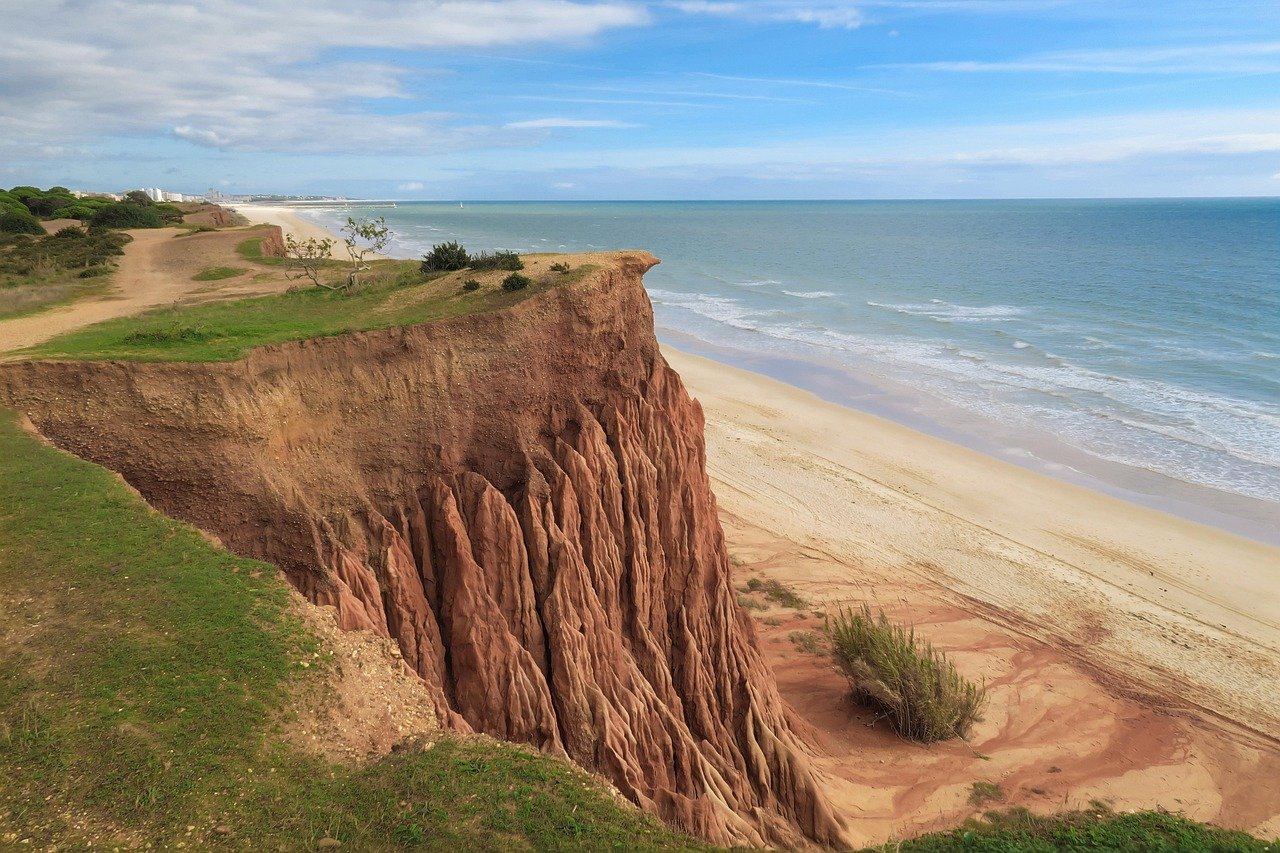
Falésia, between Albufeira and Olhos de Água, is the opposite of a hidden cove: a long, wide sweep of sand backed by red and white sandstone cliffs that glow at sunset. Because it is so long, it absorbs crowds better than almost anywhere else in the Algarve. Walk ten minutes from the main access points and you will find space even in August.
Nazaré: The Beach You Visit to Watch, Not Swim
Praia do Norte in Nazaré is not a swimming beach. It is the site of the Guinness World Record for the largest wave ever surfed, a 26.21-metre (86-foot) wall ridden by Sebastian Steudtner on 29 October 2020. The official record entry documents the measurement if you want the details.
The science behind it is the Nazaré Canyon, a submarine canyon roughly five kilometres deep that runs almost to the shore and focuses Atlantic swell into enormous waves at this one particular headland. The result is that a modest swell elsewhere becomes a monster here.
The practical tips matter. Big-wave season runs roughly October to March, and the truly giant days are unpredictable and often announced only days ahead. Watch from the clifftop at the Forte de São Miguel Arcanjo, not from the sand. The undercurrent and shore break are dangerous even on ordinary days, and the beach is patrolled only seasonally. In summer, Praia da Nazaré in the town itself is a normal, family-friendly beach, which surprises people who only know the town from viral videos. (Riding cars boys cast who plays each role it matters)
The Alentejo Coast: Portugal’s Quietest Sand
Comporta and the surrounding Alentejo coast, roughly an hour and a half south of Lisbon, have become the country’s worst-kept secret. Beaches such as Praia da Comporta and Praia do Carvalhal are backed by pine forests and dunes, with wide, uncrowded stretches and a low-rise, no-fuss feel.
It is still noticeably quieter than the Algarve, though “quiet” is relative in August. The trade-offs are real: fewer lifeguards, fewer cafés, and long, hot walks from parking to sand. Bring water, shade and cash. The upside is a version of Portugal that feels like a different decade.
Lisbon and the Surf Coast
Praia de Carcavelos, about 25 minutes by train from central Lisbon, is the city’s most accessible Atlantic beach: broad, breezy and reliably popular with surfers and beachgoers alike. It is not the prettiest beach in the country, but it is the easiest good one to reach without a car, and the train ride along the river is part of the pleasure.
Further west, the Costa da Caparica and the beaches around Ericeira and Peniche are the serious surf zone, with world-class breaks and colder water than most visitors expect.
How to Check a Beach Before You Go
Portugal’s bathing water is monitored under the EU Bathing Water Directive (2006/7/EC), and the European Environment Agency publishes annual compliance results. Portugal’s coastal waters have generally rated “excellent” in recent years, but individual beaches can still be temporarily flagged. (List of beaches in Portugal (Wikipedia))
The Blue Flag programme, run internationally by the Foundation for Environmental Education and administered in Portugal by ABAE, awards a flag each year to beaches meeting water-quality, safety and environmental-education criteria. Because the award is annual, a beach holding a flag last summer is not guaranteed to hold one this summer. Check the current year’s list rather than a blog post from three years ago.
For daily conditions, sea temperature and swell, Portugal’s national weather and sea institute publishes forecasts that are far more useful than a generic weather app. A beach that is glorious at 9am can be wind-whipped and unpleasant by 3pm; the afternoon nortada wind is a real feature of the west coast.
A Quick Comparison by Beach Type
| Beach | Region | Best for | Main catch |
|---|---|---|---|
| Praia da Marinha | Algarve | Photography, scenery, snorkelling | Small, steep access, fills early |
| Praia de Benagil | Algarve | Sea cave trips | Crowded tours, no land access to cave |
| Praia do Camilo | Algarve | Clear water, intimacy | Tiny, staircase access, fills fast |
| Praia da Falésia | Algarve | Long walks, space, sunsets | Big, exposed, less sheltered |
| Praia do Norte, Nazaré | Centro | Watching giant waves | Dangerous water, winter viewing only |
| Praia da Comporta | Alentejo | Space, nature, calm | Few facilities, long walk to sand |
| Praia de Carcavelos | Lisbon | Car-free access, surfing | Urban, busy, cooler water |
Common Mistakes Visitors Make
The most frequent error is treating the Algarve as the whole of Portugal. It is the warmest and most sheltered coast, but it is also the busiest and most expensive, and the Alentejo and Silver Coast offer something the Algarve cannot: emptiness.
The second is underestimating the Atlantic. West-facing beaches have strong shore breaks, cold upwellings and rip currents. Swim near lifeguards, obey flags, and never assume calm-looking water is safe. The third is arriving at noon. In high season, parking at the famous small beaches is gone by 10:30am, and the light is better for photos before 10am and after 5pm anyway.
A fourth, subtler mistake: booking accommodation without checking walking distance to the sand. At Comporta and parts of the Alentejo, “beachfront” can mean a 20-minute walk through dunes in full sun.
When to Go
Late May, June and September are the sweet spot: warm water, open facilities, and a fraction of the August crowds. July and August are hot, busy and expensive, with the Algarve at its most congested. October to March belongs to surfers, storm-watchers and anyone who prefers a beach walk in a jacket to a sun lounger.
Conclusion
Portugal’s best beaches are not a single list, because the country does not offer a single coastline. The Algarve delivers the postcard coves and warm water, the Alentejo delivers silence and space, Nazaré delivers the most dramatic wave on earth, and the Lisbon coast delivers a good beach day without a car. Pick the beach that matches the day you want, check the current Blue Flag list and the marine forecast before you drive, arrive early, and respect the Atlantic. Do that, and the country’s coastline will keep rewarding you long after the famous coves have filled up.
FAQ
What is the single best beach in Portugal?
There is no universally agreed answer, and rankings vary by outlet and year. Praia da Marinha in the Algarve is the most frequently cited for scenery, while Praia da Falésia is often praised for its scale. For most visitors, the best beach is the one that matches their priorities: shelter and warmth in the Algarve, space and quiet on the Alentejo coast.
Can you swim at Praia do Norte in Nazaré?
Generally no. Praia do Norte is a big-wave surfing beach with strong currents and a dangerous shore break. It is a viewing beach, best watched from the clifftop fortress. For swimming in Nazaré, use the town beach instead, and only near lifeguards.
How do you get into the Benagil sea cave?
By water. The cave has no official land route, so visitors arrive by boat tour, kayak or paddleboard from nearby beaches and harbours. Book the earliest departure to avoid the midday crush, and only attempt it independently in calm sea conditions.
Is the water in Portugal warm enough to swim?
It depends on where you are. Algarve coves can reach 22–24°C in late summer, which is comfortable for most people. The west coast, Lisbon area and further north are noticeably colder, often in the 17–19°C range, because of Atlantic upwelling. Pack a rash vest if you feel the cold.
Do you need a car to reach Portugal’s best beaches?
Not always. Praia de Carcavelos is a short train ride from central Lisbon, and many Algarve beaches are reachable by local bus or taxi. That said, the Alentejo coast and the smaller Algarve coves are far easier with a car, and parking fills early in high season.
When is the best time to visit Portugal’s beaches?
Late May, June and September offer the best balance of warm water, open facilities and manageable crowds. July and August are hottest and busiest, especially in the Algarve. October to March suits surfers and walkers rather than swimmers.