
Best Florida Beaches 2026: Coast-by-Coast Guide
 Abdul WadoodLast updated
What if the hardest part of a Florida beach trip isn’t getting there, but choosing which stretch of sand deserves your one free afternoon? The state claims roughly 825 miles of coastline, and not all of it behaves the same way. The Gulf side tends to be calmer and shallower. The Atlantic side brings bigger surf and cooler winter water. Between them sit state parks, barrier islands, shell-strewn sanctuaries, and city beaches with lifeguards and parking garages. Picking well comes down to matching the beach to the trip you actually want.
How to Judge a Florida Beach Before You Go
Beach rankings are fun to read and nearly useless as planning tools. “Best” lists rotate every year, they weigh things differently, and a spot that wins on scenery can lose badly on parking. A smarter approach is to score each candidate against four practical questions. (Riding cars boys cast who plays each role it matters)
Sand and water type. Quartz sand stays cool underfoot and squeaks when you walk on it. Coarse shell hash is rougher but comes with better shelling. Gulf water is usually gentler, which matters for small children and weak swimmers. Atlantic beaches can have strong shorebreak and rip currents even on clear days.
Crowd math. A beach with 200 parking spaces and a national reputation fills by 9 a.m. in season. A state park with a capped entry gate fills even earlier. Arrival time matters more than the beach’s ranking.
Facilities and rules. Lifeguards, showers, restrooms, concessions, and whether alcohol or dogs are allowed all vary. Some county beaches are dry; some state parks ban pets entirely. Check before you pack the cooler.
Water quality and wildlife. Florida runs a statewide beach monitoring program for bacteria levels, and advisories can appear after heavy rain. Sea turtle nesting season generally runs from spring into fall, which brings lighting rules and marked-off nests. Both are worth checking the week you travel, not the month you book.
Gulf Coast Beaches: Calm Water and Famous Sand
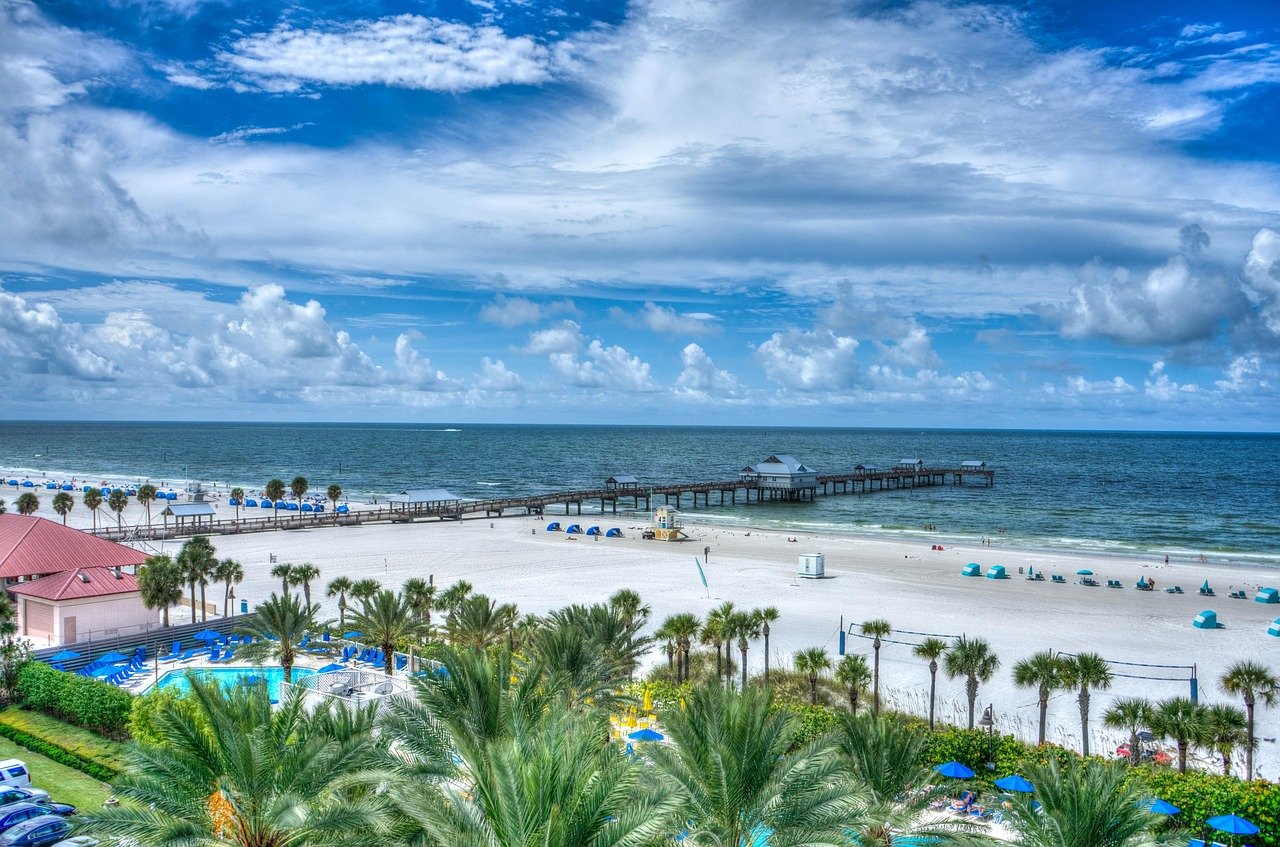
The Gulf Coast is where most first-time visitors end up, and for good reason. The water is typically shallow far out, the waves are modest, and the sunsets land directly over the water.
Siesta Key and the Quartz Sand Reputation
Siesta Key, near Sarasota, is the beach most often named in national rankings, and its sand is the reason. It is nearly pure quartz, fine and bright white, and it stays noticeably cooler than ordinary sand on a hot afternoon. The main public access at Siesta Beach is wide, with lifeguards, concessions, and a large free lot that still overflows on holiday weekends. A smaller, quieter access at Crescent Beach suits people who want less noise. The trade-off is real: in peak season, the road onto the key backs up, and the sand’s fame means company.
Clearwater Beach and St. Pete Beach
Clearwater Beach is the polished, walkable option. It has a wide beach, a pier, lifeguards, and enough restaurants within walking distance that a car can stay parked all day. St. Pete Beach, just south, feels slightly more laid-back and has a similar Gulf exposure. Both are excellent for families who want bathrooms, food, and shade within a two-minute walk. Both are also busy, and parking costs add up fast. Arriving before 9 a.m. is the single most effective money-and-stress saver on this stretch. (Bentley Car Price 2026: What Each Model Really Costs)
Fort De Soto Park
Fort De Soto, in Pinellas County, is the antidote to commercial beaches. It is a county park spread across islands, with several distinct swimming areas, a historic fort, a ferry, and calm, shallow water on the bay side. It has lifeguards in season, showers, and plenty of space to spread out. The catch: it is a drive from the nearest hotels, and the good spots fill early. Bring everything you need, because the nearest store is a decent drive away.
Panhandle Beaches: The Emerald Coast
Northwest Florida’s beaches are famous for two things: sand that looks like sugar and water that shifts between green and turquoise depending on the light. The sand here is also quartz, washed down from the Appalachians.
Grayton Beach State Park
Grayton Beach is the classic Panhandle state park beach, with dunes, coastal lakes, and a beach that feels far from the condos. It sits near the small town of Seaside and the artsy village of Grayton Beach itself. The park has limited parking and a per-vehicle entry fee, so early arrival is not optional. What you get in return is one of the most natural beach settings in the state, with no high-rises in sight. (Beach)
Pensacola Beach and Navarre Beach
Pensacola Beach offers the full-service version of the Panhandle: a pier, lifeguards, restaurants, and a national seashore nearby for a wilder contrast. Navarre Beach is quieter, with a long fishing pier and a reputation for excellent shelling. Both sit on a barrier island, which means a single causeway in and out. On summer weekends, that causeway is the bottleneck.
Atlantic Coast Beaches: Surf, History, and Space
The Atlantic side is different in character. Waves are bigger, the water is brisker, and the beaches often stretch longer and emptier.
Miami Beach and South Beach
South Beach is the most urban beach experience in the state. The sand is wide and groomed, lifeguard towers are painted in bright pastels, and the Art Deco buildings behind the beach are a genuine architectural draw. The Miami Beach Architectural District is a National Register historic district, listed in 1979, and walking it is half the reason to come. Expect crowds, expensive parking, and a scene. Come early for a swim, then stay for the buildings.
Canaveral National Seashore and Playalinda
For a completely different Atlantic experience, the national seashore north of the Space Coast offers undeveloped dunes, no concessions, and long empty stretches of sand. Entry is limited and there are no lifeguards, so this is a bring-your-own-everything beach. It is also one of the best places in the state to watch a rocket launch from the beach itself.
Amelia Island and the Northeast Corner
Florida’s northeast corner is quieter and greener, with beaches backed by maritime forest and a state park at the island’s north end. It suits travelers who want long walks, birding, and small-town dining rather than a beach club scene. Water temperatures run cooler here in winter than anywhere else in the state.
The Southwest and the Shelling Islands
Sanibel and Captiva, near Fort Myers, are the shelling capital of Florida. Their east-west orientation catches shells that other beaches miss, and the islands are largely built around nature preserves and bike paths rather than high-rises. Hurricane Ian caused severe damage in September 2022, and recovery has been uneven, so check current conditions and which accesses are open before planning a trip. Nearby Fort Myers Beach and Bonita Beach offer alternatives on the mainland.
Comparing the Main Regions at a Glance
| Region | Water and Surf | Best For | Main Drawback |
|---|---|---|---|
| Gulf Coast (Sarasota, Pinellas) | Calm, shallow, small waves | Families, first-timers, sunsets | Crowds and parking costs |
| Panhandle (Emerald Coast) | Calm, clear, turquoise | Scenery, state parks, shelling | Limited parking, causeway traffic |
| Atlantic (Miami, Space Coast) | Bigger surf, cooler water | Surf, architecture, empty stretches | Rip currents, less shade |
| Southwest (Sanibel, Captiva) | Calm, shallow | Shelling, nature, biking | Storm recovery varies by area |
Practical Tips That Actually Work
Go early, then go home. The best beach hours in Florida are before 10 a.m. and after 4 p.m. Midday brings heat, UV, and full parking lots. A 7:30 a.m. arrival changes the entire experience.
Check the water before you commit. Florida publishes beach water quality advisories, and conditions change after storms. A quick check the morning of your visit beats any ranking.
Respect rip currents. They are the leading surf hazard on Florida beaches and they do not look dramatic. Swim near lifeguards, and if caught in one, swim parallel to shore rather than fighting straight in.
Pack for sun and sand, not for photos. A shade tent, reef-safe sunscreen, extra water, and a dry bag do more for a beach day than any accessory. Florida sand gets hot enough to burn feet by late morning.
Know the wildlife rules. Nesting sea turtles mean no white lights on the beach at night during season, and no digging holes that can trap hatchlings. Distance from nests is not optional.
Budget for parking. Beach parking in popular areas can run well above what visitors expect, and meters often run seven days a week. If you are already comparing costs for a bigger trip, the same logic of hidden fees applies to vehicles themselves, from Bentley prices by model to rental add-ons, and knowing the real numbers ahead of time prevents unpleasant surprises.
Common Mistakes Visitors Make
The most common mistake is treating a beach ranking as a plan. A beach that wins a national poll may have almost no parking and no lifeguards. The second mistake is underestimating distance. Florida looks compact on a map, but crossing from the Gulf to the Atlantic can eat half a day. The third is ignoring season. Summer brings heat, afternoon storms, and crowds; winter brings cooler water and snowbird traffic; spring break changes entire towns. The fourth is forgetting that beaches are working natural systems rather than scenery alone. Dunes, sea oats, and marked nests are protected for good reasons, and walking over them damages what makes the beach worth visiting.
Conclusion
There is no single best beach in Florida, only the best beach for the day you have. If calm water and easy logistics matter most, the Gulf Coast around Sarasota and Pinellas is hard to beat. If you want the postcard sand and a state park feel, head to the Panhandle. If surf, architecture, or empty shoreline is the goal, the Atlantic delivers. Pick two or three candidates, check parking, water quality, and nesting rules the week before you go, and arrive early. That combination beats any list, including this one.
Frequently Asked Questions
Which Florida beach has the calmest water for kids?
Gulf Coast beaches generally have the gentlest surf, and the shallow, protected swimming areas at Fort De Soto and along Siesta Key are popular with families. Always check conditions and swim near lifeguards, since calm-looking water can still have currents. (Rip Currents)
When is the best time to visit Florida beaches?
Late spring and early fall usually offer warm water with fewer crowds. Summer is hottest and busiest, with afternoon thunderstorms. Winter brings cooler water and heavy snowbird traffic, especially in the south.
Do Florida beaches have lifeguards?
Many popular county and city beaches do, typically in season. State parks and national seashores often do not. Check the specific beach before you rely on one, and never assume a guarded beach is a safe beach on a rough day.
What should I know about sea turtle nesting season?
Nesting generally runs from spring into fall, varying by region. During that time, beaches may have marked nests, lighting restrictions at night, and rules against digging holes or leaving furniture on the sand. Follow posted signs and keep your distance.
Is the water quality safe at Florida beaches?
Florida monitors beach water for bacteria and issues advisories, often after heavy rain or runoff. Conditions change quickly, so check advisories the morning of your visit rather than days in advance.
Which Florida beach is best for shelling?
Sanibel and Captiva are the best-known shelling islands because of their orientation and shell-rich shallows. Navarre Beach and parts of the Panhandle also produce good shelling. Check current access and conditions on the southwest islands before planning around them.
Are Florida beaches free?
Public beach access is generally free, but parking often is not. State parks charge per-vehicle entry, and popular municipal lots charge by the hour. Budget for parking and arrive early, when lots are empty and rates are less painful.