
Bad Tattoos: Why They Happen & How to Handle Them
 Abdul WadoodLast updated
Roughly one in four people with a tattoo says they regret at least one of them, according to survey data summarized by Wikipedia’s overview of tattoo health effects. That number is worth sitting with. Tattooing has gone mainstream, prices have climbed, and yet a huge share of ink still ends up as a source of quiet embarrassment, wardrobe workarounds, and expensive laser appointments. (Tattoo)
The reasons are rarely mysterious. A bad tattoo is usually the product of a rushed decision, a mismatched artist, or a design that looked great on paper and strange on skin. Understanding those failure points is the fastest way to avoid joining the regret statistics, and to fix things if you already have.
What Actually Makes a Tattoo “Bad”
“Bad” is a slippery word. A tattoo can be technically brilliant and still be a bad tattoo for the person wearing it. In practice, most complaints fall into a few recognizable buckets.
Poor execution covers shaky linework, blown-out outlines, muddy shading, and colors that healed patchy. These are craft problems, and they show up most often when an artist works outside their specialty. A talented black-and-grey artist asked to do a saturated neo-traditional piece may produce something far below their usual standard.
Bad placement and flow is subtler. A design can be well drawn but sit awkwardly on the body. Small, detailed pieces on high-movement areas like fingers, ribs, or the inside of the wrist tend to blur and spread within a few years. Designs that ignore the natural lines of a muscle look pasted on rather than integrated.
Meaning drift is the quiet killer. A tattoo tied to a relationship, a phase, or a specific age often ages worse than the skin around it. The ink stays crisp; the context doesn’t.
Spelling and translation errors deserve their own category. Misspelled words, wrong characters, and mistranslated phrases are among the most common regret triggers, and they’re almost always preventable with a second set of eyes.
The Most Common Mistakes People Make Before the Needle
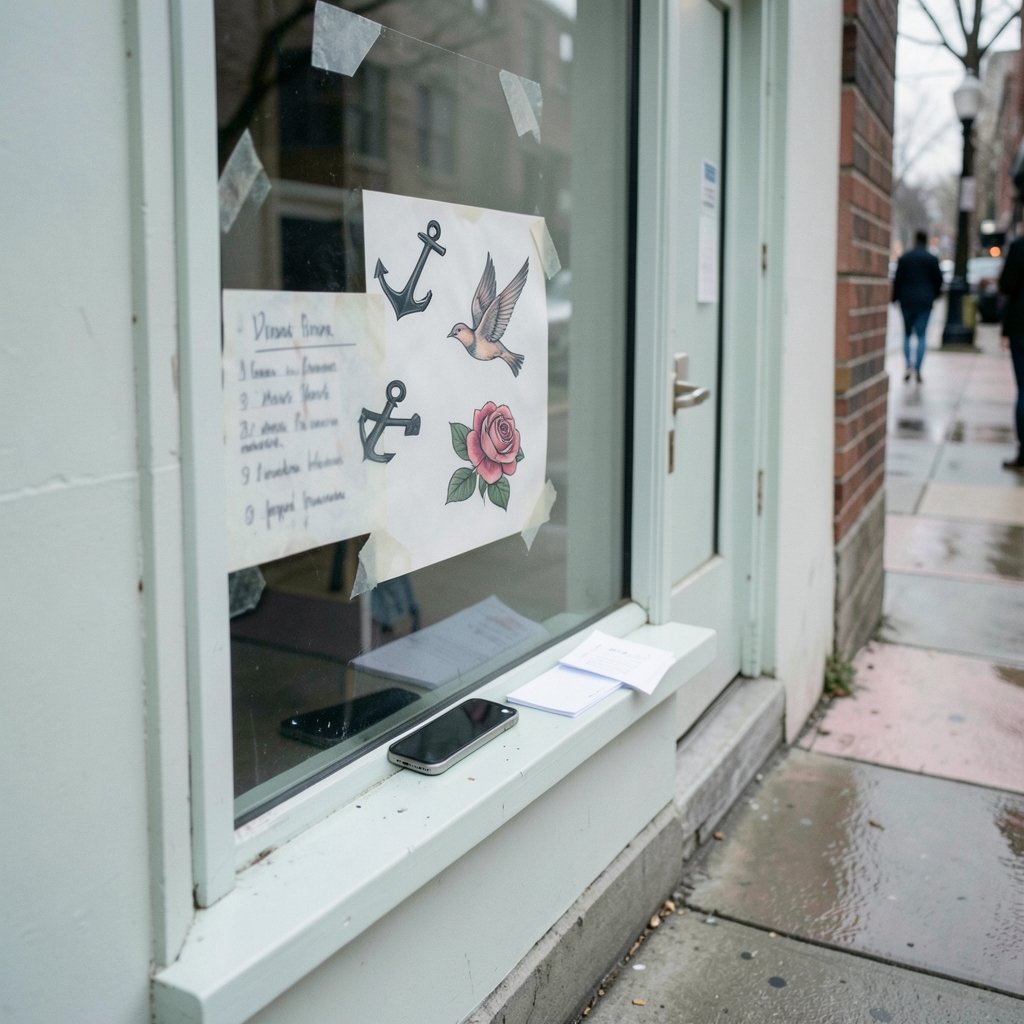
Most bad tattoos are decided long before anyone sits in the chair. The pattern repeats: someone walks into the nearest shop with a phone screenshot, picks a design off a wall flash sheet, and books for the same afternoon. (Tattoos: Understand risks and precautions)
A few habits separate satisfied clients from regretful ones.
- Booking on impulse. Same-day appointments feel exciting and remove every chance to sleep on the decision.
- Choosing on price alone. The cheapest quote in town often reflects an apprentice’s practice rate or a shop cutting corners on hygiene and time.
- Skipping the portfolio check. An artist’s Instagram should show healed work rather than only fresh photos under studio lighting. Fresh tattoos always look better than healed ones.
- Bringing a design too detailed for the size. Fine linework and tiny lettering need room to breathe; cramming them into a two-inch space guarantees blurring.
- Not asking about placement. A good artist will push back on placement that won’t age well. An artist who says yes to everything is a warning sign.
- Ignoring aftercare. Even flawless work can heal badly if it’s scratched, sun-exposed, or picked at during the peeling stage.
There’s a useful parallel in retail: the same way shoppers get burned by stores that prioritize the sale over the fit, tattoo clients get burned by artists who prioritize the deposit over the outcome. If you’re the type who researches purchases carefully, apply that instinct here too. A guide like hair stores near me: find the right shop in 2026 makes the same point about vetting a business before you commit, and the logic transfers neatly to choosing a studio.
How to Tell a Good Artist From a Risky One
Portfolio review is the single highest-leverage step, and most people do it badly. Scrolling a grid of fresh tattoos tells you almost nothing. What matters is consistency and healing.
Look for artists who post healed photos months after the session. Check whether their linework stays sharp and their black stays solid. Read reviews that mention the shop’s cleanliness and the artist’s willingness to say no. A consultation should feel like a conversation, not an order form.
Red flags worth walking away from:
- The artist won’t discuss placement or size adjustments
- The shop can’t show you sterilization practices or autoclave logs
- The quote is dramatically below local norms with no explanation
- The artist pressures you to book immediately or pay a large non-refundable deposit before any design discussion
- Reference photos are all heavily filtered or watermarked from other artists
A good artist will often redraw your idea. That’s not obstruction; it’s craft. They know how ink behaves in skin, and they’re trying to give you something that still looks intentional in a decade.
Health and Safety: The Part People Skip
Bad tattoos aren’t only aesthetic. Ink carries real medical risk, and regulation varies enormously by country.
In the United States, oversight is largely handled at the state and local level through health departments rather than by a single federal body, and the FDA’s tattoo and permanent makeup page notes that the agency’s role focuses on inks and pigments rather than the practice itself. In the European Union, a broad restriction on certain tattoo ink pigments took effect in January 2022 under the REACH chemicals regulation, which the European Chemicals Agency documents in detail. The practical takeaway for anyone shopping for a studio: ask what inks they use, and ask whether they’ve changed suppliers since those rules landed.
Common complications include bacterial infection from contaminated equipment or poor aftercare, allergic reactions (red pigments are a frequent culprit), and granulomas, where the body forms small bumps around pigment particles. Dermatology literature consistently recommends patch testing for anyone with known sensitivities, and warns that tattoos can complicate the reading of certain medical imaging.
Removal, Cover-Ups, and Living With It
When a tattoo turns bad, there are three real paths: remove it, cover it, or reframe it.
Laser removal works by breaking pigment particles into fragments small enough for the immune system to clear. It takes multiple sessions, typically spaced six to eight weeks apart, and results vary by color, depth, and skin tone. Black and dark blue clear most readily; greens and yellows are stubborn. Complete removal isn’t guaranteed, and the process is often more expensive than the original tattoo.
Cover-ups work best when the new design is larger, darker, and bolder than the old one. A common mistake is trying to cover a solid black piece with something light and delicate. Good cover-up artists build the new design around the old shape rather than fighting it.
Reframing is underrated. Some “bad” tattoos become beloved precisely because they’re imperfect. A wobbly line or an odd choice can read as character once enough time passes.
| Option | Typical Sessions | Best For | Main Limitation |
|---|---|---|---|
| Laser removal | 6–12+ | Unwanted or poorly placed work | Cost, partial fading, color limits |
| Cover-up | 1–3 | Bold, well-planned new designs | Must be larger and darker |
| Reframing | None | Sentimental or quirky pieces | Requires a shift in mindset |
Design Decisions That Age Well
Ink spreads. Lines thicken. Skin loses elasticity. Designing for the version of yourself ten years out is the most reliable defense against regret.
Favor bold, simple shapes over intricate micro-detail. Give lettering room to breathe, and keep text large enough to stay legible. Choose placement on areas with less friction and sun exposure if longevity matters. And be honest about whether the meaning behind a design will survive a change in circumstances.
The best tattoo is the one you’d still choose after a year of thinking about it. That pause costs nothing and prevents most of the regret statistics from ever applying to you.
Conclusion
Bad tattoos are rarely random misfortune. They’re the predictable result of skipped research, mismatched artists, rushed decisions, and design choices that ignore how ink behaves in skin. The good news is that every one of those failure points is controllable. Vet your artist’s healed work, ask uncomfortable questions about hygiene and ink, size your design for the long haul, and treat the consultation as a two-way interview rather than a transaction. And if you’re already living with a piece you’d rather not have, removal, cover-ups, and a change of perspective are all legitimate exits. Ink is permanent, but it isn’t final.
Frequently Asked Questions
How common is tattoo regret?
Survey results vary widely depending on the population studied, but a consistent finding across research is that roughly a quarter of tattooed adults regret at least one piece. Regret tends to cluster around very young clients, impulse decisions, and tattoos tied to relationships that later ended. Placement and execution problems rank high among stated reasons.
Can a bad tattoo be fixed without laser removal?
Often, yes. A skilled artist can rework shaky linework, add contrast to flat shading, or build a cover-up around the existing design. The limits are physical: cover-ups need to be larger and darker than the original, and heavily saturated areas can be hard to disguise. A consultation with an artist who specializes in reworks will tell you what’s realistic.
How many laser sessions does removal take?
Most tattoos require somewhere between six and twelve sessions, though large or heavily saturated pieces can take more. Sessions are usually spaced six to eight weeks apart to let the skin recover and the immune system clear pigment. Black ink responds best; green, yellow, and light blue are the hardest to remove.
Do cheap tattoos really cost more in the end?
Frequently. A low price often reflects less time, cheaper materials, or an inexperienced artist, and the resulting rework or removal can easily cost several times the original saving. The better framing is total cost of ownership: a well-executed tattoo you keep for life is usually cheaper per year than a bargain piece you pay to remove.
Are certain ink colors more likely to cause reactions?
Yes. Red pigments are the most frequently reported trigger for allergic reactions, followed by other bright colors. Symptoms include itching, swelling, and raised bumps confined to the tattooed area, sometimes appearing years after the session. Anyone with known pigment sensitivities should discuss patch testing before booking.
What should I ask an artist before booking?
Ask to see healed photos rather than only fresh work. Ask how they’d adjust your design for placement and longevity. Ask what inks they use and whether they’ve updated their stock following regulatory changes. Ask about their sterilization process. A confident, experienced artist will answer all of it without hesitation, and any reluctance is your signal to keep looking.
When to walk away mid-process. It’s also worth knowing that the vetting doesn’t end when the needle starts. If an artist changes the agreed design without discussion, works in a space that isn’t visibly clean, or dismisses your concerns about pain or aftercare, you’re allowed to stop. Forfeiting a deposit stings far less than living with a piece you didn’t consent to. Reputable artists understand this and would rather lose a booking than produce work they can’t stand behind.
Document everything. Photograph the fresh tattoo, save the artist’s aftercare instructions, and keep receipts. If a reaction develops or a shop dispute arises, that record matters for both your dermatologist and any consumer complaint.
The bottom line. A tattoo is a small medical procedure and a permanent design decision at once, so treat it with the seriousness of both. Do the boring homework, ask the awkward questions, and give yourself time to change your mind before the ink is in your skin rather than after.