
TMJ Symptoms: Recognize Jaw Pain Early in 2026
 Abdul WadoodLast updated

Have you ever bitten into an apple and felt a sharp stab near your ear, or woken up with a jaw so stiff it barely opens? That moment of confusion, when you cannot quite tell whether the problem is your tooth, your ear, or something deeper, is one of the most common experiences for people with TMJ symptoms. The term gets thrown around loosely, but the pain it describes is very real, and knowing what to look for can save you months of unnecessary dental appointments and guesswork.
What “TMJ” Actually Means
Strictly speaking, TMJ stands for temporomandibular joint, the hinge that connects your lower jaw to your skull. It is one of the most-used joints in the body, working every time you chew, speak, swallow, or yawn. When something goes wrong with that joint or the muscles around it, clinicians usually call the condition temporomandibular disorder, or TMD. In everyday conversation, most people simply say “TMJ” to describe the disorder itself, and that shorthand has stuck.
This distinction matters more than it might seem. Because “TMJ” names a joint rather than a disease, searching for information can pull up everything from anatomy diagrams to surgical advertisements. The practical takeaway is simple: when someone says they have TMJ, they almost always mean they have pain or dysfunction in the jaw system, not that their joint is fundamentally broken.
The Core Symptoms Worth Knowing
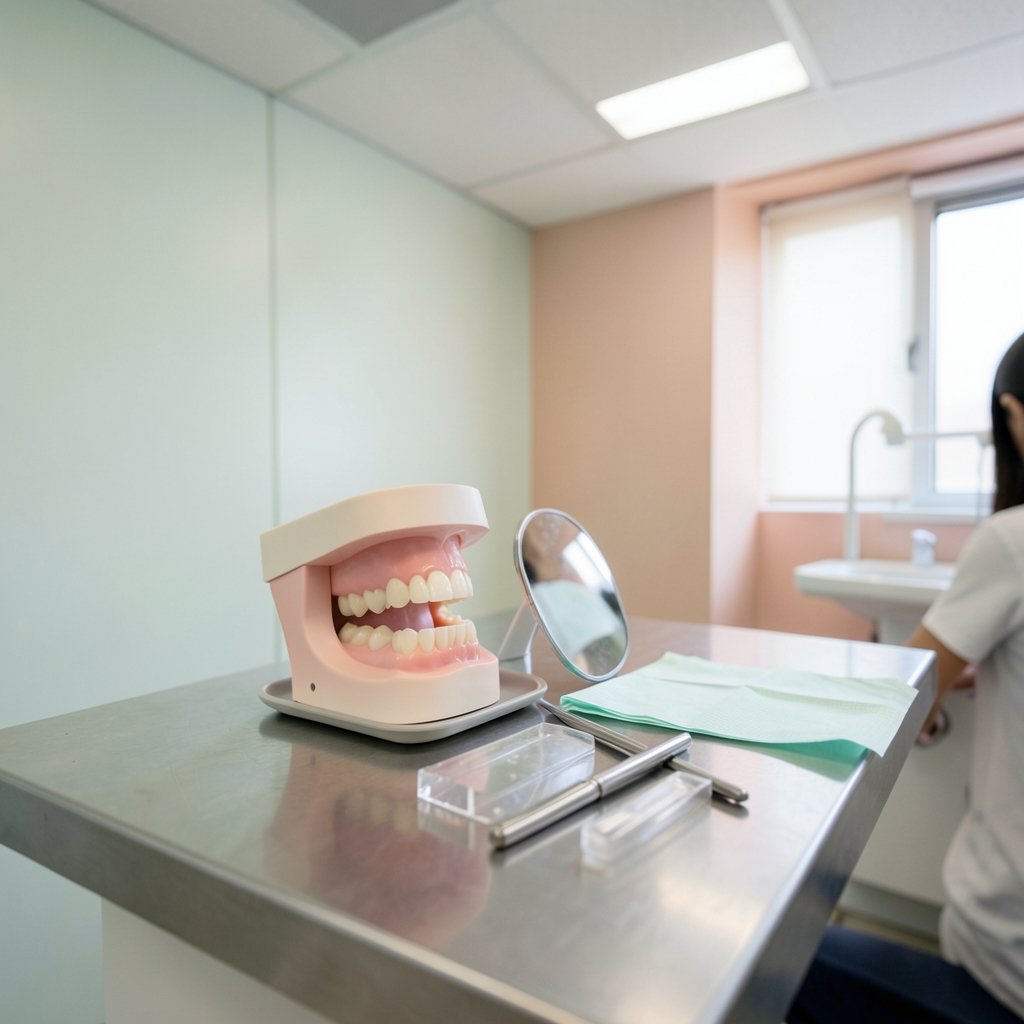
The most reliable signs of TMD cluster around pain, movement, and noise. According to the US National Institute of Dental and Craniofacial Research, common symptoms include pain in the jaw joint or the muscles used for chewing, pain that spreads into the face or neck, limited or uneven jaw opening, and clicking or popping sounds when the jaw moves.
Those four categories cover a lot of ground, so it helps to break them down.
Pain is the symptom that drives most people to seek help. It may sit directly in front of the ear, radiate along the cheek, or settle into the temples. Some people describe a dull ache that builds through the day; others feel a sharp jolt when they open wide.
Limited movement shows up as a jaw that will not open fully or that drifts to one side when opened. A useful at-home check is to open slowly in front of a mirror and watch whether the lower jaw travels in a straight line. A noticeable sideways swing is worth mentioning to a clinician.
Joint noise is the trickiest symptom of the group, because clicking alone does not mean something is wrong. Many people with perfectly comfortable jaws click or pop. The noise becomes clinically meaningful when it arrives alongside pain, locking, or a change in how the jaw moves.
Locking is the red-flag symptom. A jaw that gets stuck open or stuck closed needs prompt professional attention rather than watchful waiting.
Symptoms People Do Not Connect to Their Jaw
One reason TMD is under-recognized is that its symptoms often appear far from the joint itself. Earache, headache, and toothache-like pain are all commonly reported. That geographic spread sends people down the wrong path: to an ear, nose, and throat clinic for an ear that turns out to be fine, or to a dentist for a tooth that looks perfectly healthy on an X-ray.
The practical lesson is to keep a symptom diary. Note when the pain appears, what you were doing beforehand, and whether it changes with chewing, yawning, or stress. Patterns that repeat around mealtimes or early mornings point toward the jaw, even when the pain feels like it lives somewhere else. A clinician can use that log far more effectively than a vague description offered from memory weeks later.
Who Gets TMJ Symptoms, and When
TMD is reported to affect roughly 5 to 12 percent of the population, though estimates swing widely depending on how studies define a case. Women seek treatment far more often than men, a pattern researchers have noted for decades without fully explaining. Symptoms most often first appear between the ages of 20 and 40.
Those numbers come with a caveat worth stating plainly. Prevalence figures vary across studies, and some of the disagreement comes down to methodology rather than biology. A survey that counts anyone who ever clicked their jaw will produce a much larger number than one that counts only people in pain. Treat any single percentage as an approximation, not a precise census.
Why TMJ Symptoms Happen at All
Here is where honesty matters more than tidy answers. The causes of TMD are multifactorial and not definitively established. Contributing factors cited in clinical literature include teeth grinding and clenching (bruxism), arthritis in the joint, direct injury to the jaw, and psychological stress. The evidence for any single cause as the primary driver is not conclusive.
Stress deserves a special note because it is so often oversimplified. Telling someone their jaw pain is “just stress” is both dismissive and inaccurate. Stress may increase clenching and muscle tension, which in turn loads the joint, but that chain is a contributing pathway rather than a complete explanation. The same caution applies to bite alignment: older guidance leaned heavily on the idea that a misaligned bite causes TMD, and that view is now contested.
Common Mistakes People Make
A few missteps show up again and again in practice.
- Self-diagnosing from a single symptom. A clicking jaw with no pain is not the same problem as a locked jaw with pain.
- Ignoring morning symptoms. Waking with a sore jaw or temple headache often points to nighttime clenching, which is easy to miss.
- Chewing through the pain. Continuing to eat hard, chewy foods during a flare reliably prolongs it.
- Chasing irreversible fixes first. Bite adjustments and surgery are serious steps, and current guidance favors conservative care before anything permanent.
- Skipping the log. Without a record, appointments become guesswork.
How TMJ Disorders Get Diagnosed
Diagnosis is clinical, meaning it rests on history and physical examination rather than a single confirmatory test. There is no blood test or scan that says “yes, this is TMD.” A clinician will ask about pain location, timing, and triggers, then feel the jaw muscles and joint, measure how far the jaw opens, and listen for sounds.
Imaging such as MRI or CT is reserved for selected cases, typically when the history suggests a structural problem, when symptoms persist despite conservative care, or when surgery is being considered. Ordering advanced imaging on day one is rarely useful and often expensive. For most people, a careful exam tells the story.
What Actually Helps: Conservative First-Line Care
The consistent message across clinical guidance is to start conservative. Self-care measures typically recommended first include a soft diet, heat or ice applied to the painful area, avoiding extreme jaw movements like wide yawning or gum chewing, over-the-counter pain relievers, and stress management.
In practice, a few details separate the people who improve quickly from those who struggle.
Heat versus ice. Heat relaxes tight muscles and suits a dull, chronic ache. Ice calms acute inflammation after an injury or a heavy clenching episode. Try one for fifteen to twenty minutes and see which your jaw prefers.
The soft diet, done properly. This does not mean living on soup indefinitely. It means cutting food into small pieces, avoiding very chewy or crunchy items during a flare, and not opening wide for large bites. Most people abandon the soft diet too early and then wonder why the pain returns.
Resting the jaw without immobilizing it. Complete immobilization is not the goal. Gentle, controlled movement keeps the joint from stiffening. The aim is to stop overloading it, not to stop using it.
Sleep and clenching. If morning symptoms dominate, a night guard may be discussed, though evidence for its benefit varies and a dentist should fit it. Addressing sleep quality and daytime clenching habits often matters just as much.
A Simple Daily Routine That Works
- Apply heat or ice for 15 to 20 minutes, once or twice daily during a flare.
- Eat soft foods and cut everything into small pieces.
- Avoid gum, wide yawning, and resting the chin on your hand.
- Do gentle opening and closing exercises within a comfortable range.
- Note symptoms in a short daily log for two weeks.
- Book a professional assessment if pain persists beyond a couple of weeks or locking occurs.
When to See a Professional
Persistent or severe symptoms warrant specialist referral. The caution against irreversible procedures as routine first-line care is worth taking seriously: certain bite changes and surgical options carry risk and should follow a thorough evaluation, not precede one.
Seek care promptly if the jaw locks open or closed, if pain is severe or steadily worsening, if there is swelling or fever, or if jaw problems follow a direct injury. For everyone else, a two-week trial of conservative care with a symptom log is a reasonable starting point before escalating.
Tracking Progress Without Obsessing
One quiet trap is hypervigilance. Constantly testing the jaw by opening wide to check whether it still hurts can itself aggravate the joint. A better approach is to check once in the morning and once in the evening, record a simple pain score, and otherwise leave the jaw alone. Progress in TMD tends to be gradual and uneven, with good days and setbacks. Looking at weekly trends rather than hourly fluctuations gives a far more honest picture, and it gives your clinician something concrete to work with. For related reporting on health and everyday wellbeing, more resources are available at
Conclusion
TMJ symptoms are common, frequently misunderstood, and rarely an emergency, but they are also not something to simply endure. The pattern to remember is pain near the ear or cheek, limited or uneven jaw opening, joint noise that arrives with pain, and the occasional locked jaw. Most cases improve with patient, conservative care: soft foods, heat or ice, gentle movement, over-the-counter relief, and attention to clenching and stress. What does not work is rushing toward permanent fixes before trying the simple ones, or ignoring a jaw that keeps locking. Start with the basics, keep a short log, and bring in a professional if things do not settle within a few weeks. Your jaw does a lot of work every day; it deserves a measured, sensible response rather than a shrug.
Frequently Asked Questions
What are the most common TMJ symptoms?
The most common symptoms are pain in the jaw joint or chewing muscles, pain spreading to the face or neck, limited or uneven jaw opening, and clicking or popping when the jaw moves. Earache, headache, and toothache-like pain are also frequently reported. Locking of the jaw is less common but more serious.
Is TMJ the same thing as TMD?
Not exactly. TMJ stands for temporomandibular joint, which is the anatomical hinge itself. TMD stands for temporomandibular disorder, which is the condition affecting that joint and its surrounding muscles. In everyday speech, people use “TMJ” to mean the disorder, and the meaning is usually clear from context.
Can TMJ symptoms go away on their own?
Many cases do improve without formal treatment, particularly when symptoms are mild and linked to temporary strain or stress. Conservative self-care speeds that process. Symptoms that persist for more than a few weeks, worsen over time, or include locking should be assessed professionally rather than waited out.
How is a TMJ disorder diagnosed?
Diagnosis is clinical, based on your history and a physical exam. A clinician will ask about pain timing and triggers, feel the jaw muscles and joint, measure jaw opening, and listen for sounds. Imaging such as MRI or CT is reserved for selected cases and is not needed for most people.
What should I avoid during a TMJ flare-up?
Avoid hard, chewy, or crunchy foods, gum, wide yawning, and resting your chin on your hand. Skip the habit of repeatedly testing your jaw by opening it wide. These behaviors load the joint and tend to prolong a flare rather than resolve it.
At what age do TMJ symptoms usually start?
Symptoms most often first appear between the ages of 20 and 40. That said, TMD can affect people at other ages too, and women seek treatment for it considerably more often than men. Age is a useful clue, not a rule.