
Best Leather Sewing Machine for Thick Leather (2026 Guide)
 Abdul WadoodLast updated
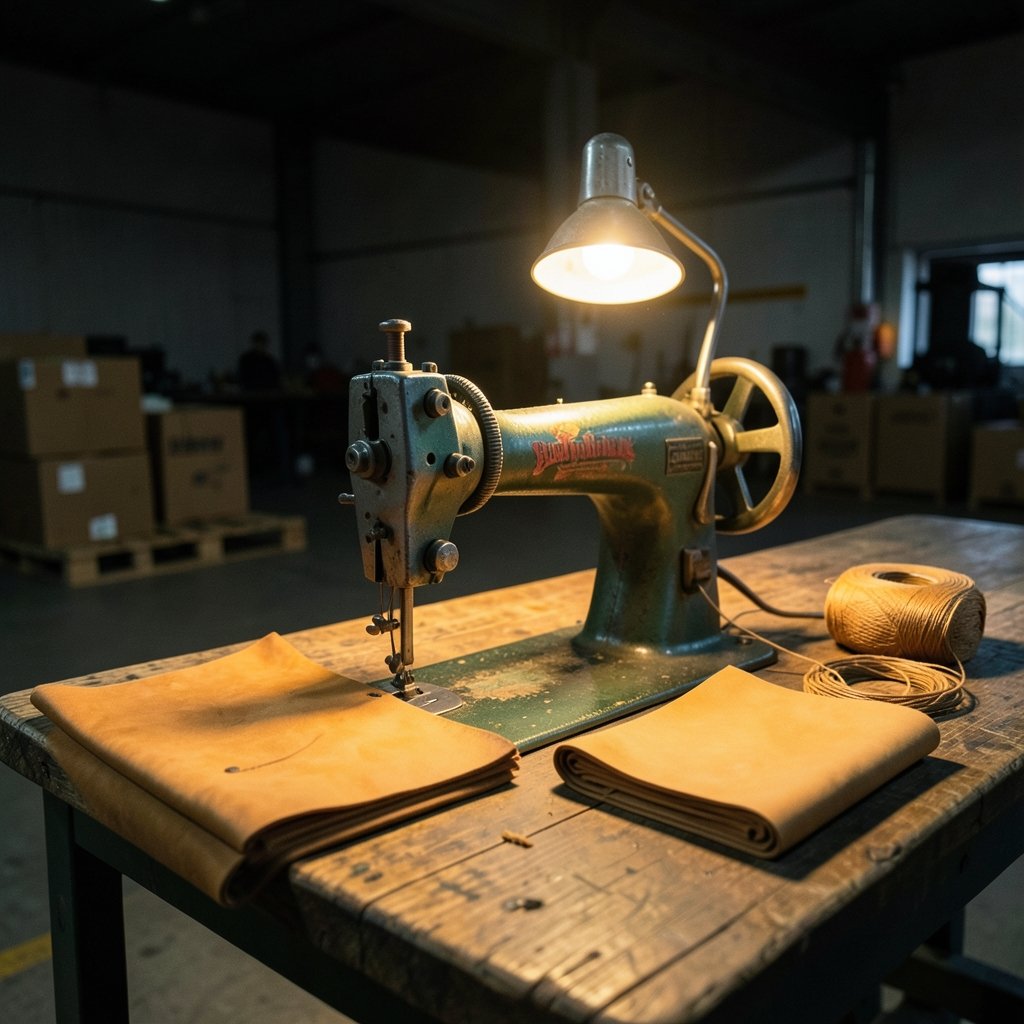
Can a standard home sewing machine push a needle through two layers of 8-ounce veg-tan leather? Almost never. Ask anyone who has tried, and you will hear the same story: the needle stalls, the thread shreds, and the machine’s plastic gears complain loudly before something gives. Thick leather is a different material class, and it demands a different class of machine. This guide explains what separates a machine that handles thick leather from one that merely survives light leather, which features matter most, and how to match a machine to the work you actually plan to do.
Why Thick Leather Breaks Ordinary Sewing Machines
Most domestic machines are built around fabric: light presser-foot pressure, small needles, fine thread, and feed dogs tuned for woven material. Thick leather stresses every one of those systems at once. It is dense, it does not compress, and it creates friction that heats needles. Stacked seams multiply the problem because each added layer must be clamped, fed, and penetrated in perfect alignment.
The practical failures follow a predictable pattern. A weak motor stalls at low speed, exactly where leather work needs torque. A low presser-foot lift cannot clear a thick seam, so the material drags or the foot rides up and the stitch length wanders. A standard feed dog marks the leather surface and shifts layers apart. And a needle that is too thin bends, deflects, and snaps. None of these are user errors. They are mismatches between machine class and material.
This is also why leather craft and resale value travel together. Buyers pay for construction that survives decades, and machines built for thick material are part of how that construction happens. The same logic that explains why luxury bags earn their price through leather craft and resale value applies to the tools behind the seams.
The Features That Separate Leather Machines From Fabric Machines
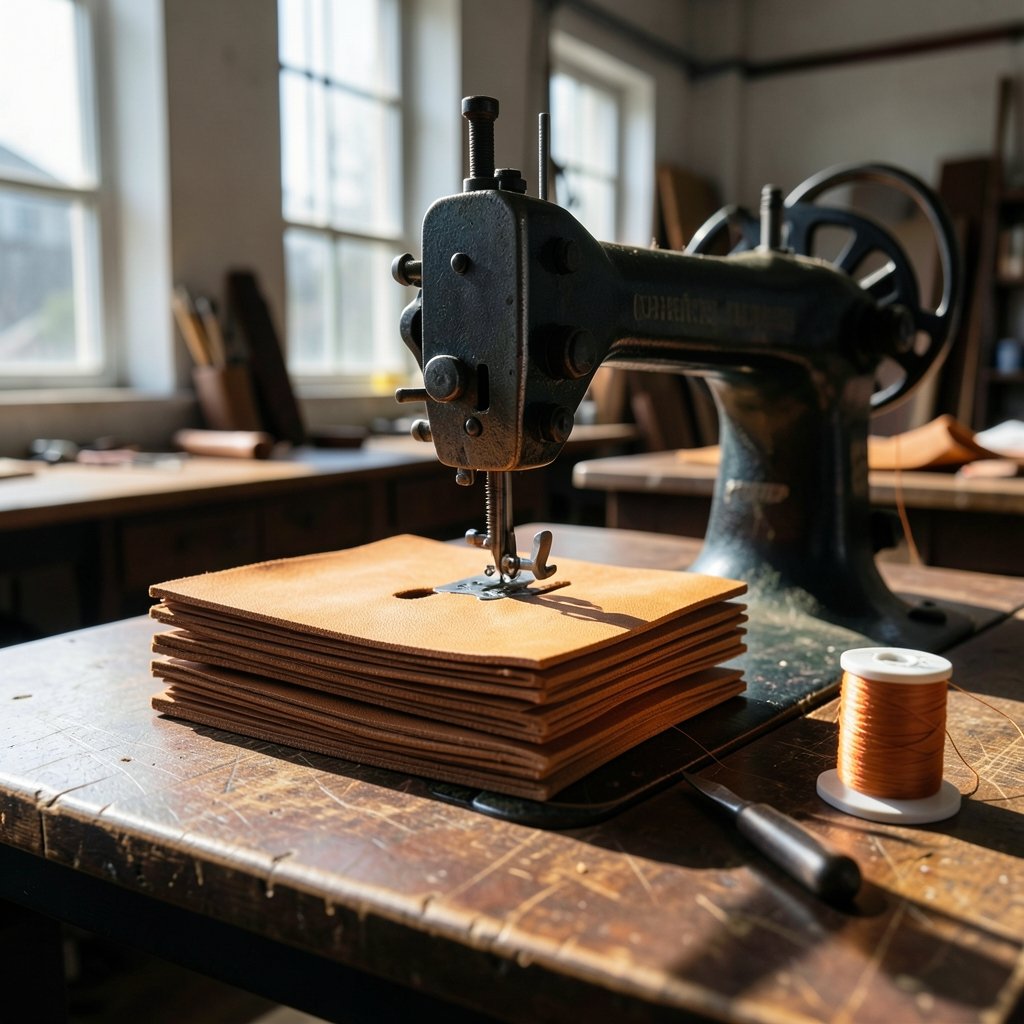
Feed System: Walking Foot and Compound Feed
The single most important feature for thick leather is the feed system. A walking foot moves the needle and the feed dog together, so the material advances from above and below at the same rate. A compound feed goes further: the feed dog, needle, and presser foot all move in sync. Both reduce layer shifting on stacked leather, which is the difference between a clean seam and a staircase of misaligned edges.
A standard drop feed, where only the feed dog moves beneath a stationary foot, tends to push the top layer forward and drag the bottom layer back. On thin leather that is annoying. On a four-layer bag gusset it is unusable.
Presser-Foot Lift and Throat Space
Thick leather needs clearance. Industrial leather machines commonly offer presser-foot lift in the range of roughly 10 to 20 millimeters, though specifications vary widely by model and should be checked per machine. That lift is what lets a folded seam pass under the foot without jamming. Equally important is throat space, the open area to the right of the needle. Bags, holsters, and saddlery involve bulky assemblies that must fit under the arm. A machine with generous lift but a cramped throat will still fight you on the final seams.
Needle System and Size
Leather work uses specific needle systems, commonly 135×17 or the heavier 794 system on industrial machines, with sizes running from roughly #18 up to #25 and beyond for thick material. The pairing depends on machine class, so the needle chart that came with your machine outranks any general recommendation. What matters practically is that the machine accepts the larger systems at all. A domestic machine limited to household needles cannot be adapted into a leather machine, no matter what accessory kit is attached.
Leather needles also have a cutting point rather than a sharp point. That geometry slices a clean hole instead of tearing fibers, which is why using a fabric needle on leather produces ragged stitches and skipped loops.
Thread Size and Tension Control
Heavy leather typically calls for bonded nylon or polyester thread in sizes like 138, 207, 277, or 346, matched to needle size. Larger thread needs a machine whose tension assembly and bobbin case can actually handle it. Thin stamped tension discs struggle to apply consistent pressure to a 277 thread, and the result is looping underneath or a top stitch that pulls tight and puckers. Look for robust, adjustable tension with a wide range, plus a bobbin system rated for heavy thread.
Motor: Servo Versus Clutch
Servo motors are widely preferred for leather because they deliver full torque at very low speeds and offer needle positioning. That control matters when you are creeping through a curve on a bag flap at one stitch per second. Clutch motors run at full speed or nothing, which is the opposite of what leather work needs. A needle-positioner that stops the needle in the material or out of it is a small feature that saves a lot of frustration.
Flat-Bed, Cylinder-Arm, or Post-Bed: Match the Machine to the Shape
Machine configuration matters as much as feed type, and the right answer depends on what you sew.
| Configuration | Best For | Trade-off |
|---|---|---|
| Flat-bed | Flat panels, belts, wallets, patch stitching | Bulky assemblies bunch against the arm |
| Cylinder-arm | Bags, cuffs, tubular and curved work | Less support for large flat panels |
| Post-bed | Shoes, small curved assemblies, tight radii | Narrow working surface, specialized use |
Cylinder-arm machines are often preferred for curved or tubular work because the narrow arm lets the material rotate around the needle. Flat-bed machines remain the default for flat panels. This is a preference driven by workflow rather than a hard rule, but most bag makers end up wanting a cylinder arm eventually.
How to Choose Based on Leather Weight
Thickness is not one number. Leather weight is measured in ounces, and the machine requirement scales with it. The table below is a practical starting point rather than a specification standard.
| Leather Weight | Typical Projects | Machine Class Needed |
|---|---|---|
| 2 to 4 oz | Linings, thin garments, small goods | Heavy-duty domestic may cope |
| 4 to 6 oz | Wallets, card holders, light bags | Walking-foot industrial recommended |
| 6 to 10 oz | Belts, sturdy bags, straps | Compound-feed industrial |
| 10 oz and up | Holsters, saddlery, heavy straps | Heavy industrial, large needle systems |
The common mistake is buying for the average project and ignoring the heaviest seam. A bag maker who mostly sews 4-ounce leather will still hit a folded 12-ounce base seam. Buy for the worst case, not the typical case.
Common Mistakes Buyers Make
Believing the “heavy-duty” label. Many domestic machines marketed as heavy-duty handle light leather and nothing more. The label describes fabric capability, not leather capability.
Buying a machine with no local service. Industrial machines are mechanical workhorses that last decades, but they need timing adjustments and occasional parts. A machine with no technician within reasonable distance becomes a problem the first time it goes out of time.
Skipping the test drive. Bring your own leather. A scrap of 8-ounce veg-tan and a folded seam tell you more in five minutes than any specification sheet. Sew a curve, sew over a thick crossover, and watch whether the stitches stay even and the layers stay aligned.
Ignoring the used market. Well-maintained used industrial machines often deliver more capability per dollar than new budget models, provided you inspect the hook, the feed mechanism, and the motor. Checking the machine’s condition is not unlike checking leather goods before you buy: the details tell the story, much as they do when you clean a Coach leather bag without ruining the finish and learn to read wear patterns.
Underspending on needles and thread. A capable machine fed cheap, wrong-sized consumables performs like a bad machine. Budget for a proper needle assortment and quality bonded thread from day one.
Practical Setup Tips That Make a Real Difference
- Match needle size to leather weight and thread size, then verify against the machine’s own chart.
- Reduce presser-foot pressure on softer leathers to avoid marks, and increase it on dense stacks to keep feed consistent.
- Use a servo motor with needle positioning and practice at low speed before attempting production work.
- Test stitch length on scrap of the same weight and layer count as the real project.
- Keep the machine timed and lubricated; leather work runs the mechanism harder than fabric work.
- Wear eye protection. Leather needles and awls cause puncture injuries, and needle guards exist for a reason.
Safety and Maintenance Habits Worth Building
Leather sewing concentrates force into a small point, and needles break under load. Eye protection is not optional, and a needle guard is worth keeping in place even when it feels inconvenient. Keep fingers clear of the needle path, and never pull material backward through a running machine.
Maintenance is straightforward but non-negotiable. Clean lint and leather dust from the feed area, oil per the manual, and check timing if stitches start skipping. Industrial machines reward this routine with years of service. The same principle of care over time shows up across leather goods generally, whether the item is a strap discussed in a guide to what makes a luxury belt worth it in leather, buckles, and fit or a bag built from a hide chosen with care, as explained in this full grain leather buyer’s guide to the strongest hide.
Where Machine Choice Fits Into the Wider Craft
A machine is one link in a chain that runs from hide selection to finishing. The best machine in the world cannot rescue a poor hide or a careless pattern, and understanding how premium leather work is structured helps set expectations. The traditions behind haute maroquinerie and the highest tier of luxury leather work rest on hand skills first and machinery second. A machine accelerates consistent stitching; it does not replace judgment about material and construction.
That perspective also keeps purchases grounded. The right machine is the one that matches your actual projects, your space, your budget, and your access to service. A machine that handles your heaviest seam comfortably, feeds stacked layers without shifting them, and accepts the needle and thread sizes your work requires is the correct answer, whether it is new or forty years old.
Conclusion
The best leather sewing machine for thick leather is not a single model but a specification: a walking-foot or compound-feed system, high presser-foot lift with generous throat space, support for large needle systems and heavy bonded thread, and a servo motor with low-speed torque and needle positioning. Configuration follows the work, with flat-bed machines for panels and cylinder-arm machines for bags and curves. Buy for your heaviest seam rather than your average one, test with your own leather before committing, and treat needles, thread, and maintenance as part of the machine rather than an afterthought. Get those pieces right, and thick leather stops being a fight and becomes a material you can shape with confidence.
What Is the Best Leather Sewing Machine for Thick Leather?
There is no universal model, but the specification is clear: a walking-foot or compound-feed industrial machine with high presser-foot lift, large throat space, support for needle sizes from roughly #18 to #25 and above, and a servo motor. Machines meeting all four criteria handle thick leather reliably; machines missing any one of them will struggle on heavy seams.
Can a Heavy-Duty Home Sewing Machine Sew Thick Leather?
Usually not. Most domestic machines are not rated for thick leather, and the heavy-duty label typically refers to fabric capability. Some heavy-duty domestics handle light leather of around 2 to 4 ounces, but stacked seams and dense veg-tan quickly exceed their motor torque, presser-foot lift, and needle capacity.
What Is the Difference Between a Walking Foot and Compound Feed?
A walking foot moves the needle and feed dog together so material advances from above and below at the same rate. Compound feed goes further, moving the feed dog, needle, and presser foot in sync. Both reduce layer shifting on stacked leather; compound feed offers the most control on thick, multi-layer seams.
What Needle and Thread Size Do I Need for Thick Leather?
Leather work commonly uses needle systems such as 135×17 or the heavier 794 on industrial machines, in sizes from about #18 up to #25 and beyond, paired with bonded nylon or polyester thread in sizes like 138, 207, 277, or 346. Exact pairings vary by machine class, so the machine’s own needle and thread chart should guide the final choice.
Do I Need a Cylinder-Arm Machine or a Flat-Bed?
It depends on the shapes you sew. Flat-bed machines suit flat panels, belts, and wallets. Cylinder-arm machines are often preferred for bags, cuffs, and tubular or curved work because the narrow arm lets material rotate around the needle. Many bag makers eventually own both.
Is a Used Industrial Machine a Good Buy?
Often yes, provided it is well maintained and you can inspect it. Check the hook, feed mechanism, and motor, and confirm that parts and service are available locally. A used industrial machine frequently delivers more thick-leather capability per dollar than a new budget model, but only if it is in sound mechanical condition.