
Hair Growth, Loss & Texture: What Really Matters
 Abdul WadoodLast updated

Have you ever pulled a stray strand from your brush and wondered whether that handful is normal, or whether something is going wrong with your hair? Many people ask the same question. Hair is one of the most discussed features of the human body, yet many myths persist. People blame shampoo for shedding, trust cold rinses for shine, and worry over one clogged drain. This article separates well-established findings from folklore and stays practical: what the hair cycle does, why loss happens, and which habits actually help. (Hair)
What Hair Actually Is
Every strand is a keratinized filament produced by a follicle rooted in the skin. Keratin is a tough protein, and the way its fibers and chemical bonds line up shapes whether your hair falls straight, waves, or coils. Humans carry millions of follicles across the body, with roughly 100,000 on the scalp alone. Treat that number as an approximation, since counts vary between individuals and between sources.
The visible part, the shaft, is biologically dead tissue. That is why cutting it does not hurt and why a trim cannot “repair” damage in any living sense. What you can do is manage how the surface behaves: conditioning smooths the outer layer, and heat or chemical treatments alter its structure.
The Hair Growth Cycle in Plain Terms
Every follicle runs on a repeating cycle with three main phases. Understanding them explains most shedding patterns people worry about.
| Phase | What Happens | Typical Scalp Duration |
|---|---|---|
| Anagen | Active growth; the follicle builds a new shaft | Roughly 2 to 7 years |
| Catagen | Transition; growth stops and the follicle shrinks | A few weeks |
| Telogen | Rest; the old hair sits loosely before release | About 3 months |
Because follicles are not synchronized, roughly 85 to 90 percent of scalp hairs sit in anagen at any moment while a small share rests in telogen. When those resting hairs let go, you shed. A commonly cited estimate is 50 to 100 hairs per day, though this figure is repeated far more often than it is precisely measured. Treat it as a ballpark, not a diagnostic threshold.
Why the Cycle Matters More Than Any Product
If a large number of follicles get pushed into telogen at once, shedding spikes a few months later. This is the mechanism behind telogen effluvium, a temporary diffuse shedding pattern often linked to illness, major stress, rapid weight loss, or childbirth. It is alarming but usually self-correcting. The practical takeaway: judge shedding over weeks, not days, and look backward two to three months for a trigger.
Why Hair Loss Happens
Androgenetic alopecia is the most common form of hair loss. It is driven by genetics and by androgens such as DHT, and it follows recognizable patterns: receding temples and crown thinning in men, widening part lines in women. It is progressive, which is why early action tends to work better than late action.
Other contributors are worth knowing because several are treatable:
- Iron deficiency and low ferritin are frequently identified in people with chronic shedding, particularly women.
- Thyroid disorders, both underactive and overactive, can disturb the cycle.
- Zinc and other nutritional shortfalls appear in the clinical literature as contributors.
- Medications, including some used in chemotherapy, cause predictable hair loss that is often temporary.
- Traction and scarring conditions damage follicles directly and can be permanent if ignored.
One practical warning: the single most common mistake is self-diagnosing. Two people with identical thinning can have completely different causes, and the treatments diverge sharply. A blood panel and a scalp examination cost far less than a year of guessing.
Graying, Texture, and Genetics
Graying reflects the progressive loss of melanocyte activity in the follicle. Pigment-producing cells gradually stop delivering color to the shaft, and the timing is largely genetic. Stress and smoking have been studied as accelerators, but no product restores pigment reliably.
Texture is similarly stubborn. Curl pattern is set by the shape of the follicle and the arrangement of bonds in the keratin. You can change how hair behaves temporarily with heat, moisture, and styling, but you cannot rewrite the pattern. This is why “curl-training” routines work for some people and disappoint others: they optimize what is already there rather than creating something new.
What Actually Works in Practice
Here is where experience beats marketing. A few habits consistently separate people with healthy-looking hair from those fighting it.
1. Stop over-washing and over-stripping. Daily shampoo is fine for oily scalps, but harsh cleansing followed by heavy conditioning creates a cycle of rebound oiliness. Match the wash frequency to your scalp, not to a rule.
2. Protect the shaft from mechanical damage. Wet hair stretches and breaks more easily. Detangle from the ends upward with a wide-tooth comb, and skip vigorous towel rubbing.
3. Limit heat. Frequent high-heat styling causes brittleness and split ends that no serum repairs. Lower the temperature and use a heat protectant.
4. Eat enough protein and iron-rich foods. Hair is protein. Severe restriction shows up in the mirror within months.
5. Be patient with any treatment. Hair grows roughly 1 cm per month on average, so visible change takes three to six months. Anyone promising results in two weeks is selling something else.
6. Get a proper diagnosis before buying anything. This is the tip that saves the most money and the most regret.
Common Mistakes Worth Avoiding
- Assuming a “growth” shampoo will fix a medical problem.
- Starting a treatment and quitting after six weeks.
- Using clarifying treatments daily, which strips the scalp barrier.
- Ignoring sudden, patchy loss, which warrants prompt medical attention rather than a new conditioner.
Hair and Self-Image
Hair carries unusual emotional weight. It signals identity, culture, and health, and losing it can affect confidence in ways that are entirely legitimate. Research on appearance and self-esteem consistently finds that hair matters to how people present themselves, which is why the psychological side deserves the same seriousness as the physical one. If thinning is affecting your daily life, that is a reason to seek help, not a reason to feel vain. For broader perspectives on media, appearance, and self-presentation, outlets such as Voozon Media cover how these themes play out culturally. (Hair (anatomy))
A Realistic Comparison of Approaches
| Approach | What It Targets | Realistic Expectation |
|---|---|---|
| Gentle cleansing and conditioning | Surface feel, breakage | Shine and manageability within weeks |
| Heat and mechanical protection | Shaft integrity | Fewer split ends over months |
| Nutritional correction | Cycle disruption from deficiency | Improvement over 3 to 6 months if deficiency was the cause |
| Medical treatment for pattern loss | Androgen-driven follicle miniaturization | Slowed progression; requires consistency |
| Cosmetic concealers | Appearance only | Immediate visual effect, no biological change |
The pattern is clear: cosmetic steps work fast and shallow, while biological steps work slowly and deep. Most people need both, and confusing the two leads to disappointment.
Conclusion
Hair rewards patience and punishes shortcuts. The fundamentals are unglamorous: understand the growth cycle, rule out medical causes before buying products, protect the shaft from heat and friction, eat adequately, and give any real treatment several months to show itself. Shedding between 50 and 100 hairs a day is a rough benchmark rather than a rule, and a sudden change deserves a professional look rather than a panic purchase. Get the basics right, and most hair problems become far more manageable than the internet suggests.
Frequently Asked Questions
How much hair shedding is normal each day?
A widely repeated estimate is 50 to 100 hairs per day, though this is an approximation rather than a precise measurement. The more useful signal is change: a sudden increase in shedding, especially two to three months after illness, stress, or childbirth, is worth investigating.
Does cutting hair make it grow faster?
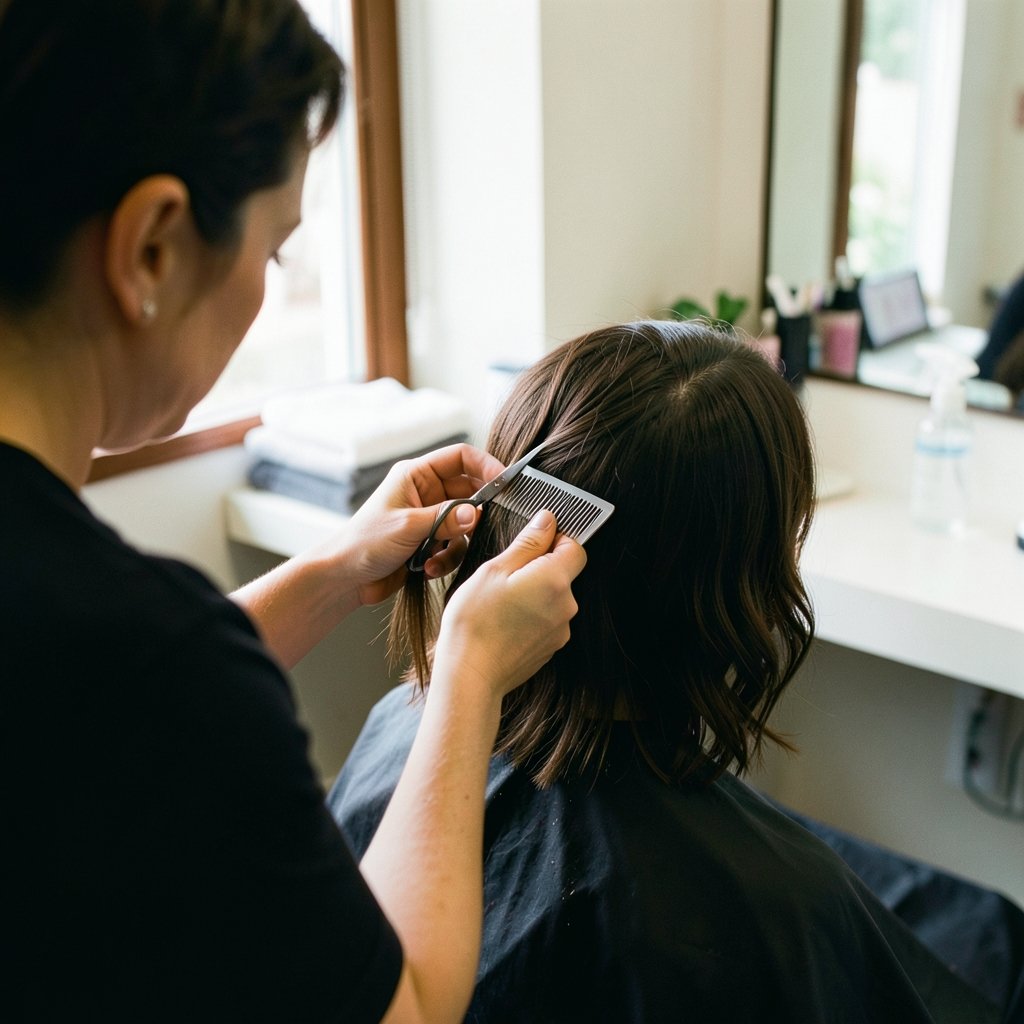
No. Hair grows from the follicle below the skin, and trimming affects only the dead shaft above it. A trim can make hair look thicker and healthier by removing split ends, but it does not change the growth rate of roughly 1 cm per month.
What is the most common cause of hair loss?
Androgenetic alopecia is the most common form, driven by genetics and androgens such as DHT. It typically produces receding temples and crown thinning in men and diffuse widening of the part in women. Because it is progressive, earlier intervention generally produces better results.
Can nutritional deficiencies cause hair loss?
Yes. Iron deficiency, low ferritin, and shortfalls in zinc are recognized contributors to shedding and appear frequently in clinical assessments. Correcting a genuine deficiency can help, but supplements taken without a confirmed deficiency rarely deliver the results people hope for.
How long before a hair treatment shows results?
Plan on three to six months. Scalp hair grows roughly 1 cm per month, so any real change takes time to become visible. Quitting after four to six weeks is one of the most common reasons people conclude a treatment “did not work.”
When should someone see a doctor about hair loss?
Prompt evaluation makes sense for sudden or patchy loss, scalp pain, itching, scaling, or loss accompanied by fatigue and other systemic symptoms. A blood panel and scalp examination can distinguish temporary shedding from progressive conditions, and the two require very different approaches.
What About Shampoo Claims and “Strengthening” Products?
Most claims on a bottle describe surface effects, not follicle biology. “Strengthening” usually means coating the shaft so it feels thicker and resists friction. That is a legitimate cosmetic benefit, but it does not change how hair grows. Similarly, “volumizing” refers to how strands sit relative to one another, not to the number of hairs present. Reading an ingredient list is less useful than reading the claim carefully: if a product promises to “reduce shedding,” ask whether it targets breakage or the growth cycle, because those are very different problems.
Everyday Habits That Quietly Damage Hair
Beyond heat and rough handling, a few ordinary behaviors matter more than people expect:
- Tight hairstyles worn repeatedly, such as ponytails, braids, or extensions, create constant tension at the hairline and can lead to traction alopecia over time.
- Sleeping on wet hair leaves the shaft in its most fragile state for hours, and rough cotton pillowcases add friction.
- Skipping conditioner to avoid greasiness often backfires, because dry strands tangle and break more easily during combing.
- Chemical treatments stacked too close together leave little recovery time between processes, compounding structural damage.
None of these is dramatic on its own. Their effect accumulates, which is why small adjustments made consistently tend to outperform occasional intensive fixes.
A Word on Patience and Perspective
Hair is one of the few parts of the body that visibly changes on a slow, predictable schedule. That slowness is frustrating when you want results, but it is also reassuring: it means the system responds to steady inputs rather than to dramatic interventions. Track changes with photos taken in the same light at the same interval, not with daily mirror checks that magnify normal variation.
Finally, remember that hair varies enormously across people, ages, and ethnic backgrounds, and much of what counts as “normal” is simply what is common in a given population. The goal is not a universal standard but a healthy scalp and a shaft that behaves well for you. Get the fundamentals right, seek help when something changes suddenly, and give the biology the months it needs. That approach will not produce a miracle, but it will produce results that last.