
Travertine vs Marble Coffee Tables: Durability, Care
 Abdul WadoodLast updated
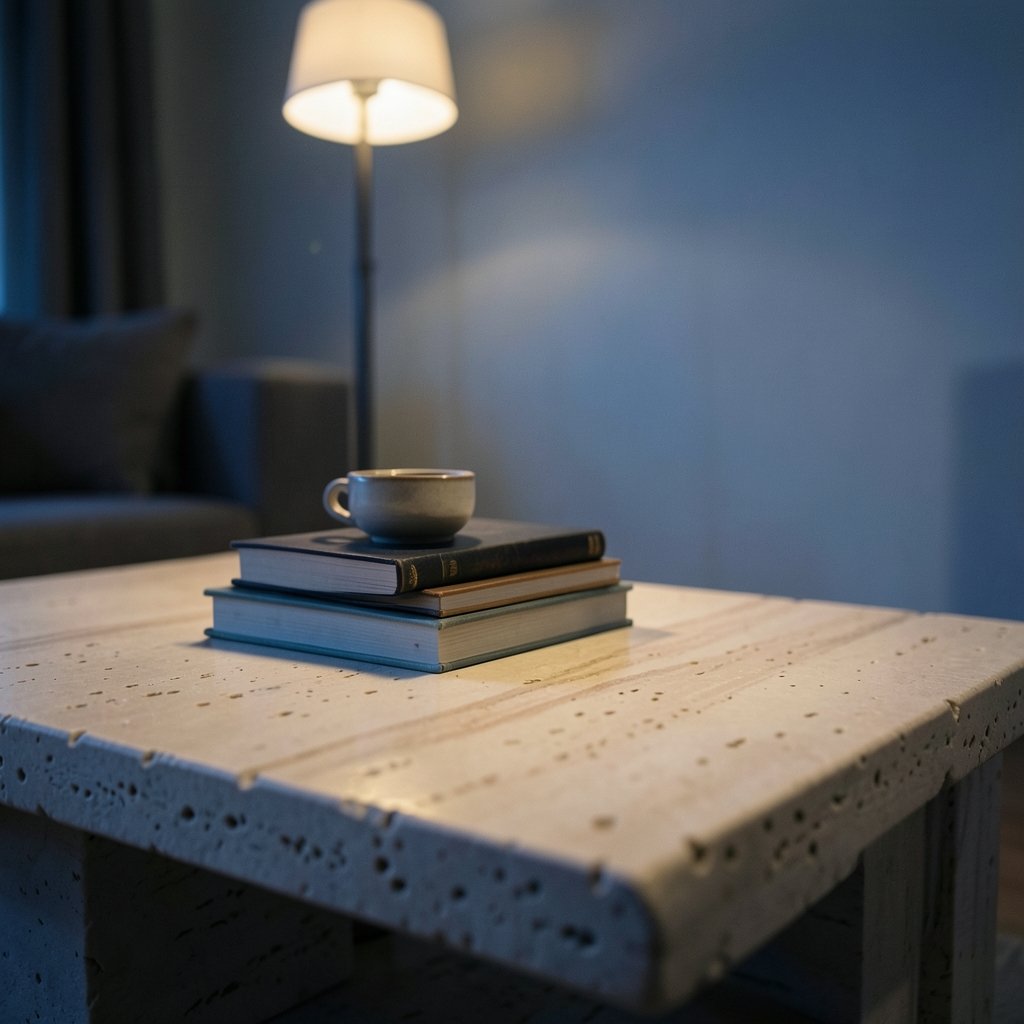
Which stone should hold your coffee cup, your books, and the occasional bowl of popcorn? A travertine vs marble coffee table comparison sounds simple until you start shopping. Both look creamy and elegant in photos. Both cost real money. Both can be ruined by a glass of red wine left sitting overnight.
The truth is that these two stones are not close cousins, even though they often sit side by side in showrooms. They form differently, age differently, and punish different mistakes. Picking the wrong one usually comes down to one overlooked detail: how you actually live on and around that table every day. This guide walks through the real differences, the practical trade-offs, and the mistakes that catch buyers after delivery day.
What Travertine and Marble Actually Are
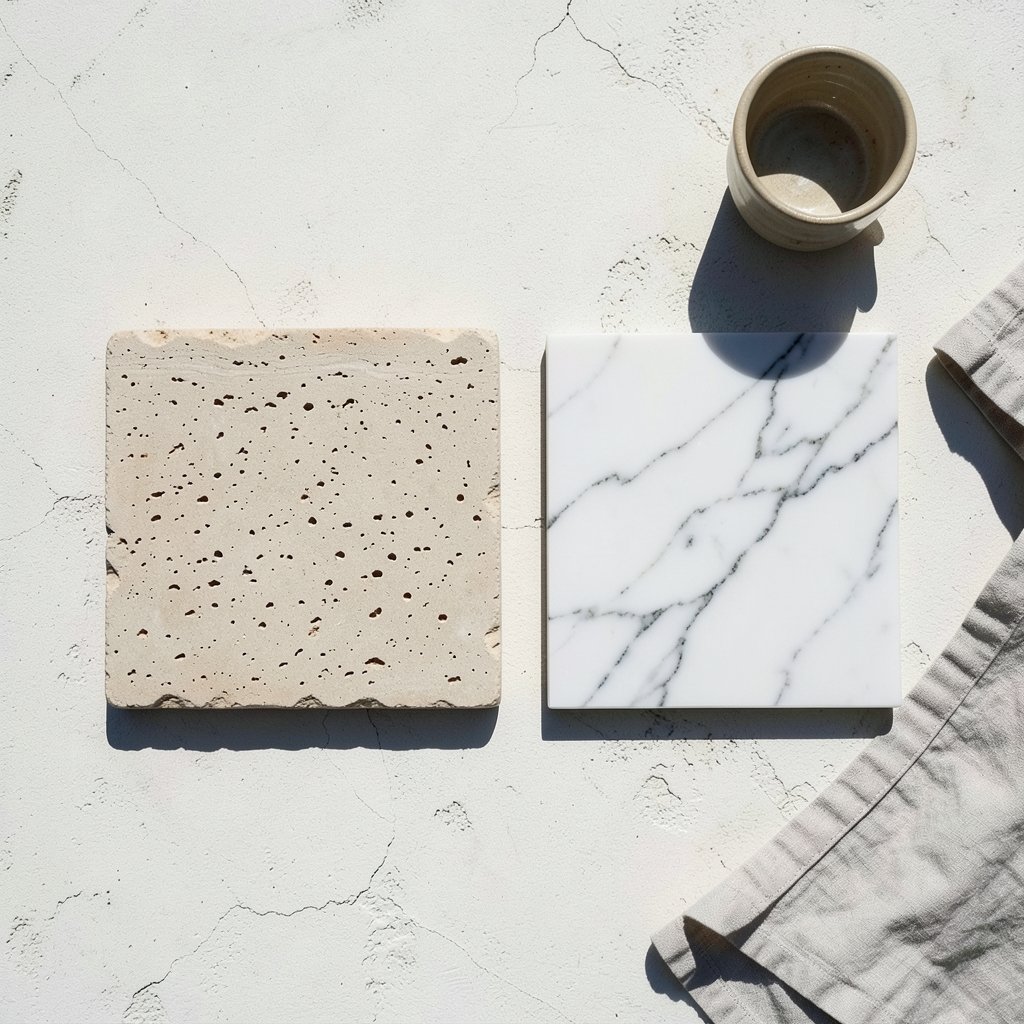
Travertine is a sedimentary stone, a form of limestone made mostly of calcium carbonate. It forms when minerals precipitate out of springs, especially hot springs, which is why it often carries layered bands and small voids where gas escaped during formation. Those pits are travertine’s signature. Filled travertine has them packed with cement or resin; unfilled travertine leaves them open as texture.
Marble is a metamorphic rock. It starts as limestone or dolomite and gets recrystallized under heat and pressure, which produces the dense, interlocking crystal structure that takes a polish so well.
That single difference in origin explains most of what follows. Travertine is a stone built around holes. Marble is a stone built around crystals. Each one behaves the way its structure suggests.
Head-to-Head Comparison
| Feature | Travertine | Marble |
|---|---|---|
| Rock type | Sedimentary limestone | Metamorphic stone |
| Surface | Pitted, banded, often honed or tumbled | Polished, veined, reflective |
| Porosity | Naturally porous; voids filled or left open | Generally denser and less porous |
| Acid sensitivity | Etches from acids | Etches from acids, often more visibly |
| Scratch risk | Relatively soft, scratches easily | Relatively soft, scratches easily |
| Best finishes for tables | Honed, brushed, tumbled | Polished or honed |
| Look | Warm, earthy, relaxed | Formal, dramatic, luxurious |
| Care demands | Sealing plus pit awareness | Sealing plus etch awareness |
Read that table again and notice what is missing: a clear winner. Neither stone dominates. They simply fail in different ways.
The Porosity Question, Explained Properly
Travertine’s pores are the first thing buyers ask about, usually with a worried face. Here is the practical version. Open pits collect crumbs, spills, and dust. A filled slab solves most of that, but the fill itself can look slightly different from the surrounding stone, and it can loosen over years of use.
Marble’s reputation for density is deserved but oversold. It is generally less porous than travertine, yet it is still a calcium-based stone that reacts to acid. Dense does not mean invincible.
For a coffee table, this matters in one specific way. A table is a horizontal surface at knee height, which means it catches everything: coffee drips, juice boxes, craft glue, nail polish remover. A porous stone with open pits gives those liquids more places to hide.
Etching: The Problem Neither Stone Escapes
Both stones are calcium carbonate, and calcium carbonate reacts with acid. Vinegar, citrus, wine, soda, and many household cleaners will etch the surface, leaving dull white marks that no amount of wiping removes. Etching is not a stain. It is a tiny chemical burn in the finish.
Marble tends to show etching more dramatically because polished marble reflects light. A dull spot on a mirror-like surface is obvious. Honed travertine scatters light anyway, so minor etch marks blend into the texture. This is why designers often specify honed finishes for busy households.
Sealers reduce staining. They do not stop etching. Anyone who promises otherwise is selling optimism, not chemistry.
What Actually Works in Real Rooms
Practical experience from stone care and furniture use points to a few patterns that repeat again and again.
Match the finish to the household. Polished marble belongs in rooms where drinks have coasters and children have left home. Honed travertine forgives far more.
Seal before first use, then on a schedule. A new stone table should be sealed before anything touches it. After that, re-seal when water stops beading on the surface. In a kitchen-adjacent living room, that might be every six to twelve months.
Use coasters as furniture, not etiquette. Keep a small tray or a set of coasters permanently on the table. The table is more likely to stay pristine when protection is already in place rather than fetched from a drawer.
Skip the vinegar spray. This is the single most common mistake. Well-meaning owners reach for a natural vinegar cleaner, which is exactly the wrong product for any calcium-based stone. Mild pH-neutral stone soap is the standard recommendation.
Blot, do not wipe, spills. Wiping spreads an acid spill across a larger area and etches more surface. Blot immediately, then clean with stone soap.
Lift, never drag. Both stones are heavy, and a heavy top on a slender base is a tipping risk. Move the table with two people or furniture sliders.
Design and Styling Differences
Travertine reads warm and casual. Its beige, walnut, and ivory tones sit comfortably with linen sofas, rattan, and earthy palettes. It suits relaxed living rooms, sunrooms, and spaces where the table is part of a layered, lived-in look.
Marble reads formal and sculptural. Bold veining turns a coffee table into a focal point, which is wonderful in a minimalist room and overwhelming in a busy one. A heavily veined marble top plus patterned rugs plus gallery walls equals visual noise.
One styling note that surprises people: a stone top changes how the whole table setting feels. The same principles that make a dinner table feel calm apply here, since a coffee table is really a low display surface. If the goal is a composed, uncluttered look, the guide to set a breakfast table that looks calm not cluttered translates almost directly to coffee table styling, from tray placement to limiting the number of objects.
Weight, Bases, and Construction Traps
Natural stone tops are heavy, and the exact weight depends on thickness and density, so check the specification for the specific product rather than trusting a general number. What matters practically is the base. A thin metal frame with four narrow legs may look airy in a showroom, but it needs proper bracing to carry a stone slab safely.
Watch for these construction issues:
- Unsupported overhang. Stone can crack at an unsupported edge if someone leans on it.
- Sharp inner corners. Rectangular cutouts in stone concentrate stress.
- Cheap fill on travertine. Poorly filled pits can crumble at the edges.
- No felt pads. Stone on hard flooring scratches both surfaces.
- Delivery without inspection. Photograph the top before signing, because chips found later are hard to claim.
Cost, Care, and Longevity
Both stones sit in the premium tier of coffee table materials, and price varies enormously with size, thickness, finish, and base design, so broad price claims are unreliable. What is reliable is the care budget.
Travertine asks for patience with texture. Its pits need occasional cleaning with a soft brush, and its finish hides small sins. Marble asks for vigilance. Every spill is a small event, and every etch mark is permanent unless professionally repolished.
Longevity favors whichever stone gets consistent care. A sealed, coastered marble table can look new for decades. A neglected travertine table with unsealed pits will look tired within a few years. The stone is not the variable. The owner is.
Pairing the Table With the Rest of the Room
A coffee table rarely lives alone. It anchors a seating area, and its material should answer to the room’s other surfaces. Stone tops pair naturally with wood, leather, and woven textures. They fight with glossy laminates and busy patterns.
If the room also hosts dinner parties, think about the flow between the coffee table and the dining table. A stone coffee table in a travertine or marble finish echoes nicely with a well-planned dining setup, and the steps to set an elegant dinner table offer a useful checklist for carrying a material palette from one surface to another without making the room feel showroom-stiff.
Books are the other classic coffee table companion, and they deserve the same material thinking. Heavy art volumes on a stone top need felt pads or a cloth runner to avoid scratches, and the books themselves become part of the visual composition. A practical guide to the best coffee table books about art covers how to choose volumes that look intentional rather than stacked at random. For rooms with a lighter, wanderlust mood, the guide to the best coffee table books about travel explores options that suit stone-and-linen palettes especially well.
Who Should Choose Which
Choose travertine if the room is casual, the household is busy, and the finish can be honed or tumbled. It hides wear gracefully and feels warm rather than grand.
Choose marble if the room is formal or minimalist, the table is a statement piece, and the household will genuinely use coasters. Polished marble rewards discipline with a finish nothing else matches.
Choose neither if the table will double as a craft station, a toddler’s snack zone, or a plant stand with frequent watering. In those cases, a sealed stone look-alike or a different material entirely will cause less heartbreak.
Conclusion
The travertine vs marble coffee table decision is not about which stone is better. It is about which failure mode you can live with. Travertine’s pits collect debris but hide etch marks. Marble’s polish looks spectacular but records every acid spill. Both need sealing, both need coasters, and both will outlast most of the furniture around them if treated with a little respect.
Start with the room, then the household, then the finish. Buy the stone whose weaknesses match your habits, not the one whose photos match your mood board. That single shift in thinking prevents most of the regret that follows a stone table purchase home.
Frequently Asked Questions
Is travertine more durable than marble for a coffee table?
Neither is clearly more durable. Both are relatively soft calcium-based stones that scratch and etch. Travertine’s pitted surface hides small marks better, while marble’s denser structure resists moisture slightly more. Finish and sealing matter more than the stone type.
Can I use vinegar to clean a travertine or marble coffee table?
No. Vinegar is acidic and will etch both stones, leaving dull marks that cannot be wiped away. Use a pH-neutral stone soap and blot spills rather than wiping them across the surface.
Does sealing make a stone coffee table stain-proof?
Sealing slows staining but does not prevent etching from acids, and it does not make the stone waterproof. Reapply sealer when water stops beading on the surface, often every six to twelve months in busy rooms.
Why does my marble table have white rings and dull spots?
Those are etch marks, not stains. An acidic liquid reacted with the calcium carbonate and dulled the finish. A honed surface hides them better, and professional repolishing can restore a polished top.
Is travertine a type of marble?
No. Travertine is a sedimentary limestone formed by mineral precipitation at springs. Marble is a metamorphic rock formed when limestone recrystallizes under heat and pressure. The trade term “travertine marble” is a misnomer. (Travertine)
How do I protect a stone coffee table in a family home?
Use a honed finish, seal before first use, keep coasters and a tray on the table permanently, blot spills immediately, lift rather than drag the table, and place felt pads under heavy books and objects.