
V&A East Museum Guide 2026: What to See & Plan
 Abdul WadoodLast updated

A massive new museum is rising beside the Olympic Stadium in Stratford, and it is set to reshape how Londoners think about design. The V&A East Museum is one of the most anticipated cultural openings in the UK. It brings a branch of the world’s leading museum of art, design, and performance to east London. This guide walks through what the museum is, why it matters, and how to plan a visit without wasted time.
The story is bigger than one building. V&A East is a two-part project. It pairs a brand-new museum with a working storage facility that opens its doors to the public. Together they form a fresh model for what a museum can be in the twenty-first century. According to the Victoria and Albert Museum, the project sits at the heart of one of Europe’s largest cultural regeneration schemes.
What Exactly Is V&A East Museum?
The V&A East Museum is a new branch of the Victoria and Albert Museum. It sits in Stratford, in the London Borough of Newham. It is part of the East Bank cultural quarter on the Queen Elizabeth Olympic Park.
The idea is simple but ambitious. Take one of the world’s great design collections and plant a piece of it in a part of London that has been transformed by the 2012 Olympic Games. The museum is not a smaller copy of the South Kensington mothership. It is built around a distinct mission: contemporary design, young people, and the creative communities of east London.
The building was designed by the architecture practice O’Donnell + Tuomey. The firm is known for careful, craft-led buildings that respond to their settings. Expect a structure that makes a statement without shouting over the stadium next door.
The Sister Site: V&A East Storehouse
Here is where the project gets genuinely interesting. The V&A East Storehouse is a companion facility at Here East, also on the Olympic Park. It is not a conventional museum. It is a working store where the public can see how a national collection is cared for, researched, and moved.
The Storehouse was designed by Diller Scofidio + Renfro, the New York studio behind high-profile cultural projects around the world. The concept turns the back-of-house into front-of-house. Visitors can walk among objects that would normally sit in sealed crates. It is a rare chance to see the machinery of a museum, not just its polished displays.
In practice, this means two very different days out. One is a classic museum visit. The other is a behind-the-scenes exploration. Plan for both if you can.
Why East Bank Matters for Visitors
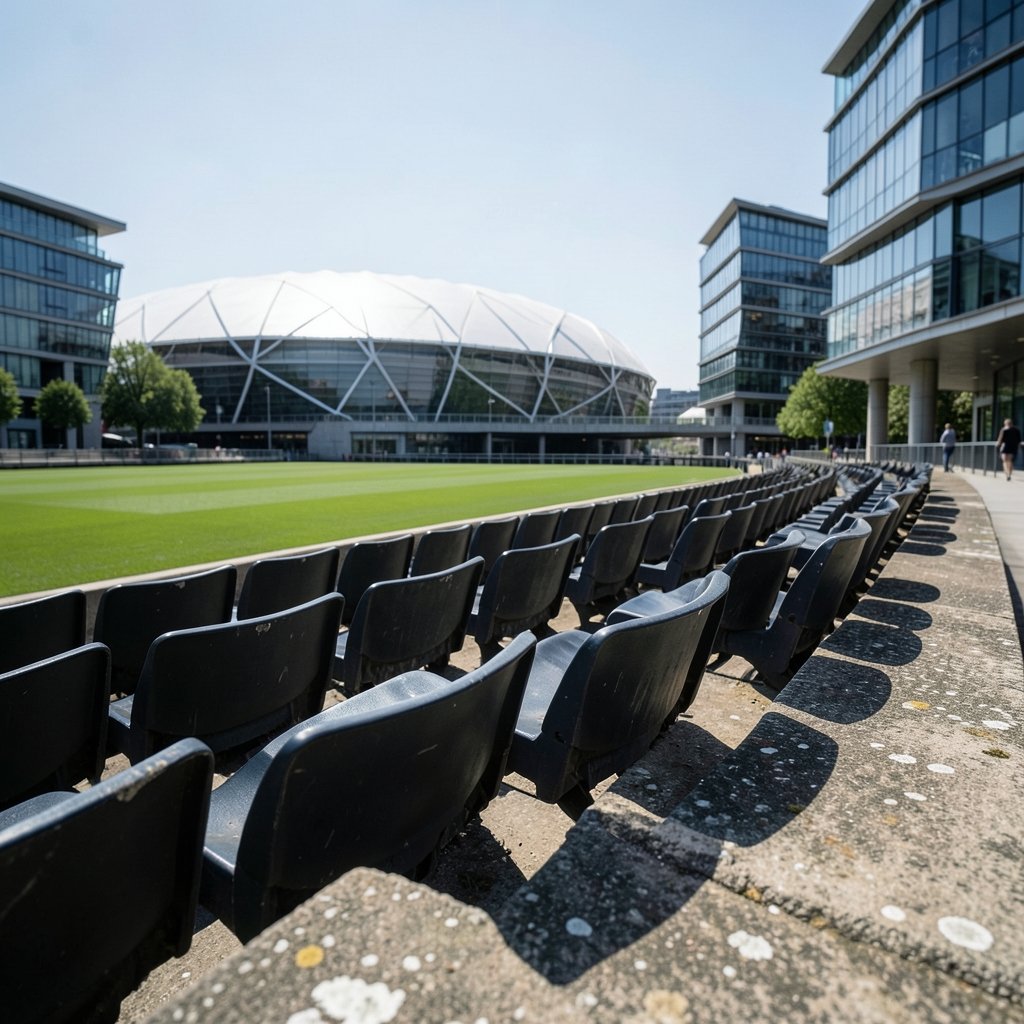
East Bank is a collaboration, and that matters for anyone planning a trip. The wider development brings together several major institutions on one site:
| Partner | What It Adds |
|---|---|
| V&A East Museum and Storehouse | Design, art, and collection access |
| Sadler’s Wells | Dance and performance |
| BBC | Broadcasting and music spaces |
| UCL | University research and teaching |
| London College of Fashion | Fashion education and public programming |
The upshot is that a visit to the V&A East Museum can anchor a full day. You can pair a design exhibition with a performance, a campus walk, or a trip to the fashion college. The Olympic Park itself offers landscaped walks, waterways, and the stadium. The area is well connected by rail, with Stratford station serving multiple lines.
For context on how cultural districts drive urban change, the Mayor of London has championed East Bank as a long-term investment in jobs, skills, and tourism. The project is backed by public funding and the London Legacy Development Corporation.
What to Expect Inside the Museum
The V&A East Museum is designed around a clear curatorial vision. Rather than recreating the encyclopedic sweep of South Kensington, it focuses on contemporary design and the people making it now. That means design across many fields: furniture, graphics, fashion, digital products, architecture, and craft.
The museum is also built with young audiences in mind. Programming is intended to speak to teenagers, students, and first-time museum visitors. That focus shapes everything from exhibition design to the way objects are explained.
A few things to keep in mind:
- Expect the collection to feel alive. Contemporary design changes fast, so displays are likely to rotate more than in a traditional museum.
- Expect east London to be present. Local makers and communities are part of the story, not an afterthought.
- Expect a different pace. The building is designed for shorter, more flexible visits than a grand national museum.
The V&A’s London museums have historically been free to enter. Whether that applies to every exhibition at V&A East is worth checking before you travel, since major shows sometimes carry a ticket price.
How to Plan Your Visit
Good planning makes the difference between a rushed afternoon and a memorable day. Here is a practical sequence that works well.
- Check the official site first. Confirm opening dates, hours, and whether timed entry applies. New museums often use booking systems in their early months.
- Decide which site you want. The Museum and the Storehouse are separate buildings. Pick one for a half day, or both for a full day.
- Book transport to Stratford. The area is served by the Elizabeth line, the Central line, the Jubilee line, the DLR, and National Rail. Allow extra time for the walk across the park.
- Build in buffer time. The Olympic Park is large. Walking between venues takes longer than the map suggests.
- Check what is on. Temporary exhibitions and events change often. Look at the programme a week before you go.
- Plan food and rest stops. The park has cafés and restaurants, but popular spots fill up at lunchtime on weekends.
Common Mistakes to Avoid
Even experienced museum-goers trip up on a few things here.
- Assuming it is the South Kensington museum. It is not. Check the address before you set off.
- Booking only one site and expecting to see both. They are close but distinct. Treat them as separate visits.
- Underestimating the walk. The park is spacious. Comfortable shoes matter more than you think.
- Ignoring the programme. The best experiences at a new museum are often talks, workshops, and late openings, not just the permanent displays.
- Turning up without checking. Opening hours at new venues can shift as operations settle. A quick check saves a wasted trip.
Getting There and Around
Stratford is one of the best-connected places in London. The main station handles tube, rail, and DLR services. From there, the Olympic Park is a short walk, and signage points toward East Bank.
For visitors coming from central London, the Elizabeth line is often the fastest option. It cuts journey times significantly from the West End and the City. The Central line is a solid alternative. Cyclists will find paths across the park, and there are walking routes from nearby neighbourhoods.
Once on site, everything is walkable. The distances are manageable, but the park is open and exposed. On a rainy day, plan for a wet walk between buildings. On a sunny one, bring water.
Who Will Love This Museum
The V&A East Museum is not aimed at one type of visitor. It rewards curiosity more than prior knowledge.
- Design enthusiasts will find contemporary work, materials, and process on display.
- Families benefit from programming built for young audiences.
- Students and early-career creatives get a nearby resource in one of London’s fastest-changing districts.
- Architecture fans can study two significant new buildings on one site.
- Local residents gain a national institution on their doorstep.
If you prefer the grand sweep of a historic collection, South Kensington remains the place to go. If you want to see where design is heading, east London is the answer.
The Bigger Picture
Cultural projects of this scale always invite debate. Supporters point to jobs, skills, and visitor spending. Critics ask who the regeneration is really for, and whether local people benefit as much as developers. Those questions are fair, and they are worth holding in mind as you visit.
The V&A has framed V&A East as a museum for the many, not the few. Whether it delivers on that promise will be judged over years, not months. What is clear is that the project is a genuine experiment. A national museum is testing a new relationship with a local community, and a storage facility is testing whether the public wants to see the workings of a collection.
For more coverage of cultural spaces and how they shape cities, see Voozon Media.
Frequently Asked Questions
Where is the V&A East Museum located?
It is in Stratford, east London, on the Queen Elizabeth Olympic Park. It forms part of the East Bank cultural quarter, alongside Sadler’s Wells, the BBC, UCL, and London College of Fashion. The nearest major transport hub is Stratford station.
Is the V&A East Museum the same as the V&A in South Kensington?
No. They are branches of the same institution but completely separate sites. The South Kensington museum holds the historic national collection. V&A East focuses on contemporary design and east London’s creative communities. Check the address before travelling.
What is the V&A East Storehouse?
It is a companion facility at Here East, also on the Olympic Park. It is a working collection store that opens to the public, letting visitors see objects and conservation work up close. It was designed by Diller Scofidio + Renfro. Many visitors treat it as a separate trip from the museum.
Do I need to book tickets in advance?
That depends on the exhibition and the time of year. New museums often use timed entry during busy periods. Check the official site shortly before your visit. Even if general entry is free, major temporary shows may require a paid ticket. (V&A Official Website)
How long should I allow for a visit?
Allow at least two to three hours for the museum itself. If you want to see the Storehouse as well, plan a full day. Add extra time for walking across the Olympic Park, which is larger than it looks on a map.
Is it suitable for children and teenagers?
Yes. The museum is explicitly designed with young audiences in mind, and programming aims to engage first-time visitors and students. Families should check the events calendar for workshops and activities before booking.
Conclusion
The V&A East Museum is more than a new building in a regenerated park. It is a test of what a national museum can be when it moves into a neighbourhood and shares its workings with the public. The pairing of a contemporary design museum with a working storehouse is genuinely novel, and it gives visitors two distinct reasons to travel to Stratford.
Plan ahead, check the official site for current hours and exhibitions, and give yourself time to walk the park. Go with curiosity rather than a checklist. Whether you come for the design, the architecture, or the chance to see a collection in the making, V&A East offers something the South Kensington museum cannot: a view of where culture is heading next.
For anyone weighing up the trip, the practical case is straightforward. East London has long been a creative engine, and East Bank gives that energy a permanent home alongside world-class neighbours. If you are visiting London with limited time, treat V&A East as a half-day option rather than a substitute for South Kensington. If you live nearby, it is a resource worth returning to as the programme evolves. Either way, check the official V&A East site for current opening hours, exhibition details, and booking requirements before you travel, as these will settle as the museum finds its rhythm.