
Ultra Luxury Cruise Lines: What Your Fare Buys in 2026
 Abdul WadoodLast updated
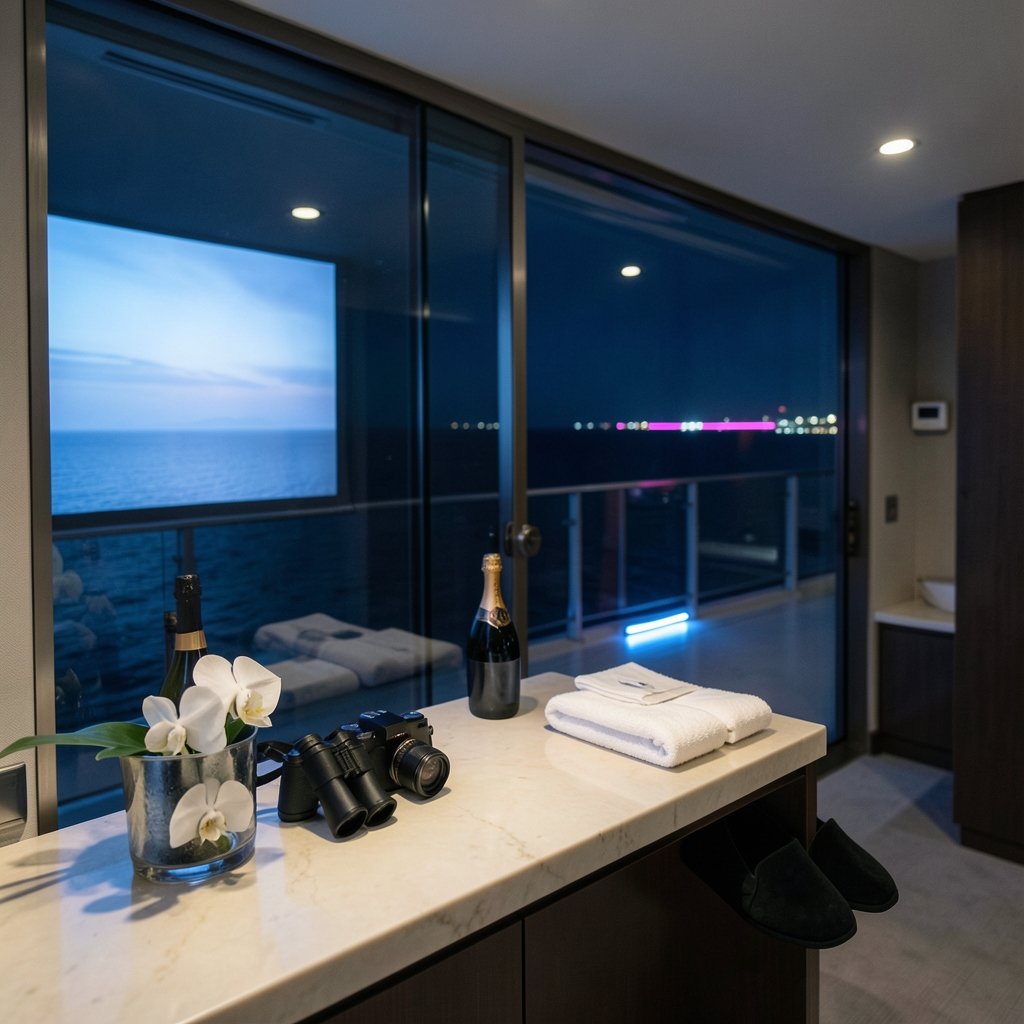
What separates a $12,000 suite from a $1,200 cabin when both float on the same ocean? The answer is less about marble bathrooms and more about a business model most travelers never see. Ultra-luxury cruise lines sell a fundamentally different product: smaller ships, bundled pricing, and a guest-to-crew ratio that borders on the absurd. Understanding how that model works is the difference between overpaying for a label and paying fairly for a genuinely different experience.
The Segment Is Smaller Than You Think
Industry analyses have pegged the ultra-luxury segment at roughly 1 to 2 percent of global cruise capacity. That is tens of thousands of berths against the mass market’s millions. The exact figure shifts by analyst and year, so treat any precise number with suspicion.
The commonly grouped names are Regent Seven Seas Cruises, Silversea Cruises, Seabourn, Crystal Cruises, and Explora Journeys, with Ponant and Scenic Eclipse often slotted into a luxury-expedition tier. Trade publications use these groupings loosely. Here is the uncomfortable truth: there is no formal industry definition of “ultra-luxury,” no certification body, and no audited standard. Unlike hotel star ratings in some countries, the term is marketing usage backed by consistent practice, not regulation.
That matters more than it sounds. It means a line can call itself ultra-luxury while running a 900-guest ship with paid specialty dining. Your job as a buyer is to check the inclusions list, not the brochure adjective.
What the All-Inclusive Fare Really Covers

Ultra-luxury lines typically bundle gratuities, specialty dining, beverages, and often shore excursions and airfare into the fare. This is a positioning claim the lines make about themselves, not an audited standard, but it is broadly accurate in practice.
Run the math before you recoil at the sticker price. A mainstream cruise with a $1,500 base fare can easily reach $3,000 per person once you add drinks, tips, specialty restaurants, excursions, and flights. A $7,000 ultra-luxury fare that includes all of it is not the same gap it first appears to be. The lines know this, which is why their marketing leans so hard on the word “included.”
Where the comparison breaks down: ultra-luxury lines still charge for spa treatments, some premium wine lists, and certain private excursions. “All-inclusive” has a ceiling. Ask for the exclusions sheet before booking, not after.
Ship Size and the Space Ratio
Ultra-luxury vessels generally carry roughly 300 to 1,000 guests, against 3,000 to 6,000-plus on mainstream megaships. Those figures are approximate and vary by ship and line, but the ratio is the point.
The practical effect shows up in places you would not expect. No tender queues at 8 a.m. No scramble for loungers. A bartender who remembers your order by day two. Fewer than 700 guests also means ports that megaships simply cannot access: small harbors, shallow channels, town quays within walking distance of the old quarter.
The tradeoff is real. Smaller ships carry fewer venues. You will not find a bumper car track or a 12-restaurant food hall. If nightlife variety and onboard spectacle drive your vacation choices, this segment will feel quiet. That is a feature for some travelers and a dealbreaker for others.
How to Compare the Major Lines
| Line | Typical Guest Count | Signature Strength | Parent Group |
|---|---|---|---|
| Regent Seven Seas | ~700 | Most inclusive fares, unlimited excursions | Norwegian Cruise Line Holdings |
| Silversea | ~300–600 | Expedition crossover, wide itinerary range | Royal Caribbean Group |
| Seabourn | ~450–600 | Intimate ships, strong expedition arm | Carnival Corporation |
| Crystal | ~700–1,000 | Dining and enrichment programming | A&K Travel Group |
| Explora Journeys | ~900 | Newer ships, contemporary design | MSC Group |
Ownership is worth knowing because it shapes everything from loyalty programs to how a line weathers a bad year. The segment is concentrated inside large cruise groups, which brings financial stability but also pressure to standardize. Crystal’s history is the cautionary tale: the line suspended operations in 2022 after its parent’s insolvency and relaunched under new ownership in 2023. Verify current ownership status before you book, since corporate structures move faster than brochures.
If you are weighing where the price tiers genuinely separate, this breakdown of premium vs luxury vs ultra luxury and where the real lines are drawn is a useful calibration before you start comparing fares.
Expedition Ships: Luxury Meets the Polar Code
Several ultra-luxury lines run expedition vessels. Silversea, Ponant, and Scenic all operate ships built for remote water. These voyages carry their own regulatory layer: the Polar Code, in force since 2017, sets construction and operational requirements for ships sailing polar waters, and the IMO’s Polar Code framework explains what those requirements actually cover.
Practically, expedition-luxury means zodiac landings, naturalist guides, and a heated mudroom. It also means capacity limits at landing sites, which are set by Antarctic treaty rules rather than the cruise line. A 200-guest ship can land everyone at once. A 500-guest ship cannot, and you will rotate in shifts. If a brochure promises “Antarctica,” check the guest count before you check the cabin photos. (Cruise ship)
Safety and Health Rules Apply Here Too
Luxury does not buy exemption from regulation. Cruise ships are governed by the flag state (the country of registry) and by port states under International Maritime Organization conventions, notably SOLAS for safety and MARPOL for pollution. The SOLAS convention governing life-saving and fire safety at sea,-1974.aspx),-1974.aspx) applies to a 300-guest luxury vessel exactly as it does to a megaship.
Ships calling at US ports also fall under US Coast Guard inspection and CDC Vessel Sanitation Program oversight, and the CDC Vessel Sanitation Program inspection records are public. This is one of the few genuinely objective quality signals available to consumers in a segment built on subjective claims. Check the inspection history of your specific ship rather than the line as a whole. A brand-new vessel and a fifteen-year-old one under the same flag can score very differently.
The Mistakes First-Time Buyers Make
The most common error is comparing base fares across tiers without normalizing inclusions. A luxury fare that bundles airfare and excursions can undercut a premium fare plus add-ons. Build a spreadsheet with four columns: fare, drinks, gratuities, shore time. The ranking often flips.
The second mistake is booking for the ship when the itinerary matters more. Ultra-luxury ships shine in destinations where small size is an advantage: the Greek isles in shoulder season, the Norwegian fjords, the smaller Alaskan inlets. On a route where every port is a deep-water container terminal, you are paying for space you could get cheaper elsewhere.
The third is assuming “ultra-luxury” means formal. Most lines have relaxed dress codes considerably. Pack the jacket if you enjoy wearing it, not because you fear the dining room.
The fourth is ignoring the cabin category trap. Entry-level suites on these ships are often excellent, and the jump to a top suite buys square footage rather than a better experience. Spend the difference on a private excursion instead.
Matching the Line to the Trip
Cruise selection is a matching problem, and the ultra-luxury segment rewards specificity. A few practical pairings:
- Define the destination first. Glacier-heavy Alaska itineraries reward ships with strong viewing space and permit access, which is why a guide to choosing a cruise line by Alaska glacier access and style is more useful than a generic ranking.
- Decide whether you want children aboard. Some lines welcome families; others are effectively adult-only by design. This comparison of the best cruise lines for adults sailing child-free covers how that plays out in practice.
- Set the budget ceiling before you browse. It is easier to hold a number than to talk yourself down from a suite you cannot afford.
- Read the inclusions sheet line by line. Anything not listed is billable.
If you are still at the stage of deciding whether ultra-luxury is the right tier at all, a broader framework for choosing the best cruise line for your travel style will save you from starting at the top of the market by default.
Who This Segment Actually Suits
Ultra-luxury cruising suits travelers who value space, service attention, and simplicity of billing over onboard spectacle. It suits people who would rather see four ports well than eight ports badly. It suits anyone who has done the add-on math and concluded that predictable total cost beats a low headline fare.
It does not suit travelers who want water parks, Broadway-scale production shows, or a ship that functions as the destination. It also does not suit anyone unwilling to read the fine print, because the entire value proposition rests on inclusions that vary by line and by voyage.
The honest framing: you are buying a lower-stress trip with fewer decisions to make and fewer surprise charges. Whether that is worth two to five times a mainstream fare is a personal calculation, not an objective one.
Conclusion
Ultra-luxury cruise lines occupy a tiny slice of the market, and they earn it with a coherent model: small ships, bundled pricing, and service ratios that mass-market vessels cannot match. But the label itself carries no legal weight. No regulator certifies “ultra-luxury,” which means the burden of verification sits with you. Check the inclusions, check the ship’s public health record, check the guest count against the itinerary, and run the total-cost math rather than the fare comparison. Do that, and the segment stops looking like an expensive indulgence and starts looking like a straightforward value question with a clear answer either way.
Frequently Asked Questions
What defines an ultra-luxury cruise line?
There is no formal definition or certification. In practice, the term describes lines operating ships of roughly 300 to 1,000 guests with bundled gratuities, beverages, specialty dining, and often excursions and airfare. The grouping is industry and marketing usage, so always verify inclusions directly with the line.
Is ultra-luxury cruising actually all-inclusive?
Mostly, but not entirely. Fares typically cover gratuities, standard beverages, specialty dining, and sometimes shore excursions and airfare. Spa treatments, premium wine lists, and certain private excursions usually cost extra. Ask for the exclusions list before booking.
How much more does an ultra-luxury cruise cost than a mainstream one?
Headline fares often run two to five times higher, but the gap narrows sharply once you add drinks, tips, specialty dining, excursions, and flights to a mainstream fare. The real comparison requires a total-cost calculation, not a base-fare comparison.
Are ultra-luxury ships safer than large cruise ships?
They operate under the same international framework. All cruise ships are governed by flag-state rules and port-state oversight under IMO conventions such as SOLAS for safety and MARPOL for pollution. Ships calling at US ports also face Coast Guard inspection and CDC sanitation program review, regardless of price tier.
Do ultra-luxury lines sail to Alaska and Antarctica?
Yes. Several lines operate expedition-capable vessels in polar and glacial regions, subject to Polar Code requirements for polar waters. Guest capacity matters on these routes because landing-site limits are set by regulation, so smaller ships often deliver more actual shore time.
Can you bring children on an ultra-luxury cruise?
Policies vary by line. Some welcome families with dedicated programming, while others are effectively adult-oriented through design and atmosphere. Check each line’s age policy and children’s facilities before assuming a luxury ship is child-friendly.
The segment also rewards booking early. Suites on 300–600-guest ships sell out far faster than mainstream cabins, and the best-value entry-level categories are usually the first to go. Waiting for a last-minute discount is a weaker strategy here than in the mass market, because the inventory simply is not large enough to create genuine fire sales. Repositioning voyages and shoulder-season sailings remain the reliable exceptions, offering the same inclusions at materially lower fares. Whichever route you choose, confirm the deposit and cancellation terms in writing. Ultra-luxury lines often carry stricter penalty schedules than mainstream operators, and that fine print is part of the total cost as surely as the fare itself.