
What Is a Software Defined Vehicle? 2026 Guide
 Abdul WadoodLast updated
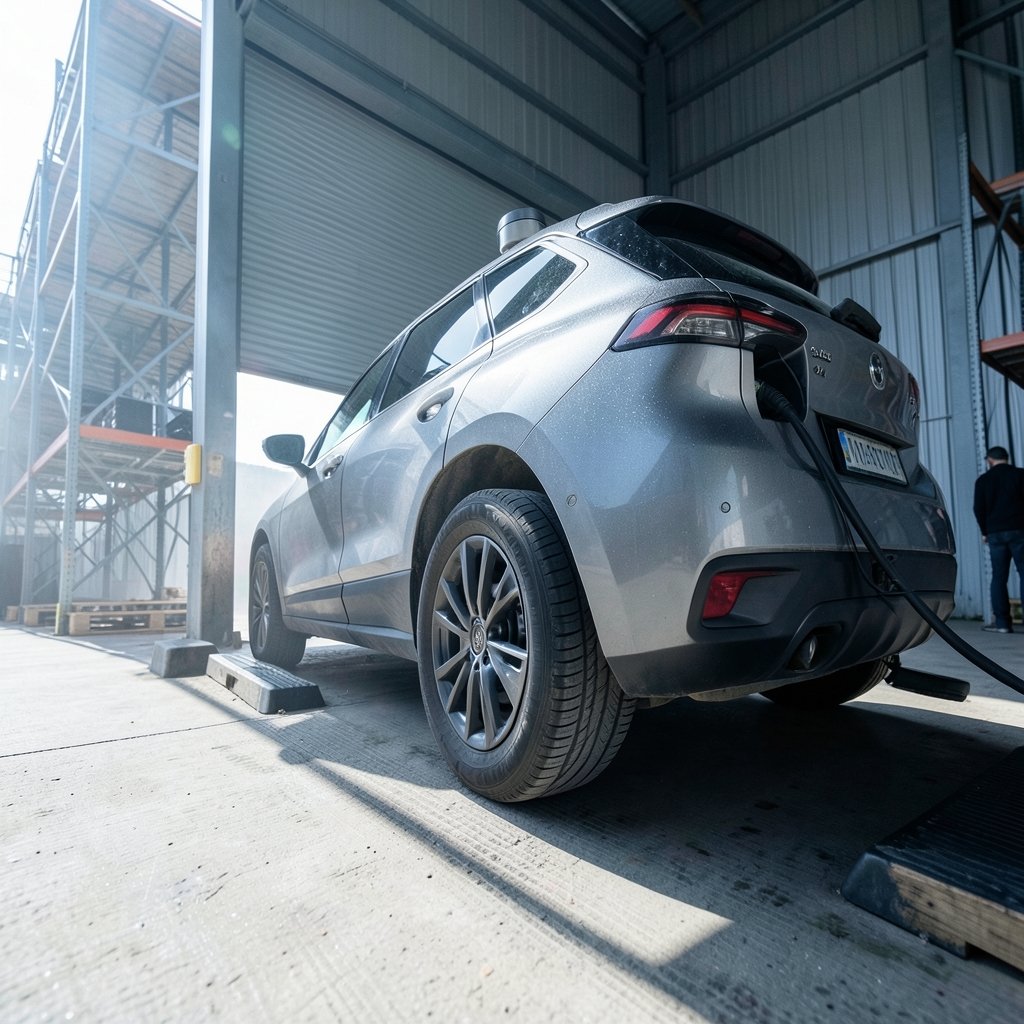
The average modern car runs on roughly 100 million lines of code, more than a fighter jet or the Large Hadron Collider. That number alone explains why the auto industry has stopped thinking of vehicles as machines with computers bolted on, and started treating them as computers with wheels attached. The term for that shift is the software defined vehicle, and it is quietly rewriting how cars are built, sold, and kept up to date.
Quick Answer: What is software defined vehicle?
A software defined vehicle (SDV) is a car whose features and behavior are controlled mainly by software running on a few centralized, updatable computers rather than by dozens of fixed, single-purpose chips. The core idea is simple: the hardware stays put, but the software can change over time. Owners see this mostly through over-the-air updates, app-based features, and subscription add-ons.
It differs from a connected vehicle, which simply has internet access, and from an autonomous vehicle, which is defined by driving automation rather than by architecture. The two overlap, but they are not the same thing.
Before buying or investing in one, check the update policy, the compute platform, cybersecurity compliance, subscription costs, and long-term software support commitments.
That reframing matters because it changes the car’s life cycle. A traditional vehicle starts aging the moment it leaves the factory. An SDV is designed to improve after purchase, at least in theory. The gap between theory and practice is where most of the interesting questions live.
From Dozens of Black Boxes to a Few Brains
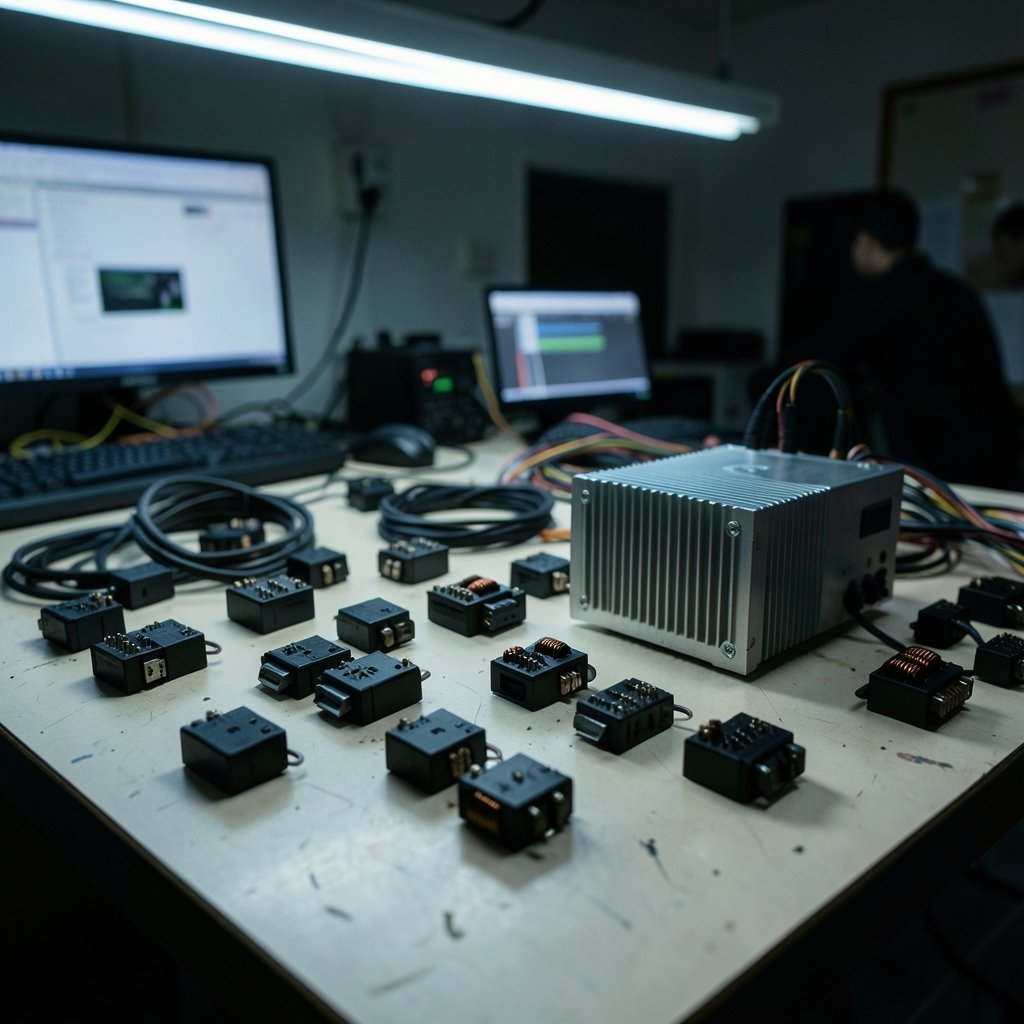
For decades, cars were built around electronic control units (ECUs), small dedicated computers each handling one job. One ran the windows, another the engine, another the brakes. A premium car could carry 70 to 150 of them, wired together in a sprawling web. It worked, but it was brittle. Adding a feature meant adding a box and another length of wiring harness.
The SDV model collapses that sprawl into a handful of high-performance domain or zonal controllers, often anchored by a central compute unit. Zonal architecture groups components by physical location in the car rather than by function, which cuts wiring weight and simplifies assembly. The trend has been widely described since roughly 2020, and most major automakers now publish some version of it.
The practical payoff is abstraction. Instead of a chip that only knows how to move a seat, you get a general-purpose computer that can run seat software, then later run something else entirely. That is the same leap a smartphone made when it stopped being a phone with a camera and became a platform.
Over-the-Air Updates: The Feature That Defines the Category
If one capability separates an SDV from a merely modern car, it is over-the-air (OTA) updates. Tesla popularized OTA in production cars during the early to mid-2010s, pushing fixes and new features remotely. The exact “first” is contested, and several automakers claim early milestones, so treat marketing claims with some caution.
What matters is what OTA enables. A recall that once meant a dealer visit can become a download. A brake tune, a range improvement, or a new interface can arrive overnight. It also means a car can ship with software that is not quite finished, which is a less flattering side of the same coin.
Here is where buyers get burned in practice. An “OTA-capable” badge tells you nothing about frequency, scope, or cost. Some updates only touch the infotainment screen. Others genuinely change how the car drives. Before committing, ask which systems are actually updatable and whether updates are free for the life of the vehicle.
How the Architecture Compares
| Layer | Traditional Vehicle | Software Defined Vehicle |
|---|---|---|
| Compute | 70–150 distributed ECUs | Few domain or zonal controllers plus central compute |
| Wiring | Function-based, heavy harness | Location-based, lighter zonal network |
| Updates | Dealer visits, rare | Over-the-air, frequent |
| Features after sale | Fixed at purchase | Added, changed, or unlocked |
| Revenue model | One-time sale plus parts | One-time sale plus recurring services |
| Safety approach | Hardware redundancy | Hardware plus layered software safety |
The table hides a hard truth: the SDV column is harder to build than it looks. Centralizing compute means one failure can ripple further. That is why safety standards matter so much here.
Safety and Security Are the Real Bottlenecks
Two families of standards dominate the conversation. ISO 26262 governs functional safety for road vehicles, and ISO 21448 addresses the safety of the intended functionality, often shortened to SOTIF, which deals with hazards arising from performance limitations rather than malfunctions. Both are widely cited as the governing frameworks for SDV software safety. (National Highway Traffic Safety Administration)
On the security side, UNECE regulations on software update management systems (R156) and cybersecurity (R155) shape how SDVs can be sold in signatory markets. Adoption dates and applicability vary by market and vehicle type, so the details deserve checking rather than assuming. (SAE International)
Then there is the standards layer for the software itself. The AUTOSAR Adaptive Platform is an industry standard aimed at high-performance, service-oriented vehicle software, a different beast from the older, deeply embedded AUTOSAR Classic. Early Adaptive releases arrived around 2017 to 2018, though the release history is worth verifying against primary documentation.
The lesson from practice: security cannot be bolted on after the architecture is set. Teams that treat the update pipeline as an afterthought end up with signing keys scattered across suppliers and no clean way to revoke access. The ones that get it right design the update path and the key management on day one.
What Automakers Are Actually Building
The industry has poured money into this transition, sometimes messily. Volkswagen announced its Car.Software Org around 2020, later reorganized as Cariad. GM announced Ultifi in 2021. Mercedes-Benz announced MB.OS around 2020 to 2021. Exact announcement dates and naming vary across sources, and several programs have been reshuffled since.
Those programs share a goal: own the software stack rather than ceding it to suppliers. That is a strategic bet, not just an engineering one. If software defines the car, whoever writes the software captures the margin. Automakers watched smartphones commoditize the hardware and hand profits to the platform owners, and they have no intention of repeating that.
For readers tracking the technology side of this shift, the broader landscape of AI, software platforms, and product reviews is covered in Voozon’s technology section, which follows how these systems evolve in the consumer market.
The Business Model Question Nobody Has Settled
SDVs are frequently framed as a gateway to recurring revenue: subscriptions, feature-on-demand, and post-sale upgrades. That framing is an industry claim rather than an established fact. Buyers have shown real resistance to paying monthly for features that feel like they should be included, particularly hardware already installed in the car.
The pattern that tends to work is narrower than the pitch. Upgrades that deliver obvious, ongoing value, such as advanced driver assistance or live services, convert better than paywalls on heated seats. One-time unlocks also outperform subscriptions for physical hardware. Automakers are still learning this, often the hard way.
There is a design dimension too. When a car’s personality lives in software, the interface and the physical controls have to work together. That balance between screen-driven features and tactile controls is the same tension explored in design details that define a driver’s car, where small ergonomic choices decide whether technology feels helpful or intrusive.
Where the Definition Gets Fuzzy
There is no single industry-standard definition of a software defined vehicle, and vendors and analysts define it differently. Some mean “has OTA updates.” Others mean a full zonal architecture with a central computer and a service-oriented software stack. The term also overlaps with connected vehicles, autonomous vehicles, and the “vehicle as a platform” idea, and sources often conflate them.
That fuzziness is not just academic. It affects regulation, warranty language, and marketing claims. A car advertised as software defined may have a genuinely updatable architecture, or it may have a slick screen and a modem. The distinction matters when you are deciding what to buy or how to value an automaker.
A useful test is to ask what can change after purchase. If the answer is only maps and media, it is a connected car. If the answer includes driving behavior, safety systems, and energy management, it is closer to the real thing.
Practical Advice for Buyers and the Curious
For anyone shopping in this category, a few habits separate a good decision from an expensive experiment.
- Ask for the update history, not the update promise. How many updates has this model received, and what did they change?
- Confirm which systems are updatable. Infotainment only, or brakes, steering, and powertrain too?
- Check the subscription list and total cost over five years, not just the sticker price.
- Ask about software support duration. Will this car still receive security patches in a decade?
- Verify cybersecurity and update compliance for your market rather than relying on a brochure.
- Look for a clear data policy covering what the car collects and who can access it.
The most common mistake is treating “software defined” as a quality signal. It is an architecture, not a guarantee. A well-executed SDV from a cautious brand can beat a poorly executed one from a headline-grabbing one, and the difference shows up in year three, not on the test drive.
A second common mistake is ignoring the hardware underneath. Software cannot fix an underpowered compute platform. If the central computer is already maxed out at launch, future updates will be thin. Buyers rarely ask about headroom, and they probably should.
For those interested in how fast consumer technology categories mature once software takes over, the trajectory of 2c hair care and styling tools is a reminder that even niche product categories get reshaped when software and personalization enter the picture. Cars are following a similar curve, just at a much higher stakes level.
What Comes Next
The direction of travel is clear even if the timeline is not. More compute per vehicle, fewer discrete boxes, more frequent updates, and a slow, awkward negotiation over what owners will actually pay for after the sale. Regulators will keep tightening update and cybersecurity requirements, which will favor automakers that built clean pipelines early.
The open question is ownership. If a car’s capabilities can be changed remotely, who decides what changes are allowed, and what happens when the manufacturer stops supporting a model? Those are contract and policy questions as much as engineering ones, and the industry has not answered them well.
Conclusion
A software defined vehicle is best understood as a car built to be changed. The centralized compute, the zonal wiring, the OTA pipeline, and the safety and security standards all exist to serve one goal: letting software, not hardware, decide what the vehicle can do. That shift brings real benefits, from faster fixes to features that improve with age, and real risks, from subscription fatigue to security exposure.
The practical takeaway is to look past the label. Ask what can be updated, how often it has been, what it costs, and how long support will last. Those four questions tell you more about a modern car than any spec sheet. The software defined vehicle is not a marketing phrase to accept or dismiss. It is an architecture with consequences, and the buyers who understand it will make better choices than the ones who do not.
Frequently Asked Questions
Is a software defined vehicle the same as an electric vehicle?
No. Electric vehicles describe a powertrain, while software defined vehicles describe an architecture. Plenty of EVs are not true SDVs, and a gasoline car can be built on SDV principles. The two trends often appear together because both are new platforms, but they are independent choices.
Do software defined vehicles require constant internet access?
They require a way to deliver updates, which usually means built-in connectivity, but not constant access for normal driving. Many updates download in the background and install when parked. Owners in areas with weak coverage may need dealer visits or Wi-Fi connections to receive them.
Can a car become software defined through an update?
Rarely. The defining features, such as centralized compute and zonal wiring, are baked into the hardware at design time. An older car can gain better infotainment or map updates, but it cannot retrofit the underlying architecture. That is why the distinction matters at the point of purchase.
Are over-the-air updates safe?
They can be, when the update system is properly designed with authentication, rollback, and safeguards that prevent installation while the car is in motion. Problems tend to arise from weak key management or rushed rollouts. Regulators now require documented update management processes in many markets for exactly this reason.
Why do automakers want software defined vehicles so badly?
The strategic appeal is control over the software stack and the chance to earn revenue after the sale. Automakers saw hardware become commoditized in consumer electronics while platform owners captured the profit. Whether recurring revenue actually materializes at scale remains unproven, and buyer resistance is real.
What should I ask a dealer before buying one?
Ask for the model’s update history, which systems are updatable, the full subscription cost over five years, how long software support will last, and what data the car collects. A dealer who cannot answer these questions is a signal in itself. Get the answers in writing where possible.