
RC Cars Guide 2026: Scales, Power Types & Smart Buying
 Abdul WadoodLast updated
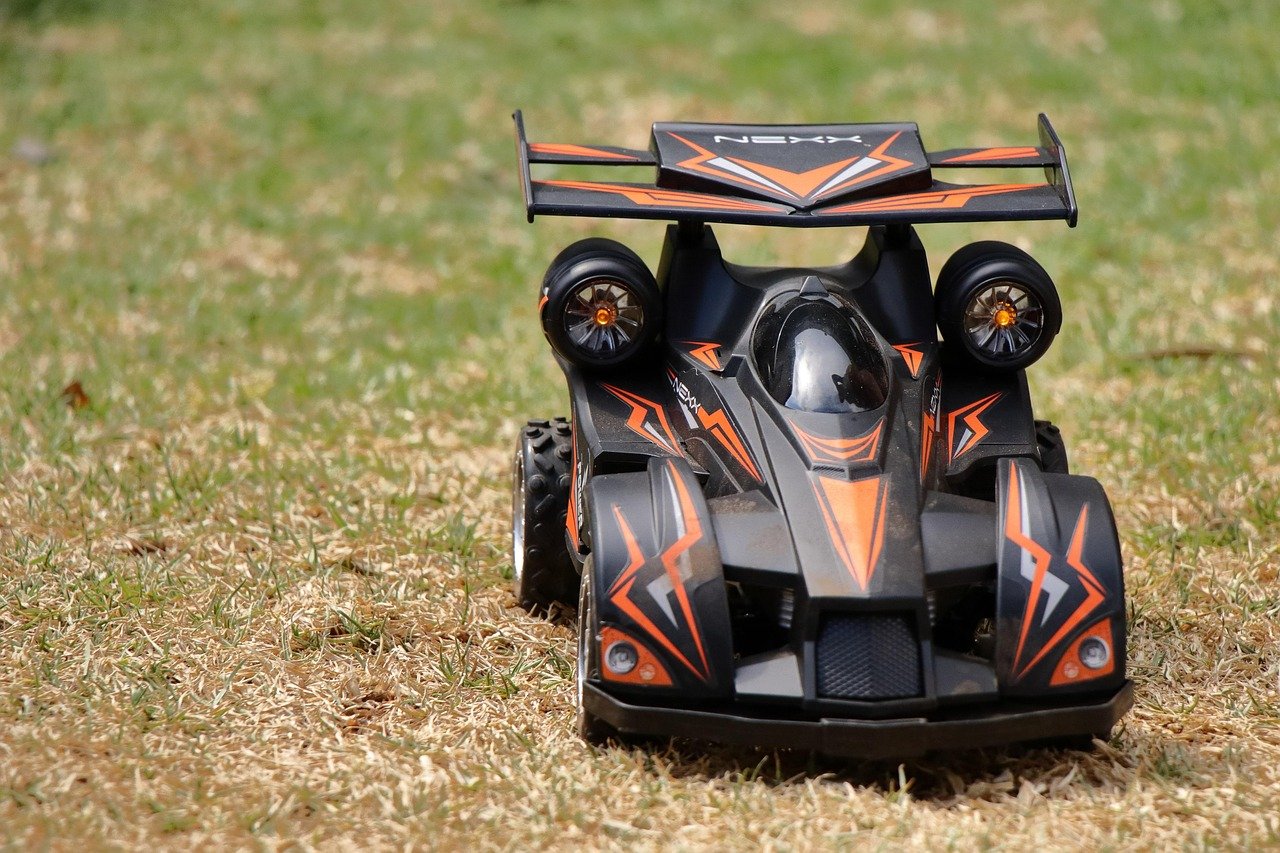
A hobby-grade RC car can hit 60 mph, stop on a dime, and be rebuilt from spare parts in an afternoon. That combination of speed and wrench-turning is why the hobby has survived for decades while countless toy fads faded. But walk into any hobby shop or scroll through a marketplace listing and the vocabulary gets thick fast: 1/10 scale, brushless, LiPo, RTR, nitro, 2.4 GHz. None of it is complicated once you know what the labels actually mean. This guide breaks down how RC cars work, how the classes differ, and where beginners most often waste money.
What Actually Counts as an RC Car
RC stands for radio control: a transmitter in your hand sends signals to a receiver in the vehicle, which drives a motor or engine and a steering servo. That basic chain is identical whether the car costs $40 or $1,400.
The more useful distinction is toy-grade versus hobby-grade. Toy-grade cars are sealed units built for a specific age range, often labeled 6+ or 8+, and typically can’t be repaired or upgraded. Hobby-grade cars are modular. Motors, speed controllers, gears, shocks, and arms are standardized enough that you can replace or upgrade them individually. That modularity is the entire point.
Scale is the other core label. Most hobby cars are 1/10 or 1/8 scale, with smaller 1/16 to 1/24 classes for indoor and backyard use. Scale is an industry convention rather than a formal standard, so a 1/10 short course truck from one brand may be noticeably larger than another’s. Physical dimensions in the spec sheet matter more than the fraction.
A Short, Honest History
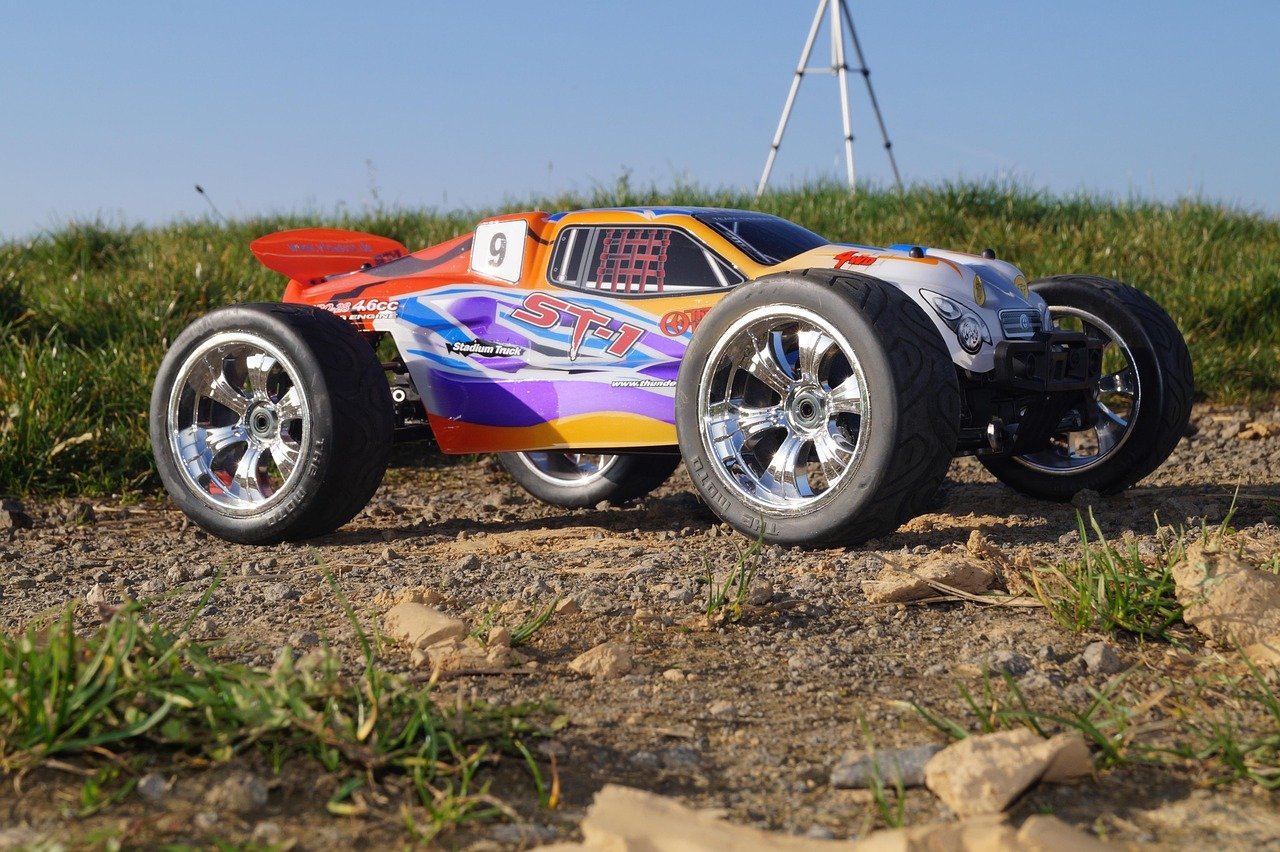
Hobby-grade surface radio control grew out of model aircraft radio systems in the 1960s and 1970s. Early cars used discrete channels and mechanical speed controllers, which were crude by modern standards but proved the concept. The exact “first” commercial RC car is genuinely disputed among hobby historians, so treat any single-origin claim with suspicion.
What’s not disputed is that organized racing drove the technology. IFMAR (International Federation of Model Auto Racing) became the main international sanctioning body, and ROAR (Remotely Operated Auto Racers) governs competition in the United States. Racing created pressure for standardized classes, which in turn created the scale and power categories buyers see on shelves today.
The Three Power Types, Compared
Almost every buying decision comes down to this table. There’s no universal “best” drivetrain, only the one that fits how and where you’ll drive.
| Power type | How it works | Strengths | Trade-offs | Best for |
|---|---|---|---|---|
| Electric (brushed) | DC motor, NiMH battery | Cheap, simple, quiet, low maintenance | Slower, shorter run times, limited upgrade path | Kids, first car, indoor use |
| Electric (brushless + LiPo) | Brushless motor, lithium polymer pack | Fast, efficient, long run times, huge tuning range | Higher upfront cost, battery care required | Most hobbyists, racing, bashing |
| Nitro (glow fuel) | Small internal combustion engine | Long run times, refuel instead of recharge, engine sound | Tuning, noise, exhaust, more maintenance | Enthusiasts who enjoy engine work |
| Gas (1/5 scale) | Small gasoline engine | Very long run times, large scale presence | Heavy, loud, expensive, needs space | Large-scale off-road driving |
Brushless motors paired with LiPo batteries dominate modern electric racing and most hobby-grade bashers. The efficiency gain over brushed motors is large enough that the price premium usually pays for itself in performance and durability.
Battery Safety Is Not Optional
LiPo packs are the single most mishandled component in the hobby. They must be balance charged and stored at roughly 3.8 volts per cell when not in use. Punctured, over-discharged, or improperly charged packs can catch fire, and water won’t reliably put a lithium fire out. Battery manufacturers publish safety pages for a reason, and those pages are worth reading before the first charge, not after.
The practical routine that works: charge on a non-flammable surface, never leave a pack charging unattended, use a charging bag, and store packs at storage voltage rather than fully charged. Most beginners skip storage voltage entirely and wonder why their packs puff after a season.
Radio Gear and the Law
Modern surface RC almost universally uses 2.4 GHz spread-spectrum radio systems, which need no license and automatically avoid interference with other drivers. In the United States, radio equipment falls under FCC Part 15 rules, which govern unlicensed low-power devices. That’s why you can run a car in a park without a permit for the radio itself, though local rules about motorized vehicles in public spaces still apply. (Radio-controlled car)
Older 27 MHz and 75 MHz systems used crystal pairs and required frequency control at tracks. If you inherit an older car, check the band before assuming it will play nicely with modern gear.
Choosing Your First Car Without Regret
The most common beginner mistake is buying too much car. A 60 mph brushless buggy is not a learning tool; it’s a repair bill waiting to happen. The second most common mistake is buying too cheap and discovering the car can’t be fixed.
A sensible first purchase looks like this:
- Pick the terrain first. Smooth asphalt points to a touring car or drift car. Grass, dirt, and jumps point to a buggy, short course truck, or monster truck.
- Choose RTR over kit. RTR (ready-to-run) cars include the radio, battery, and charger. Kits require assembly and separate electronics. Kits teach you how the car works, but they’re a poor first step unless you enjoy building more than driving.
- Check parts availability. Before buying any model, search for replacement arms, driveshafts, and spur gears. A car with no parts support is disposable.
- Budget for the extras. A second battery, a proper charger, and a small tool kit will cost 30 to 50 percent of the car’s price. Skipping them means a 15-minute first session.
- Start on low power. Most brushless speed controllers ship in a training mode. Use it. Learning throttle control on a slower setting saves arms and egos.
For buyers comparing specific models and classes, resources like Voozon Cars — Reviews, Comparisons & Car Guides can help narrow the field before you commit to a platform.
Where to Drive, and Where Not To
RC cars need space and a surface. A cul-de-sac works for touring cars. A local BMX track is excellent for buggies if it’s empty. Purpose-built RC tracks exist in most metro areas and usually charge a small day fee, but they also offer timing, a driver’s stand, and people who can diagnose your handling problems in thirty seconds.
What doesn’t work: wet grass (it destroys electronics and packs mud into drivetrains), sand near bearings, and public spaces where motorized vehicles are prohibited. Check local park rules before assuming a field is fair game.
The single biggest performance upgrade most drivers can make is not a motor. It’s tires. Compound and tread pattern change grip more than any electronics swap, and they’re cheaper.
Maintenance: The Part Nobody Talks About
RC cars are mechanical objects that take abuse. A few habits separate cars that last years from cars that last a season:
- Clean after every run. Compressed air and a soft brush. Grit in bearings is the leading cause of premature wear.
- Check screws after every session. Vibration loosens everything. Threadlock on metal-to-metal fasteners prevents most of it.
- Inspect tires and shock oil. Worn tires hide handling problems. Degraded shock oil makes the car unpredictable.
- Store batteries at storage voltage. Covered above, but it bears repeating because it’s the most expensive habit to skip.
- Keep a spares box. Arms, turnbuckles, and a spare servo are the parts that break first.
The cars built around experience piece is a useful companion read for understanding why some platforms are designed to be serviced and others aren’t.
Racing: Club Level to World Championships
Organized racing runs from informal club nights to IFMAR world championships across classes including 1/10 electric off-road, 1/8 off-road, 1/10 touring car, and 1/5 scale. Class calendars change, so confirm current schedules with the sanctioning body rather than relying on older sources.
Club racing is the realistic entry point. Most tracks run novice and sportsman classes specifically for newer drivers, and the social element is a genuine draw. Racing against the clock is humbling, but it’s also the fastest way to improve.
What RC Cars Actually Cost
Prices span an enormous range, and the spread is mostly about electronics and materials rather than size. (NASA)
| Tier | Typical price range | What you get |
|---|---|---|
| Toy-grade | $30–$100 | Sealed unit, limited repair, short lifespan |
| Entry hobby-grade electric | $150–$300 | RTR brushed or entry brushless, parts support |
| Mid hobby-grade | $300–$600 | Brushless + LiPo, adjustable suspension, race-capable |
| Competition electric | $600–$1,200+ | Race chassis, premium electronics, tuning range |
| Nitro / large-scale gas | $500–$1,500+ | Engine, fuel system, larger scale |
The hidden cost is consumables: tires, batteries, and broken parts. Budget realistically for those before deciding a $500 car is affordable.
Common Mistakes That Cost Real Money
Beyond buying too much car too soon, a few errors come up repeatedly:
- Running LiPo packs to zero. Over-discharging permanently damages cells. Use a low-voltage cutoff.
- Charging at maximum rate. Fast charging shortens pack life. Charge at 1C unless you have a reason not to.
- Ignoring gearing. Changing tire size or motor without adjusting the pinion gear leads to overheating. Gearing is the most overlooked tuning variable in the hobby.
- Driving in water. “Waterproof” usually means splash-resistant, not submersible. Bearings and electronics don’t forgive.
- Buying a platform with no local parts supply. Shipping times turn a five-minute fix into a two-week wait.
For a broader set of buying guides and model comparisons, Voozon Cars — Reviews, Comparisons & Car Guides – Voozon — Discover, Review & Explore covers the practical side of choosing a platform.
Conclusion
RC cars reward a little homework. The hobby’s vocabulary looks intimidating, but the decisions reduce to a handful of questions: what surface, what power type, what budget, and is there parts support nearby. Get those right and the car becomes a platform you can learn on, upgrade, and eventually race. Get them wrong and it becomes an expensive shelf ornament.
The smartest path for most people is modest: a hobby-grade RTR electric car in the 1/10 class, a couple of batteries, a decent charger, and a local track or empty lot. Learn throttle control, learn to clean and inspect the car, and learn what breaks. Everything else, from brushless upgrades to racing setups, follows naturally from there.
Frequently Asked Questions
What does the scale number on an RC car mean?
Scale refers to the model’s size relative to a full-size vehicle, so a 1/10 car is roughly one-tenth the size of the real thing. It’s an industry convention rather than a strict standard, so actual dimensions vary between brands. Always check the listed length and width rather than relying on the fraction alone.
How fast do hobby-grade RC cars go?
Entry-level hobby cars typically reach 20 to 30 mph, mid-range brushless models hit 40 to 50 mph, and high-end competition or speed-run setups exceed 60 mph. Speed depends heavily on gearing, battery voltage, and surface. Beginners should use training mode until throttle control is solid.
Are RC cars legal to drive in public parks?
It depends on local rules. The radio equipment itself needs no license under FCC Part 15 in the United States, but many parks prohibit motorized vehicles. Check municipal rules before running a car in a public space, and prefer dedicated RC tracks or private lots where permitted.
How long does an RC car battery last per run?
A typical NiMH pack gives 10 to 15 minutes of run time, while a LiPo pack in a brushless car often delivers 15 to 30 minutes depending on driving style and capacity. Aggressive throttle and high gearing shorten runs considerably. Carrying a second battery is the simplest fix.
Is nitro or electric better for beginners?
Electric is almost always the better starting point. It’s quieter, cleaner, requires less tuning, and has fewer failure points. Nitro offers longer run times and engine sound, but it demands carburetor tuning, fuel handling, and more maintenance. Most hobbyists start electric and add nitro later if the engine side appeals to them.
How much should a complete beginner setup cost?
A realistic entry budget is $250 to $450 total: roughly $200 to $300 for a hobby-grade RTR electric car, plus a spare battery, a proper charger, and basic tools. Buying the car alone and skipping the extras usually results in a very short first session and an immediate second purchase.