
Raphael’s Sublime Poetry: Met Exhibition Guide 2026
 Abdul WadoodLast updated
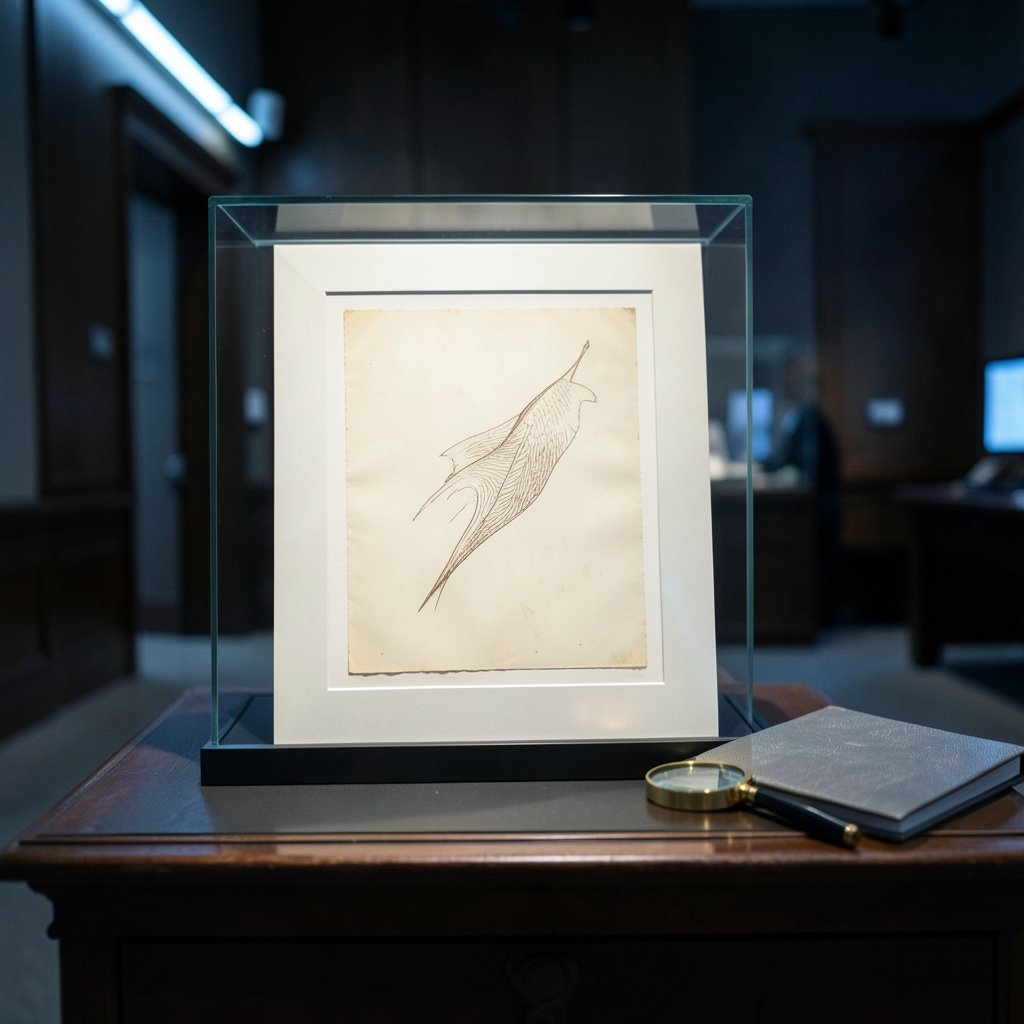
Visitors to the Metropolitan Museum of Art in New York can stand inches from a drawing made around 1515 and see where Raphael’s pen lifted off the paper. That tiny gap, a fraction of a second captured in ink, is what curators mean by Raphael’s sublime poetry. The Met’s deep holdings of Italian Renaissance drawings have anchored exhibitions and rotations devoted to Raphael and his circle, and they show why his contemporaries called him a painter and a poet with a pen.
Raphael Sanzio (1483–1520) died at 37, yet his influence ran for centuries. He was born in Urbino, trained in Perugia under Pietro Perugino, and worked in Florence before moving to Rome in 1508 at the invitation of Pope Julius II. There he painted the Stanze (papal rooms) in the Vatican, ran a busy workshop, and became, in the words of the painter and biographer Giorgio Vasari, an artist whose grace seemed almost divine. For anyone trying to understand the phrase “sublime poetry” in a museum context, the Met is one of the best places on earth to start.
What “Sublime Poetry” Actually Means in Raphael’s Work
The word poesia (poetry) is an old art-historical term. Renaissance writers used it for paintings that told stories with the emotional pull of verse. Raphael’s mythologies, especially the frescoes he designed for the Villa Farnesina in Rome around 1517–1519, are the classic example: the story of Cupid and Psyche unfolds across a ceiling like a sequence of stanzas, each panel a scene with its own rhythm.
In Raphael’s hands, poetry is not decoration. It is structure. A Madonna is arranged so the eye moves in a gentle curve. A saint turns his head at the exact moment that makes you wonder what he is looking at. That is the “sublime” part: the feeling that a simple line carries more meaning than it should.
The Met’s collection notes have long described Raphael’s drawings as the clearest window into this quality. Because drawings are fast, they capture the thought before the polish. A study for a figure in a fresco shows the artist testing three or four poses in the margin, like a poet crossing out lines.
Why the Met Is a Key Stop for Raphael
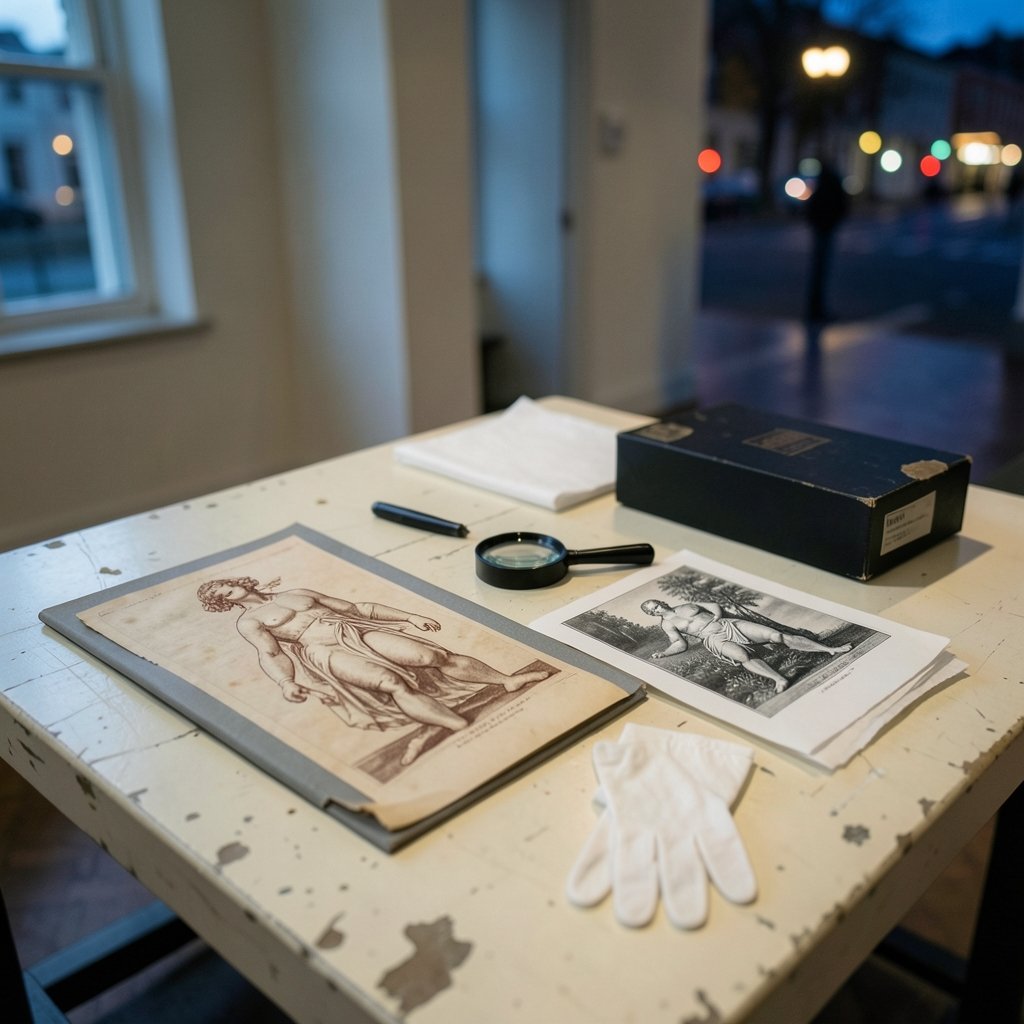
The Metropolitan Museum of Art holds one of the most important collections of old European drawings in the Western Hemisphere, and Italian Renaissance sheets are a core strength. Raphael, his teacher Perugino, and his Roman followers appear regularly in the museum’s study rooms and rotating galleries.
This matters for a few practical reasons:
- Drawings are light-sensitive. Works on paper cannot stay on view indefinitely. They appear in focused rotations, often for a few months at a time.
- Attribution is live scholarship. Drawings once given to Raphael have been reattributed to assistants, and vice versa, as connoisseurs study paper, ink, and handling.
- The Met pairs drawings with prints. Engravings after Raphael’s compositions show how his poetry traveled across Europe long before photographs existed.
For visitors, the lesson is simple: check the museum’s current drawing rotations before you go. A Raphael sheet you saw last year may be resting in storage this year. That is not a disappointment; it is how the collection survives for the next century.
How Raphael’s Poetry Was Built: Technique in Four Steps
Looking at a Raphael drawing can feel like watching a poem get written. Curators and conservators describe a fairly consistent working method in his sheets, and it is worth knowing before you stand in front of one.
- Start with a quick sketch in chalk or pen. Raphael blocked in the whole figure loosely, often with an oval for the head and a few lines for the body’s twist.
- Test the pose in variants. He frequently drew the same arm or leg two or three times, searching for the most graceful angle.
- Refine with a second medium. A black chalk study might be reworked in pen and brown ink, or the other way around, to sharpen contours.
- Transfer to the final surface. Pricking and pouncing, or squaring, moved the design onto panel or fresco plaster.
The result is a record of decisions. That is what makes the drawings feel poetic rather than mechanical: you can see the artist choosing.
The Renaissance Context: Poetry as a Visual Ideal
Raphael worked in a culture that took the comparison between painting and poetry seriously. The Roman poet Horace had written that poetry is like painting, and Renaissance humanists ran with the idea. Painters wanted the license poets had: to invent, to move the viewer, to aim at something beyond plain description.
This is where the “sublime” enters. In the eighteenth century, the philosopher Edmund Burke wrote a famous enquiry into the sublime and the beautiful, separating awe from charm. Later critics applied that vocabulary backward to Renaissance art. A Raphael Madonna could be called beautiful; a Raphael mythological scene, with its swirling bodies and dreamlike logic, could be called sublime. (Raphael)
The distinction is useful but imperfect. Raphael rarely chose between the two. His best works hold grace and grandeur together, which is exactly why the phrase “sublime poetry” sticks to him.
What to Look For in the Gallery
A first-time viewer often spends too long reading wall labels and too little time looking. Here is a practical approach that works in any Raphael drawing gallery.
Look at the hands first. Raphael’s hands are almost always doing something expressive: pointing, resting, holding a fold of cloth. They carry emotion that the face sometimes hides.
Follow the line’s speed. Fast lines are thin and searching. Slow, deliberate lines are darker and more controlled. The contrast tells you where the artist was confident and where he was still thinking.
Notice the paper. Many Renaissance sheets are discolored, repaired, or trimmed. A drawing that looks small may once have been part of a larger sheet. Conservators can often reconstruct the original size.
Step back. Drawings are intimate, but Raphael designed for large walls. Moving back a few paces helps you imagine the finished fresco or altarpiece.
One common mistake: assuming every sheet labeled “Raphael” is by Raphael’s own hand. Workshop production was normal in the Renaissance, and museums now label many drawings as “Raphael and workshop” or “follower of Raphael.” That honesty is a feature, not a flaw. (Raphael)
How Raphael’s Reputation Traveled
Raphael’s poetry did not stay in Rome. Prints spread his compositions across Europe within decades of his death. Engravers such as Marcantonio Raimondi reproduced his designs, and those prints were collected, copied, and studied by artists from Antwerp to Madrid.
The result was a kind of visual canon. A painter in the 1600s might know Raphael’s Galatea or his Vatican frescoes only through a print, yet still absorb the compositional grammar. This is one reason Raphael is often called the most influential painter of the Western tradition: his ideas were reproducible.
For a museum visitor, this history explains why the Met can mount a rich Raphael display without owning a single large panel painting by Raphael. Drawings and prints together show how an artist thinks and how that thinking spreads.
Raphael in Vienna: A Useful Comparison
For readers trying to place the Met’s holdings in a wider map, Vienna offers a useful comparison. The Albertina, Austria’s great drawings museum, has staged major Raphael exhibitions built around its own sheets, and those shows have drawn crowds for the same reason the Met’s rotations do: drawings make genius legible.
A recent overview of exhibition programming in Vienna, including shows that put Renaissance draftsmanship in conversation with contemporary art, is collected in this review of the exhibitions shaping the conversation. It is a helpful reminder that Raphael’s poetry is not a closed chapter; curators keep returning to it because each generation reads the lines differently.
The Sublime in Practice: Why It Still Works
Why does a 500-year-old drawing still stop people in their tracks? Part of the answer is technical: Raphael was extraordinarily good at making a figure look weightless and grounded at the same time. Part of it is emotional: his faces carry a calm that reads as wisdom rather than blankness.
There is also a modern reason. In an age of instant images, a drawing shows time. You can see the hours. That slowness is itself a kind of poetry, and it may be the most accessible thing about Raphael for a viewer who knows nothing about the Renaissance.
Museums have noticed. Drawing exhibitions that once appealed mainly to specialists now draw general audiences, and shows built around process, rather than masterpieces alone, have become a reliable formula. The Met’s approach fits that pattern: put the working sheet in front of the public and let the thinking show.
Practical Tips Before You Visit
A few habits make a Raphael visit better.
- Go early or late. Drawing galleries are small, and quiet hours reward close looking.
- Bring a small sketchbook. Drawing a single line from a Raphael sheet teaches more than ten minutes of staring.
- Ask about study rooms. Some museums allow appointment-based access to works on paper. The Met has a dedicated study room for drawings and prints, and researchers and serious visitors can request viewings.
- Check the calendar twice. Rotations change, and a show listed online may have closed a week earlier.
- Read one good biography before you go. A short account of Raphael’s life makes the labels far more meaningful.
And one thing to avoid: rushing. A single drawing can hold twenty minutes of attention if you let it. The sublime, in Raphael’s case, is rarely loud. It is quiet, and it rewards patience.
Conclusion
Raphael’s sublime poetry is not a slogan invented by modern marketing. It describes something real about how he worked: the speed of a searching line, the grace of a chosen pose, the emotional logic of a story told in pictures. The Met’s drawings and prints give visitors a rare chance to see that thinking up close, without the barrier of a gilded frame. Whether you encounter him in New York, in Vienna, or in a reproduction, the invitation is the same. Slow down, follow the line, and let the poem do its work.
Frequently Asked Questions
What does “Raphael’s sublime poetry” mean?
It refers to the poetic quality of Raphael’s compositions, especially his mythologies and Madonnas. Renaissance writers used the term poesia for paintings that told stories with emotional force, and later critics added “sublime” to describe the awe his best works inspire.
Did the Metropolitan Museum of Art hold a Raphael exhibition?
The Met holds a major collection of Raphael and Renaissance drawings and shows them in rotating displays rather than permanent galleries, because works on paper are light-sensitive. Visitors should check the museum’s current drawing rotations before planning a trip.
Why are Raphael drawings so important?
Drawings show the artist thinking. In Raphael’s sheets you can see him test poses, revise figures, and refine lines. They reveal the working method behind the finished frescoes and altarpieces, which is why museums treat them as treasures.
How can I tell a Raphael drawing from a workshop copy?
It is difficult without training. Look for confident, varied line weight, lively handling of hands and drapery, and consistent proportions. Museums often label uncertain works as “Raphael and workshop” or “follower of Raphael,” and connoisseurs rely on paper, ink, and provenance as much as style.
What should I look at first in a Raphael drawing?
Start with the hands and the direction of the gaze. Raphael used both to carry emotion. Then follow the speed of the line: fast strokes show searching, slow dark strokes show decision.
Is it worth seeing Raphael’s drawings in person rather than online?
Yes. High-resolution images miss paper texture, ink sheen, and scale. A drawing that looks flat on a screen often has surprising depth in person, and the small size creates an intimacy that reproductions cannot match.