
Race Cars: Engineering, Rules & Speed in 2026
 Abdul WadoodLast updated
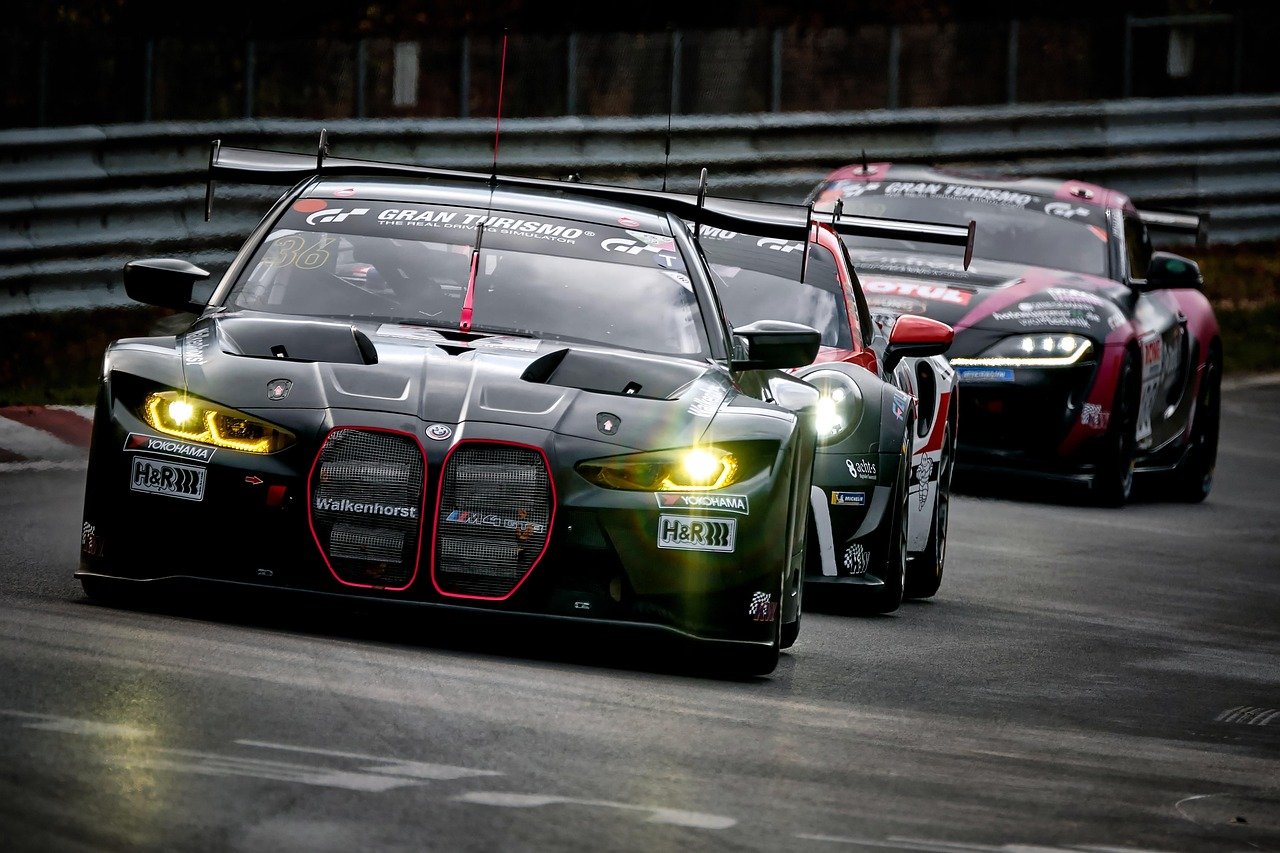
A modern Formula One car can pull more than 5 g in a fast corner, which means the driver’s head briefly weighs five times what it does at rest. That single number explains a lot about race cars. They are not fast versions of road cars. They are purpose-built machines shaped by rulebooks, safety science, and the constant search for a tenth of a second. This guide walks through the main categories of racing machinery, the technology underneath them, and the practical realities that separate a winning car from a fast one. (Voozon Cars) (Race car)
What Makes a Race Car Different?
A race car is built around a single goal: completing a defined course faster than everyone else. Everything else is negotiable. Comfort, luggage space, fuel economy, and noise insulation get thrown out. What remains is a structure optimized for speed, grip, and reliability over a set distance.
The biggest difference sits in the power-to-weight ratio. A production sedan might carry 3,600 kg of mass for every 100 horsepower. A purpose-built single-seater can flip that figure dramatically. Less mass means better acceleration, shorter braking distances, and more responsive cornering.
Then there’s aerodynamics. Road cars push air out of the way. Race cars use it. Wings, diffusers, and underbody tunnels generate downforce that presses the tires into the track, and more grip means higher cornering speeds. The trade-off is drag, and every series writes rules to balance the two. (Voozon Cars)
Finally, race cars live inside a technical rulebook. Engineers don’t design freely. They design against a spec that defines dimensions, materials, engine architecture, and sometimes even the shape of the floor. Reading the rules closely is often where races are won before the season starts.
The Main Categories of Race Cars
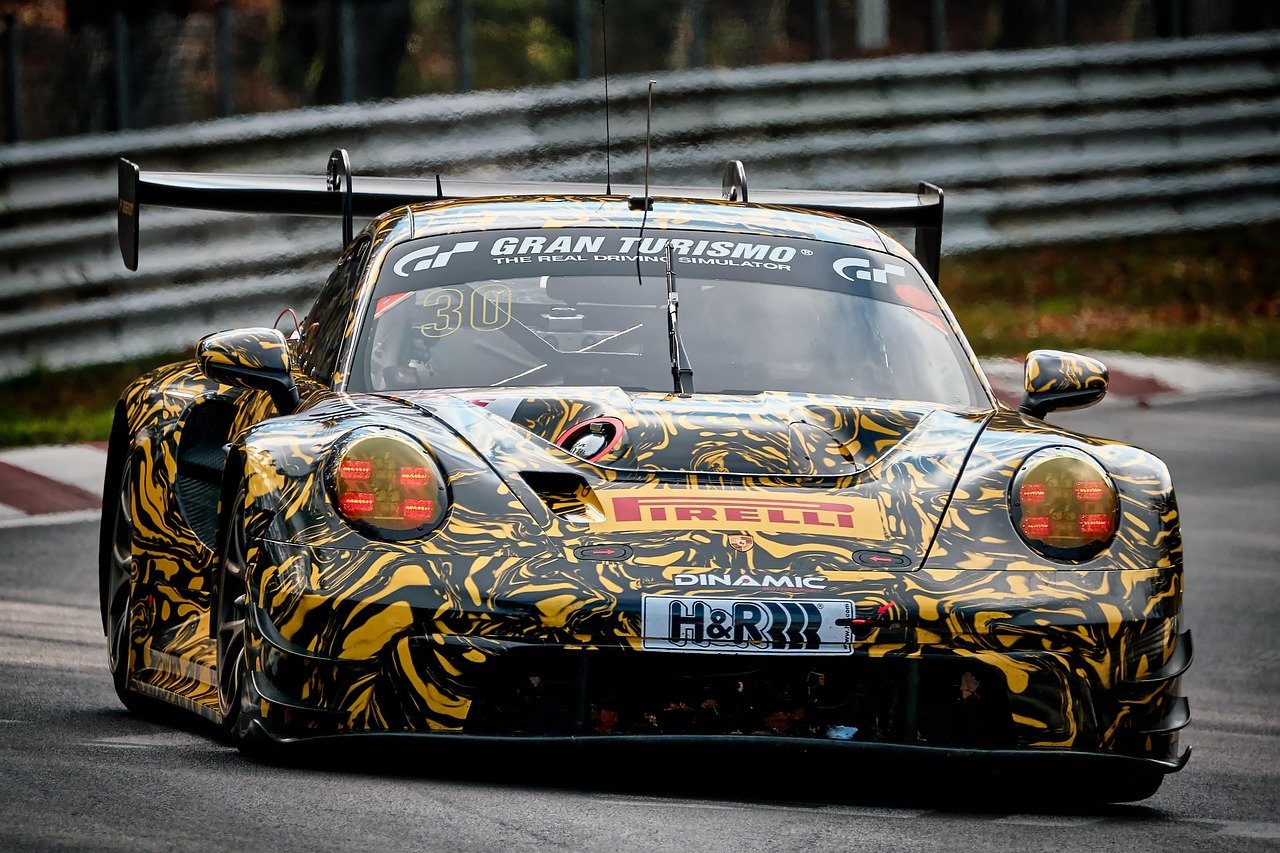
Motorsport splits into families, each with its own philosophy. Understanding the categories helps make sense of why a Le Mans prototype and a rally car look nothing alike.
| Category | Typical Example | Defining Trait | Signature Event |
|---|---|---|---|
| Open-wheel | Formula One, IndyCar | Exposed wheels, single seat | Monaco Grand Prix |
| Sports car / endurance | LMH, LMDh prototypes | Closed cockpit, long-distance reliability | 24 Hours of Le Mans |
| Stock car | NASCAR Cup | Silhouette body over a tube chassis | Daytona 500 |
| Rally | Rally1, Group Rally | Road-based stages, loose surfaces | Monte Carlo Rally |
| Drag racing | Top Fuel, Funny Car | Straight-line acceleration | NHRA Winternationals |
| Touring car | TCR, BTCC | Production-based bodies | Various national series |
Each family evolved separately, but ideas leak between them. Hybrid systems arrived in endurance racing before they reached open-wheel. Sequential gearboxes and independent rear suspension moved from road racing into stock cars. The technical cross-pollination is one of the more interesting stories in the sport.
Formula One: The Technology Benchmark
Formula One sits at the top of the open-wheel pyramid, and its technical regulations drive development that eventually reaches road cars. The series adopted 1.6-liter V6 turbo hybrid power units in 2014, pairing a combustion engine with energy recovery systems that harvest heat and braking energy.
A major overhaul arrives in 2026. The new power unit rules remove the MGU-H heat recovery unit and roughly split output between the combustion engine and the electric component, while mandating sustainable fuels. It is one of the largest regulation changes in the sport’s history, and teams began restructuring their engineering departments years in advance.
The chassis side matters just as much. Since 2018, the halo device has protected the cockpit, a titanium structure that has deflected debris in several high-profile incidents. Earlier, the HANS device became mandatory in 2003, restraining head movement in crashes. Those two additions changed the safety conversation in every series that followed.
Anyone following the technical side closely will find that the cars built around experience, where driver feedback and engineering data meet, tend to outperform designs that chase raw numbers alone.
Endurance Racing and the Prototype Classes
Endurance racing rewards a different virtue: finishing. The 24 Hours of Le Mans punishes fragile designs, and the modern top class reflects that.
Le Mans Hypercar (LMH) rules arrived around 2021, allowing manufacturers to build cars from scratch with hybrid or non-hybrid powertrains. LMDh followed, with cars racing from 2023. LMDh uses a spec hybrid system and a chassis from one of four approved suppliers, which lowers costs and lets more brands enter.
The result is a unified top class across the FIA World Endurance Championship and IMSA, so the same basic car can race at Le Mans, Daytona, and Sebring. Drivers often describe the difference between sprint and endurance racing as the difference between a sprint and a marathon with pit stops. (FIA)
What Actually Wins at Le Mans
- Reliability first. A car that finishes slowly beats a fast car in the garage.
- Driver lineup depth. Three drivers share a car, and stint consistency matters more than one hero lap.
- Pit stop discipline. Fuel and tire changes are choreographed, and a sloppy stop costs more than a tenth.
- Night driving comfort. Visibility and fatigue management decide positions in the small hours.
- Weather adaptability. Tire choice on a drying track can swing the result.
Stock Cars and Drag Racing: Speed in Straight Lines
NASCAR’s Cup Series moved to the Next Gen car in 2022, introducing independent rear suspension, a sequential gearbox, and a more standardized chassis. The change narrowed the gap between big and small teams and shifted how drivers manage tires over a long run.
Drag racing takes a different path entirely. Top Fuel cars are among the fastest-accelerating vehicles on earth, reaching 100 mph in well under a second and covering a quarter mile in roughly 3.6 to 3.7 seconds at over 330 mph. The engine runs on nitromethane and survives only a few seconds at full load. Crew chiefs rebuild them between runs, which is why drag racing is as much a maintenance discipline as a driving one.
The practical lesson from both series: consistency beats peak performance. A driver who hits the same launch rpm every run wins more rounds than one who occasionally finds a perfect pass.
Rally and Touring Cars: Racing on Real Roads
Rally cars race on public roads closed for competition, which changes everything. Surfaces shift from tarmac to gravel to snow, often within a single stage. Setup becomes a compromise, and co-drivers read pace notes at a pace that sounds impossible until you watch it.
The sport’s history includes a cautionary chapter. Group B was banned after the 1986 season following fatal crashes, a decision that reshaped safety thinking across motorsport. Modern Rally1 cars use hybrid assistance and far stricter safety cells.
Touring cars sit closer to production models. TCR regulations use a spec chassis with manufacturer bodywork, keeping costs down and grids full. It’s the most accessible form of professional circuit racing for teams without factory budgets.
The Engineering That Decides Races
Underneath the bodywork, a handful of systems do most of the work.
Tires are the single biggest performance variable. Compounds trade grip for durability, and managing that trade-off is the core skill of race strategy. A driver who protects the tires early often has more pace at the end.
Brakes use carbon-carbon discs in top series, capable of glowing orange under heavy use. Cooling ducts are tuned per circuit, and getting them wrong means either overheating or excess drag.
Suspension and setup translate track conditions into mechanical grip. Ride height, camber, spring rates, and anti-roll bar settings form a web of compromises. Change one and three others shift.
Data and simulation now shape the weekend before the car leaves the factory. Teams run millions of simulated laps to choose gear ratios and aerodynamic configurations. The reviews, comparisons and car guides available to fans rarely capture how much of a race happens in software.
Safety: The Part That Changed Everything
Modern race cars are engineered to survive crashes that would have been fatal decades ago. The safety stack includes:
- Survival cell construction from carbon fiber or steel, designed to absorb energy.
- HANS device, mandatory in F1 since 2003, limiting head movement.
- Halo or roll structure, protecting the cockpit opening.
- Crushable structures at the front, rear, and sides that deform on impact.
- Fire-resistant suits and on-board extinguisher systems.
- Wheel tethers, keeping wheels attached to the car in a collision.
Each item exists because of an incident that exposed a gap. The sport’s safety record improved because engineers studied failures rather than hiding them, a pattern documented widely in engineering and management literature on learning from error.
What Separates a Winning Car From a Fast One
Plenty of race cars are quick over one lap. Far fewer win championships. The difference usually comes down to a few practical factors that teams learn the hard way.
First, the car must be predictable. Drivers can push a car that communicates clearly. A nervous car that switches behavior mid-corner produces inconsistent lap times no matter how much downforce it generates.
Second, the operating window matters more than peak numbers. A setup that works across a range of temperatures and fuel loads beats a knife-edge configuration that only works for three laps.
Third, pit crews and strategy teams win points. Undercuts, tire offsets, and fuel saving calls decide races as often as overtakes.
Fourth, reliability compounds. Every retirement costs points that can’t be recovered. Teams that finish consistently stay in contention even when raw pace is missing.
For readers who want to follow how these trade-offs play out across different series, the cars coverage on Voozon tracks the comparisons season by season, and the deeper dives into reviews, comparisons and car guides help separate marketing claims from measurable performance.
How to Follow Race Cars as a Fan
Newcomers often struggle because motorsport assumes prior knowledge. A few practical starting points help.
- Pick one series and watch a full season. Context makes individual races matter.
- Learn the tire rules. Most tire-rule confusion goes away once you know compound choices and mandatory stops.
- Watch qualifying as well as the race. Single-lap pace shows what the car can do.
- Follow the regulations as well as the results. Rule changes explain why a dominant team suddenly struggles.
- Use practice sessions to learn the circuit. Camera angles make more sense once you know the corner sequence.
The most common mistake is judging a car by its straight-line speed. Corner exit, braking stability, and tire management decide far more races than top speed. The second most common mistake is assuming the fastest car wins. It doesn’t. The best-prepared car usually does.
Conclusion
Race cars are engineering arguments made physical. Every wing, every suspension link, and every line of the rulebook represents a decision about where to spend performance. Formula One pushes hybrid technology and aerodynamics to their limits. Endurance racing tests whether those ideas survive 24 hours. Stock cars and drag racing reward consistency and preparation. Rally proves that adaptability matters as much as raw pace.
What ties them together is the same discipline: understand the rules, build a predictable car, protect the driver, and execute on the day. Speed gets attention. Preparation wins championships. Whether you’re watching a hybrid prototype exit a chicane at Le Mans or a Top Fuel car launch off the line, the same principles are working underneath, and once you see them, the sport becomes far more interesting to follow.
Frequently Asked Questions
What is the fastest type of race car?
It depends on the measurement. Top Fuel dragsters accelerate hardest, reaching 100 mph in under a second. Formula One cars carry the highest cornering speeds thanks to downforce. Endurance prototypes reach the highest top speeds on long straights. No single car wins every category.
How fast does a Formula One car go?
Modern F1 cars exceed 350 km/h at low-downforce circuits and corner with sustained lateral loads above 5 g. Top speed varies by track and wing configuration, so the same car can be dramatically faster at one circuit than another.
Why are race cars so loud?
High-revving engines, open exhausts, and minimal sound insulation all contribute. Rules limit noise at some circuits, which is why mufflers appear in certain series. Electric racing series exist precisely to remove engine noise entirely.
What is the difference between LMH and LMDh?
LMH lets manufacturers design their own chassis and hybrid system. LMDh uses a spec hybrid unit and a chassis from an approved supplier. Both compete in the same top class, which is why they race against each other at Le Mans and Daytona.
Do race cars use the same fuel as road cars?
Not usually. Many series use specialized blends, and Formula One’s 2026 regulations mandate fully sustainable fuels. Drag racing uses nitromethane, which is a completely different chemistry from pump gasoline.
How do I start watching motorsport?
Choose one series, watch qualifying and the race, and learn the tire rules first. Strategy becomes clear quickly once you understand compounds and mandatory stops. Following a full season builds the context that makes individual races compelling.