
What Is Organic Modern Design? A Clear 2026 Guide
 Abdul WadoodLast updated
Quick Answer: What is organic modern design?
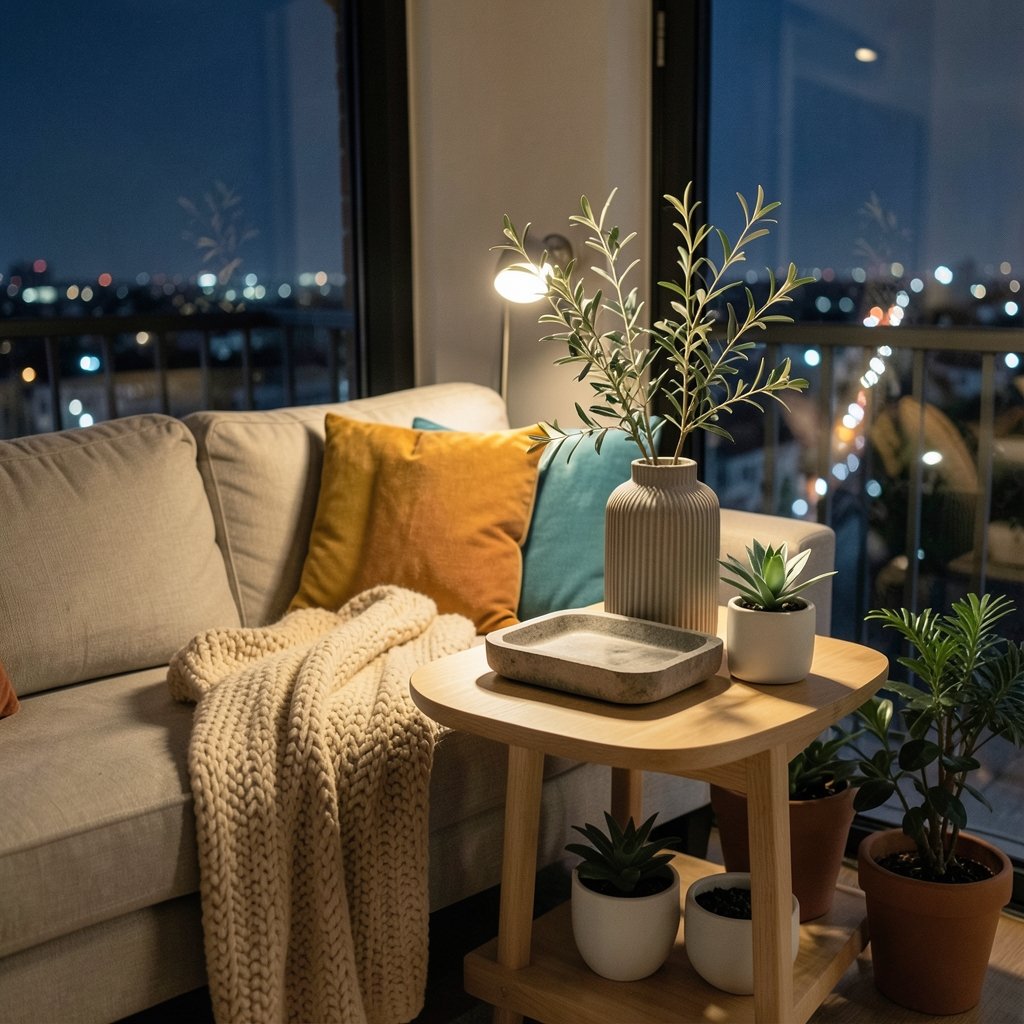
Organic modern design is a contemporary interior style that pairs clean, modern lines with natural materials, warm neutral colors, and soft, irregular shapes. In practice, it shows up in living rooms and bedrooms through linen sofas, pale wood tables, stone accents, and potted greenery rather than glossy finishes or heavy ornament.
It is often confused with mid-century modern, a historical movement from roughly the 1940s to the 1960s, and with organic architecture, the earlier approach associated with Frank Lloyd Wright. Both borrow natural motifs, but neither is the same thing as the current style label.
Before committing, compare material quality, color palette discipline, lighting, budget per room, maintenance needs, and how the pieces will age.
The phrase “organic modern” is everywhere right now, and yet almost nobody agrees on exactly what it means. That ambiguity is not a small detail. It is the single biggest source of confusion for homeowners who walk into a showroom asking for one thing and leave with another. The term is a popular style label used mostly in interior design media and retail marketing, not a formally defined term in academic or standards literature. Different designers and publications define it differently, and that genuine uncertainty is worth flagging up front.
What follows is a practical, honest breakdown: what the style actually looks like in real rooms, how it differs from the movements it borrows from, where people go wrong, and how to tell whether it suits your home at all.
Where the label comes from, and why it stays fuzzy
Organic modern gained visible popularity in interior design and home-decor publishing roughly in the late 2010s to early 2020s, alongside related labels like Japandi and warm minimalism. It rode the same wave as the broader retreat from cool grays, chrome, and high-gloss surfaces that dominated the 2010s. (The Return of Minimalism in Modern Fashion)
But here is the honest part: there is no single authoritative definition. A shelter magazine may describe organic modern as essentially warm minimalism with plants. A furniture retailer may use it to sell anything with a wood grain and a beige cushion. A working designer may mean something narrower, involving a specific balance of texture, negative space, and natural stone.
That flexibility is not entirely bad. Style labels are marketing shorthand, and they shift as taste shifts. But it does mean you should treat any confident one-sentence definition, including the one above, as a working description rather than a rule. Style vocabulary, like art and design trends generally, usually arrives before anyone agrees on the boundaries.
What organic modern actually looks like in a room
Strip away the marketing and the style has a recognizable fingerprint. It combines the restraint of modernism with the softness of natural materials, and the tension between those two impulses is what makes it work.
Materials do most of the talking
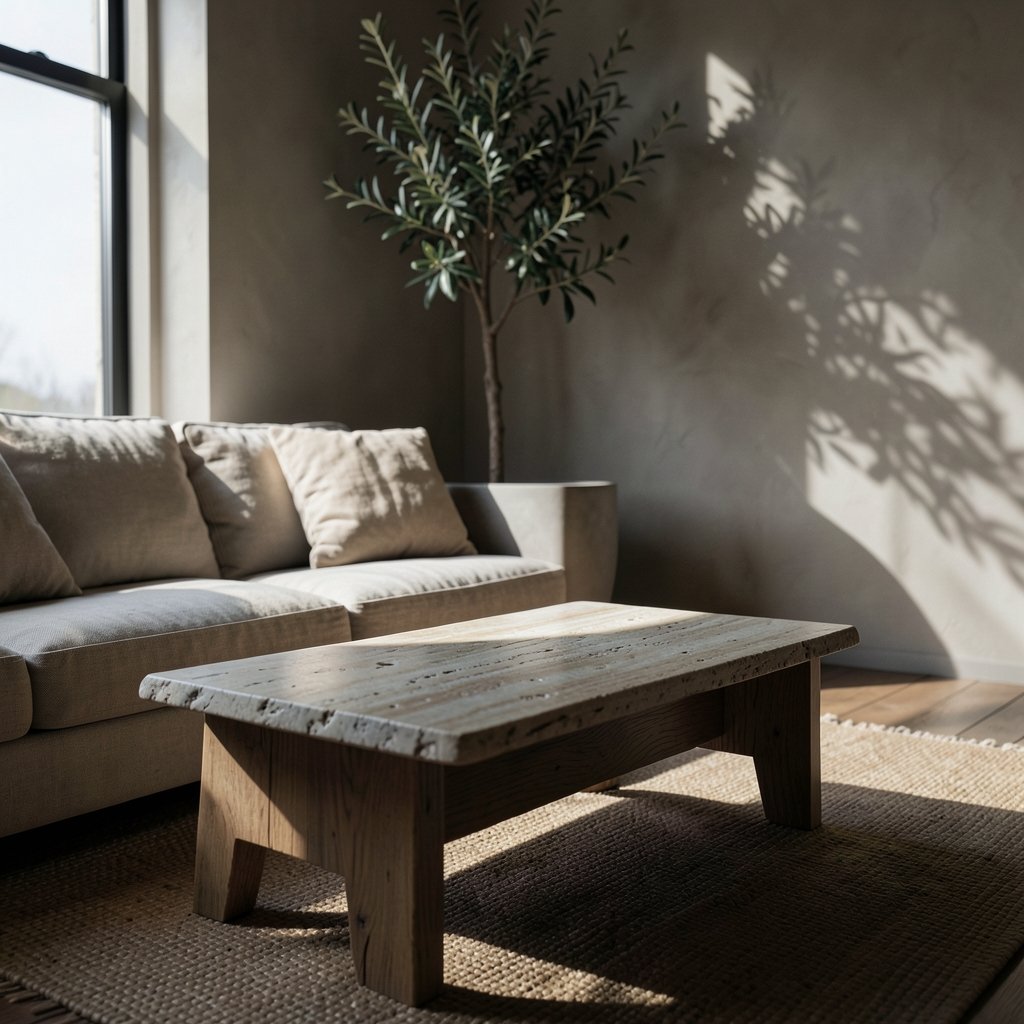
Wood, stone, linen, wool, rattan, clay, and leather dominate. Finishes tend to be matte or satin rather than glossy. You will see pale oak and walnut, travertine and limestone, bouclé and slubby linen, and ceramics with visible irregularities.
The key is honesty of material. A wood table should look like wood, not like a wood-printed laminate pretending otherwise. This is where budget versions of the style tend to fall apart.
Color stays warm and quiet
Palettes lean toward bone, sand, oatmeal, mushroom, clay, and soft olive, usually grounded by a darker wood or a black metal accent. The discipline matters more than the specific shades. Rooms that feel chaotic usually have too many competing warm neutrals rather than too few.
Shapes soften the edges
Modern lines remain, but corners get rounded. Sofas have curved backs. Tables come in organic, pebble-like silhouettes. Arches appear in mirrors and doorways. The geometry is modern; the feeling is relaxed.
Greenery is structural, not decorative
Plants are treated as part of the composition, not an afterthought on a shelf. A large olive tree or a sculptural branch arrangement often does the work a piece of art would do in a more traditional scheme.
Organic modern vs. the styles it gets confused with
This is where most people’s understanding breaks down. The table below separates the labels clearly.
| Style | Era / origin | Core idea | Typical giveaway |
|---|---|---|---|
| Organic modern | Contemporary label, popularized late 2010s–early 2020s | Modern restraint plus natural materials and soft shapes | Pale wood, linen, stone, curves, greenery |
| Mid-century modern | Historical movement, roughly 1940s–1960s | Functional postwar design with tapered legs and bold accents | Walnut, splayed legs, mustard and teal |
| Organic architecture | Early 20th century onward | Buildings that integrate with their natural setting | Low profiles, native stone, site-driven plans |
| Warm minimalism | Contemporary label | Minimalism with texture and warmth added back | Few objects, soft fabrics, muted tones |
| Japandi | Contemporary label | Japanese restraint merged with Scandinavian function | Low furniture, dark wood, wabi-sabi imperfection |
The most common error is conflating organic modern with mid-century modern. They share a mid-century DNA, and many organic modern rooms include a vintage chair or two. But mid-century modern is a historical movement with a defined period and recognizable design language. Organic modern is a current decorating approach that borrows from it selectively. (Art, Design & Modern Trends) (Organic architecture)
The second common error is confusing it with organic architecture, the site-driven building philosophy associated with Frank Lloyd Wright. That is about how structures meet their landscape. Organic modern is about how a room is furnished. Related in spirit, entirely different in scope. Design vocabularies travel freely between architecture and interiors, and keeping the two labels distinct is part of reading either one accurately.
Practical tips that actually work
First-hand experience from people who have decorated in this style tends to produce the same advice, repeated in different words.
Start with one anchor material. Pick a single dominant natural material, usually a wood tone, and build the palette around it. Rooms that fail usually have three wood tones fighting each other.
Buy the largest piece first. Sofa or rug, then build outward. Doing it in reverse produces a room that never quite coheres.
Mix at least three textures per sightline. Wood, linen, and stone. Or wool, ceramic, and leather. Texture is what stops warm neutrals from reading as flat.
Use one dark accent. A black metal frame, a dark walnut stool, a deep olive cushion. Without it, the room can feel washed out in photographs and in person.
Keep lighting warm and layered. Overhead downlights alone flatten the whole scheme. Add floor lamps, table lamps, and a dimmer.
Common mistakes people make
Mistaking beige for organic. A room painted entirely in greige with no texture is not organic modern. It is just beige. The style depends on material contrast, not color alone.
Over-buying matching sets. Buying a full matching bedroom suite kills the layered, collected feel the style depends on.
Skipping the plants. Greenery is not optional in this scheme. It supplies the “organic” half of the name.
Ignoring scale. Curved, low-slung furniture looks generous in a large room and cramped in a small one. Measure before ordering.
Buying fast-furniture versions of natural materials. Veneer and printed laminate photograph well and age badly. If budget is limited, buy fewer pieces in genuine materials.
Forgetting maintenance. Linen wrinkles. Travertine stains. Unsealed wood marks. These are real costs, and they should be part of the decision.
How to tell if organic modern suits your home
The style is forgiving in some ways and demanding in others. It works best in rooms with good natural light, because the palette is light and the materials are matte. North-facing rooms with small windows can end up feeling dim rather than serene.
It also rewards restraint and punishes clutter. If you have a large book collection, a busy family, or a love of color, the strict version of the style will fight you. The good news is that it adapts. Many people run a looser version: organic modern bones with a few saturated accents and personal objects layered on top.
There is also a budget reality. Genuine stone, solid wood, and natural fiber textiles cost more than their synthetic equivalents, and the difference is visible. This is the same tension that runs through conversations about modern luxury more broadly: the value sits in material honesty rather than logos or surface shine.
Where organic modern sits within wider design trends
The style is best understood as part of a longer correction. After a decade of cool grays, glossy kitchens, and statement lighting, interiors moved toward warmth, texture, and a quieter palette. Organic modern, warm minimalism, and Japandi are three expressions of the same shift.
That context matters because it tells you the style is not a permanent law of good taste. It is a moment in a cycle. If you are furnishing a home you plan to keep for fifteen years, buy the pieces you genuinely love rather than the ones that match a label. The best organic modern rooms are not styled to a formula. They simply happen to contain good wood, good linen, and a plant that is thriving.
Similar shifts play out in other categories too. Modern fragrance moved toward natural and woody notes along an almost identical arc: away from the synthetic and loud, toward the textured and quiet. The return of minimalism in modern fashion tells the same story in clothing, where fewer, better pieces replaced rapid turnover.
Conclusion
Organic modern design is a loosely defined contemporary style that combines modern restraint with natural materials, warm neutrals, soft shapes, and greenery. It is not mid-century modern, and it is not organic architecture, though it borrows from both. The label has no single authoritative definition, and that ambiguity is a feature of how style terms spread through media and retail rather than a flaw you need to solve.
What matters is what the style asks of you: material honesty, palette discipline, texture over color, and a willingness to maintain natural surfaces. Get those right and the room will feel calm and lived-in. Get them wrong and you will have a beige room full of matching furniture that photographs well and satisfies nobody. The practical path is simple. Pick an anchor material, buy the biggest piece first, layer at least three textures, add one dark accent, and keep a plant alive.
Frequently asked questions
Is organic modern the same as mid-century modern?
No. Mid-century modern is a historical movement with a defined period, roughly the 1940s to the 1960s, and a recognizable design language of tapered legs, walnut, and bold accent colors. Organic modern is a current decorating style that borrows from that era selectively while adding softer shapes, lighter woods, and more texture.
Do I need real stone and solid wood to get the look?
It helps considerably, because the style depends on material honesty. Veneer and printed laminate can look convincing in photographs but tend to age poorly and read as flat in person. If the budget is limited, buying fewer pieces in genuine materials usually produces a better result than filling a room with synthetic versions.
Can organic modern work in a small apartment?
Yes, with adjustments. Keep the palette tight, choose furniture with visible legs so floor space shows through, and favor one large plant over many small ones. In low-light apartments, the lighter end of the palette and warm layered lighting prevent the room from feeling dim rather than calm.
How much greenery does the style actually require?
There is no fixed number, but plants are treated as structural elements rather than decoration. One large sculptural plant often does more than a shelf of small pots. Choose species suited to the room’s light levels, since struggling plants undercut the whole effect.
Is organic modern expensive to maintain?
It can be. Linen wrinkles, travertine and limestone stain without sealing, and untreated wood marks. These are real ongoing costs rather than one-time purchases. Sealing stone, using washable slipcovers, and choosing performance fabrics where wear is heavy keeps the style practical.
How does organic modern differ from warm minimalism?
They overlap heavily and are often used interchangeably. Warm minimalism emphasizes fewer objects and generous negative space with texture added back. Organic modern puts more weight on natural materials and irregular, organic shapes, and typically allows more greenery and layered texture.