
What Is Narrative Art? Storytelling in Visual Art
 Abdul WadoodLast updated
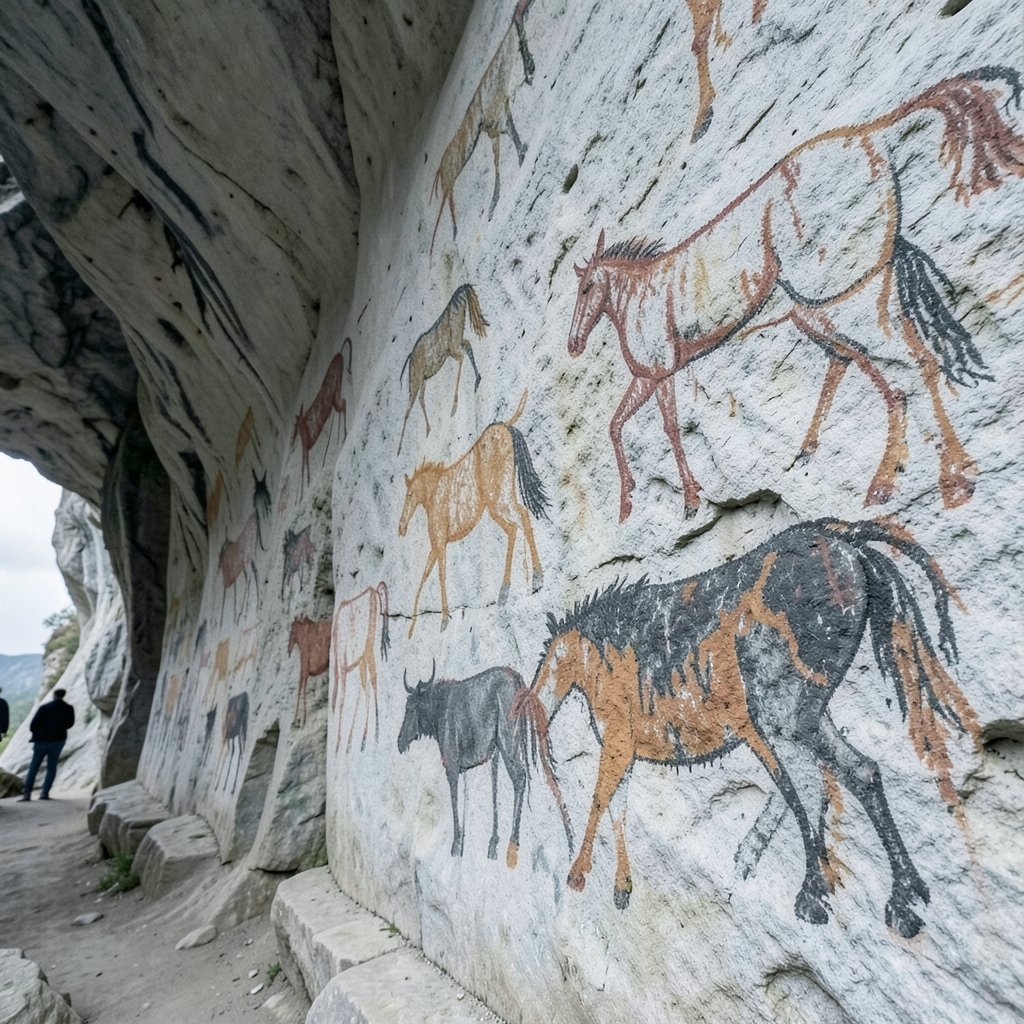
Around 17,000 years ago, someone climbed into a cave at Lascaux and painted animals layered over one another in what may be the world’s oldest storyboard. Nobody knows exactly what that painter intended, but the instinct is unmistakable: humans have been telling stories in pictures for as long as we’ve been making pictures at all.
Quick Answer: What is narrative art?
Narrative art is art that tells a story or implies a sequence of events, usually through figures, actions, and settings arranged to suggest something happened before and will happen after. You’ll find it in cave painting, temple reliefs, history painting, comic books, and film storyboards. (Narrative)
It differs from art that is purely decorative, abstract, or focused on a single mood. Some works show one decisive moment, while others pack multiple scenes into a single frame, a technique called continuous narrative.
Before you classify a work, check the number of scenes depicted, whether figures repeat, how captions or text function, the setting and props, and the implied timeline.
A Working Definition (and Why There Isn’t Just One)
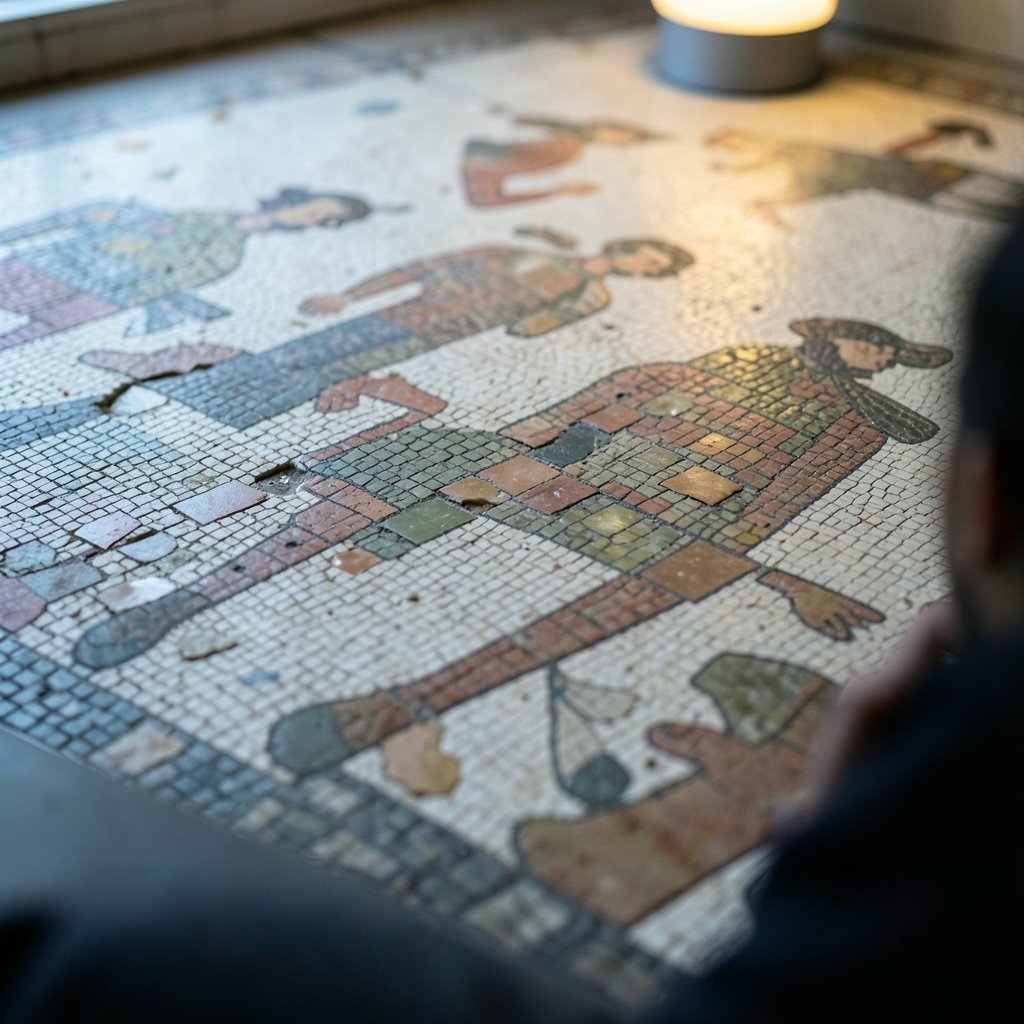
Here’s the honest truth: no museum, university, or standards body has issued an official definition of narrative art. The term is descriptive, not a formal movement, and its meaning shifts depending on who’s using it. Art historians tend to mean paintings and reliefs that depict a story. Comics scholars mean sequences of images arranged in deliberate order. Film scholars mean visual storytelling that implies time passing.
That flexibility is a feature, not a bug. It lets the term stretch from a Mesopotamian mosaic to a graphic novel without breaking. But it also means context matters more than any single dictionary entry. When someone calls a painting “narrative,” ask what story they think it’s telling and how the image communicates it.
The Deep Roots: From Cave Walls to Continuous Narrative
The earliest surviving examples of visual storytelling are also the most debated. The Lascaux cave paintings in France, estimated at roughly 17,000 years old (though dating methods are contested), include superimposed animal figures that some archaeologists read as narrative scenes. Others argue the overlaps are simply repeated ritual use of the same wall. Either way, the images imply action and sequence rather than static decoration.
By the third millennium BCE, storytelling in art had become systematic. The Standard of Ur, made around 2600–2400 BCE and held by the British Museum, uses stacked registers to show war on one side and peace on the other. This is a textbook example of continuous narrative: multiple moments from one story share a single frame, with the same figures appearing more than once.
Classical Greece pushed the idea further. The Parthenon frieze, carved around 443–438 BCE, depicts a processional sequence that unfolds as you walk past it. The movement of the viewer’s body becomes part of the storytelling. Medieval Europe had its own solution: the Bayeux Tapestry, embroidered in the 1070s (the exact date is uncertain), narrates the Norman Conquest across a continuous strip with Latin captions, essentially a stone-age-to-medieval ancestor of the comic strip.
What Continuous Narrative Actually Looks Like
| Feature | Continuous Narrative | Single-Scene Narrative |
|---|---|---|
| Number of moments shown | Two or more | One |
| Repeating figures | Yes, often | Rarely |
| Reader’s task | Reconstruct sequence | Interpret a frozen moment |
| Classic example | Standard of Ur | Most Renaissance history painting |
| Modern cousin | Comic page | Film still |
The Renaissance Rules: History Painting as the Highest Aim
In 1435, the Italian polymath Leon Battista Alberti wrote De pictura, a treatise that codified istoria, or history painting, as the noblest purpose of the medium. For Alberti, a painting should move the viewer emotionally by depicting a morally significant story with convincing figures and gestures. Storytelling wasn’t just one option among many; it was the point.
That idea hardened into doctrine. In 17th-century France, the Académie royale formalized a hierarchy of genres that ranked history painting above portraiture, genre scenes, landscape, and still life. If you wanted prestige as a painter, you told stories, preferably grand ones drawn from scripture, myth, or classical history.
The hierarchy eventually collapsed, but its shadow is long. Even today, museum wall texts often treat narrative painting as the default mode of “serious” art, a bias worth noticing.
Narrative Art in Modern Times: Hogarth, Comics, and Beyond
William Hogarth’s A Rake’s Progress, painted in 1733–34 and engraved in 1735, showed that storytelling could be sharp, satirical, and popular. The series follows a wealthy young man through eight scenes of dissipation and ruin, and it was designed to be read in order, like episodes of a show. Hogarth essentially invented the modern serial narrative in visual art.
Two centuries later, comics scholars formalized what Hogarth had intuited. Scott McCloud’s Understanding Comics (1993) defined comics as “juxtaposed pictorial and other images in deliberate sequence,” a definition that treats sequential narrative as a legitimate artistic language rather than a lowbrow cousin of literature. That framing helped push graphic novels into museums and university syllabi.
Today the category is genuinely wide. It includes photojournalism, storyboards, animated shorts, video games, and installation art that unfolds as the viewer moves through a space. The medium changes; the underlying question doesn’t: what happened, and what happens next?
How to Read a Narrative Painting
Looking at narrative art well takes a bit of method. The following approach works whether you’re standing in front of a Renaissance altarpiece or flipping through a graphic novel.
- Identify the moment. Is this a single decisive instant, or several moments sharing one frame? Look for repeated figures or clothing.
- Find the protagonist. Whose gaze, gesture, or position draws your eye first? That’s usually your guide.
- Read the props. A skull, a letter, a dropped cup, a clock: objects carry plot information.
- Check the edges. Figures cut off at the frame’s border often imply action continuing beyond it.
- Look for text. Captions, inscriptions, and speech bubbles are part of the storytelling machinery, not decoration.
- Ask what’s missing. Narrative art often works by omission. The most important event may be the one not shown.
A common mistake is treating a narrative image as a puzzle with one correct answer. Most of these works were made to be interpreted, not decoded, and scholars frequently disagree about what a given scene depicts. That ambiguity is often deliberate.
Where Narrative Art Shows Up Today
Narrative art isn’t a historical relic. It’s everywhere once you start noticing it. Editorial illustration tells a story in a single frame. Album covers imply a mood and a backstory. Video game environments guide players through space the way a frieze guides a worshipper. Even brand campaigns borrow the grammar of sequential storytelling.
The culture around visual storytelling keeps expanding too. Publications that track contemporary creative work, like this fresh perspective on contemporary art, often highlight how younger artists blend narrative traditions with digital tools. The same is true in design and fashion, where modern trends in art and design increasingly borrow from comic panels, storyboards, and cinematic framing. And if you want a deeper dive into how scent, memory, and storytelling intersect in commercial art, there’s an interesting read on the art of modern fragrance that shows how narrative thinking crosses disciplines. (Narrative art)
Narrative vs. Non-Narrative at a Glance
| Question | Narrative Art | Non-Narrative Art |
|---|---|---|
| Does it imply events in time? | Yes | Usually not |
| Are there characters or agents? | Often | Rarely |
| Does order matter? | Frequently | Seldom |
| Examples | History painting, comics, reliefs | Abstract painting, minimal sculpture, pattern design |
Common Misconceptions Worth Clearing Up
Myth: narrative art must be figurative. Not necessarily. Some abstract works imply sequence through color progression or repeated forms, though most scholars would hesitate to call them narrative in the strict sense.
Myth: it has to be old. Comics, animation, and installation art are all living forms of narrative art, and they’re studied with the same rigor as oil paintings.
Myth: there’s one correct reading. Interpretation is contested even among experts. The dating of prehistoric and medieval works is approximate, and the meaning of specific scenes is often disputed.
Myth: continuous narrative and sequential art are the same thing. This is a genuine definitional dispute, not a settled fact. Some scholars reserve “sequential art” for works where images are physically separate (comic panels), while “continuous narrative” describes multiple moments within one unified image.
Conclusion
Narrative art is less a style than a strategy: the decision to make an image carry a story. It runs from the caves of Lascaux through the registers of Ur, the friezes of Athens, the satirical engravings of Hogarth, and straight into the graphic novels and storyboards of today. There’s no single authority defining it, and that’s precisely what makes it useful. Whether you’re a student, a collector, or just someone who likes looking closely, the practical skill is the same: find the moment, follow the figures, read the props, and ask what happened next.
Frequently Asked Questions
What is the difference between narrative art and genre painting?
Genre painting depicts scenes from everyday life, while narrative art tells a story. The two overlap heavily, since many genre scenes imply a small drama, but a genre painting can be purely observational with no implied sequence of events.
Is a portrait considered narrative art?
Usually not, unless it implies a story beyond the sitter’s appearance. A portrait becomes narrative when props, gestures, or background details suggest action, history, or an unfolding situation, such as a portrait showing a subject mid-task or surrounded by symbolic objects.
Can abstract art be narrative?
Rarely in the strict sense, but the boundary is fuzzy. Some abstract works suggest progression or transformation through repeated forms and color shifts. Most scholars treat true narrative as requiring implied agents or events, which abstract art usually avoids.
Why is continuous narrative important in art history?
It solves a practical problem: how to show time passing within a single image. Continuous narrative let artists depict complex stories without splitting them across separate panels, and it shaped how later traditions, including comics and film storyboards, approached sequence.
How do historians know what ancient narrative art depicts?
Often they don’t know for certain. Scholars rely on accompanying text, comparable works, and cultural context, and interpretations frequently change. The dating of prehistoric and medieval works is also approximate and debated, so claims about specific scenes should be treated with caution.
Does narrative art have to be realistic?
No. Egyptian reliefs, medieval tapestries, and modern comics all tell stories using stylized or symbolic conventions rather than realism. What matters is whether the viewer can reconstruct events, not whether the figures look lifelike.
Myth: a story must be complete within the frame. Many narrative works are fragments of larger cycles, intended to be seen alongside companion pieces or read in a fixed order. A single panel of a predella or one page of a comic gains meaning from its neighbors, and isolating it can flatten the story it was built to tell.
Myth: words and images compete. In captioned tapestries, inscribed reliefs, and speech-balloon comics, text and image divide the labor of storytelling rather than duplicating it. The caption often supplies time, cause, or voice that the picture cannot show, while the image supplies the spatial and emotional detail the words leave out.
None of this makes narrative art harder to enjoy; it makes it richer. The next time an image seems to ask a question rather than state a fact, treat that as an invitation. Stories in art are rarely closed. They wait for a viewer willing to look long enough to finish them.