
Moynat Brand History: Paris Trunk Maker’s Return
 Abdul WadoodLast updated
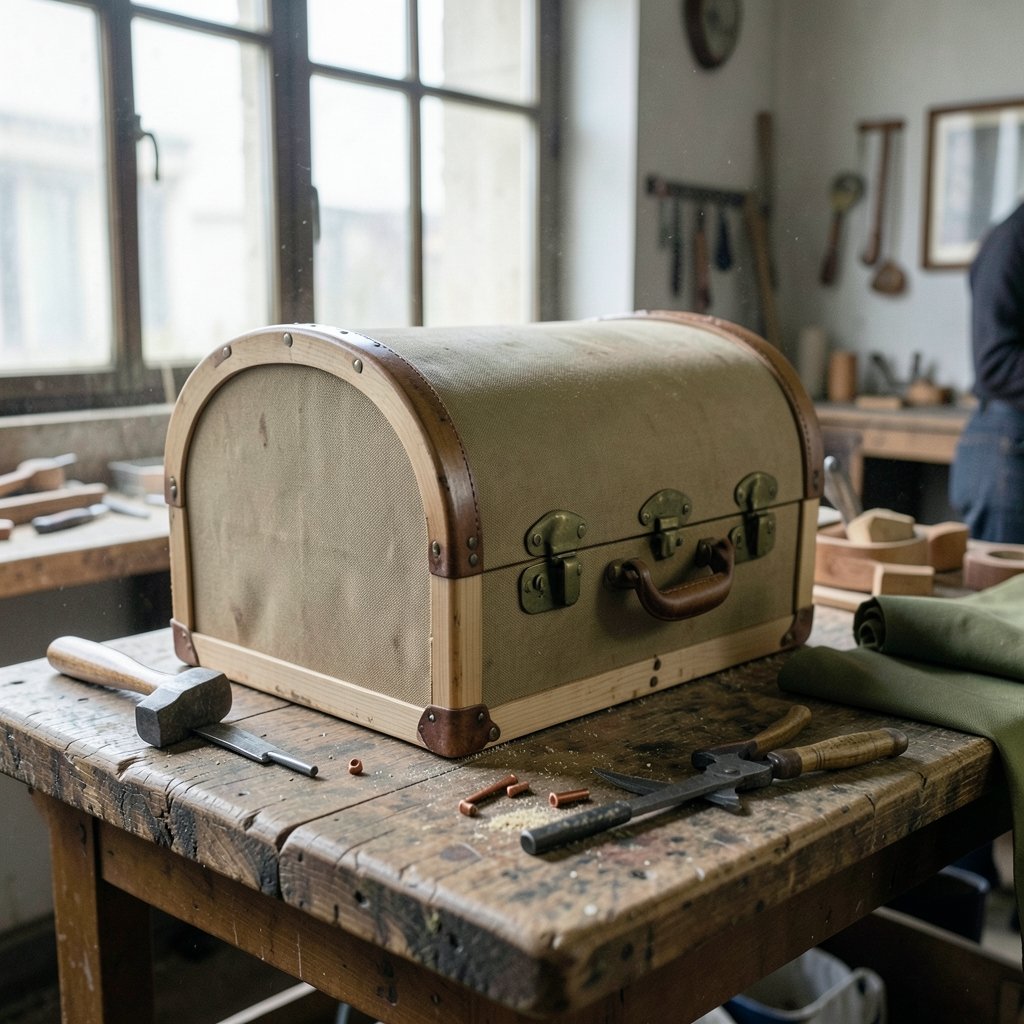
Moynat was founded in Paris in 1849, and for a luxury house that is now sold in a handful of boutiques worldwide, that date hides a strange story. The brand built lightweight, waterproof travel trunks for a newly mobile 19th-century world, faded almost completely by the 1970s, and then came back to life more than three decades later. Few heritage brands have disappeared so thoroughly and returned so deliberately. Understanding Moynat’s history means separating the parts the house tells about itself from the parts that are harder to pin down. (Moynat)
The Founding: Pauline Moynat and a Trunk-Maker’s Partnership
Moynat traces its origins to Pauline Moynat, who founded the house in Paris in 1849 together with a trunk-maker named Coulembier. That pairing matters. Pauline Moynat is frequently described as one of the very few women to found a luxury house in 19th-century France, a period when the great names in leather goods and travel ware were almost entirely male. Her partner brought the craft; she brought the commercial instinct and the name that would sit above the door. (Moynat)
The founding year of 1849 is the date the brand itself repeats, and it is the anchor of its heritage story. It is also the first place where a reader should slow down. Luxury houses often treat the year a business was registered, the year a workshop opened, and the year a shop opened as interchangeable. For Moynat, those dates do not always line up neatly across published accounts, and the founding year and the opening of the first boutique are sometimes blurred together. The 1849 date is the house’s own, and it is worth treating as brand-authored history rather than an independently audited fact.
Why Lightweight Trunks Were a Genuine Innovation

It is easy to read “lightweight, waterproof trunk” as marketing language. In the mid-19th century it was closer to an engineering problem. Travel trunks of the era were heavy wooden boxes bound in leather and reinforced with brass. They protected their contents well and punished anyone who had to move them. As rail networks spread across Europe, travelers needed cases that a porter could actually carry and that would survive rain on an open platform.
Moynat’s early reputation rested on exactly that problem. The house became known for lightweight, waterproof travel trunks and automobile trunks, with the technical credit often given to Coulembier’s construction methods and materials. The specific techniques are described differently depending on the source, so the safe takeaway is the principle rather than the recipe: Moynat’s early edge came from making luggage that was easier to move without giving up protection. That is the same trade-off luggage makers still argue about today, and it was a real commercial advantage when long-distance travel stopped being a privilege of the very rich.
Rue de la Paix: The Address That Built the Reputation
The original boutique and workshop sat at 1 rue de la Paix in Paris, close to the Opéra. The address was not incidental. In the second half of the 19th century, rue de la Paix was one of the most fashionable streets in Europe, lined with jewelers, couturiers and the shops that served them. A trunk maker with an address there was selling to people who traveled constantly and cared how their luggage looked arriving.
The opening of the rue de la Paix store is often dated to 1854. That is where the timeline gets slippery. Some accounts treat 1849 as the founding and 1854 as the boutique, which is perfectly coherent: a business can exist for several years before it opens a flagship. Other accounts use the two dates almost interchangeably, which creates the impression of a contradiction where there may be none. The honest position is that 1849 and 1854 probably describe two different milestones, not two competing origin stories.
Toulouse-Lautrec and the Artist Connection
The most repeated anecdote in Moynat’s history links the house to Henri de Toulouse-Lautrec, the French painter who chronicled Parisian nightlife in the 1890s. According to the story, the artist designed or decorated items for the brand. It is a wonderful detail, and it fits the era: Toulouse-Lautrec was a working commercial artist as well as a painter, and he produced posters and illustrations for businesses across Paris.
It is also the weakest link in the chain. The connection appears in many retellings but is anecdotal in most of them, and it needs a primary citation, such as an archival record or a documented surviving object, before it should be stated as fact. A brand’s own history page is a starting point, not a finish line. Readers who care about accuracy should treat the Toulouse-Lautrec story as plausible and charming rather than proven.
The Long Decline and the Silence
Moynat’s prominence faded in the mid-20th century. The reasons are not mysterious in outline. Air travel reshaped luggage, mass-market manufacturing reshaped prices, and the small ateliers that made hand-finished trunks faced competitors who could produce serviceable suitcases at a fraction of the cost. Houses that survived that shift either scaled up or found a new luxury identity. Moynat, by most accounts, did neither.
The original house effectively ceased operations by the 1970s, though the exact date of closure is reported inconsistently. For roughly three decades the name sat dormant. That gap is the most interesting part of the story for anyone studying brand longevity, because it raises an uncomfortable question: what exactly survives when a company stops trading? In Moynat’s case, the answer was a name, an address, a founding date, and a set of design references. That turned out to be enough.
The Revival: LVMH and a New Chapter
The Moynat name was revived under LVMH ownership, with the brand relaunched around 2010 to 2011 and creative direction linked to Ramesh Nair, a designer with a background in leather goods. The relaunch positioned Moynat as a quiet, craft-first alternative to the loudest names in the group: fewer stores, limited production, and a heavy emphasis on hand-finished leather.
Two cautions apply here. First, the exact relaunch year and the precise corporate structure are described differently across sources, and some accounts are vaguer than others about LVMH’s involvement. Second, the revival is recent enough that most published material about it originates from the brand or from fashion press repeating brand briefings. That does not make it false. It does mean the relaunch narrative deserves the same scrutiny as the 19th-century one. The broader question of how heritage houses rebuild identity after decades of silence is explored in this look at building meaningful brand worlds, and Moynat is a textbook case of heritage used as raw material rather than decoration.
What Contemporary Moynat Actually Sells
Modern Moynat markets itself on the 1849 founding date and on Pauline Moynat’s role as a female founder. Both are genuine differentiators in a category where the founding stories are overwhelmingly male. The product line leans on structured leather handbags and small leather goods rather than the travel trunks that made the original reputation, which is a sensible commercial choice and also a break with the past.
The positioning places Moynat in a specific niche: heritage without spectacle. That puts it in conversation with other revived or quietly run houses, and the wider landscape of watchmaking, leather and design heritage is covered in Voozon’s luxury section for readers who want to compare how different brands handle the same problem. Brand-level profiles and reviews of individual houses are collected in the Voozon brands directory, which is a useful starting point before forming a view on any single label.
How Moynat Compares With Other Heritage Houses
The clearest way to understand Moynat is to compare its trajectory with peers that took different paths.
| House | Founded | 20th-Century Fate | Revival |
|---|---|---|---|
| Moynat | 1849 | Faded, ceased operations by the 1970s | Relaunched around 2010–2011 under LVMH |
| A house that scaled | 19th century | Expanded globally, stayed in production | No revival needed |
| A house absorbed into a group | 19th or 20th century | Kept trading under new ownership | Continuous, with repositioning |
| A dormant name | Various | Traded until mid-20th century | Relaunched by a new owner |
The pattern is common. A dormant name is a valuable asset because it carries history without carrying legacy costs. There is no aging factory, no inherited retail network, no workforce to renegotiate with. What the new owner buys is a story, and the story is only as strong as the documentation behind it. That is why the 1849 date and the Pauline Moynat narrative matter commercially as well as sentimentally.
Practical Advice for Anyone Researching a Heritage Brand
If you are trying to establish what is actually true about a brand like Moynat, a few habits save time.
- Separate founding year from first boutique. They are often different milestones, and blurring them creates fake contradictions.
- Check whether the source is the brand. Official history pages are primary for what a house claims, not for what happened.
- Look for surviving objects. A dated trunk with a maker’s mark is stronger evidence than any press release.
- Treat artist and celebrity connections as unproven until an archive or a documented piece backs them up.
- Note the gap years. When a brand stopped trading, and for how long, tells you more about its current identity than its founding story does.
The most common mistake is assuming that a long founding date implies unbroken continuity. For Moynat it plainly does not. The second most common mistake is the opposite: dismissing a revived brand as pure invention. Moynat’s founding, its address and its early specialty in lightweight trunks are all well attested. The uncertainty sits in the details, not in the existence of the business.
Conclusion
Moynat’s history runs in three acts: a genuine 19th-century success built on lighter, waterproof trunks and a fashionable rue de la Paix address; a slow mid-20th-century decline that ended in dormancy by the 1970s; and a deliberate revival around 2010 to 2011 under LVMH, built on the 1849 founding date and the unusual figure of Pauline Moynat. The unresolved questions, the 1849 versus 1854 confusion, the Toulouse-Lautrec anecdote, the exact closure date and the precise terms of the relaunch, are not flaws in the story. They are the story. A heritage brand is a set of claims about the past, and the most useful thing a reader can do is ask which claims rest on documents and which rest on repetition.
FAQ
When was Moynat founded?
The brand dates its founding to 1849 in Paris, when Pauline Moynat established the house with the trunk-maker Coulembier. The first boutique at 1 rue de la Paix is often dated to 1854, which is a separate milestone rather than a competing founding date.
Who was Pauline Moynat?
Pauline Moynat was the founder of the house and is often described as one of the few women to found a luxury brand in 19th-century France. Her exact role, founder or co-founder alongside Coulembier, is described differently across sources.
Did Toulouse-Lautrec really design for Moynat?
The connection is widely repeated but remains anecdotal in most accounts. It is plausible given the artist’s commercial illustration work in 1890s Paris, but it needs archival or object-based confirmation before being treated as established fact.
Why did Moynat disappear?
The house faded in the mid-20th century as air travel, mass production and changing luggage habits undercut small ateliers making hand-finished trunks. It effectively ceased operations by the 1970s, though the exact closure date is reported inconsistently.
When was Moynat revived?
The name was revived under LVMH ownership, with a relaunch around 2010 to 2011 and creative direction linked to Ramesh Nair. The precise relaunch year and corporate details vary between sources and are worth checking against primary material.
Is Moynat still known for trunks?
Not primarily. Contemporary Moynat focuses on structured leather handbags and small leather goods, while marketing itself on the 1849 founding date and its trunk-making heritage. The travel trunks built the original reputation, but they are heritage material now rather than the core business.