
Mountain Buggy Skyrider: Luxury Luggage Stroller Guide 2026
 Abdul WadoodLast updated
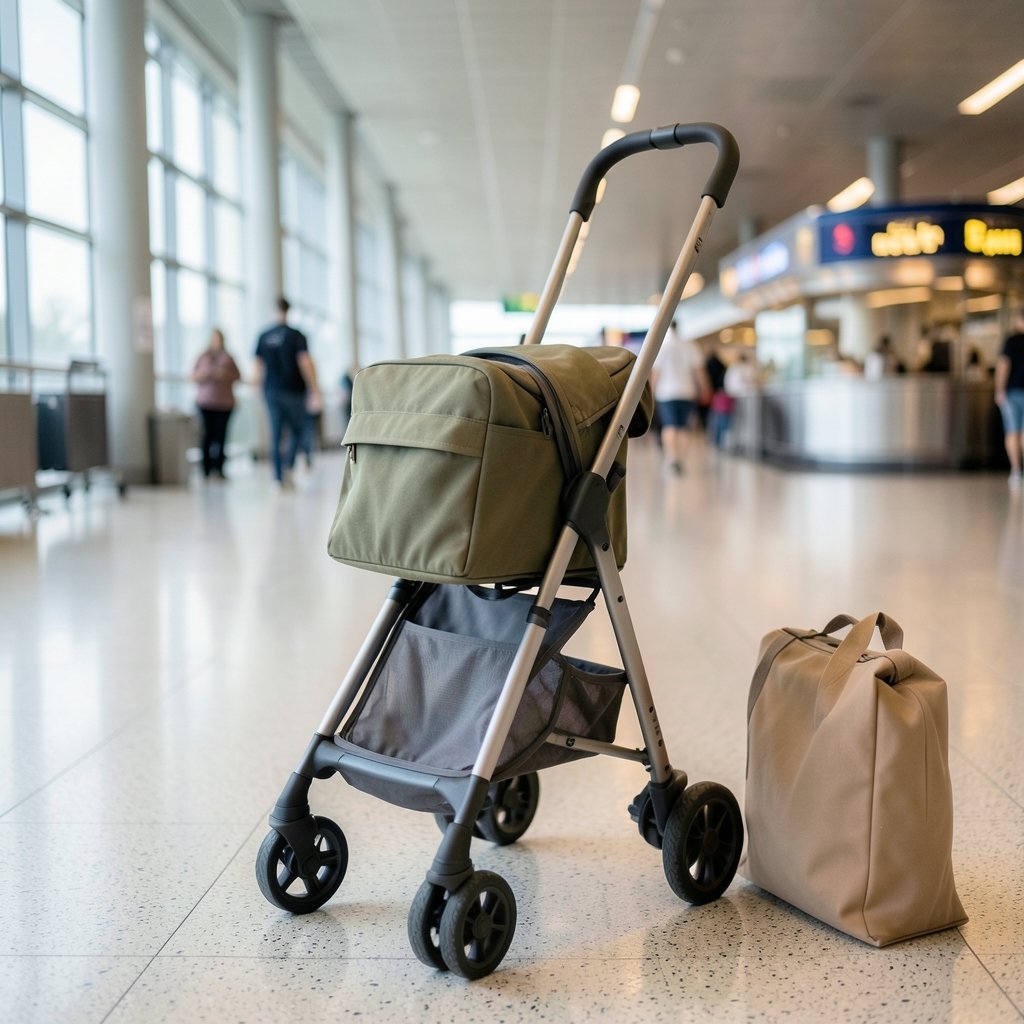
What if your stroller could double as a piece of luggage, folding into something you wheel behind you like a carry-on instead of wrestling onto a carousel? That is the promise that made the Mountain Buggy Skyrider one of the most talked-about designs in the premium stroller world. It is also the promise that makes shoppers ask hard questions about weight, fold size, price, and whether the concept actually holds up on a real trip.
This article looks at where the Skyrider fits in the wider market, what to check before you spend, and how it compares with the travel strollers most families end up buying instead.
What the Skyrider Is and Where It Came From
Mountain Buggy is a New Zealand brand that built its reputation on all-terrain and jogging strollers such as the Urban Jungle and the Terrain. Those pushchairs were designed for gravel paths, beach walks, and serious mileage, with big air-filled wheels and sturdy frames. The Skyrider took the brand in a different direction: a premium travel-oriented pushchair built around the idea that a stroller should be as easy to move through an airport as it is to push down a street.
The concept is straightforward. Instead of folding into a compact bundle you carry by a strap, the Skyrider is designed to convert into a wheeled travel format, so you roll it along rather than haul it. For parents juggling a toddler, a diaper bag, and a boarding pass, that is an appealing pitch.
It is worth being clear about what this article can and cannot tell you. Exact specifications, current availability, and pricing for the Skyrider vary by market and have changed over the years, so treat any single figure you read online with caution and confirm details with the manufacturer or an authorized retailer before buying. What follows focuses on the things that stay true regardless of the spec sheet: how to judge the category, what to test in person, and where the concept fits.
Why “Luggage Stroller” Is a Real Category Now

The travel stroller market has grown quickly because airlines have made travel with young children more complicated. Cabin baggage rules, gate-check policies, and the risk of a stroller arriving damaged at the far end of a trip have pushed manufacturers toward designs that fold small and travel well.
There are broadly three approaches:
| Approach | Typical strength | Typical trade-off |
|---|---|---|
| Compact fold stroller | Fits overhead bins on many airlines | Small wheels, limited comfort on rough ground |
| All-terrain stroller | Handles gravel, sand, cobbles | Heavy and bulky to travel with |
| Luggage-style stroller | Rolls like a case, protects itself in transit | Heavier than a bare-bones compact, higher price |
The Skyrider sits in the third group. That framing matters because it tells you what you are paying for. You are not buying the lightest stroller or the most rugged one. You are buying a travel experience that is meant to be less physically awkward.
If your trips lean toward city breaks and resort stays rather than wilderness, the way you pack and move through airports matters as much as the stroller itself. That is the same logic behind broader thinking on conscious luxury: a practical guide to buying better, not more, where the question is less about owning the most impressive object and more about whether it genuinely earns its place in your life.
The Practical Test: What Actually Matters in Daily Use
Marketing language is easy. Real use is harder. Here is what experienced parents and reviewers tend to check first, and what to look at when you see a Skyrider or any luggage-style stroller in person.
Weight and one-handed handling
A stroller that converts to luggage format still has to be lifted at some point: into a taxi trunk, up a flight of stairs, onto a train. Ask to lift the folded unit yourself. If you cannot manage it with one hand while holding a child’s hand with the other, the luggage feature is solving a problem you will still have. (NHTSA overview of child passenger safety equipment)
The fold and the roll
Test the conversion sequence in the shop, not on the manufacturer’s video. Count the steps. Time yourself. Then imagine doing it in the rain, at a gate, with a queue behind you. A fold that takes two hands, a foot, and a firm shove is a fold you will resent by day three of a trip.
Wheel quality and surface behavior
Small wheels are fine on smooth airport floors and terrible on cobblestones. If your travel plans include old European city centers, check how the front wheels handle uneven pavement. Solid tires need less maintenance than air-filled ones but transmit more vibration.
Seat comfort and recline
A travel stroller is often used for naps in unfamiliar places. A flat or near-flat recline and a supportive seat back matter more than they seem to on the shop floor. Sit the child in it if you can.
Storage and the luggage function itself
If the design includes a luggage element, ask what it is actually for. Is it a built-in case for the stroller itself, or extra capacity for your belongings? Those are very different features, and confusing them is one of the most common mistakes buyers make.
Common Mistakes Buyers Make
A few patterns show up again and again when families shop for premium travel strollers.
Buying for the brochure, not the trip. The most common error is choosing a stroller for the holiday you take once a year rather than the walks you take every day. If 90 percent of your outings are on pavement near home, a compact city stroller may serve you better, and you can rent or borrow for the big trip.
Ignoring the airline you actually fly. Cabin stroller policies differ between carriers and even between aircraft on the same route. Check the specific rules for your booking rather than trusting a general claim that a stroller “fits overhead.”
Skipping the car seat and car boot question. A stroller that travels beautifully but does not fit your boot alongside the weekly shop is a stroller that stays in the garage.
Underestimating the resale question. Premium strollers hold value reasonably well, but only if you keep the travel bag, the manual, and the receipt. If you might sell in two years, treat those accessories as part of the purchase.
Assuming price equals suitability. A high price buys materials, engineering, and brand history. It does not buy a guarantee that the stroller suits your body height, your child’s size, or your staircase.
How the Skyrider Compares With the Wider Premium Market
The luxury stroller space is crowded, and the Skyrider’s real competition is not only other luggage-style designs. It is also high-end compact strollers and premium all-terrain models from established European and American brands.
A few honest comparisons help frame the decision:
- If your priority is a stroller that disappears into an overhead bin, a purpose-built compact fold model will usually beat a luggage-style design on size and weight.
- If your priority is comfort on rough ground, an all-terrain model with larger wheels will usually win.
- If your priority is reducing the physical friction of travel, the luggage concept has a genuine advantage that is hard to replicate with a strap-carried fold.
That last point is where the Skyrider’s appeal lives. It is a design-led answer to a specific irritation. Whether that irritation is big enough in your life to justify the outlay is a personal calculation, not a universal one.
The same reasoning applies to other premium purchases. A quiet cabin, for example, is something buyers pay a lot for and rarely test properly, which is why guides to the quietest luxury cars and what actually makes a cabin silent tend to focus on measurable engineering rather than badge prestige. Strollers reward the same discipline: look at what the object does, not what it signals.
Safety, Standards, and What to Verify
Strollers are regulated products, and the rules differ by region. In the United States, the relevant voluntary standard is ASTM F833, which covers performance requirements for carriages and strollers, while the European market works to EN 1888. These standards address things like restraint systems, stability, brake performance, and pinch points. (Baby transport: strollers, prams and their history)
For a buyer, the practical takeaway is simple: confirm that the model you are considering is certified to the standard in force where you live, and check for any safety recalls before you buy, particularly if you are shopping second-hand. A premium price is not a substitute for a recall check.
Two other checks are worth doing:
- Confirm the warranty terms in your country, since coverage often differs by region and by retailer.
- Confirm that spare parts, especially wheels and fabrics, are available locally. A stroller you cannot repair becomes landfill.
Where the Skyrider Fits in a Real Travel Plan
The strongest case for a luggage-style stroller is a specific kind of trip: multiple flights, train transfers, city hotels with small lifts, and a child young enough to need a seat but old enough to walk some of the time. In that scenario, every minute saved at a gate compounds over a two-week holiday.
The weakest case is a family that drives everywhere and walks on pavements. For them, the luggage function is dead weight.
Families planning bigger trips often find that the stroller is one piece of a larger puzzle. Coordinating different ages, nap schedules, and luggage across a long trip takes its own skill, and the reasoning in a multigenerational luxury trip that works for every age applies here: the equipment has to serve the whole group, rather than only the person who chose it.
It is also worth remembering that travel gear is only as good as the trip it supports. A well-chosen stroller on a badly planned itinerary still feels like a burden, while a modest one on a well-paced trip feels effortless. If you are weighing up destinations, a Lake Como luxury travel guide covering villas, boats, and where to stay is a useful reminder of how much terrain and transport shape what you should pack.
Buying Checklist Before You Commit
Before you pay for any premium travel stroller, work through this list:
- Lift the folded unit and carry it ten meters.
- Fold and unfold it five times in a row.
- Push it over a rough surface, rather than only shop flooring.
- Check the recline with a child in the seat if possible.
- Confirm the certification standard for your country.
- Search for recalls on the specific model and year.
- Ask about spare wheels and fabric availability.
- Check your airline’s actual stroller policy for your route.
- Measure your car boot before you buy.
- Keep the receipt, manual, and travel bag.
If the stroller passes all ten, it is probably the right purchase. If it fails at step one or two, no amount of brand heritage will fix it.
Conclusion
The Mountain Buggy Skyrider is best understood as a design idea rather than a single spec sheet: a premium stroller built around the friction of travel rather than the romance of the pram. That idea has real value for families who fly often and hate the airport scrum. It has much less value for families whose strollers mostly see the pavement outside their front door.
The sensible approach is to verify the current specifications directly with the manufacturer or an authorized retailer, check the safety certification and recall history for your market, and then test the fold and the lift yourself before committing. A luxury stroller should earn its price in daily use, rather than only in the showroom. Buy for the trips you actually take, and the right choice becomes much easier to see.
Frequently Asked Questions
What is the Mountain Buggy Skyrider?
The Skyrider is a premium stroller from the New Zealand brand Mountain Buggy, designed around travel. Its defining idea is a format that converts for rolling rather than carrying, positioning it in the luggage-style stroller category rather than among compact city pushchairs or all-terrain joggers.
Is a luggage stroller worth the extra cost?
It depends on how often you fly and transfer. If you take several trips a year with a young child and regularly juggle bags at gates and stations, the reduced physical friction can justify the price. If most of your stroller use is local pavement walking, a simpler model will usually serve you better for less money.
How heavy is a luggage-style stroller compared with a compact one?
Luggage-style designs are generally heavier than the lightest compact fold strollers, because the conversion mechanism and structural reinforcement add mass. Rather than rely on a published figure, lift the folded unit yourself and judge whether you can manage it one-handed while holding a child’s hand.
Can the Skyrider go in an airplane cabin?
That depends on the airline, the aircraft, and the fare class, and policies change. Check the specific cabin baggage rules for your booking rather than assuming a stroller fits overhead. Many families gate-check larger strollers, which is exactly the scenario a luggage-style design is built to make easier.
What safety standards should a stroller meet?
In the United States, look for compliance with ASTM F833, the standard covering carriages and strollers. In Europe, the relevant standard is EN 1888. Whichever market you buy in, confirm certification and check for recalls on the specific model before purchase, especially if buying second-hand.
Does a premium stroller hold its resale value?
Better than budget models, generally, but only if you keep the travel bag, manual, and proof of purchase, and if the model is still supported with spare parts. Condition matters more than brand name. Check current second-hand listings for your model before you assume a strong resale price.