
Men’s Tattoos: What the History, Data, and Ink Actually Tell You
 Abdul WadoodLast updated

A tattoo is one of the few purchases a man makes that is designed to outlast him. It goes into the skin, stays for decades, and gets judged by strangers in seconds. That permanence is exactly why the subject deserves more thought than a walk-in decision made at 11 p.m. on a Friday.
Men’s tattoos sit at a strange crossroads. They carry a history tied to sailors, soldiers, and royalty. They carry real medical questions about ink safety. And they carry a very modern problem: a market flooded with cheap work and fast trends. This article looks at the history, the numbers, the safety side, and the practical decisions that separate a tattoo a man is proud of from one he starts planning to cover up. (Tattoos and piercings: What to know)
The Surprising History Behind Men’s Tattoos
Tattooing is older than writing. Ötzi the Iceman, a naturally mummified body found in the Alps and dated to roughly 5,300 years ago, carries dozens of small tattoo marks, many of them on joints and the lower back. The scientific record on Ötzi treats those marks as the oldest known tattoos on a preserved human body.
What that fact kills, quickly, is the idea that tattoos are a modern rebellion. Men have been marked for thousands of years, and the reasons were rarely decorative in the way people assume today. They signaled rank, group membership, healing, protection, or punishment.
From Punishment Mark to Status Symbol
In several ancient societies, tattooing was applied to slaves, criminals, and prisoners of war. The mark was a warning label. Then the meaning flipped. Polynesian and Japanese traditions developed elaborate tattoo systems tied to social status and identity. European sailors brought designs home from the Pacific in the 18th century, and by the 19th century, British and other European royalty were being tattooed, which pushed the practice up the social ladder instead of down.
That flip matters for anyone trying to understand men’s tattoos today. The same mark can read as criminal, sacred, fashionable, or military depending on the decade and the street. Context is doing most of the work.
Military and Maritime Roots
The strongest thread in Western men’s tattoo history runs through the armed forces. Sailors used tattoos as identification and as a record of travel. Soldiers added unit insignia and memorials. Naval and military tattoo traditions are documented in collections around the world, and the Wellcome Collection holds material on the medical and cultural history of body marking that rewards a browse. (Tattoo)
The practical lesson from that history: the designs that age best tend to be the ones tied to a specific event, place, or person. A man who gets a tattoo to mark something real rarely regrets it. A man who gets one because a design looked good on someone else’s arm often does.
What the Numbers Say About Men and Tattoos
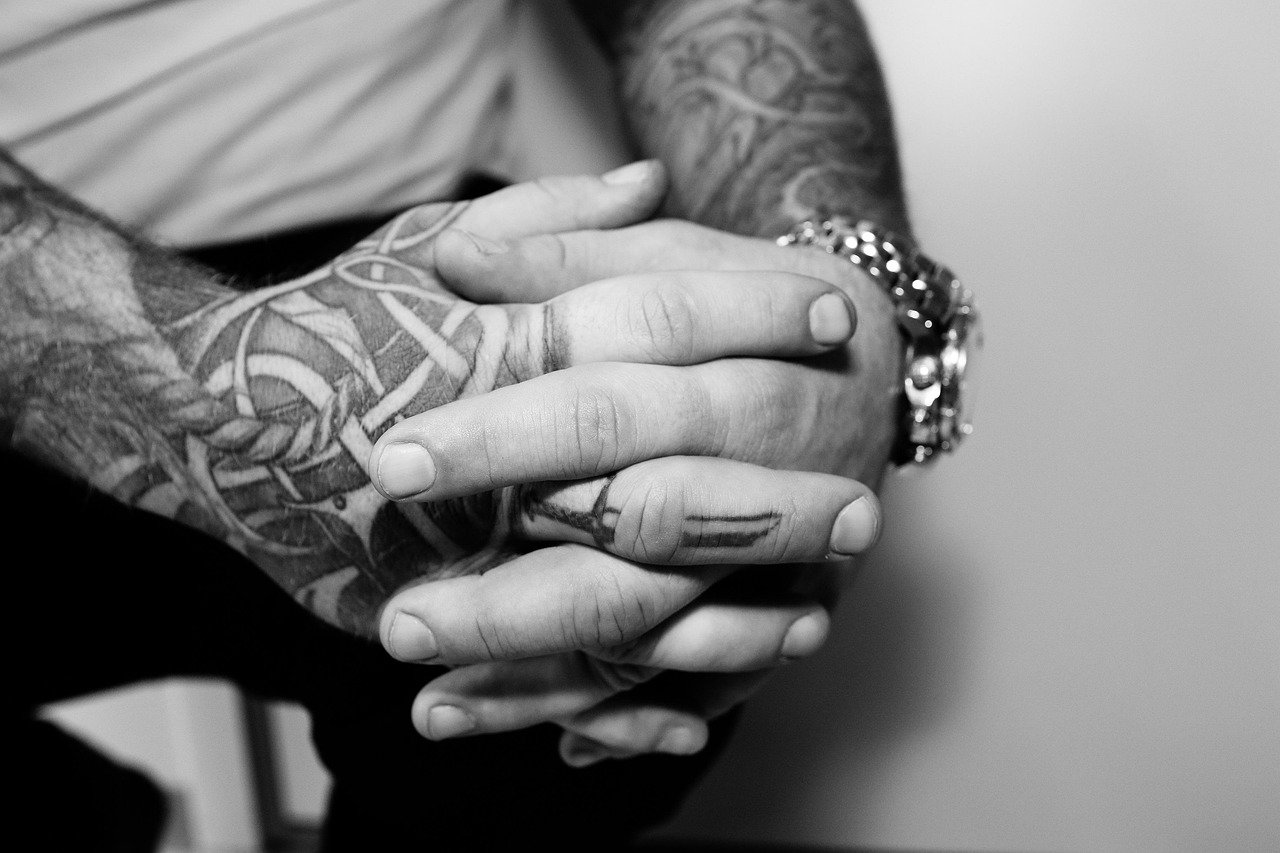
Prevalence figures for tattoos vary widely by survey year, country, and how the question is worded. Treat any single percentage with caution. What holds up across most surveys is the direction: tattoo rates among adults have climbed steadily over the past few decades, and the gap between men and women has narrowed.
That shift has consequences for men specifically.
- Visible tattoos are more accepted. A forearm tattoo no longer closes office doors in most industries. The workplace penalty has shrunk, though it has not vanished in client-facing or uniformed roles.
- The average client is older. More men are getting first tattoos in their thirties and forties, often as memorials or career markers, rather than at eighteen.
- Removal demand tracks regret. The growth of the laser removal industry tells you something the tattoo industry would rather not advertise: a sizeable share of men want out.
The lesson from the data is not “everyone is doing it.” It is that the decision has moved from a fringe act to a normal consumer choice, which means it now deserves normal consumer diligence.
Ink Safety: The Part Most Men Skip
Tattoo ink is not cosmetics-grade in the way most people assume. Regulators have raised specific concerns about certain pigments, and the U.S. Food and Drug Administration maintains consumer information on tattoo inks and the risks tied to them, including allergic reactions and the limited oversight of ink ingredients.
Three safety points are worth knowing before booking.
- Allergies can appear late. A red pigment that caused no problem on day one can flare years later. Red and yellow inks are the usual suspects.
- Ink quality varies by studio. Cheap ink is cheap for a reason. A studio that cannot tell you the brand and batch of its ink is telling you something.
- Medical conditions change the risk. Skin conditions, immune disorders, and blood-thinning medication all affect healing. A doctor’s opinion beats a forum thread.
The practical rule that works in real studios: ask about ink brands, ask about sterilization, and watch whether the artist hesitates. Hesitation is information.
Choosing an Artist: What Actually Works in Practice
The single biggest determinant of whether a man likes his tattoo in ten years is not the design. It is the artist.
Match the Artist to the Style, Not the Shop to the Neighborhood
Tattoo styles are not interchangeable skills. Fine-line work, traditional American, blackwork, realism, and Japanese-style tattooing all demand different muscle memory. A brilliant traditional artist will produce mediocre fine-line work, and vice versa. Portfolios are the only reliable evidence.
Look for a portfolio that shows healed work, rather than only fresh photos. Fresh tattoos photograph beautifully because the skin is still taut and the ink is crisp. Healed work shows what the tattoo will actually look like next year.
Read the Studio, Not the Instagram Grid
Common mistakes show up over and over:
- Booking on follower count. A large following measures marketing, not needle control.
- Skipping the consultation. Good artists want to talk through placement, size, and how the design will age. A shop that wants a deposit before a conversation is a shop to leave.
- Ignoring placement physics. Skin stretches, sags, and gets sun. A design that works on a flat canvas may distort on a ribcage or a forearm that rotates.
- Rushing the size. Small tattoos blur over time. Fine detail in a two-inch design turns to mush. Bigger is usually better for longevity.
Pricing Reality
| Factor | Cheap Option | Durable Option |
|---|---|---|
| Hourly rate | Low, often unlicensed | Market rate, established artist |
| Ink | Unbranded, unverified | Named brand, traceable batch |
| Consultation | None | Included, with design revision |
| Healing advice | Verbal, vague | Written aftercare plan |
| Likely outcome | Rework or cover-up | Stable, clean result |
The cheapest tattoo is almost never the cheapest decision. Cover-ups cost multiples of the original price, and laser removal costs more again.
Design Choices That Age Well
Men’s tattoo regret is rarely about the subject. It is almost always about execution. A few patterns hold up across decades.
Bold shapes beat fine detail. Heavy outlines and solid black hold their structure as skin changes. Hairline detail fades into a gray smudge.
Placement should respect the body’s movement. Forearms, upper arms, shoulders, and calves are stable surfaces. Hands, fingers, necks, and feet are high-fade zones and often a workplace liability.
Personal meaning outlasts trends. Tribal bands, barbed wire, and script in dead languages have all had their moment and their backlash. A date, a coordinate, a piece of family history, or an image tied to a real experience tends to survive changing taste.
Leave room to grow. A man who plans one tattoo often ends up with a collection. Design the first one so it can be extended or composed into a larger piece later.
Consider the sleeve as a project, not a purchase. Full sleeves take multiple sessions across months. Planning the whole composition before the first needle goes in prevents the patchwork look that forces expensive rework.
Aftercare: Where Good Tattoos Are Actually Won
The tattoo is finished on the table. The result is decided in the following two weeks.
The standard advice is consistent across professional studios: keep the area clean, wash gently with unscented soap, pat dry, apply a thin layer of recommended ointment, and avoid soaking, swimming, and direct sun during healing. Do not pick or scratch. Do not let anyone convince you to apply alcohol or petroleum-heavy salves.
Two mistakes are common among men specifically. The first is treating aftercare as optional because the tattoo “feels fine.” The second is sun exposure. Ultraviolet light is the single biggest long-term destroyer of tattoo sharpness, and a man who spends weekends outdoors without sunscreen on his ink will watch it fade years ahead of schedule.
Cost, Removal, and the Regret Math
Tattoo pricing varies enormously by city, artist reputation, and complexity. What does not vary is the shape of the regret math. Removal typically requires multiple laser sessions spread over months, costs much more than the original tattoo, and does not guarantee complete clearance.
That asymmetry is the strongest argument for patience. A man who waits three months between deciding on a design and booking the appointment filters out most impulse mistakes. The design that still feels right after ninety days is usually the one worth keeping.
For anyone weighing a first tattoo against a career or personal situation, the practical test is simple: imagine explaining the tattoo to a future employer, a future partner, and a future version of yourself at fifty. If all three conversations feel fine, book the consultation.
Conclusion
Men’s tattoos are not a trend, a rebellion, or a personality test. They are a permanent body modification with a deep history, a real safety profile, and a market that rewards research over impulse. The men who end up happiest with their ink share a pattern: they chose the artist before the design, they went bigger and bolder than the impulse suggested, they respected aftercare, and they protected the work from the sun.
Everything else, from style to placement to meaning, is a personal call. The one decision that is not personal is diligence. Ask about ink, look at healed work, and give the idea ninety days. That is what actually separates a tattoo a man keeps from one he pays to erase.
Frequently Asked Questions
How much do men’s tattoos typically cost?
Pricing depends on artist reputation, city, size, and complexity. Most studios charge either an hourly rate or a flat rate per piece, and minimum charges apply even for small designs. Established artists with strong portfolios charge more, and that premium usually pays for itself by avoiding cover-ups later. Always confirm the rate and deposit terms during the consultation, not on the day of the appointment.
Do tattoos hurt more for men than women?
Pain depends far more on placement than on sex. Areas over bone and thin skin, such as ribs, collarbone, hands, and feet, hurt more than fleshy areas like the upper arm or calf. Individual pain tolerance, session length, and artist technique matter more than gender. Most people describe the sensation as a hot scratching rather than sharp pain, and longer sessions get harder as the skin becomes irritated.
How old should a man be to get a tattoo?
Legal age requirements vary by country and region, and many studios will not tattoo minors even with parental consent. Beyond legality, the practical consideration is permanence. Skin changes with age, and a design chosen at eighteen may not fit a man at thirty. Many artists recommend waiting until the design has been stable in your mind for several months.
Can a tattoo be removed completely?
Laser removal can fade many tattoos substantially or clear them, but results vary by ink color, depth, skin tone, and the age of the tattoo. Multiple sessions are usually required, spaced weeks apart, and the process costs considerably more than the original tattoo. Some colors, particularly certain greens and yellows, respond poorly to lasers. Removal is best treated as a fallback, not a plan.
What should a man know before his first tattoo?
Choose the artist based on a portfolio of healed work in the style you want, not on social media popularity. Ask about ink brands and sterilization practices. Discuss placement and how the design will age as skin changes. Follow the studio’s written aftercare instructions exactly, and keep the healing tattoo out of direct sun. A ninety-day waiting period between deciding and booking filters out most regret.
Are tattoos still a problem in professional workplaces?
In many industries, visible tattoos are now normal and policies have relaxed. Client-facing, uniformed, and conservative professional environments may still have restrictions, particularly on hands, necks, and faces. The practical approach is to check the employer’s written policy before committing to a highly visible placement, and to favor placements that a short sleeve can cover if flexibility matters.