
Manual Cars in 2026: Why Stick Shifts Still Matter
 Abdul WadoodLast updated
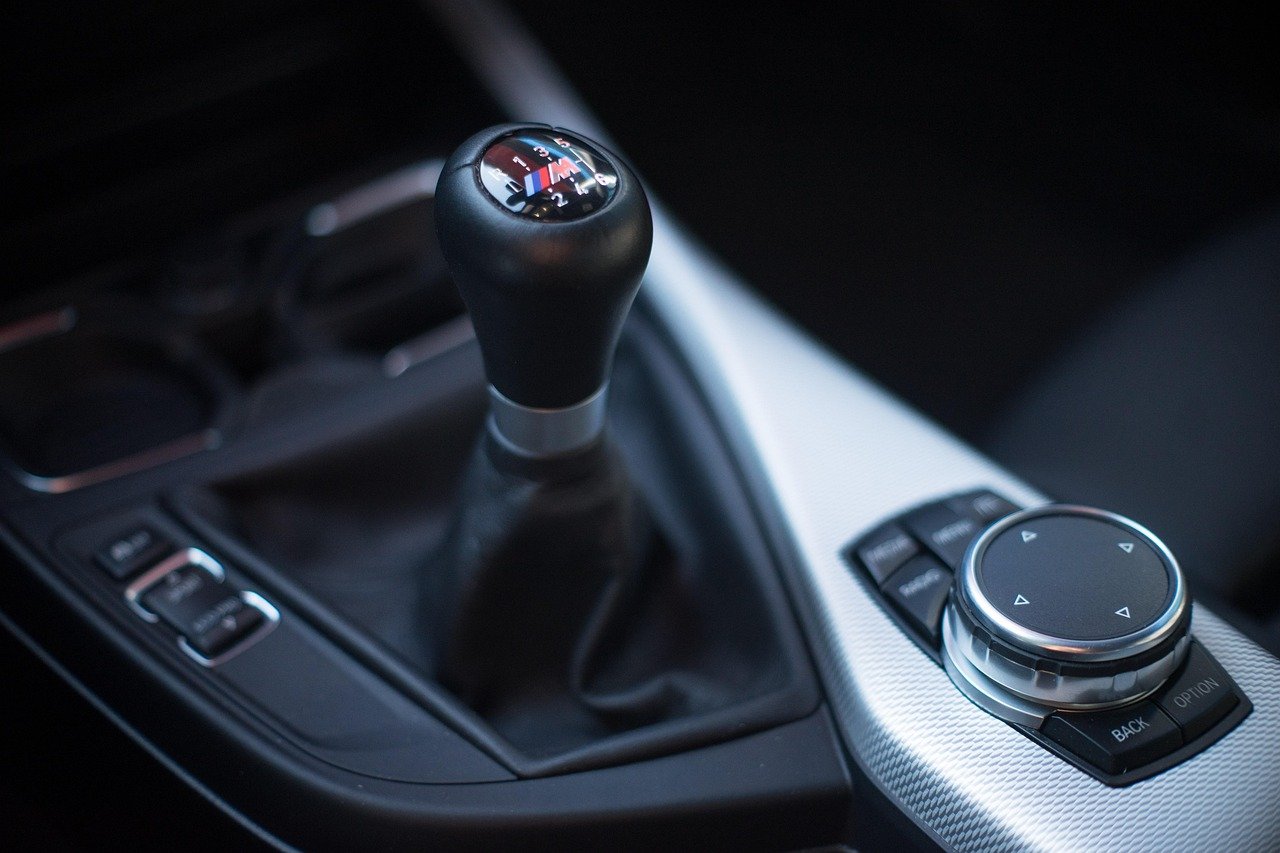
In the 1980s, roughly a quarter of new cars sold in the United States came with a manual transmission. By the 2020s, that figure had collapsed to low single digits. Yet despite decades of predictions that the stick shift would vanish entirely, manual cars keep refusing to die. They survive in sports cars, budget hatchbacks, off-roaders, and a stubborn subculture of drivers who insist on three pedals. This article looks at what manual cars actually are, why they declined, where they still thrive, and what buyers should know before choosing one.
What Makes a Car a Manual?
A manual transmission uses a clutch pedal and a gear lever to let the driver choose gear ratios by hand. Press the clutch, move the lever, release the clutch, and the engine connects to the wheels through a different gear. Most modern manuals are synchronized, meaning the gears mesh smoothly without the driver needing to double-clutch, a technique that was once a basic survival skill for anyone driving a pre-1960s vehicle. (Driver Assistance Technologies)
The layout is familiar: a third pedal on the far left, a lever in the center console or on the floor, and a shift pattern printed on the knob. First gear for pulling away, then up through the ratios, with reverse usually tucked behind a lockout collar or a push-down gate. Compared with an automatic, a manual has fewer moving parts inside the gearbox, no torque converter, and no complex hydraulic control unit. That mechanical simplicity is the root of most of its advantages and, ironically, part of the reason it lost ground as automatics became cheaper to build at scale.
The Long Decline of the Stick Shift

The story of manual cars over the past four decades is a story of steady, almost relentless erosion. In the US, manuals went from mainstream to niche in a single generation. Automakers dropped them model by model, often citing low take rates and the cost of certifying an extra powertrain variant for emissions and safety testing.
The pattern repeated across mainstream segments. Family sedans lost their manuals first, then compact SUVs, then even economy cars. Honda ended US sales of the manual Civic around 2020–2021, a symbolic moment given that the Civic had long been a gateway stick-shift car for young drivers. Exact model-year cutoffs vary by source and are frequently confused with calendar years, so buyers shopping used should check the specific trim and year rather than trusting a general claim.
Two forces accelerated the shift. First, automatic transmissions got genuinely good. Modern eight-, nine-, and ten-speed automatics, plus dual-clutch gearboxes, shift faster than most humans and deliver better fuel economy on official test cycles. Second, electrification removed the gearbox question entirely. Battery-electric vehicles essentially never use multi-speed manual gearboxes, so every EV sold is a car that will never offer a stick.
Where Manual Cars Still Thrive
The decline is real, but it is not uniform. Manuals remain far more common in Europe than in the US, though the automatic and electrified share has been rising there too. In many European markets, driving schools still teach in manuals as the default, and used lots are full of them.
Beyond geography, manuals hold specific niches:
- Sports and performance cars. Enthusiast demand keeps the manual alive in hot hatches and sports coupes, where buyers pay a premium for involvement rather than efficiency.
- Budget transportation. In price-sensitive markets, a manual is often the cheapest way into a new car.
- Off-road and utility vehicles. Low-range gearing and precise clutch control remain valuable on rough terrain.
- Emerging markets. Where automatic servicing is expensive or unreliable, manuals persist on durability grounds.
The enthusiast angle deserves emphasis. For many drivers, the appeal is not nostalgia but control: choosing the gear, timing the shift, and feeling the machine respond. That tactile feedback is exactly what a growing segment of buyers now seeks out deliberately, as covered in this look at the cars built around experience.
Manual vs. Automatic: An Honest Comparison
The old arguments have shifted. Manuals used to win on price and fuel economy; today they usually lose on both. Here is a realistic breakdown.
| Factor | Manual | Automatic |
|---|---|---|
| Purchase price | Often cheaper on base trims | Usually a paid option or standard |
| Fuel economy | Rarely better today; often worse | Typically better on official cycles |
| Maintenance | Simpler gearbox, but clutch wear | Fluid services; complex repairs cost more |
| Driving involvement | High | Low to moderate |
| Traffic comfort | Tiring | Effortless |
| Resale in the US | Narrow buyer pool | Broader appeal |
| Theft risk | Anecdotally lower | Standard |
That last row is worth a caveat. The idea that manuals deter thieves is folklore more than data. It circulates widely in the US because many younger drivers never learned to drive stick, but no serious statistic backs it up as a reliable anti-theft measure. Treat it as a fun anecdote, not a purchasing rationale.
The Learning Curve: What Actually Works
Learning to drive a manual is less mysterious than it looks, and most people can operate one competently within a few hours of practice. The common mistakes are predictable.
- Releasing the clutch too fast. The single biggest cause of stalling. Find the bite point slowly, hold it, then release.
- Riding the clutch. Resting a foot on the pedal wears the friction disc prematurely. Keep the left foot on the dead pedal when not shifting.
- Skipping gears on the way down. Fine in principle, but it demands rev-matching to avoid a lurch. Beginners should downshift sequentially.
- Braking with the clutch in. This removes engine braking and reduces control on descents. Brake first, clutch last.
- Practicing only on hills. Flat, empty parking lots build muscle memory faster. Hills come once the bite point is automatic.
What actually works in practice is repetition in low-stakes environments, plus a willingness to stall without embarrassment. Every manual driver has stalled in traffic. The skill comes back quickly.
Licensing Rules Most Drivers Never Think About
In many countries, the transmission you learn in determines what you are legally allowed to drive. In the UK and much of the European Union, a driver who passes the test in an automatic receives a licence restricted to automatic cars only. To drive a manual, you must pass in a manual. This rule alone keeps manual instruction schools in business across Europe and shapes the used-car market, since a manual licence widens the pool of legal drivers for any given vehicle. (Manual transmission)
In the US, by contrast, licensing is transmission-agnostic. A driver can pass a test in an automatic and legally buy a manual the same day, which partly explains why so many American buyers never learn. It also explains the occasional comedy of a new manual owner asking a stranger in a parking lot for help getting off the lot.
Buying a Used Manual: Practical Checks
Shopping for a used manual is a different exercise from buying an automatic. The gearbox itself is usually durable, but the clutch is a wear item, and replacement can cost anywhere from a few hundred to well over a thousand dollars depending on the car.
Practical checks that experienced buyers run:
- Test the bite point. It should engage smoothly, not at the very top of pedal travel (a sign of wear) or the very bottom.
- Listen for whine or grind. Noise in a specific gear points to worn synchros or bearings.
- Check for slipping. Accelerate hard in a higher gear; if revs climb without matching speed, the clutch is going.
- Inspect the pedal feel. A spongy or sticking clutch pedal can indicate hydraulic problems.
- Verify the clutch history. Ask for service records. A recent clutch replacement is a plus, not a red flag.
For buyers comparing models and trims, resources like Voozon Cars — reviews, comparisons & car guides can help narrow the field before you start test-driving. It also pays to check whether the specific model year you are considering actually offered a manual, since trim availability changed constantly through the 2010s.
The Future of Three Pedals
The long-term picture is clear: manual cars are becoming a specialty product. Electrification removes the gearbox from the equation entirely, and automakers have little incentive to engineer a manual for a vehicle platform that will soon be replaced. Yet the niche is proving durable. Enthusiast demand has kept manuals alive in performance models, and some manufacturers have made a point of offering them as a statement of intent.
What is likely to happen is a split. Mainstream transportation will continue to migrate to automatics and EVs. Meanwhile, a smaller, more committed segment of manual cars will persist, sold at a premium to buyers who value the interaction over the efficiency. That is not a tragedy; it is how niche products usually survive. The stick shift will not disappear so much as become a deliberate choice, which is arguably what it always was for the people who loved it. For a broader view of how car culture and buyer preferences are shifting, Voozon Cars — reviews, comparisons & car guides tracks the models and trends worth watching.
Conclusion
Manual cars occupy an odd position in the modern market: technically obsolete for most buyers, yet culturally resilient and genuinely enjoyable for a committed minority. The decline is well documented, from a quarter of US sales in the 1980s to low single digits today, and the rise of electric vehicles will keep squeezing the segment. But the arguments for a manual have never really been about efficiency. They are about control, engagement, and the simple satisfaction of a well-timed downshift. Buyers who want one should shop carefully, check the clutch, and confirm the exact model year offered the gearbox they want. Buyers who do not should feel no guilt; the automatic won on merit. Either way, the manual is not vanishing quietly. It is just becoming what it perhaps always was: a choice for people who care about the drive itself.
Frequently Asked Questions
Are manual cars still being made?
Yes, though in far smaller numbers than before. Manuals remain available in many sports cars, some budget models, and select off-road vehicles, particularly in Europe and emerging markets. In the US, availability is concentrated in performance trims.
Is a manual transmission cheaper to maintain?
The gearbox itself is simpler and often needs less routine service than an automatic. However, the clutch is a wear item that eventually needs replacement, and that cost can offset the savings. Overall, costs are roughly comparable over a vehicle’s life.
Why did manual cars become so rare in the US?
Automatics improved dramatically in efficiency and shift quality, while manual take rates fell to the point where certifying an extra powertrain variant stopped making financial sense for automakers. Electrification accelerated the trend by removing gearboxes entirely.
Can I drive a manual car with an automatic licence?
It depends on the country. In the UK and much of the EU, an automatic-only licence legally restricts you to automatic cars. In the US, no such restriction exists, and you can legally drive a manual after passing in an automatic.
Do manual cars get better fuel economy?
Generally no, not anymore. Modern multi-speed automatics and dual-clutch gearboxes usually beat manuals on official test cycles. The manual’s advantage today is driving engagement, not efficiency.
How hard is it to learn to drive a manual?
Most people can operate one competently within a few hours of focused practice. The main challenge is mastering the clutch bite point. Stalling is normal and not a sign of failure; repetition in low-pressure environments is what builds the skill.