
Classic Cars: Definitions, Values & Ownership Guide 2026
 Abdul WadoodLast updated
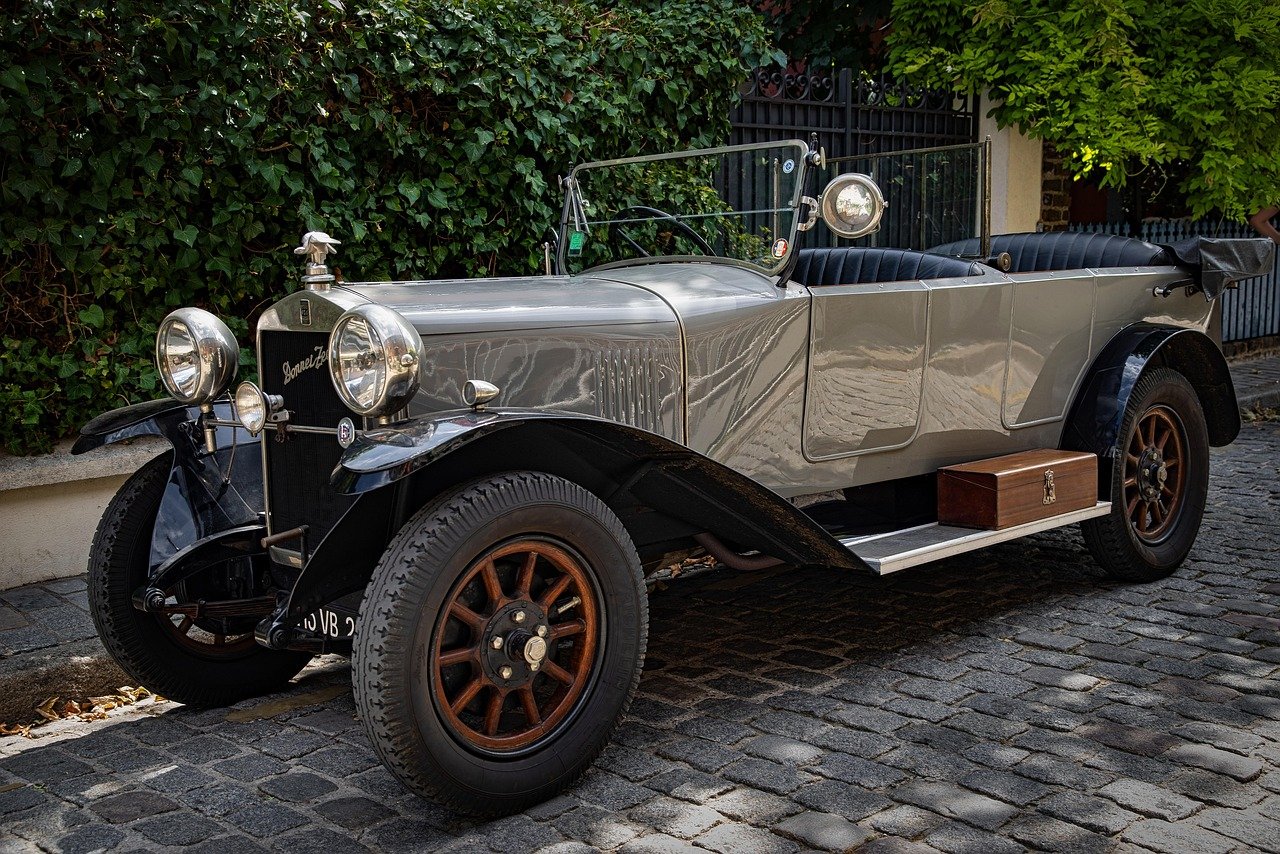
A car is usually considered a classic once it turns 20 to 30 years old, depending on who is doing the counting. That fuzzy line matters more than most buyers expect, because the label changes insurance rates, tax status, import rules, and resale value. A 1995 sports coupe that seemed like used transport a decade ago can now qualify for historic plates in some jurisdictions. The definition, in other words, is not fixed. It shifts with time, geography, and the priorities of whoever is writing the rulebook.
Why the Definition of “Classic” Is Messier Than It Looks
Most people assume there is one official answer. There isn’t. Clubs, governments, and insurers each draw their own boundaries, and those boundaries rarely agree.
The Antique Automobile Club of America, founded in 1935, has long anchored the U.S. hobby’s vocabulary. It treats “antique” as a vehicle built before a rolling cutoff, while “classic” covers a broader span of recognized, well-preserved models. In Europe, FIVA (the Fédération Internationale des Véhicules Anciens) defines a historic vehicle as at least 30 years old, kept in historically correct condition, and not used as everyday transport. In the UK, the DVLA’s historic vehicle tax class kicks in at 40 years, bringing exemption from vehicle tax and annual MOT testing.
Three organizations, three numbers: 25, 30, 40. None of them is wrong. Each reflects a different purpose, whether that is taxation, preservation, or import regulation.
Then there is the U.S. import exemption, often called the 25-year rule. Under federal law, vehicles 25 years or older can generally be imported without meeting current Federal Motor Vehicle Safety Standards. That single provision is why so many Japanese and European models that were never sold new in America become available to U.S. buyers on a predictable schedule. Every year, another model year “turns legal,” and prices react. (Hemmings Motor News)
The Practical Markers Buyers Actually Use

Strip away the official language and most enthusiasts apply a simpler test. A genuine classic tends to hit several of these markers at once:
- Age: typically 20 to 30 years minimum, with 25 as the most common working threshold.
- Significance: it was notable when new, whether for design, engineering, motorsport success, or sheer cultural presence.
- Survival rate: enough examples remain to support parts supply and a community, but not so many that rarity disappears.
- Documentation: original paperwork, service history, and matching numbers carry real weight.
- Desirability: people want it for reasons beyond transport, which is the whole point.
Miss two or three of those and you usually have a used car that happens to be old. That distinction protects buyers from overpaying. Plenty of 1980s sedans are old without being collectible, and their prices reflect it.
The details that separate a genuinely collectible car from a merely old one are often small: a correct badge, an unmodified interior, a documented engine rebuild. Exploring the details that make a classic is a useful exercise before any inspection, because it trains the eye to notice what sellers hope you’ll overlook. (Classic car)
How the Market Actually Prices These Cars
Classic car values behave nothing like new-car depreciation curves. They rise, stall, spike, and occasionally collapse, often for reasons unrelated to the cars themselves.
Specialty insurers publish annual guidance on collectible models, and auction results provide the most visible price signals. Broadly, the market splits into tiers:
| Tier | Typical Examples | Price Behavior | Buyer Profile |
|---|---|---|---|
| Entry-level | 1980s–90s mass-market coupes, sedans | Flat to modest gains; condition-driven | First-time owners, daily drivers |
| Mid-market | Recognized sports cars, limited editions | Steady appreciation on clean examples | Enthusiasts trading up |
| Blue-chip | Low-production icons, significant race cars | Volatile, auction-led, heavily documented | Collectors, investors |
Two forces distort this picture constantly. First, condition trumps rarity more often than sellers admit; a rough rare car frequently sells for less than a pristine common one. Second, provenance can double a price or halve it. A car with a documented competition history is a different asset from an identical model with an unknown past.
There is also a cyclical effect worth understanding. When a generation reaches its peak earning years, the cars of its youth tend to rise. That is why 1990s models have outperformed many 1950s models in recent years. Nostalgia has a purchasing schedule, and it is remarkably predictable.
The Rules That Shape Ownership
Owning a classic is partly a legal exercise. Three regulatory areas catch people out again and again.
Import and registration. The U.S. 25-year exemption is the single most consequential rule for cross-border buying. Vehicles younger than that generally must comply with federal standards or qualify for a narrow exception. Buyers who assume any old car can be shipped in often discover otherwise at customs.
Tax and testing status. Historic vehicle classifications in several countries reduce or eliminate annual fees and inspections. The trade-off is usually a mileage or usage restriction. Using a historically registered car as a commuter can invalidate the benefit.
Insurance. Agreed-value policies, rather than standard market-value policies, are the norm for collectibles. The difference matters enormously after a total loss: a standard policy may pay what a 30-year-old sedan is worth to a dealer, not what it costs to replace a documented, well-kept example.
Getting these three right at purchase saves years of friction. Getting them wrong is expensive and occasionally irreversible.
What Ownership Is Really Like, Day to Day
Here is where enthusiasm meets arithmetic. A classic car is a hobby with a maintenance schedule attached, and the practical realities deserve honest treatment.
Parts availability is uneven. Popular models enjoy enormous aftermarket support, with reproduction panels, trim, and mechanical components available off the shelf. Obscure models can require months of searching for a single bracket. Before buying anything unusual, check whether a specialist community exists and whether consumables are obtainable. That single research step prevents more regret than any inspection.
Storage drives cost more than fuel. Indoor storage protects paint, trim, and electrics. Cars left outside deteriorate in ways that are expensive to reverse, particularly in damp climates where corrosion finds every seam. If covered parking isn’t available, factor that into the budget before purchase, not after.
Deferred maintenance compounds. Old cars reward routine attention and punish neglect quickly. Brake hydraulics, cooling systems, and rubber components degrade with time even when mileage is low. A low-mileage car that sat unused for a decade often needs more work than a higher-mileage car that was driven regularly. This surprises nearly every first-time buyer.
Driving them is the point. Garage-queen treatment preserves value but defeats the purpose. Most specialists recommend regular use, since seals, bearings, and fuel systems all behave better when exercised. The cars built around experience, rather than speculation, tend to be the ones owners keep longest. That philosophy comes through clearly in writing about the cars built around experience, and it is a healthier framing than treating every vehicle as an appreciating asset.
Common Mistakes That Cost Real Money
Certain errors appear so regularly in the hobby that they function as a checklist of what not to do.
- Buying the first car seen. Emotion is a terrible inspection partner. Look at three examples of the same model before committing; the comparison alone reveals what “good” actually means.
- Skipping a pre-purchase inspection. A specialist who knows the model will spot structural repairs, incorrect engines, and disguised corrosion that a general mechanic will miss.
- Trusting a verbal history. Paperwork or it didn’t happen. Service records, registration history, and photographs of restoration work all matter.
- Underestimating restoration costs. A full restoration routinely exceeds the finished value of all but the most desirable models. Buy the best example affordable rather than a project, unless the project itself is the hobby.
- Ignoring the model’s community. A strong owners’ club is worth more than a slight discount on the car. It supplies knowledge, parts leads, and the institutional memory that keeps a model on the road.
- Assuming appreciation. Not every classic rises. Many simply hold value while costing money to keep. Treating a car as an investment invites poor decisions.
Reviewing structured car reviews and comparisons before shortlisting helps here, because model-specific weaknesses are usually well documented by the time a car reaches classic status.
The Cultural Side That Keeps the Hobby Alive
Cars become classics partly through machinery and partly through memory. Museums such as the Petersen Automotive Museum in Los Angeles and the Henry Ford Museum in Dearborn, Michigan, treat significant vehicles as cultural artifacts rather than transport, and their collections shape which models the public considers important. Recognition programs that document historically significant vehicles reinforce the same idea: some cars deserve preservation because of what they represent, rather than only what they cost.
This cultural layer explains why the hobby survives economic downturns. People do not buy a 1960s coupe because they need transport. They buy it because it connects them to a moment, a design language, or a version of driving that no longer exists. That emotional engine is more durable than any price index.
It also explains the hobby’s generosity. Owners’ clubs, forums, and informal meetups exist largely to pass knowledge along. A newcomer who asks sensible questions usually finds help quickly, and that shared expertise is the real infrastructure of classic car ownership.
Conclusion
The classic car world resists tidy definitions, and that is arguably its strength. A rolling age threshold, a set of cultural markers, and a patchwork of national rules all shape what counts as collectible at any given moment. What stays constant is the practical core: buy the best condition available, verify the paperwork, understand the regulations before money changes hands, and drive the thing.
Values will keep moving as generations rediscover the cars of their youth, and the 25-year import clock will keep delivering fresh metal to new markets. Through all of it, the owners who fare best are the ones who treat the car as a long-term relationship rather than a trade. Careful buying, honest maintenance, and realistic expectations turn an old car into a genuine classic in the only sense that finally matters, which is the owner’s.
Frequently Asked Questions
How old does a car have to be to count as a classic?
There is no single global answer. Many U.S. enthusiasts and insurers use 20 to 25 years, FIVA uses 30 years for historic vehicle status, and the UK’s DVLA historic tax class begins at 40 years. The right threshold depends on which rule or organization applies to your situation.
What is the 25-year rule for importing cars?
Under U.S. federal law, vehicles 25 years or older can generally be imported without meeting current Federal Motor Vehicle Safety Standards. This is why models never originally sold in America become legally available on a predictable schedule as each model year ages past the cutoff.
Is a classic car a good investment?
Sometimes, but not reliably. Blue-chip models with documented history can appreciate, while most classics hold value and cost money to maintain. Insurance, storage, and parts usually outweigh any gain. Treating a car as a hobby first and an asset second is the more realistic approach.
How much does it cost to insure a classic car?
Costs vary widely by model, agreed value, mileage limits, and driver history. Most collectibles are insured on agreed-value policies rather than standard market-value ones, because a standard payout may not cover replacement of a documented, well-kept example. Always confirm the agreed value in writing.
Should I buy a restored car or a project?
For most buyers, a well-restored or original car is the better choice. Full restorations routinely cost more than the finished vehicle is worth unless the model is highly desirable. A project makes sense only when the work itself is the point and the budget has room for surprises.
Do classic cars need to be driven regularly?
Yes, generally. Regular use keeps seals, bearings, and fuel systems in better condition than long storage. Cars that sit unused for years often need more mechanical attention than higher-mileage cars that were driven consistently. Short, frequent drives are usually better than occasional long trips.