
Luxury Coffee Tables: Craft vs Marketing Guide 2026
 Abdul WadoodLast updated
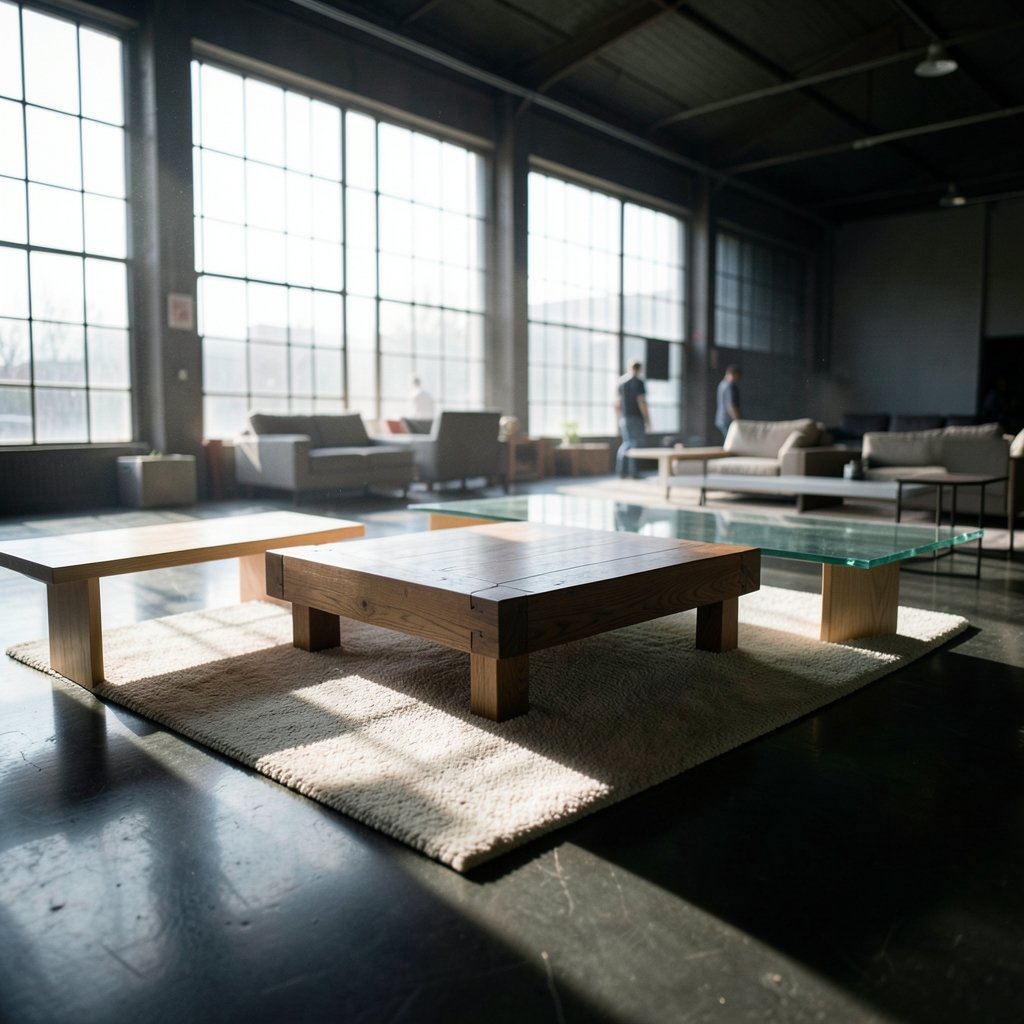
What makes a coffee table worth more than a used car? It isn’t the size of the top or the shine of the finish. Walk into a serious furniture showroom and the difference between a $600 table and a $6,000 one often comes down to things you can’t see from across the room: how the joints are cut, where the wood grew, and whose name is on the underside. This guide breaks down what actually drives value in luxury coffee tables, where buyers get fooled, and how to choose a piece you’ll still want in twenty years. (Choose best luxury turntables serious listening)
When Did the Coffee Table Become a Status Object?
The low table parked in front of a sofa is a surprisingly modern idea. It took hold in the West in the early-to-mid 1900s, as the living room became a place for entertaining rather than formal sitting. The popular story that a single British furniture maker invented the term is poorly documented, so treat any tidy origin tale with suspicion. What matters for buyers is this: because the coffee table is a 20th-century form, its luxury market is dominated by named designers and studio makers rather than antique dynasties. For a broader view of how furniture types and materials evolved, the Encyclopaedia Britannica entry on furniture is a useful starting point.
That short history explains a quirk of the market. A coffee table has no centuries-old pedigree to lean on, so value gets attached to attribution instead. A table documented as the work of a named mid-century designer can sell at auction for many times the price of an anonymous piece built from the same wood. Provenance, in other words, is a material.
The Real Luxury Markers: Material, Joinery, Provenance
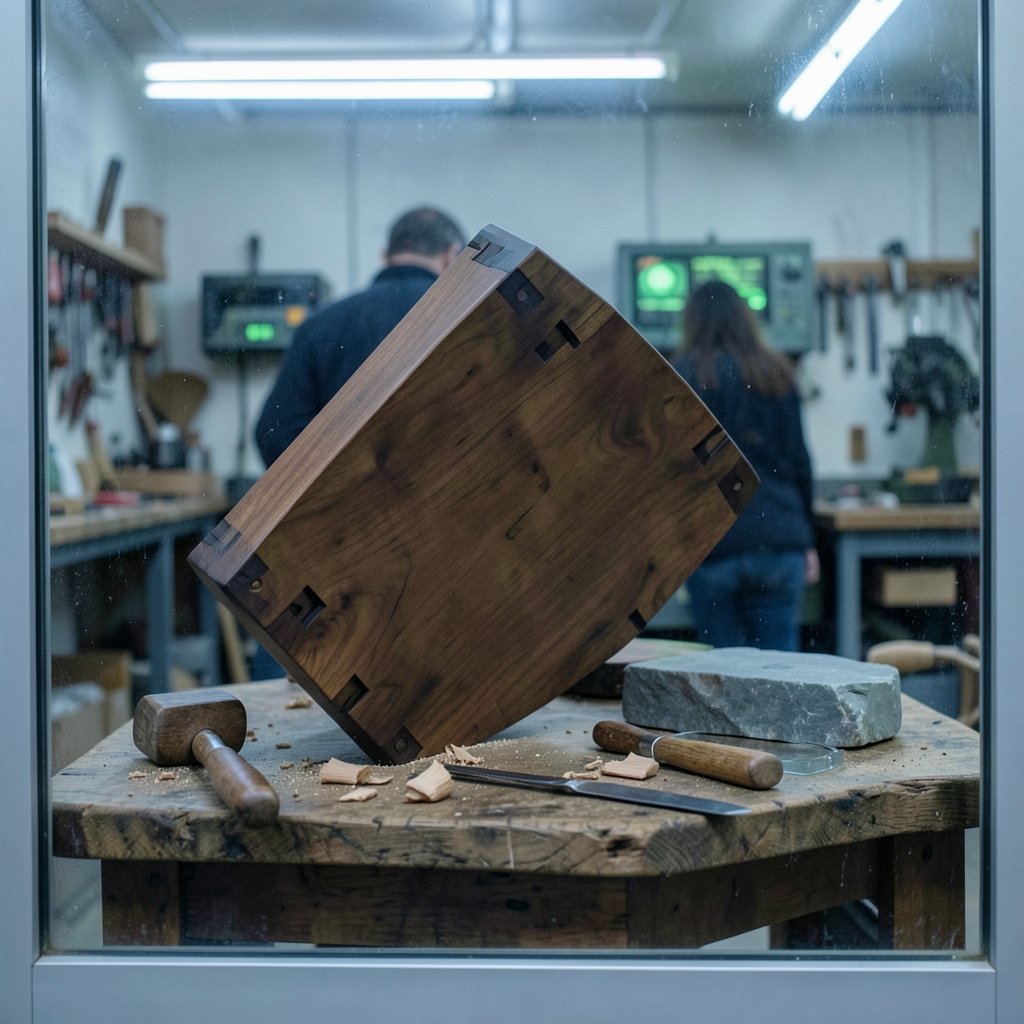
There is no formal industry standard that defines “luxury” furniture. It’s a marketing category and an auction category, which is exactly why buyers need their own checklist. In practice, high-end tables earn their price through three things.
Material. Solid hardwoods such as walnut, oak, and mahogany, plus stone or cast-glass tops, sit at the top of the market. Veneered particleboard sits at the bottom. The gap isn’t snobbery; solid timber can be refinished and repaired for decades, while a thin veneer over composite core usually can’t.
Joinery. Hand-cut joints, properly reinforced corners, and frames that resist racking separate a lifetime table from a five-year one. Run a hand along the underside of a top. Sharp edges, visible staples, and uneven sanding are tells.
Provenance. Maker attribution, original documentation, and exhibition history all add value. Studio furniture from the American mid-century school, associated with makers like George Nakashima and his live-edge slab work, is the clearest example. Design-history resources such as the Cooper Hewitt, Smithsonian Design Museum collection are worth browsing before you pay a premium for a “designer” label.
A Practical Comparison
| Feature | Mass-Market Table | Genuine Luxury Table |
|---|---|---|
| Top material | Veneer over MDF or particleboard | Solid hardwood, stone, or cast glass |
| Joinery | Staples, cam locks, glued butt joints | Hand-cut joints, reinforced frame |
| Repairability | Limited; veneer chips cannot be fixed | Refinishable, repairable, restorable |
| Provenance | None | Named maker, documentation, or auction record |
| Lifespan | 5–10 years typical | Decades, often resold |
Why the Wood’s Legal Status Now Matters
Here’s a buying factor most shoppers never consider: the legality of the timber. Trade in certain woods is restricted under the Convention on International Trade in Endangered Species, which lists species whose international movement is controlled. Rosewoods in the genus Dalbergia were added to the convention’s Appendix II in 2017, a change that hit guitar makers and furniture workshops alike. If a seller can’t tell you what species a dark, dense top is made of, that’s a red flag, not a charming mystery.
Composite wood carries its own rules. Lower-cost tables often use particleboard or MDF substrates, and those materials emit formaldehyde. In the United States, the EPA’s formaldehyde page explains the TSCA Title VI limits on composite wood products, finalized in 2016 with compliance phased in through 2018–2019. A luxury table shouldn’t need those limits at all, but a “solid wood” claim over a composite core does.
In Europe, the regulatory picture tightened further. The EU Deforestation Regulation, adopted in 2023, requires due diligence for wood products placed on the EU market, with application delayed to 30 December 2025 for large operators. The European Commission’s page on the deforestation-free products regulation sets out the timeline, which has been amended more than once, so check for further postponements before relying on it.
Stone, Glass, and Slab: Choosing a Top That Suits Your Room
The top is where most of the money and most of the regret live. Each material asks something different of its owner.
Marble and other stone. Beautiful, heavy, and porous. Stone stains unless it’s sealed, and it needs resealing periodically. A thin stone top on a spindly base is a breakage risk; check the weight rating and the base’s footprint.
Cast glass. Dramatic and reflective, but it shows every fingerprint and needs a base engineered for the load. Thick cast glass is a genuine luxury material; thin tempered glass on a metal frame usually isn’t.
Live-edge slabs. Single-slab tables that keep the natural edge of the tree are a distinct luxury subcategory, rooted in mid-century American studio furniture and revived in the 2010s. They’re stunning, but slabs move with humidity. Ask how the piece was dried and whether the maker used butterfly keys to stabilize cracks.
Solid hardwood. The safest all-rounder. Walnut and oak take refinishing well, hide everyday wear better than glass, and age instead of degrading.
A useful rule of thumb: the top should sit at roughly sofa-seat height or slightly lower, commonly cited around 40–45 cm (16–18 in). That’s design guidance rather than a formal standard, so test it against your own sofa before committing.
Mistakes Buyers Make, and What Actually Works
A few patterns come up again and again in furniture showrooms and auction previews.
- Paying for a name with no paperwork. A “Nakashima-style” table is not a Nakashima. Ask for documentation, original receipts, or auction records. If the seller can’t produce them, price the piece as anonymous.
- Confusing weight with quality. Heavy doesn’t mean well made. A thick veneered top can outweigh a finely built solid one.
- Ignoring the base. Most structural failures happen at the legs and stretchers, not the top. Tip the table gently and watch for wobble.
- Skipping the underside inspection. Flip it, or ask for photos. The underside tells you more about joinery than any showroom lighting.
- Buying for a room you haven’t measured. A generous slab table can swallow a small living room. Tape the footprint on the floor first.
- Forgetting care costs. Stone needs sealing, oiled wood needs re-oiling, and glass needs constant cleaning. Budget for it.
What actually works is slower and less glamorous: buy from makers who will name the species, show the joinery, and stand behind repairs. The same discipline applies across the luxury world, whether you’re choosing a table or weighing bigger purchases in a conscious luxury buying guide that puts longevity ahead of novelty.
How to Judge a Table in Ten Minutes
If you only have a short showroom visit, run this sequence.
- Ask what species the top is. Vague answers (“imported hardwood”) are a pass.
- Look at the end grain. Solid wood shows growth rings; veneer shows a repeating pattern or a sharp edge line.
- Check the corners underneath. Hand-cut joinery looks deliberate; staples look like staples.
- Test the frame. Press down on one corner. A well-built table stays quiet and still.
- Ask about the finish. Oil, wax, lacquer, and polyurethane each need different care. Know which you’re getting.
- Request provenance in writing. Maker, date, and any restoration history.
That process filters out most of the marketing noise. It also explains why serious collectors treat auction catalogues as the main price reference for attributed pieces. Auction results are the most cited evidence of value in this market, and they’re public. Before paying a premium, look at what comparable attributed tables have actually sold for.
Styling Without Clutter
A luxury table is furniture first, display surface second. The most common styling mistake is treating it as a shelf. A short stack of books, one object with real weight, and a tray to corral remotes will do more than a dozen small items. If books are part of your plan, it’s worth choosing them deliberately rather than by spine colour; a practical guide to art coffee table books and a similar guide to travel coffee table books both cover how to pick volumes that hold up to repeat reading. (Coffee table)
Scale matters too. A table should leave roughly 35–45 cm of walkway around it. In a tight room, an oval or rounded rectangle beats a sharp-cornered slab every time, and it’s kinder to shins.
Where Luxury Coffee Tables Fit in a Wider Home
The table rarely lives alone. It sits in a room with sound, light, and other objects that shape how the space feels. Someone building a listening room might pair a low table with serious equipment, and the same logic of buying once and buying well applies to choosing luxury turntables for serious listening. Travel and second-home owners face a different question: what survives being closed up for months? Guides to places like a Lake Como luxury travel guide covering villas and boats often touch on how seasonal homes are furnished and maintained, which is a useful reality check before buying a stone-topped table for a house that sits empty half the year. (Best coffee table books about travel practical buying guide)
The through-line is the same everywhere. Luxury in furniture, as in cars or watches, is mostly about how well something is made and how long it lasts. The quietest luxury cars earn their reputation through engineering you can’t see, and a good coffee table earns its price the same way. (Forest Stewardship Council)
Conclusion
Luxury coffee tables are not defined by size, shine, or a showroom’s lighting. They’re defined by solid materials, honest joinery, legal and documented timber, and provenance you can verify. The market has no formal standard for “luxury,” which means the buyer’s own checklist does the work. Ask what species the wood is, look underneath, demand paperwork for any designer attribution, and budget for the care the material needs. Do that, and you’ll end up with a table that survives trends, moves house with you, and might even hold its value. Skip it, and you’ll pay luxury prices for a veneered box.
Frequently Asked Questions
What makes a coffee table “luxury”?
There is no formal industry definition. In practice, luxury tables use solid hardwoods, stone, or cast glass rather than veneer over composite board, are built with hand-cut joinery, and often carry a named maker’s attribution with documentation. Material, construction, and provenance do the work, not the label.
Is a solid wood coffee table always better than veneer?
Not automatically, but usually for longevity. Solid timber can be sanded and refinished for decades, while a thin veneer over particleboard or MDF can’t be repaired once it chips. Well-made veneer exists, but at luxury prices you should expect solid material or a clearly explained reason for veneer.
How much should I expect to pay for a quality coffee table?
Prices vary enormously because the category has no standard. Mass-market tables sit in the hundreds, well-made solid wood pieces in the low thousands, and attributed designer or studio pieces far higher at auction. The useful benchmark is comparable sold prices for pieces with similar materials and documentation.
Do designer names really change the value?
Yes, significantly. Attribution is the main value driver in this market because the coffee table is a 20th-century form with little antique pedigree. A documented piece by a recognised designer can sell for many times the price of an anonymous table made from the same wood. Without paperwork, price it as anonymous.
Are rosewood and other exotic woods legal to buy?
Often yes, but with conditions. Rosewoods in the genus Dalbergia were added to CITES Appendix II in 2017, which controls international trade in those species. A legitimate seller should be able to identify the species and explain the documentation. If they can’t, walk away.
How do I care for a marble or stone coffee table?
Seal it and reseal it on schedule, wipe spills quickly, and avoid acidic cleaners. Stone is porous and stains without protection, and thin stone tops have weight and breakage limits, so check the base’s rating. Manufacturer guidance varies, so follow the specific instructions that come with your piece.