
Luxury Belts: Quality vs Logos, Expert Guide 2026
 Abdul WadoodLast updated

What makes a belt worth several hundred dollars when a strip of leather from a high-street shop does the same basic job of holding up trousers? The answer is rarely the buckle logo alone. It sits in the leather, the construction, the sizing, and the very different ways these accessories hold value compared with a handbag. This guide walks through what a luxury belt really is, how the famous models earned their status, and how to buy one that survives a decade of daily wear.
What Makes a Belt a “Luxury” Belt?
A luxury belt is defined less by a single feature than by a cluster of them: full-grain leather from a reputable tannery, a buckle made from solid brass or stainless steel rather than plated zinc, edges that are hand-painted or burnished rather than simply glued, and stitching that is tight, even, and consistent. The hardware matters more than most shoppers realize. A plated buckle will eventually pit and flake; a solid one can be re-polished for decades.
The leather itself is the bigger tell. Full-grain leather keeps the outermost layer of the hide intact, so it develops a patina instead of cracking. Corrected-grain and bonded leathers look uniform on day one but degrade quickly at the point where the strap bends around the buckle. That bend point is where cheap belts fail first.
There is also a regulatory angle worth knowing. In the European Union, claims like “genuine leather” are governed broadly by the EU Unfair Commercial Practices Directive, which requires marketing claims to be truthful and not misleading. There is no single EU-wide standard defining “genuine leather,” so terminology varies by country and by brand. Practical takeaway: read the material composition on the label, not the marketing copy.
The Houses Behind the Most Recognizable Belts
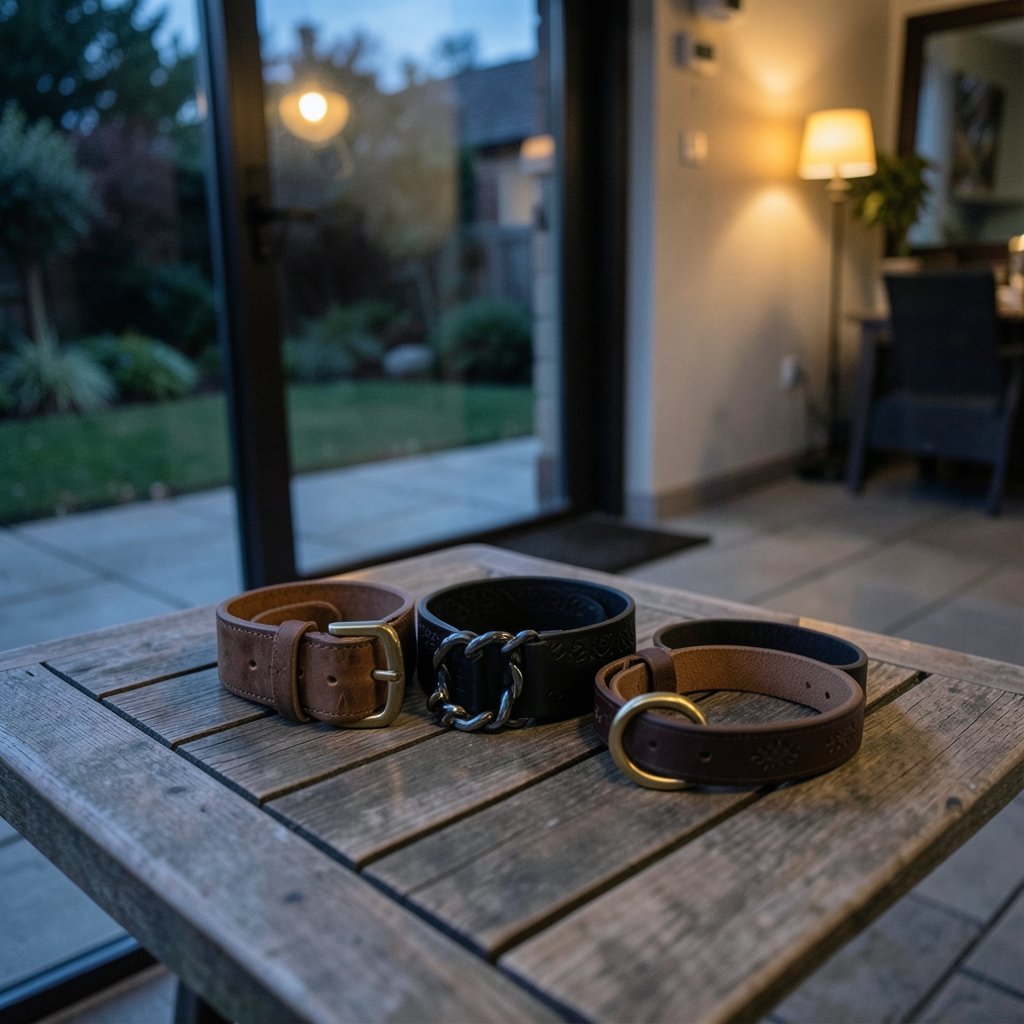
Three brands dominate the conversation, and each arrived at the belt from a different direction.
Hermès was founded in Paris in 1837 as a harness and saddle workshop, which explains why leather craft sits at the center of its identity. Its Collier de Chien belt, designed in the 1920s, began as a dog collar and was later adopted by the punk scene in the 1970s and 1980s. Sources disagree on the exact first-production year, so treat any precise date with caution.
Gucci built its double-G interlocking logo in the 1960s. The GG Marmont belt, introduced in 2016, became one of the most imitated luxury accessories in the world, which makes authentication a genuine concern for buyers.
Louis Vuitton created its LV monogram in 1896 under Georges Vuitton. Belts carrying the monogram sit among the brand’s more accessible leather goods, which is part of why they are so widely faked.
These houses sit inside larger groups. LVMH and Kering are the two biggest luxury conglomerates, and their annual reports break out leather-goods performance, which is useful if you want to understand how the category is actually performing rather than how it is marketed.
A Practical Comparison: What You Pay For at Each Tier
| Tier | Typical price band | Leather | Buckle | Expected lifespan with care |
|---|---|---|---|---|
| High-street | Low | Bonded or corrected grain | Plated alloy | 1–3 years |
| Mid-market leather | Moderate | Full-grain or top-grain | Plated or light solid brass | 3–7 years |
| Luxury designer | High | Full-grain, often Italian-tanned | Solid brass or steel | 10+ years |
| Heritage/atelier | High | Full-grain, often hand-finished | Solid brass, often replaceable | 15+ years |
The price jump from mid-market to luxury is not linear with quality. Part of what you pay is design, part is brand, and part is the after-sales infrastructure that lets a strap or buckle be repaired rather than replaced. That repair pathway is the single most underrated feature of a luxury belt, and it is worth asking about before you buy.
Sizing: The Most Common and Most Expensive Mistake
Belt sizing is where buyers get burned most often, and it is almost entirely avoidable. There is no universal standard. Some brands list the waist measurement the belt is designed to fit; others list the total length of the strap from buckle to tip. A belt labeled “85” might mean an 85 cm waist fit or an 85 cm overall length, and those are very different things. (Belt (clothing)))
The reliable method is to measure a belt you already own and that fits well. Lay it flat, measure from the fold at the buckle to the hole you actually use, and compare that number to the brand’s stated sizing convention. If a brand publishes only total length, subtract roughly 5 to 7 cm to estimate the waist fit. Ordering your trouser size directly is the fastest route to a return.
A second practical point: most belts are punched with five holes spaced about 2.5 cm apart, which gives roughly 10 cm of adjustment. If you sit near the end of that range, you have bought the wrong size, not a belt that needs an extra hole.
Exotic Skins and the Rules That Come With Them
Crocodile, alligator, python, and ostrich belts occupy the top of the market, and they come with legal obligations that many buyers do not know about. International trade in these species is regulated under the Convention on International Trade in Endangered Species, and the CITES permit system for protected species governs cross-border movement of the finished goods. A legitimate exotic belt should arrive with documentation. Traveling internationally with one without the right paperwork can result in seizure, even if you bought it legally at home.
For most buyers, calfskin, box calf, or vegetable-tanned leather delivers the same visual effect with none of the paperwork. The exotic premium is real, but so is the friction.
How to Spot Quality in the Hand (and Avoid Fakes)
Counterfeiting is not a niche concern. Joint research from the OECD and EUIPO has estimated counterfeit and pirated goods at roughly 2.5% of world trade, and belts are among the commonly seized categories. A few checks catch most problems:
- Feel the cut edge. A quality belt has a sealed, painted, or burnished edge. A raw, fuzzy edge means cost-cutting.
- Flex the strap at the buckle. It should bend without visible creasing or a white stress line, which signals corrected grain.
- Weigh the buckle. Solid brass has heft. Hollow, plated buckles feel light and tinny.
- Check stitch consistency. Machine stitching on a luxury belt is fine, but it should be even, with no wandering or loose threads.
- Inspect the stamping. Logos should be crisp and correctly proportioned. Blurry or off-center stamps are a red flag.
- Ask about repair. Brands that stand behind their leather usually offer resoling-style services for straps and buckles.
If you are buying secondhand, the resale market adds its own layer. Platforms publish annual resale data showing that belts generally retain a lower share of their original price than handbags do, so buying a belt as an investment is a weak strategy. Buy it to wear.
Care That Actually Extends Life
Leather is skin, and it dries out. A luxury belt kept in a dry drawer for a year will crack faster than one worn regularly and conditioned twice a year. A few habits do most of the work:
- Store the belt rolled loosely or hung, never folded sharply at the same point.
- Wipe with a dry cloth after wear, especially in humid weather.
- Apply a neutral leather conditioner sparingly, twice a year, and buff it off.
- Keep it away from prolonged direct sun and from radiators.
- Rotate between two belts rather than wearing one every day.
The single most common mistake is over-conditioning. Too much product softens the leather and attracts dirt. A thin layer, worked in and buffed, is enough.
Where Belts Fit in a Considered Wardrobe
A belt is one of the few accessories that touches every outfit, which makes it a natural entry point for buying better rather than buying more. The thinking behind conscious luxury and buying fewer, better pieces applies directly here: one well-made brown belt and one black will outlast a drawer of cheap alternatives and cost less over a decade.
There is also a styling distinction worth naming. The understated, logo-free approach often called quiet luxury versus the old money aesthetic plays out clearly in belts: a plain brass buckle and a clean strap read differently from a large interlocking logo, and the choice signals different things depending on context. Neither is wrong, but knowing which you are buying helps avoid a belt that sits unworn.
For readers planning a wardrobe around travel, the same logic applies to packing. A versatile belt earns its place in a capsule for a multigenerational luxury trip that works for every age, where one adaptable accessory beats three specialized ones. (Trademarks)
Common Mistakes Buyers Make
Beyond sizing, a handful of errors show up again and again. Buying a belt to match one specific pair of shoes rather than the general tone of a wardrobe. Choosing a buckle width that does not fit the trouser loops. Assuming a higher price guarantees better leather. And ignoring the return window on a first purchase from an unfamiliar brand.
The fix is unglamorous: measure first, buy from sellers with clear return policies, and prioritize construction over logo. A belt with a modest buckle and excellent leather will look better in five years than a heavily branded one that has started to crack.
Conclusion
Luxury belts reward a buyer who looks past the buckle. The leather grade, the edge finish, the solidity of the hardware, and the availability of repair matter far more than the size of the logo, and they determine whether the belt lasts three years or fifteen. Sizing deserves real attention because conventions vary by brand and getting it wrong is the most common and most avoidable expense. Exotic skins bring legal obligations that most shoppers never consider. And resale data suggests belts are for wearing, not investing. Buy two good ones, measure carefully, condition them twice a year, and the cost per wear drops to almost nothing.
Frequently Asked Questions
How much should a good luxury belt cost?
Most well-made full-grain leather belts with solid hardware fall into a wide band, from mid-market prices up to several hundred dollars for designer models. The useful question is not the sticker price but the cost per wear. A belt worn three times a week for ten years costs far less per outing than a cheap one replaced every two years.
Is full-grain leather really better than genuine leather?
Yes, in durability terms. Full-grain keeps the hide’s outer layer intact, so it develops patina and resists cracking. “Genuine leather” is a broad marketing term that often describes lower grades, including corrected-grain and bonded leather. Check the specific grade named on the label rather than the general word.
What size belt should I order online?
Measure a belt you already own from the buckle fold to the hole you use, then compare that figure to the brand’s stated sizing convention. Some brands list waist fit, others list total length. If only total length is given, subtract roughly 5 to 7 cm to estimate waist fit. Never assume your trouser size transfers directly.
Do exotic leather belts require special paperwork?
Belts made from crocodile, alligator, python, or other protected species fall under international trade rules, and legitimate pieces should come with documentation. Crossing borders with an undocumented exotic belt can lead to seizure. For most buyers, a high-quality calfskin delivers a similar look with none of the complications.
Can a luxury belt be repaired instead of replaced?
Often, yes. Many houses offer strap replacement, buckle refinishing, and re-stitching. This is one of the clearest practical differences between luxury and high-street belts. Ask about repair services before buying, because a brand that supports its leather goods usually signals better construction as well.
Do designer belts hold their value?
Generally less than handbags. Resale data consistently shows belts retaining a smaller share of their original price than bags from the same brands, and the figures shift year to year. Buy a belt for daily wear and longevity, not as an appreciating asset.