
Lucid Gravity Review 2026: Range, Interior & Drawbacks
 Abdul WadoodLast updated

The Lucid Gravity arrives in a market where electric SUVs are finally getting serious. Battery-electric vehicles accounted for roughly 20 percent of new light-duty vehicle sales in the United States in 2024, according to the U.S. Department of Energy, and the three-row luxury segment is now one of the most contested battlegrounds in the industry. Lucid Motors, the California company best known for the record-setting Air sedan, is betting its second act on the Gravity: a seven-seat SUV that promises sedan-like range in a family-friendly package.
This review takes a balanced look at what the Gravity is, how it compares with rivals, where it shines, and where buyers should keep their expectations in check. It is written for people who are seriously shopping this segment, not for spec-sheet enthusiasts who just want drag-strip bragging rights.
What the Lucid Gravity Actually Is
The Gravity is Lucid’s first SUV and its second production model. It is a three-row, fully electric luxury SUV built on an evolution of the platform that underpins the Air sedan. Lucid has positioned it to compete with established players like the Tesla Model X, Rivian R1S, Mercedes-Benz EQS SUV, and BMW iX, while undercutting some of them on price and beating most on range.
The headline pitch is straightforward: Lucid claims the Gravity will deliver more driving range than any other three-row electric SUV on sale, paired with a spacious interior and a starting price that lands in the same neighborhood as mid-tier luxury SUVs rather than six-figure flagships. Those are ambitious claims, and they are the ones a buyer should scrutinize hardest. (Lucid Gravity)
The Gravity is a relatively new entrant, and independent long-term data is still thin. Anyone researching it should treat early impressions as preliminary rather than definitive.
Design and Interior: Practical Luxury, Not Showy Luxury
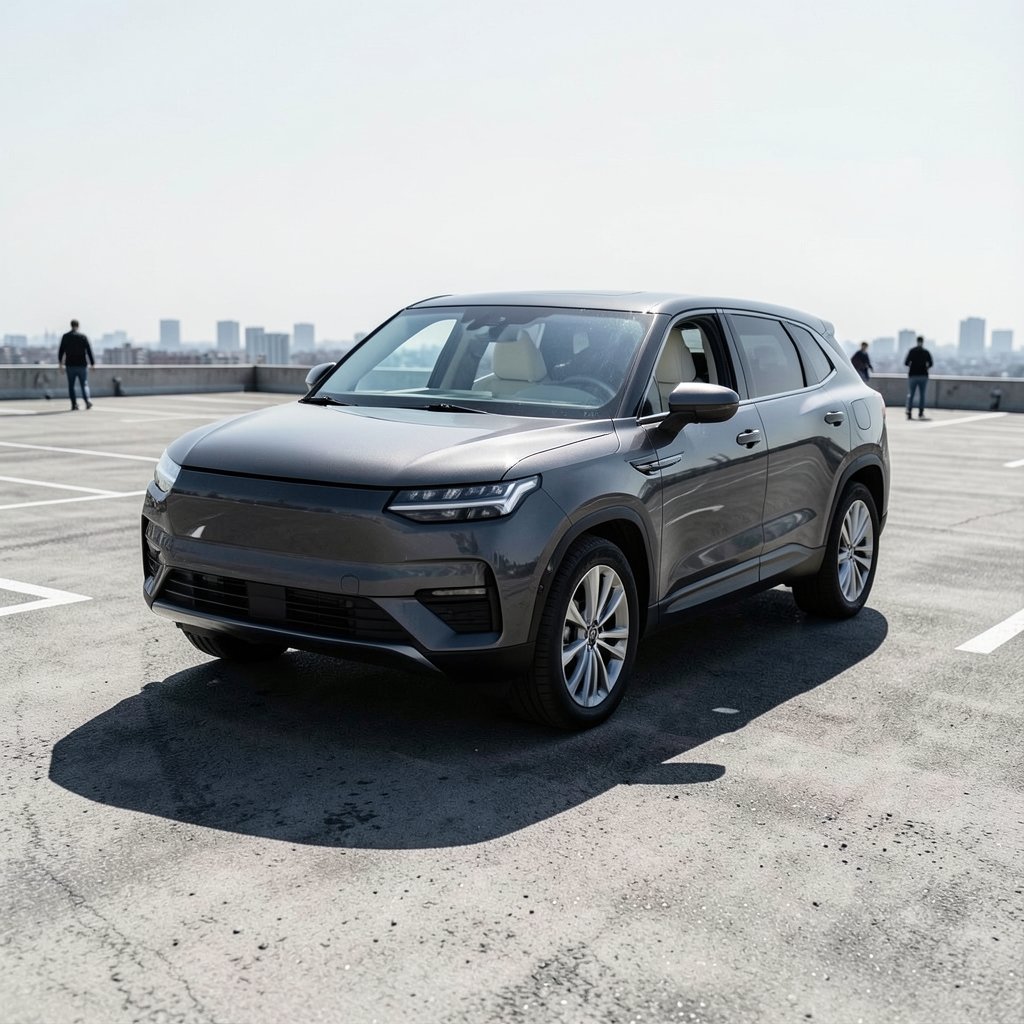
Lucid’s design language is clean and aerodynamic, and the Gravity carries it over without looking like a stretched sedan. The low roofline and smooth surfaces help with efficiency, though the trade-off is a silhouette that some shoppers will find less imposing than a traditional boxy SUV.
Inside, the story is more convincing. The cabin is genuinely roomy, with a usable third row that is rare in this class. Cargo space is competitive, and the front seats are comfortable for long drives. The materials feel premium without being ostentatious.
A few practical notes from the perspective of someone who has spent time around premium EVs:
- The glass roof and low beltline make the cabin feel airy, but they also mean you will notice sun load on hot days. Check whether your trim includes proper shading.
- The touchscreen-heavy interface is fast, but common controls like climate and mirrors are buried in menus. Spend real time with the UI before you commit.
- Third-row access requires folding the second row, which is normal for the class but worth practicing.
If you are the type of buyer who cares about the aesthetic details as much as the drivetrain, the broader conversation around finish and color choices is worth exploring. Guides like this look at light brown hair shades and care for a different kind of style decision, and the same principle applies to cars: the details you live with every day matter more than the spec sheet.
Range, Charging, and Real-World Efficiency
Range is Lucid’s calling card. The Air sedan has repeatedly posted some of the longest range figures of any production EV, and the Gravity is expected to carry that reputation forward. Official EPA figures should be the benchmark you check, since manufacturer claims and independent testing can diverge.
Charging speed is the other half of the equation. A long range figure means little if the vehicle charges slowly on road trips. Lucid has designed the Gravity’s architecture around fast DC charging, and the 900-volt system is a genuine advantage on compatible chargers. The catch is that real-world charging speed depends heavily on the station you find, its condition, and whether it can deliver the power the car can accept.
Practical advice for shoppers:
- Map your actual charging routine. If you can charge at home overnight, range anxiety is mostly a road-trip concern.
- Check charger reliability on your regular routes. A 900-volt architecture is only useful when the hardware supports it.
- Test a road-trip scenario during your test drive if the dealer allows it, or at minimum ask about preconditioning behavior in cold weather.
Cold-weather range loss is a real phenomenon across all EVs, and the Gravity is not immune. Buyers in northern climates should discount the headline range figure by a meaningful margin in winter.
Driving Experience: Calm, Quick, and Comfortable
The Gravity drives more like a grand tourer than a sport utility vehicle. Acceleration is strong in every configuration, and the ride quality is composed on broken pavement. Steering is light but precise, and the cabin stays quiet at highway speeds.
What it is not is a corner-carver. The Gravity prioritizes comfort and stability over athleticism, which is the right call for a family SUV. If you want a three-row EV that feels eager and playful, the Rivian R1S is the more entertaining choice. If you want something that swallows miles without drama, the Gravity is the better fit.
One common mistake buyers make with premium EVs is over-indexing on the 0-60 time. In daily driving, the difference between a 3.5-second and a 4.5-second SUV is almost never relevant. What matters is throttle smoothness, brake feel, and how the car behaves in stop-and-go traffic. The Gravity scores well on all three.
Technology and Software
Lucid’s software has improved steadily, but it is still a younger platform than what Tesla or Mercedes offers. The centerpiece is a large central touchscreen paired with a driver display, and the interface is responsive. Over-the-air updates mean the experience should improve over time, but early buyers are effectively beta testers for some features.
Driver-assistance systems are competent but not class-leading. Adaptive cruise control and lane centering work well on highways; more complex urban scenarios still demand attention. Buyers who expect hands-off driving will be disappointed, but that is true of nearly every system on the market today.
A fair way to think about it: the hardware is there, and the software is catching up. Whether that trajectory matters to you depends on how long you plan to keep the car.
Pricing and Value: Where the Math Gets Interesting
The Gravity’s pricing strategy is one of its strongest arguments. It undercuts several established luxury EVs while offering more range and comparable space. But the base price is rarely the price you pay, and options add up quickly.
| Consideration | What to Watch |
|---|---|
| Starting price | Often excludes destination fees and popular packages |
| Trim upgrades | Range and features can vary significantly by trim |
| Options | Paint, wheels, and interior packages add real cost |
| Incentives | Federal and state credits change frequently; verify eligibility |
| Insurance | Premium EVs often carry higher premiums; get quotes early |
| Depreciation | New-brand EVs can depreciate faster than established rivals |
The value case is strongest for buyers who prioritize range and interior space over badge prestige. It is weaker for those who care about resale value or dealer network depth, where Lucid is still building out its footprint.
Ownership, Service, and the Dealer Question
Lucid operates a direct-sales model with a growing network of studios and service centers. That means a cleaner buying experience but fewer physical locations than legacy luxury brands. If you live far from a service center, factor that into your decision.
This is where a little research pays off. Finding good service providers for any premium product, whether it is a car or a salon appointment, comes down to knowing how to search smartly. A practical guide to finding hair salons near you makes the same point: location and reputation matter more than marketing. The same logic applies to EV service. Check distance, loaner policy, and mobile service availability before you sign.
Warranty coverage on the Gravity is competitive, with a comprehensive bumper-to-bumper term and a longer battery warranty. Read the fine print on battery degradation thresholds, since that is where the real long-term cost sits.
How the Gravity Compares With Rivals
The three-row electric SUV segment now has real depth. Here is a simplified comparison based on positioning rather than exact specs, which change frequently:
| Model | Strength | Weakness |
|---|---|---|
| Lucid Gravity | Range, interior space, value | Newer brand, thinner service network |
| Tesla Model X | Software, charging network | Aging design, polarizing interior |
| Rivian R1S | Off-road capability, personality | Less efficient, heavier |
| Mercedes EQS SUV | Refinement, brand prestige | Higher price, complex options |
| BMW iX | Driving dynamics, build quality | Two rows only, styling divides opinion |
The Gravity’s clearest advantage is the combination of range and third-row practicality at its price point. Its clearest disadvantage is that it is a first-generation product from a young company.
Who Should Buy the Lucid Gravity
The Gravity makes the most sense for families who need three rows, drive long distances regularly, and want to avoid the fuel costs of a large gasoline SUV. It also suits buyers who value interior calm and efficiency over badge appeal.
It makes less sense for people who live far from service centers, want a proven track record, or expect a fully mature software ecosystem on day one. Those buyers might prefer to wait a model year or choose an established rival.
Conclusion
The Lucid Gravity is a genuinely impressive electric SUV with a clear identity: long range, a roomy cabin, and a price that undercuts much of the luxury establishment. It is not perfect. The software is still maturing, the service network is thin in some regions, and first-generation products always carry some risk. But for buyers who prioritize range and space over prestige, the Gravity deserves a serious test drive. The smart move is to verify current EPA figures, confirm local service coverage, and compare total cost of ownership rather than sticker price alone. Do that homework, and the Gravity makes a compelling case.
Frequently Asked Questions
What is the Lucid Gravity?
The Lucid Gravity is a three-row, fully electric luxury SUV from Lucid Motors, the California automaker behind the Air sedan. It is the company’s first SUV and is designed to compete with the Tesla Model X, Rivian R1S, and Mercedes-Benz EQS SUV.
How much range does the Lucid Gravity have?
Lucid has positioned the Gravity as offering class-leading range among three-row electric SUVs. Exact figures vary by trim and wheel choice, so buyers should check the official EPA rating for the specific configuration they are considering rather than relying on headline claims.
How much does the Lucid Gravity cost?
Pricing varies by trim and options, and destination fees and packages can push the final figure well above the advertised starting price. Buyers should confirm current pricing with Lucid directly and factor in incentives, insurance, and expected depreciation.
Is the Lucid Gravity a good family SUV?
Yes, for many families. It offers a usable third row, generous cargo space, and a comfortable ride. The main caveats are the touchscreen-heavy controls and the need to confirm service center proximity in your area.
How does the Lucid Gravity compare with the Tesla Model X?
The Gravity generally offers more range and a simpler interior design, while the Model X benefits from Tesla’s mature software and charging network. The better choice depends on whether you value range and space or software and charging infrastructure.
Should you buy a first-generation Lucid Gravity?
It depends on your risk tolerance. Early buyers get strong range and value but may encounter software refinements and limited service locations. Buyers who prefer proven reliability might wait a model year or choose an established competitor.