
Lucid Cars: Luxury EV Range & What to Expect in 2026
 Abdul WadoodLast updated

Lucid Motors has built one of the longest-range electric sedans on the market, with the Air Grand Touring rated at an EPA-estimated 516 miles on a single charge. That single number explains much of the fascination with lucid cars and also much of the confusion. A company that posts a headline range figure like that should, by logic, be everywhere. Yet most drivers have still never sat in one, and plenty of car shoppers cannot say whether Lucid is a startup, a subsidiary, or a rival to Tesla.
The short answer: Lucid Group, Inc. is an American electric-vehicle manufacturer headquartered in Newark, California. It was founded in 2007 as Atieva, a battery-technology company, and renamed Lucid Motors in 2016. It went public in July 2021 through a merger with Churchill Capital Corp IV and trades on Nasdaq under the ticker LCID. Everything else, from the cars to the production story, follows from that unusual path.
From battery supplier to luxury carmaker
Most car companies start by building cars and learn about batteries along the way. Lucid did the reverse. Its early years were spent on battery packs and powertrain work, which is why its engineering identity centers on efficiency rather than styling gimmicks. When the company pivoted to full vehicles, it brought a supplier’s obsession with energy density into a segment where buyers mostly cared about badge prestige.
That heritage shows up in the product. Lucid’s pitch is not “fastest” or “most luxurious” in isolation. It is range per kilowatt-hour, a measure that matters little on a showroom floor and enormously on a 400-mile road trip. The company’s Arizona manufacturing facility, AMP-1 in Casa Grande, began producing vehicles in 2021, the same year the first Air Dream Edition cars reached customers in late 2021.
The financial side has been rockier than the engineering side. Lucid has repeatedly revised production targets, and its shareholder communications have become the most reliable record of what is actually happening, more so than press coverage that tends to swing between hype and obituary. Anyone tracking the brand seriously should read quarterly shareholder letters rather than headlines.
The Lucid Air: the car that made the name
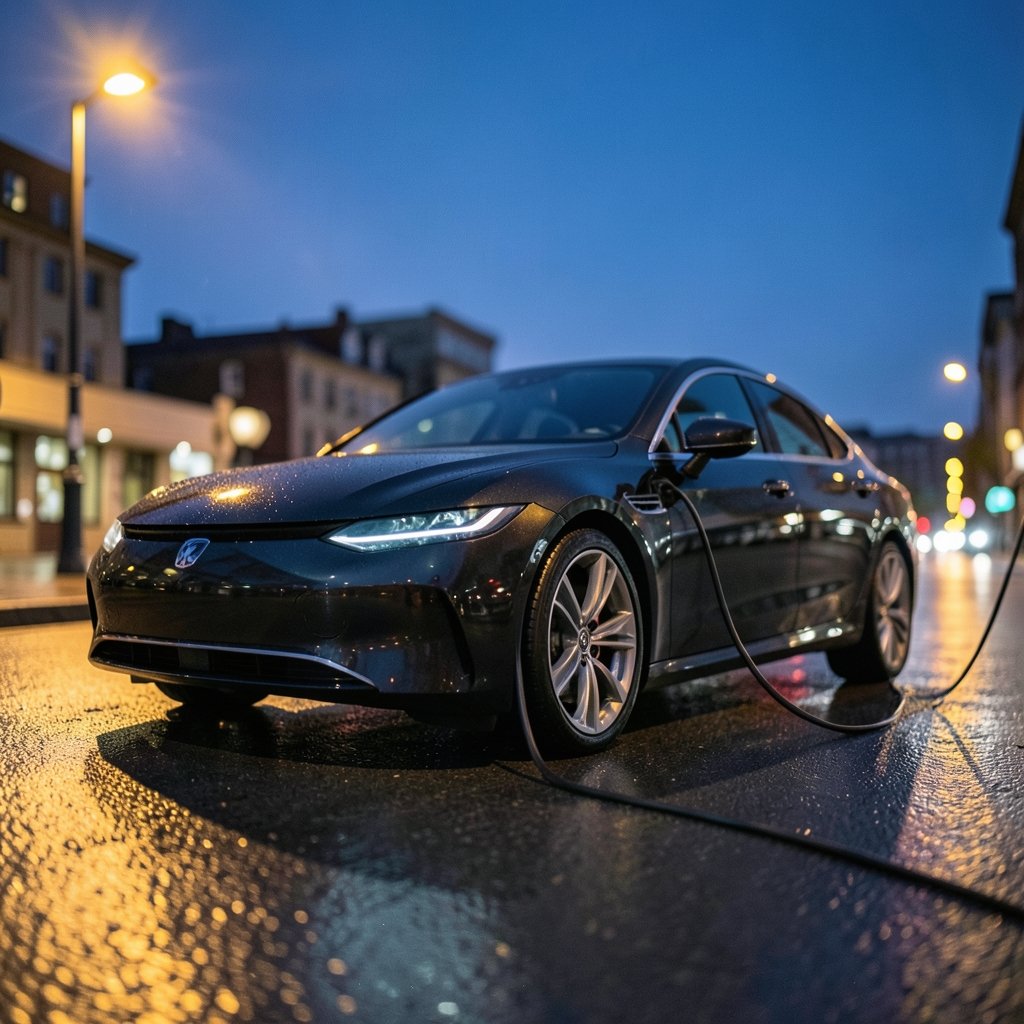
The Lucid Air is a full-size luxury sedan aimed squarely at the Mercedes-Benz EQS, the Porsche Taycan, and the Tesla Model S. It is the model that established the brand, and it remains the clearest expression of what Lucid believes a luxury EV should be.
Range and efficiency
Range is the headline. Depending on trim and wheel choice, Air variants have posted EPA range figures from roughly 400 miles up to the 500-plus mile mark on the longest-range Grand Touring configuration. Real-world results vary with speed, temperature, and driving style, as they do in every EV, but independent testing has generally placed the Air at or near the top of its class.
Interior and technology
The cabin is where Lucid takes its biggest swing. A curved 34-inch glass display spans the dashboard, with a separate lower touchscreen for climate and vehicle controls. Materials are genuinely premium, and rear-seat space is generous for the class. The trade-off is a learning curve: the interface packs a lot in, and some controls that used to be physical buttons now live in menus. Practical tip for anyone test-driving one: spend ten minutes adjusting the climate and audio settings before you drive. If those two tasks feel annoying, the rest of the interface will too.
Performance
Even entry-level Air models are quick, and the higher-performance trims deliver acceleration in the range normally associated with supercars. The more interesting engineering story is that Lucid achieves this without sacrificing efficiency, which is rare. Most fast EVs are heavy and thirsty.
The Lucid Gravity: the brand’s next act
Sedans do not pay the bills in the United States. SUVs do. Lucid’s answer is the Gravity, a three-row SUV that the company has positioned as the volume model. Production and sales timing for the Gravity has been reported across 2024 and 2025, and as with everything at Lucid, exact dates are best confirmed through the company’s own investor communications rather than secondary reporting.
The Gravity matters for a simple reason: it competes in the segment where luxury buyers actually shop. A seven-seat electric SUV with Lucid’s efficiency approach, if it delivers on range and packaging, addresses the single biggest objection to the Air, which is that it is a sedan. For a closer look at how the brand’s lineup is evolving, the cars built around experience is a useful read on how Lucid frames its design philosophy.
How Lucid compares with its rivals
Buyers cross-shopping Lucid almost always compare it with three or four specific cars. Here is the honest version of that comparison.
| Model | Strength | Weakness | Who it suits |
|---|---|---|---|
| Lucid Air | Class-leading range, efficiency, rear space | Interface complexity, thin service network | Long-distance drivers who want maximum range |
| Tesla Model S | Access to Tesla’s charging network, software maturity | Older design, polarizing interior | Buyers who value charging convenience above all |
| Mercedes-Benz EQS | Brand prestige, ride comfort | Less efficient, higher price | Traditional luxury buyers |
| Porsche Taycan | Driving dynamics, build quality | Shorter range, tighter rear seat | Enthusiasts who prioritize handling |
The pattern is consistent: Lucid wins on efficiency and interior space, and loses on dealer and service coverage. That last point deserves emphasis. A luxury car is a service relationship as much as a product, and Lucid’s service footprint is far smaller than that of established brands. In practice, buyers in major metropolitan areas have a very different ownership experience from buyers in smaller markets. Check the distance to the nearest service center before you fall in love with the range figure.
What ownership is really like
Marketing materials show the best version of any car. Ownership reveals the rest. A few practical realities stand out for anyone considering a Lucid.
Charging speed matters more than range on most days. The Air’s fast-charging capability is strong, and on a road trip the difference between a 350 kW charger and a 150 kW charger is 15 minutes, not an hour. The bigger variable is whether a compatible charger exists on your route. Lucid vehicles can use a wide range of public networks, but peak charging speeds depend on the equipment you find.
Software updates change the car over time. Like most modern EVs, Lucid vehicles receive over-the-air updates that adjust interfaces, driver-assistance features, and occasionally performance. This is genuinely useful, but it also means a review written at launch may not describe the car you buy a year later. Owners report that early interface complaints have been addressed incrementally rather than in a single fix.
Depreciation is steep. Low-volume luxury EVs have historically depreciated faster than established luxury sedans. That is bad news for buyers and excellent news for anyone shopping used. A two- or three-year-old Air can represent a substantial discount against a new one, and the warranty often transfers.
Insurance and tires cost more than expected. Heavy, fast EVs chew through tires, and performance trims are expensive to insure. Budget for both before signing.
A common mistake buyers make is fixating on the range number and ignoring the ownership infrastructure around it. The second most common mistake is assuming that a high price guarantees a flawless ownership experience. It does not. It guarantees a more expensive one when something goes wrong.
The Saudi connection and the money question
Lucid’s largest shareholder is Saudi Arabia’s Public Investment Fund, which has been central to the company’s funding strategy. A Saudi assembly plant has been announced as part of that relationship. The connection has been covered heavily, sometimes fairly and sometimes with more heat than light. The practical takeaway for buyers is straightforward: Lucid’s capital position is stronger than its sales volume alone would suggest, which reduces the risk of the brand vanishing overnight, but it does not guarantee commercial success.
That distinction matters. A well-funded company can keep building cars for years without ever reaching profitability. Buyers should separate “will my car be orphaned next year” from “will this company ever make money.” The first risk is lower than headlines suggest. The second is a genuine open question.
For a broader look at how reviewers and buyers are assessing the lineup as it expands, Voozon Cars — reviews, comparisons & car guides tracks model-level detail, and Voozon Cars — reviews, comparisons & car guides – Voozon covers how the brand stacks up against alternatives in the same price bracket.
Who should actually buy one
Lucid cars are not for everyone, and the brand’s own marketing is sometimes reluctant to admit it. The honest profile of a good Lucid buyer looks like this:
- You drive long distances regularly and value range over badge prestige.
- You live within reasonable reach of a service center.
- You are comfortable with a software-first interface and willing to learn it.
- You plan to keep the car for several years rather than trade it in quickly.
- You have access to home charging, which transforms the ownership experience.
If most of those apply, the Air is a genuinely impressive machine. If several do not, a plug-in hybrid or a more established EV brand may serve you better, and there is no shame in that. The worst outcome is buying a car that is brilliant on paper and inconvenient in daily life.
The reverse is also true. Buyers who dismissed Lucid as “another EV startup” often change their minds after a test drive, because the ride quality and cabin quietness are not obvious from spec sheets. Specifications persuade; seat time converts.
Conclusion
Lucid sits in an unusual position. It builds one of the most efficient and longest-range electric cars on the market, backed by deep technical roots and a well-capitalized investor base, yet it remains a niche player with a limited service footprint and a long road to profitability. The Air is a legitimate luxury sedan that competes on engineering rather than heritage. The Gravity is the company’s real test, because SUVs are where luxury buyers actually spend money.
For shoppers, the sensible approach is unglamorous: verify current range and pricing for the specific trim, confirm the distance to a service center, drive the car for at least half an hour, and read the latest investor communications rather than the loudest headlines. Lucid cars reward informed buyers and punish impulse ones. That is not a flaw. It is simply what happens when a company competes on substance in a market that mostly sells image.
Frequently asked questions
Who makes Lucid cars?
Lucid Group, Inc., an American electric-vehicle manufacturer headquartered in Newark, California. The company was founded in 2007 as Atieva, a battery-technology firm, and renamed Lucid Motors in 2016. It has been publicly traded on Nasdaq under the ticker LCID since July 2021.
How far can a Lucid car go on one charge?
It depends on the model and trim. The longest-range versions of the Lucid Air have posted EPA-estimated figures above 500 miles, while other trims sit in the roughly 400-mile range. Real-world range drops with high speeds, cold weather, and heavy use of climate control, as with any electric vehicle.
Are Lucid cars reliable?
Owner reports generally describe solid mechanical and battery performance, with most complaints centered on software interfaces and occasional service delays rather than drivetrain failures. Because the brand is young and volumes are low, long-term reliability data is thinner than for established luxury brands. Checking owner forums for your specific model year is worthwhile.
How much does a Lucid car cost?
Pricing varies by trim, options, and model year, and Lucid has adjusted prices several times. The Air starts in the luxury-sedan range and climbs steeply for high-performance versions, while the Gravity SUV is positioned at a similar level. Always confirm current pricing with the manufacturer or a dealer, since published figures go stale quickly.
Where are Lucid cars built?
The company’s primary manufacturing facility is AMP-1 in Casa Grande, Arizona, which began producing vehicles in 2021. A Saudi Arabian assembly plant has also been announced as part of the company’s relationship with the Public Investment Fund, its largest shareholder.
Can Lucid cars use regular public charging stations?
Yes. Lucid vehicles can charge at a wide range of public networks using standard connectors, and peak charging speed depends on the equipment available at each station. Home charging is the most convenient option for most owners, and access to a home charger substantially improves the day-to-day ownership experience.