
Lexus TX 350 Luxury: 2026 Three-Row Family SUV Guide
 Abdul WadoodLast updated
What makes a family SUV feel genuinely luxurious without tipping into oversized-truck territory? That is the exact question the Lexus TX 350 Luxury tries to answer. The TX arrived for the 2024 model year as Lexus’s dedicated three-row family hauler, replacing the stretched RX L that never quite convinced buyers it was a real third-row vehicle. The TX 350 Luxury sits at the top of the non-hybrid lineup, and it is the trim most shoppers gravitate toward once they decide they want space, comfort, and a badge that won’t embarrass them at the school gate. (Sport utility vehicle)
This guide walks through what the Luxury trim actually adds, how the TX 350 drives, who it suits, and where it falls short. No hype, no press-release language, just the practical detail you need before a test drive.
What the Lexus TX Is, in Plain Terms
The TX is a three-row midsize luxury SUV built on the same platform as the Toyota Grand Highlander. It slots above the smaller RX and gives Lexus a proper family vehicle in the US market. The lineup splits into three powertrain families:
- TX 350: 2.4-liter four-cylinder engine with a turbo, around 275 horsepower and 317 lb-ft of torque, paired with an eight-speed automatic. Front-wheel drive is standard, all-wheel drive is optional.
- TX 500h: a hybrid with more power and better fuel economy.
- TX 550h+: a plug-in hybrid for buyers who want electric-only commuting.
The TX 350 is the entry point and, for many buyers, the sensible one. It costs less than the hybrids, runs on regular fuel in most configurations, and delivers enough torque for loaded family trips. If you want the broader context of how Lexus positions comfort and restraint against flashier rivals, the debate between quiet luxury vs old money aesthetic is a useful lens, because the TX leans hard into understated rather than shouty.
What the Luxury Trim Actually Adds
Trim names can be slippery across model years, so always confirm the current spec sheet before you sign. That said, the Luxury trim on the TX 350 has historically bundled the features most families actually use:
| Feature area | What Luxury typically includes |
|---|---|
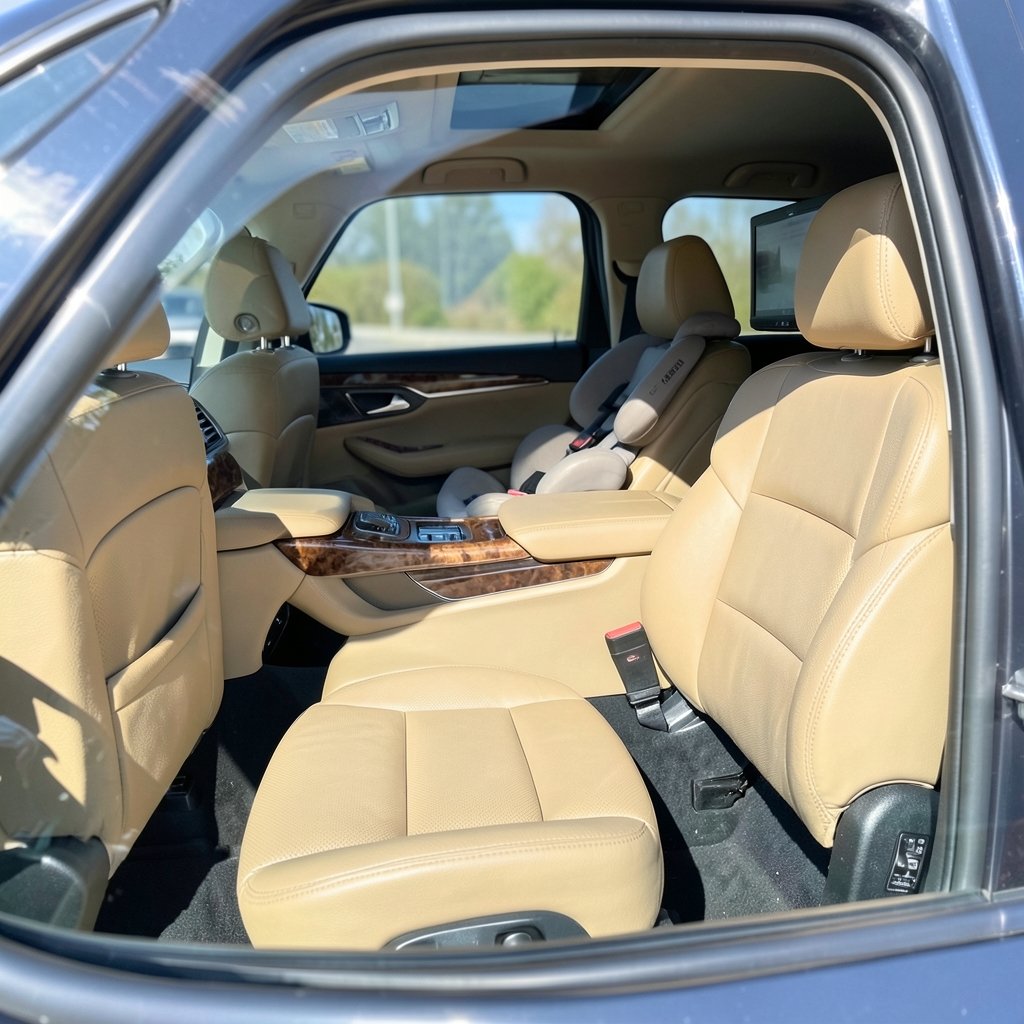
| Seating | Leather or semi-aniline upholstery, heated and ventilated front seats, heated second-row seats |
| Cabin | Panoramic moonroof, upgraded ambient lighting, wood or premium trim accents |
| Tech | Larger infotainment display, premium Mark Levinson audio, head-up display on some years |
| Wheels | Larger alloy wheels, typically 20-inch or above |
| Driver assistance | Lexus Safety System+ suite as standard across the range |
The jump from Premium to Luxury is mostly about materials and comfort rather than capability. You are paying for a quieter, nicer place to sit, not more power. That distinction matters: if you mainly care about space and safety tech, the lower trims deliver most of it. If you spend three hours a day in the car, the Luxury upgrades earn their keep.
For buyers thinking about how to spend on a vehicle without waste, the principles in this guide to conscious luxury and buying better rather than more apply neatly here. The Luxury trim makes sense when you will use the extras daily, not when you are buying them for the brochure.
How It Drives in the Real World
The TX 350 is not a sporty SUV, and it doesn’t pretend to be. The turbo four delivers strong low-end torque, which means it pulls cleanly away from traffic lights and holds highway speeds without strain. The eight-speed automatic shifts smoothly in normal driving. Push it hard and the engine note gets coarse, but that is true of most four-cylinder three-row SUVs.
Ride quality is the TX’s strongest card. The suspension is tuned for comfort, soaking up broken pavement and highway expansion joints without floatiness. Steering is light and accurate, which makes parking a surprisingly easy job for a vehicle this size. All-wheel drive adds confidence in rain and light snow, though this is a road-focused SUV, not an off-roader.
Practical points worth knowing before a test drive:
- Sit in the third row yourself. It is usable for adults on short trips but tight for long journeys.
- Check the second-row configuration. Captain’s chairs seat fewer people but improve access and comfort; the bench seats more.
- Test the cargo area with the third row up. It is modest, which is normal for the class.
- Drive over a rough surface at low speed to check for tire and suspension noise on the larger Luxury wheels.
The larger wheels that come with the Luxury trim look great but can transmit more road noise than smaller ones. It is a small trade-off, and one that matters more if your daily route is coarse-chip asphalt. If cabin quietness is a priority for you, the thinking in this piece on the quietest luxury cars and what actually silences a cabin is worth a read before you choose wheel sizes.
Interior, Tech, and Family Practicality
Inside, the TX feels genuinely premium. Materials are soft where your hands and elbows land, the switchgear is solid, and the layout is logical. The infotainment system has improved markedly over older Lexus interfaces, with a responsive touchscreen and physical climate controls that you can operate without looking. Wireless smartphone mirroring is standard on recent model years.
Space is the headline. Front passengers get generous room, the second row is genuinely comfortable for adults, and the third row is best reserved for kids or short trips. Cup holders, USB ports, and storage cubbies are scattered sensibly. The panoramic roof on the Luxury trim brightens the cabin considerably, which helps on long drives with restless passengers.
If you are planning a big family road trip, the packing and seating advice in this guide to a multigenerational luxury trip that works for every age pairs well with what the TX offers. The vehicle is built for exactly that scenario: grandparents in the second row, kids in the back, luggage behind.
Safety and Running Costs
The TX comes with the Lexus Safety System+ suite as standard, which bundles adaptive cruise control, lane keeping, automatic emergency braking, and blind-spot monitoring across the range. That means even the base TX 350 carries the same core safety tech as the Luxury trim. Crash-test results and recall information are published by the US National Highway Traffic Safety Administration, and checking the NHTSA vehicle safety ratings database for the specific model year is a sensible pre-purchase step.
Fuel economy is the TX 350’s weak point. The turbo four is thirsty in city driving, and a loaded three-row SUV with all-wheel drive will never be frugal. Official figures are published by the EPA, and you can look up the EPA fuel economy figures for the Lexus TX by model year and drivetrain. If you do mostly urban miles, the hybrid variants close that gap quickly. If you do mostly highway miles with a light load, the 350 is fine.
Maintenance and insurance costs sit in line with other midsize luxury SUVs. Lexus has a strong reliability reputation, which helps resale values, but verify the warranty terms for your market rather than assuming they carry over.
How It Compares to the Alternatives
The TX 350 Luxury competes with three-row luxury SUVs from German, British, and American brands. Its pitch is simple: more standard equipment, better predicted reliability, and a calmer cabin than most rivals, at a price that undercuts the premium Germans.
Where it loses: the TX 350 is not as engaging to drive as a sport-tuned rival, and its hybrid and plug-in siblings are more efficient. Where it wins: comfort, space, and the sense that nothing was over-engineered for the sake of a spec sheet.
If you are cross-shopping and also considering a grand touring road trip in the new vehicle, this guide to the best luxury cars for road trips in real-world conditions covers the comfort and range factors that matter over long distances. And if the TX is one option among several dream purchases, the context in this Lake Como luxury travel guide is a reminder that the best luxury purchase is the one you actually use.
Common Mistakes Buyers Make
A few patterns show up again and again with three-row SUV buyers, and the TX 350 Luxury is no exception.
- Buying the Luxury trim for the badge alone. The extras are real, but only worth it if you use them. Heated second-row seats are wasted if the kids sit in boosters.
- Skipping the third-row test. Adults who never sit in the back often assume it is fine. It is tight. Sit in it.
- Ignoring wheel size effects. Big wheels look better in photos and ride harder in real life. Drive both if you can.
- Assuming hybrid math always works. The TX 350 is cheaper upfront. Run your own annual mileage before assuming the hybrid pays back quickly.
- Forgetting insurance and tire costs. Larger wheels mean more expensive tires, and luxury trims often carry higher insurance groupings.
Conclusion
The Lexus TX 350 Luxury is a well-judged family SUV. It is not the fastest, the most efficient, or the flashiest vehicle in its class, and it doesn’t try to be. What it offers is a calm, spacious, well-built cabin with the comfort features most families actually use, wrapped in a package that should hold its value and stay out of the workshop. The Luxury trim is the sweet spot for buyers who spend serious time in the car, while lower trims make more sense for occasional use. Test the third row, check the wheel and tire costs, and confirm the current model year’s equipment list before you commit. Do that, and the TX 350 Luxury is hard to fault as a practical luxury purchase.
Frequently Asked Questions
What engine does the Lexus TX 350 Luxury have?
It uses a 2.4-liter four-cylinder engine with a turbo producing around 275 horsepower and 317 lb-ft of torque, paired with an eight-speed automatic transmission. Front-wheel drive is standard and all-wheel drive is optional. The Luxury trim does not change the powertrain, so you get the same engine as lower trims.
Is the TX 350 Luxury worth the extra cost over the Premium trim?
It depends on how much time you spend in the car. The Luxury trim adds upgraded leather, heated and ventilated seats, a panoramic roof, premium audio, and larger wheels. If you drive daily or take long family trips, those features earn their keep. For occasional use, the Premium trim covers the essentials for less money.
How many people can the Lexus TX 350 Luxury seat?
It seats seven or eight depending on the second-row configuration. Captain’s chairs in the second row give seven seats and easier access to the third row, while a bench gives eight. The third row is best suited to children or short trips for adults.
Does the TX 350 Luxury come with all-wheel drive as standard?
No. Front-wheel drive is standard on the TX 350, and all-wheel drive is an optional extra across the range, including the Luxury trim. If you live somewhere with wet or snowy winters, the all-wheel-drive option is worth specifying.
How is the fuel economy on the TX 350?
It is average for a three-row luxury SUV, and city driving is where it suffers most. The hybrid TX 500h and plug-in TX 550h+ variants are noticeably more efficient. If most of your driving is urban, run the numbers on a hybrid before committing to the 350.
What safety features are standard on the TX 350 Luxury?
The full Lexus Safety System+ suite is standard across the TX range, including adaptive cruise control, lane keeping, automatic emergency braking, and blind-spot monitoring. The Luxury trim does not add extra safety hardware, so lower trims carry the same core protection.