
How to Host a Book Club Dinner: A Stress-Free Guide
 Abdul WadoodLast updated
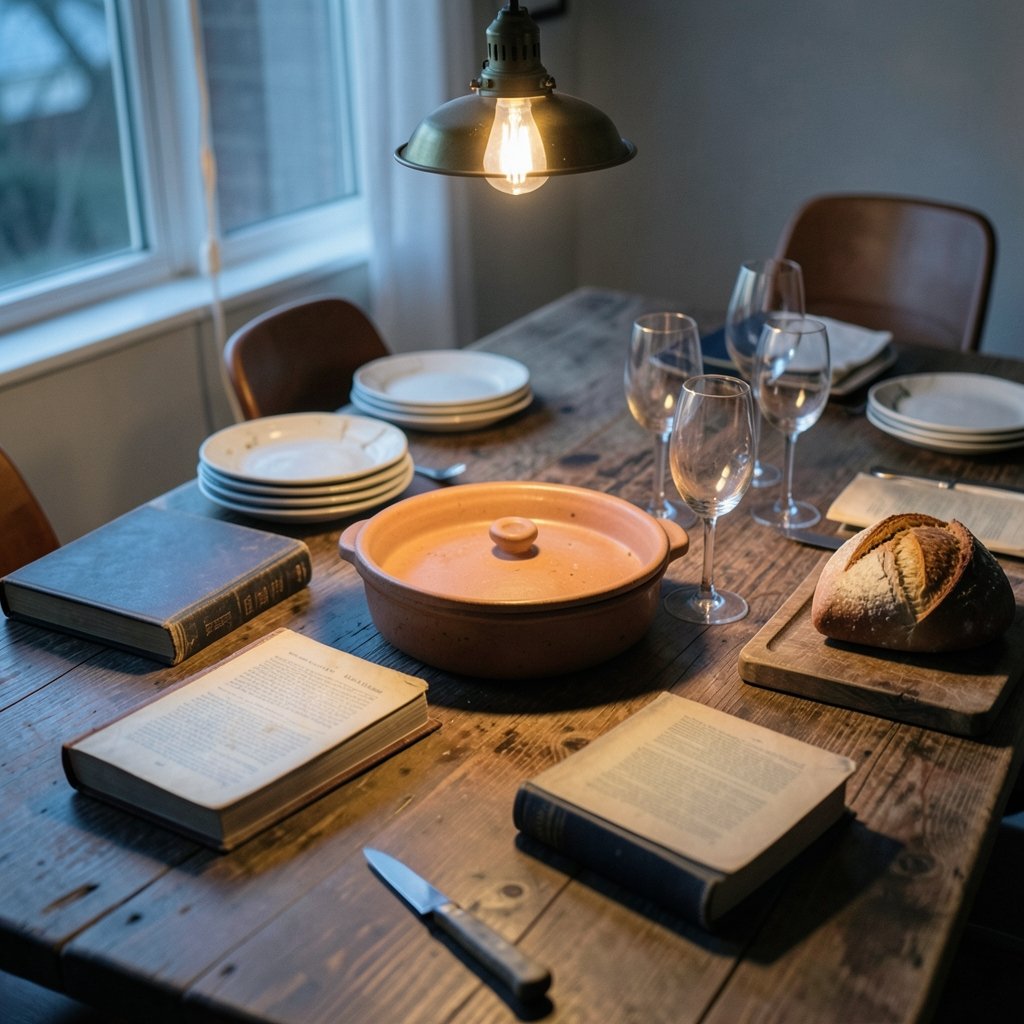
Roughly one in five American adults belongs to some kind of book club, and the dinner-and-discussion version has quietly become the format people fight to get into. The reason is simple: reading is solitary, but eating is social. Put the two together and a group that used to text “sorry, didn’t finish” suddenly shows up with a casserole dish and opinions.
Yet a book club dinner fails in predictable ways. The food overwhelms the conversation. The host spends the night in the kitchen. Nobody finished the book, and everyone pretends they did. The good news is that hosting a book club dinner is a design problem, not a talent contest, and it can be solved with a handful of decisions made well in advance.
Start With the Guest List, Not the Menu
The single most common mistake is planning the food before knowing how many people will sit around the table. A discussion works best somewhere between six and ten people; below six the conversation stalls, and above ten it splits into side chats, which defeats the purpose of gathering.
That number drives everything else: how many copies you need, how big a main dish to plan, and whether a single table can hold everyone. A group of eight is a comfortable target. It fills a normal dining table, survives one or two no-shows, and keeps a discussion moving without a formal facilitator.
There is also the practical matter of dietary needs. Ask about allergies and restrictions at the same time you announce the book, not two days before dinner. A simple line in the invitation (“Reply with any allergies or foods you avoid”) saves the host from cooking three separate meals and saves guests from eating bread in silence.
Choose a Book That Fits a Dinner Table

Not every book works for a dinner discussion. Dense experimental fiction can be wonderful, but it tends to produce long silences punctuated by someone saying “I just didn’t get it.” Books that generate good dinner conversation share a few traits: a clear moral question, characters people feel strongly about, and a length that a working adult can finish in three to five weeks.
Practical criteria that tend to work:
- Length of 250 to 400 pages. Long enough to matter, short enough to finish.
- A live question at its center. Something where reasonable readers disagree.
- Availability in paperback and audiobook. A book that’s only in hardcover at full price shrinks attendance.
- No direct sequel required. Standalone titles keep the group flexible.
Announce the book at least four weeks before the dinner, and pair the announcement with a rough page count and a suggested reading pace. Groups that set a mid-point check-in (“we’re all aiming to be halfway by the 15th”) finish far more often than groups that don’t. If the group is new, a shorter book under 300 pages is a smart first pick, because the goal of the first dinner is to make people want a second one.
For anyone building a recurring club rather than a one-off evening, voozon.media is worth a look for ideas on content and community building around shared interests.
Pick a Format: Potluck, Rotating Host, or Full Host
The three main formats each solve a different problem. Choosing one up front prevents the awkward mid-dinner negotiation about who owes what.
| Format | How it works | Best for | Main risk |
|---|---|---|---|
| Potluck | Host provides the main dish and drinks; guests sign up for sides, dessert, and bread | Groups of 6–10, tight budgets, variety | Five people bring chips |
| Rotating host | One person hosts and cooks; the role rotates each meeting | Close-knit groups, serious cooks | Host burnout |
| Full host with a theme | Host cooks a menu tied to the book’s setting | Special occasions, milestone meetings | Cost and prep time |
The potluck version is the most sustainable for most groups, but only if it is organized. A shared sign-up list with named categories, rather than a vague “bring something,” is the difference between a coherent meal and a table of dips. Assign one person to sides, one to salad, one to dessert, one to bread and cheese, and one to drinks. The host covers the main dish, which keeps the anchor of the meal consistent.
The rotating host model works beautifully until it doesn’t. It tends to collapse when the same two people volunteer every time. Groups that rotate successfully usually schedule hosts six months ahead on a shared calendar, so nobody has to be the one who asks.
A themed menu tied to the book is the most fun option and the most likely to be overdone. A single dish that nods to the setting, plus a normal meal around it, lands better than an elaborate multi-course attempt that leaves the host exhausted before the discussion starts.
Build a Menu That Survives Conversation
The best book club dinner food has three qualities: it holds up at room temperature, it can be served from a single dish, and it doesn’t require the host to be in the kitchen while the discussion is happening.
Choose dishes that forgive timing. Braises, lasagnas, grain salads, roasted vegetables, and sheet-pan dinners all tolerate a twenty-minute delay. Anything fried, anything that must be plated individually, and anything that needs last-minute assembly will pull the host away from the table at exactly the wrong moment.
Keep it to one hot dish. A potluck with four hot dishes creates a traffic jam at the oven and a pile of lukewarm food on the counter. One hot main, one substantial room-temperature side, bread, and dessert is plenty.
Food safety matters as much as flavor. Shared dishes that sit out for hours are a genuine risk. Perishable food should not stay at room temperature for more than about two hours, and that window shrinks in a hot room. Keep cold dishes on ice or in a cooler, hold hot food above 140°F (60°C) in a slow cooker or warming tray, and put leftovers in the fridge within two hours rather than leaving them out for late arrivals. The USDA Food Safety and Inspection Service publishes the current two-hour guidance and the temperature rules that go with it, and it’s worth a two-minute read before a potluck.
Set up a serve-yourself line away from the table. A kitchen counter buffet keeps the dining table clear for books, glasses, and elbows. Stack plates at the start of the line and put cutlery at the end, so people aren’t balancing a plate while hunting for a fork.
Run the Discussion Without Running It Into the Ground
The discussion is the part most hosts under-plan, and it is the part that decides whether people come back. A few light structures do most of the work.
Open with a low-stakes question. “What did you think of the ending?” is a trap. “Which character would you least want to sit next to at dinner?” gets laughs and gets people talking. Save the big interpretive questions for twenty minutes in, once the table has warmed up.
Use a short list of questions, not a script. Five or six prepared questions are enough for a ninety-minute conversation. Print them or write them on a card. The Wikipedia entry on book discussion clubs gives a useful overview of how different groups structure their meetings, from formal question lists to free-form conversation.
Let silence do its job. New hosts panic at a three-second pause and fill it. Experienced hosts wait. Someone always has a thought they’re assembling.
Protect the non-finishers. In every group, at least one person didn’t finish. A good host says early, “Spoilers are fine after the main course, and nobody has to have finished,” which lets people relax and participate. Shaming non-finishers is the fastest way to lose half the group by meeting three.
Close with the next book. Decide the next title before people leave, while the energy is high. Groups that defer the decision to a group chat tend to drift for a month and then quietly stop meeting.
Handle the Logistics Nobody Talks About
Small operational details separate a smooth evening from a chaotic one.
- Start time and eating time. Set the arrival time thirty minutes before dinner. People trickle in, drinks get poured, and the meal starts on time.
- A parking and address message. Send the full address, parking notes, and a phone number the day before. Not everyone has the group chat pinned.
- Drinks in a self-serve spot. A cooler of cold drinks and a bottle opener on the counter keeps the host out of bartender duty.
- A book display. A small stack of the current book, plus any related titles, gives people something to handle and sparks side conversations.
- An end time. Say “we’ll wrap by 9:30” in the invitation. It gives people permission to leave and makes hosting feel finite.
One more thing worth saying plainly: the host should not do the dishes during the discussion. Accept help, or leave them. A host scrubbing pans while eight people debate the ending is a host who won’t volunteer again.
Conclusion
A book club dinner works when the host treats it as two events that share an evening: a meal that can run itself and a conversation that has just enough structure to stay alive. Pick a book people can finish, choose a format before anyone asks, cook food that forgives a twenty-minute delay, and protect the discussion from both chaos and over-management. Do those four things and the hardest part of the next meeting will be choosing the book, which is a much better problem to have than an empty table.
Frequently Asked Questions
How many people should I invite to a book club dinner?
Six to ten is the sweet spot. Fewer than six and the conversation runs dry; more than ten and the table splits into separate chats. Eight gives you a buffer for no-shows and still fits a normal dining table. (The Guardian: Books)
Should I host a potluck or cook the whole meal myself?
Potluck is more sustainable for recurring groups, but only with an organized sign-up that assigns specific categories like sides, salad, dessert, and drinks. Cooking everything yourself works for occasional or themed dinners, but it rarely survives as a monthly habit.
What if some guests didn’t finish the book?
Say up front that spoilers are fine after the main course and that nobody has to have finished. Then ask the finishers to give everyone else a two-minute plot recap. Shaming non-finishers is the fastest way to shrink a group.
How far in advance should I announce the book?
At least four weeks, and five is better for anything over 350 pages. Pair the announcement with a page count and a halfway check-in date. Groups that set a midpoint finish far more often than groups that don’t.
How long should the whole evening last?
Plan for about three hours: thirty minutes of arrival and drinks, sixty to seventy-five minutes for dinner, and sixty minutes of discussion. State an end time in the invitation so guests know it’s fine to leave and the host knows the night has a finish line.
What should I do with leftovers?
Refrigerate them within two hours of serving, and sooner if the room is warm. Perishable food left out longer than that should be thrown away rather than saved. Send guests home with containers if you’d rather not deal with it, which also cuts down on your own cleanup.