
Hair Gloss Guide 2026: Salon vs At-Home Results
 Abdul WadoodLast updated

Walk into any salon and ask for a “gloss,” then ask three different stylists to define it. You will likely get three different answers. That is the strange reality of the hair gloss market in a nutshell. The word gets used for a clear shine treatment, a demi-permanent color service, a purple toning mask, and a $12 drugstore spray. All of them are sold as “gloss,” and none of them do quite the same thing.
So what actually happens when you book a gloss or buy one at the store? The honest answer depends on which category you are dealing with, and understanding that split is the difference between walking out with glassy, reflective hair and walking out wondering why you paid salon prices for a product that washed out in four days.
What Is a Hair Gloss, Exactly?
The term hair gloss covers two broad product families that share a name but not much else.
The first is an in-salon glossing treatment. These are typically semi-permanent or demi-permanent services. A stylist applies a formula to the hair, lets it process for a set time, and rinses it out. Depending on the product line, the formula may be mixed with a low-volume developer, or it may be a ready-to-use liquid. The result is a combination of shine, smoother texture, and often a subtle shift in tone.
The second is an at-home glossing product. This category includes sprays, serums, conditioning masks, and tinted glosses sold in drugstores and beauty retailers. Most of these are no-mix products designed to be applied in the shower or on damp hair, and most work largely by coating the outer layer of the hair strand. (Hair Dyes and Cancer Risk)
The critical difference is mechanism. Temporary, at-home glosses mostly coat the cuticle to add shine and smoothness. Semi- and demi-permanent glosses deposit dye or tone into the hair and typically last through several washes. That is not a marketing distinction. It is a structural one, and it explains almost every complaint people have about glosses not living up to expectations.
Gloss, Glaze, and Toner: The Terminology Problem
Here is a frustration worth naming up front: the industry has no standardized definitions for gloss, glaze, or toner. Brands use these words inconsistently, and the same word can describe a temporary color rinse in one line and a shine-only treatment in another. Some “glazes” are temporary color. Others are essentially shine serums with a fancier label.
This matters for consumers because the label on the box will not reliably tell you whether a product deposits color, how long it lasts, or whether it requires gloves. The practical workaround is to ignore the name and read the ingredient and instruction panel instead. Look for whether the product mentions developer, processing time, or color deposit. A gloss that requires mixing is a different animal from one that does not.
How Salon Glosses Differ From At-Home Glosses
The salon-versus-drugstore split is where most of the confusion lives, so it is worth putting side by side.
| Feature | Salon gloss | At-home gloss |
|---|---|---|
| Typical mechanism | Semi- or demi-permanent deposit, sometimes with low-volume developer | Cuticle coating, sometimes light temporary tint |
| Mixing required | Often yes, depending on the line | Usually no |
| Processing time | Set by the stylist per manufacturer instructions | Minimal; applied in shower or on damp hair |
| Longevity | Commonly described as roughly 2–6 weeks | Often marketed as lasting a few washes to a few weeks |
| Color change | Can shift tone noticeably | Usually subtle to none |
| Cost pattern | Higher per service | Lower per use |
A caveat worth stating plainly: longevity ranges are industry and marketing claims, not standardized measurements. They vary with hair porosity, how often you wash, and what else you do to your hair. Someone who shampoos daily and swims twice a week will see a gloss fade far faster than someone who washes twice weekly with color-safe products. Treat any specific week count as a rough guide, not a promise.
What a Gloss Actually Does for Your Hair
Strip away the marketing and a gloss is doing a few concrete things.
It boosts shine and light reflection
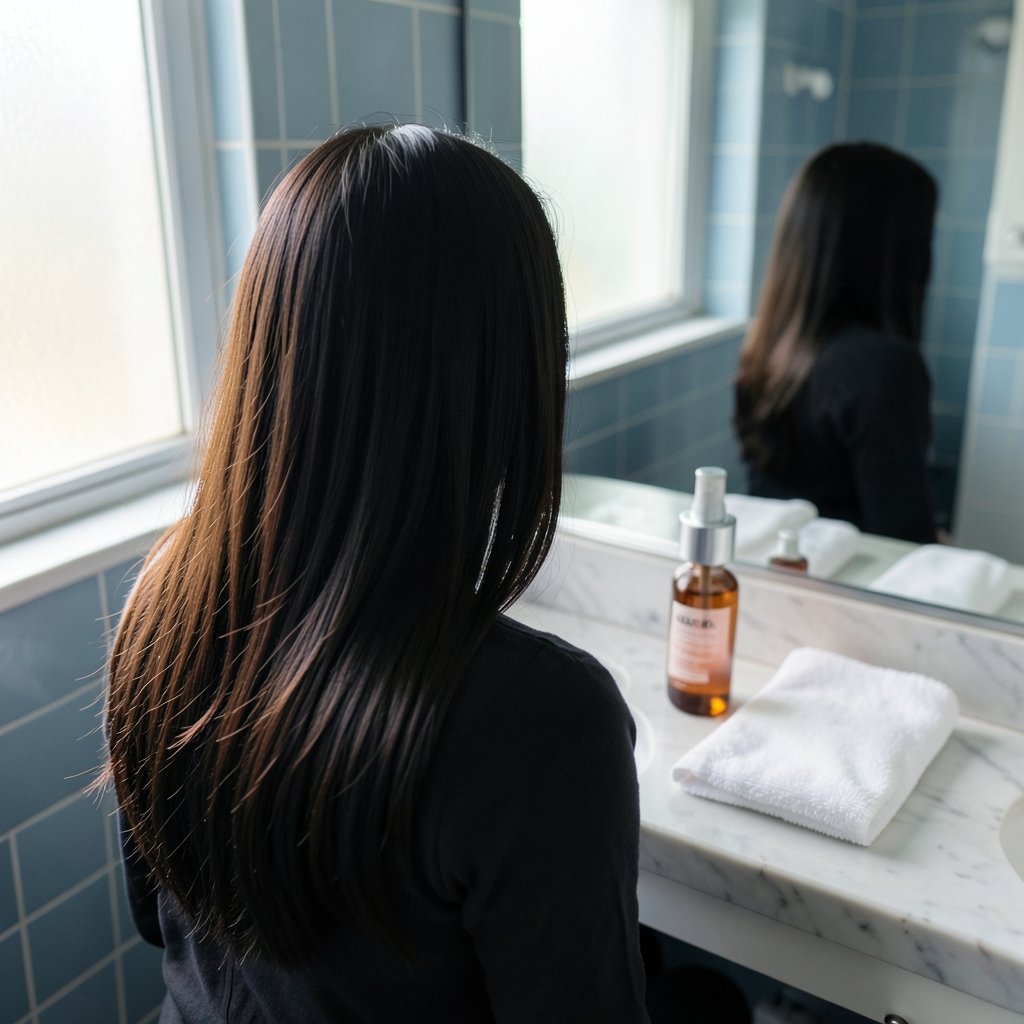
Smoother cuticles reflect more light. That is the entire physics of shine, and it is why coating products work at all. A gloss that lays the cuticle flat makes hair look glossier in photographs and in person, at least until the coating wears off.
It can neutralize unwanted tones
This is the demi-permanent side of the category. Tinted glosses can cool brassiness in blondes, soften warmth in brunettes, or refresh faded ends. This is genuinely useful for anyone maintaining a color service between full appointments.
It adds a temporary smoothing effect
Many people report that hair feels silkier and behaves better immediately after a gloss. Some of that is real smoothing, and some of it is simply the conditioning ingredients doing their job.
What it does not do
A gloss is not a repair treatment. It will not reconstruct broken bonds, and it will not permanently change hair structure. If your hair is damaged from bleaching, a gloss can make it look better while you wait for it to grow out, but it is cosmetic improvement, not rehabilitation. Expecting structural repair from a coating product is one of the most common mistakes people make.
Developer Strength and Why It Matters
For demi-permanent glosses, developer strength is the variable that separates a gentle tone shift from something closer to conventional color. Demi-permanent color and gloss products typically use low-volume developer, commonly in the range of around 6 to 10 volume, and they are deposit-only rather than lifting. That is what makes them gentler than permanent dye.
Exact volumes and processing times differ by manufacturer, so the instruction sheet on the specific product is the only reliable source. This is also why salon glosses are not a great DIY project. A stylist is matching developer strength, timing, and formula to your hair’s history. Getting that wrong at home is how people end up with patchy tone or over-processed ends.
Safety and Regulatory Context Worth Knowing
Hair color products, including many glosses, are regulated differently depending on where you live, and the rules are more specific than most shoppers realize.
In the United States, hair dyes and many gloss and color products fall under FDA oversight as cosmetics. Coal-tar hair dye ingredients carry specific labeling rules, and some color additives require certification before they can be used. The details have evolved over decades, so the current FDA hair dye guidance is the place to check exact wording rather than relying on secondhand summaries. (Hair Products)
In the European Union, cosmetic products including hair gloss and color fall under Regulation (EC) No 1223/2009, which sets ingredient restrictions and labeling requirements across member states. The regulation has been in force since 2009 and applied since 2013, though its annexes are updated over time.
The practical takeaway for anyone using a gloss at home is simpler than the regulatory detail: patch test before first use, avoid applying color-depositing products to a broken or irritated scalp, and be aware that dye ingredients can trigger allergic reactions in some people. PPD (paraphenylenediamine), found in some color products, is a well-documented contact allergen. If you have reacted to hair dye before, that history is worth mentioning to a stylist before any gloss service.
Practical Tips That Actually Work
A few habits separate a gloss that performs from one that disappoints.
Clarify before you gloss. Product buildup blocks the cuticle and prevents coating products from doing their job. A clarifying wash before an at-home gloss makes a noticeable difference.
Match the product to your goal. If you want shine, a coating gloss is fine. If you want to neutralize brass, you need a tinted, deposit-style product. Buying a shine spray and expecting it to fix yellow tones is a category error.
Stretch the results with color-safe care. Sulfate-heavy shampoos strip coatings and fade deposits faster. If you paid for a salon gloss, switching to a gentler wash routine is the cheapest way to protect that investment.
Do not over-apply. More product does not mean more shine. Coating products applied too heavily weigh hair down and can make it look greasy rather than glossy, especially on fine hair.
Book glosses strategically. If you color your hair, a gloss timed about midway between appointments keeps tone fresh without adding a full service. For anyone curious how this fits into a broader content and brand strategy in the beauty space, resources like Voozon Media cover how beauty topics get framed and marketed to consumers.
Skip the gloss on a irritated scalp. No shine is worth a reaction. Wait until your scalp is calm.
Who Should Try a Gloss and Who Should Skip It
Glosses suit a wide range of people, but not everyone.
Good candidates include anyone with dull or rough-feeling hair looking for a quick cosmetic boost, people maintaining color between appointments, and anyone wanting to soften brassiness without committing to permanent dye. Glosses are also a reasonable low-commitment option for someone curious about color who is not ready for a full change.
Poor candidates include anyone with an active scalp reaction or a known dye allergy, people expecting repair from damaged hair, and anyone who wants a dramatic color shift. A gloss will not deliver a big transformation, and expecting one leads to disappointment.
Conclusion
A hair gloss is not one thing, and that is the single most useful fact to carry into a salon or a drugstore aisle. Salon glosses are typically semi- or demi-permanent services that deposit tone and boost shine for a few weeks. At-home glosses mostly coat the cuticle for a temporary smoothing and reflective effect. The terminology around gloss, glaze, and toner is genuinely inconsistent, so labels are a weak guide and instructions are a strong one.
The realistic expectation is modest but real: glosses make hair look better, shinier, and more polished, and tinted versions can refresh tone between color appointments. They do not repair damage, and their longevity claims are industry ranges rather than measured guarantees. Patch test, read the instructions, clarify first, and protect the result with gentle washing. Do that, and a gloss delivers exactly what it promises, no more and no less.
Frequently Asked Questions
How long does a hair gloss last?
Salon glosses are commonly described as lasting roughly two to six weeks, while at-home glosses are often marketed as lasting a few washes to a few weeks. These are industry and marketing ranges, not standardized measurements. Your wash frequency, hair porosity, and styling habits will shift the real timeline considerably.
Does a hair gloss change your hair color?
It can, but only subtly and only with tinted, deposit-style products. Clear glosses add shine without changing color. Demi-permanent tinted glosses can cool brassiness or refresh faded ends. A gloss will not lighten hair or produce a dramatic color shift.
Can you do a hair gloss at home?
Yes, at-home glossing products are designed for exactly that and usually require no mixing. The caveat is that at-home products are mostly coating treatments with limited color effect. Demi-permanent glosses that require developer and precise timing are better handled by a professional who can match the formula to your hair history.
Is a hair gloss the same as a glaze or a toner?
Not reliably. The industry has no standardized definitions, and brands use gloss, glaze, and toner inconsistently. Some glazes are temporary color, others are shine treatments. The only dependable way to know what a product does is to read its instructions and ingredient panel rather than trusting the name.
Is a hair gloss safe for damaged or color-treated hair?
Glosses are generally used on color-treated hair and are often recommended for maintaining tone between appointments. They are cosmetic, though, not reparative, so they will not fix damage. Anyone with a known dye allergy or an irritated scalp should patch test first and consult a professional before applying color-depositing products.
How often should you get a hair gloss?
There is no universal schedule. Many people book a gloss midway between color appointments to keep tone fresh, which works out to roughly every four to six weeks. Others use at-home glosses weekly or biweekly for shine. Frequency should follow how quickly your hair fades and how much coating or deposit your hair tolerates without feeling weighed down.