
Electric Cars 2024: Market Growth & Key Insights
 Abdul WadoodLast updated

Roughly 17 million new electric cars were sold worldwide in 2024, according to International Energy Agency estimates. That is more than one in five new cars sold globally. Yet if you only read headlines from Detroit or Stuttgart, you might think the electric car market was collapsing. Both things were true at once, and that contradiction is the story of electric cars in 2024.
This was the year the EV conversation stopped being about novelty and started being about money, policy, and patience. Growth slowed in some regions, accelerated in others, and the industry learned a hard lesson: electric cars are no longer a science experiment. They are a business, and businesses have bad quarters.
A Global Market With Two Very Different Halves
The global picture in 2024 was lopsided. China accounted for the overwhelming majority of new electric car sales, with domestic manufacturers pushing plug-in hybrids and battery-electric models into every price bracket. Europe and the United States grew, but at a far gentler pace than in 2022 or 2023.
The result was a market that looked booming in aggregate and sluggish in specific showrooms. That gap matters for buyers, because regional supply, incentives, and model availability all shaped what was actually on the lot.
| Region | 2024 EV picture | Main driver |
|---|---|---|
| China | Dominant share of global volume; aggressive pricing across segments | Domestic competition and scale |
| Europe | Modest growth; battery-electric share stalled in several markets | Incentive changes and CO2 rules |
| United States | Around 1.3 million EVs sold, roughly 8% share | Policy support and new model launches |
| Rest of world | Small but rising volumes | Early infrastructure build-out |
Europe’s Subsidy Hangover
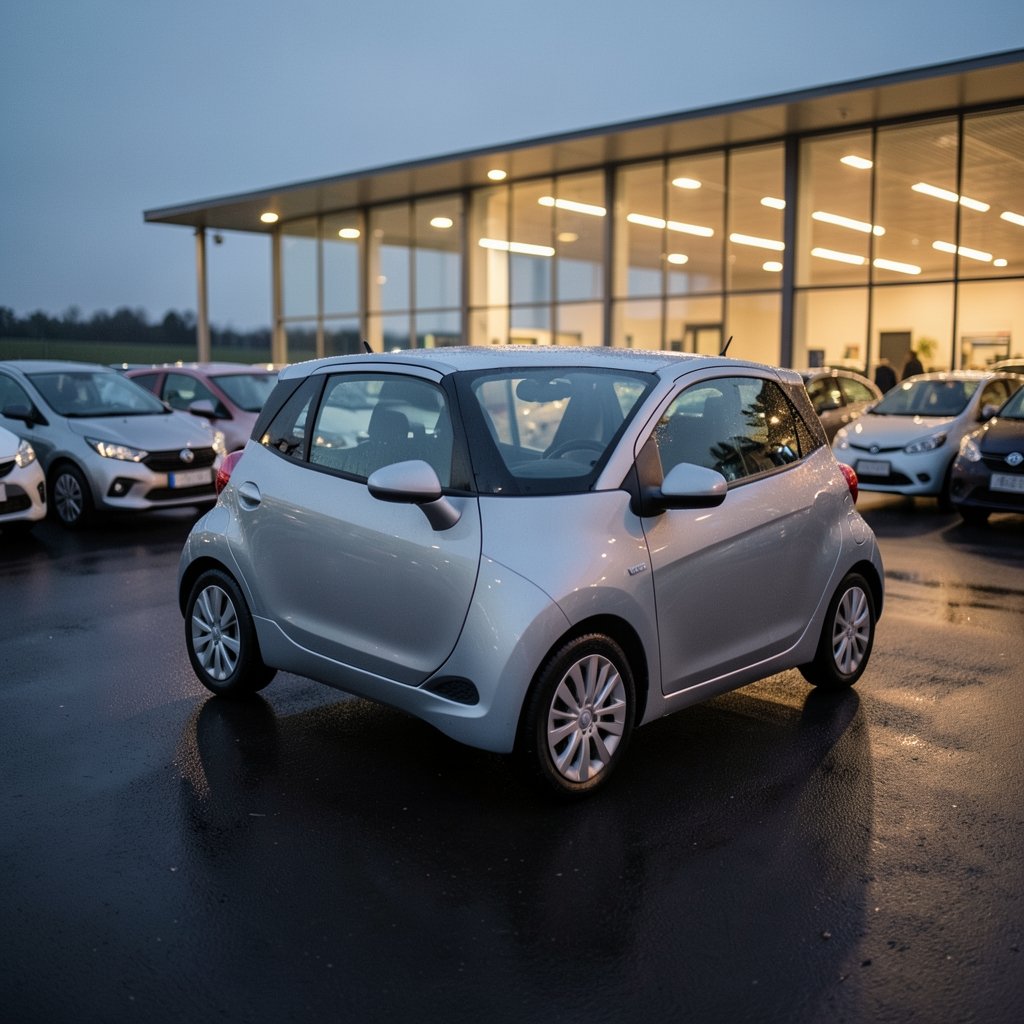
Germany’s decision to end its battery-electric purchase subsidy at the end of 2023 rippled through the entire European market in 2024. Registrations in Europe’s largest car market fell sharply, and the effects were visible in EU-wide figures for months afterward.
The lesson here is uncomfortable but useful: European demand for electric cars was, for a while, partly a demand for discounts. When the discount disappeared, so did a chunk of the buyers. That does not mean the cars got worse. It means price sensitivity is real, and anyone shopping in 2024 quickly discovered that a €40,000 hatchback competes with a lot of very good petrol alternatives.
Meanwhile, the regulatory backdrop stayed firm. EU CO2 standards for new cars require a 100% reduction from 2035, and 2024 was dominated by debate over the scheduled 2026 review rather than any retreat from the target. For manufacturers, that meant one thing: they could not stop building EVs, even in a soft quarter.
The cars themselves kept improving. As coverage of electric icons changing the road edition 2 shows, design and engineering ambition did not pause just because sales charts flattened. (Electric Vehicle Myths)
The United States: Slower Growth, Bigger Questions
American buyers picked up roughly 1.3 million electric vehicles in 2024, about 8% of the market. That was growth, just not the hockey-stick growth everyone had priced in. Several manufacturers trimmed production plans, delayed model launches, and quietly walked back ambitious targets.
Policy did much of the heavy lifting. The EPA finalized light-duty vehicle emissions rules in March 2024, and the Treasury’s clean vehicle credit guidance, including final rules on foreign entity of concern restrictions in May 2024, reshaped which cars qualified for the $7,500 credit. For shoppers, this created a genuinely confusing situation: two identical-looking cars could differ by thousands of dollars depending on battery sourcing and assembly location.
Practical tip: if you were buying in 2024, the single most valuable thing you could do was check eligibility before falling in love with a car. Dealers were not always reliable on this point, and the rules changed mid-year.
Prices Fell, and That Changed Everything
Battery pack prices continued their long slide, with BloombergNEF’s annual survey published in December 2024 reporting a drop to roughly $115 per kWh. Cheaper batteries do not instantly produce cheaper cars, but they set the direction of travel.
By late 2024, several markets saw genuine price cuts, particularly in China, where competition turned brutal. In Europe and the US, discounts arrived more quietly, through financing offers, lease deals, and trim rebalancing rather than headline sticker cuts.
Leasing deserves a special mention. Through 2024, leasing became the smart route into an EV for many households, partly because it sidestepped uncertainty about resale values. That uncertainty was real: used EV prices fell sharply as early adopters traded in, and anyone who bought at peak 2022 prices felt it.
What Actually Worked for Buyers in 2024
Plenty of advice circulated about electric cars in 2024, and much of it was either outdated or written by people who had never charged at a public station in winter. Here is what held up in practice.
Charging at home beats everything else. If you can charge overnight, running costs fall dramatically and the public network becomes a backup rather than a lifeline. If you cannot charge at home, be honest with yourself about that before you buy.
Range anxiety is mostly a planning problem. Most new EVs comfortably cover daily driving. The friction appears on long trips, in cold weather, and at busy corridors on holiday weekends.
Winter changes the maths. Expect a noticeable range loss in low temperatures. Preconditioning the battery while plugged in helps, and heat pumps are worth the option price.
Check the charging curve, not the peak rate alone. A car that holds high power across a broad state-of-charge window beats one with a headline number that collapses after five minutes.
Resale value is the hidden cost. Depreciation hit EVs hard in 2024. Leasing or buying used shifted that risk elsewhere.
Common mistakes were equally predictable. Buyers overestimated public charging reliability in rural areas, underestimated insurance premiums, and assumed every EV qualified for incentives. Others bought the largest battery available when a smaller one suited their actual routine.
If you want a broader sense of how reviewers weighed these trade-offs, the Voozon Cars reviews, comparisons and car guides collection is a reasonable starting point, and the analysis of the cars built around experience gets at why some EVs feel far better than their spec sheets suggest.
The Models That Defined the Year
2024 was not short of interesting metal. Chinese manufacturers pushed compact, affordable EVs into Europe and Southeast Asia. Tesla refreshed its lineup and fought a price war it partly started. Korean brands continued to impress with fast-charging platforms. Legacy European makers launched competent but expensive models and then wondered why volume lagged.
The most significant shift was segment coverage. Electric cars stopped being mostly SUVs and premium sedans. Smaller, cheaper models began arriving, though not fast enough for everyone. For a deeper look at how the standout models compared, Voozon Cars — reviews, comparisons and car guides covers the practical differences rather than the marketing ones.
Policy: The Invisible Hand on the Forecourt
Government decisions shaped 2024 more than any single product launch. Subsidy withdrawal in Germany, credit rules in the US, CO2 targets in the EU, and tariff discussions on Chinese imports all moved buyer behaviour.
The pattern was consistent: where support was stable and predictable, sales held up. Where support vanished abruptly, sales dipped. Consumers respond to incentives, and they respond even faster when those incentives disappear without warning.
There is a fair criticism buried in this. A market that depends on subsidies to move metal is a market still finding its feet. But the counterargument is equally fair: petrol cars benefited from a century of public investment in roads and fuel infrastructure. A decade of support for a newer technology is not unreasonable by comparison.
Charging Infrastructure: Better, Still Uneven
The network improved in 2024, particularly along motorway corridors in Europe and on major US routes. Reliability remained the weak point. A charger that exists but does not work is worse than no charger at all, because it wastes time and destroys trust.
Payment systems also frustrated drivers. Apps, cards, subscriptions, and roaming agreements created a mess that no other fuel type has ever imposed on customers. Progress was made, but slowly.
For anyone planning a purchase, the practical advice is to test the specific routes you actually drive. Not the national map. Your commute, your parents’ house, the airport run. That is where the network either works or does not.
Conclusion
Electric cars in 2024 were a market in transition from hype to homework. Global sales hit record levels, yet growth slowed in the markets that had led the previous wave. Prices fell, batteries got cheaper, and policy kept nudging the industry forward even as consumer enthusiasm cooled in places.
The year’s real lesson is that electric cars have become ordinary. They have depreciation curves, insurance quirks, and awkward winters. They also have lower running costs, better refinement, and a charging network that is genuinely usable for most drivers most of the time.
Buyers who went in with clear eyes, checked incentive eligibility, matched battery size to real habits, and considered leasing did well in 2024. Those who bought on impulse and assumed the maths would work out learned something more expensive. The technology is no longer the risk. The decision-making is.
Frequently Asked Questions
How many electric cars were sold worldwide in 2024?
Around 17 million new electric cars were sold globally, counting both battery-electric and plug-in hybrid models. That represented more than one in five new car sales worldwide, with China accounting for the largest share by a wide margin. (Electric car)
Did electric car sales actually fall in 2024?
Not globally. Total sales rose to a record. However, growth slowed sharply in Europe and the United States, and battery-electric market share stalled in several European countries after purchase incentives were withdrawn. The confusion came from mixing up slowing growth with declining sales.
Why did German EV sales drop in 2024?
Germany ended its battery-electric purchase subsidy at the end of 2023. Without the discount, price-sensitive buyers stepped back, and registrations fell noticeably in Europe’s largest car market. Similar effects appeared in other markets where support was cut abruptly.
Are electric cars cheaper to run than petrol cars?
Usually, yes, especially if you charge at home. Electricity per mile typically costs less than petrol per mile, and EVs have fewer moving parts, so servicing is often cheaper. The savings shrink considerably if you rely on expensive public fast charging, and insurance premiums can be higher.
How much range do electric cars lose in winter?
It varies by model and conditions, but range losses are normal in cold weather because batteries are less efficient at low temperatures and cabin heating draws power. Features like heat pumps and battery preconditioning reduce the impact. Planning charging stops with a buffer is the practical fix.
What should I check before buying an electric car in 2024?
Confirm incentive eligibility for the specific trim and build date, verify you can charge at home or work, test your regular routes on a charging app, get an insurance quote before signing, and compare lease versus purchase costs including expected depreciation. Matching battery size to your actual driving habits saves more money than any single feature.
Where support was stable and predictable, adoption held. Where it vanished overnight, it did not. The lesson for anyone shopping in 2025 is to watch the policy calendar as closely as the product calendar, because a subsidy announced in March can change a deal signed in June. None of this makes electric cars a bad purchase. It makes them a purchase worth researching properly, with the same scepticism you would apply to any large financial decision. The cars are ready. The homework is yours.