
Egyptian Tattoos: Evidence from Gebelein to Coptic Ink
 Abdul WadoodLast updated
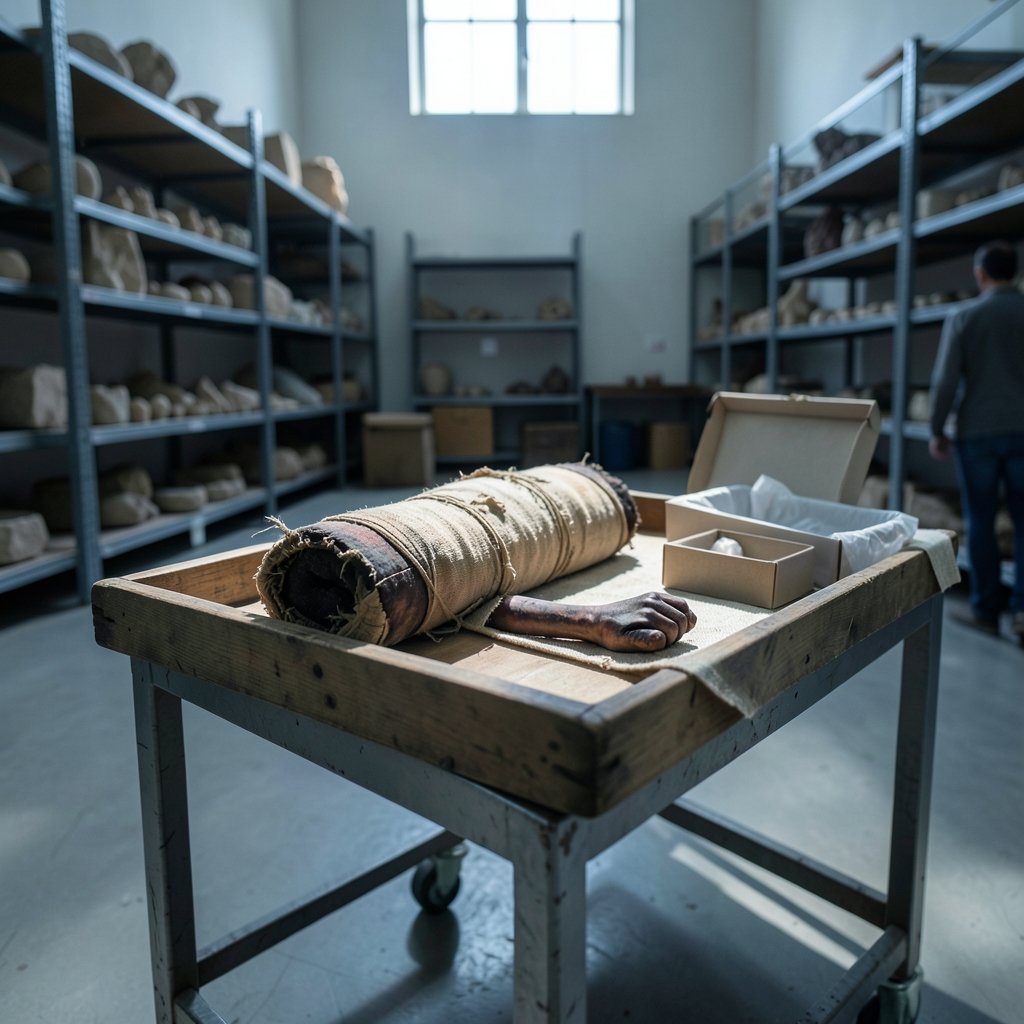
In 2018, researchers announced that two naturally mummified men from Gebelein, buried roughly 5,000 years ago, carried the world’s oldest known figurative tattoos. One wore a bull and a Barbary sheep on his upper arm. The other bore an S-shaped motif and a baboon. Both predate the earliest tattoos previously confirmed in Egypt by more than a thousand years, and both push back the global timeline for figurative body art. That discovery reset a debate Egyptologists had been having for over a century: how old is Egyptian tattooing, who practiced it, and what did the marks mean?
The short answer is that Egyptian tattoos are older, more widespread, and more ambiguous than most popular retellings suggest. Read on for what the physical evidence supports, what is contested, and where the common myths fall apart.
The Gebelein Discovery and the Oldest Figurative Tattoos
The Gebelein mummies are the anchor of any serious discussion. The two men, dated to roughly 3350–3017 BCE, were excavated in the late 19th century and have been held at the British Museum ever since. For decades, the dark smudges on their skin were treated as artifacts of preservation. New imaging techniques revealed them as intentional pigment: a bull and a sheep on one man’s arm, an S-motif and a baboon on the other.
The find matters for two reasons. First, the motifs are figurative rather than only dots or lines; the practice already had a visual vocabulary. Second, the subjects are male. That overturned a long-held assumption that ancient Egyptian tattooing was exclusively female, an assumption based on a much smaller set of mummies.
The dating is radiocarbon-based and debated in its finer details, so treat the exact century ranges as provisional. The broader conclusion — that tattooing in Egypt is at least five millennia old — is now hard to dispute.
Predynastic Female Mummies and the “Dancing Girl” Problem
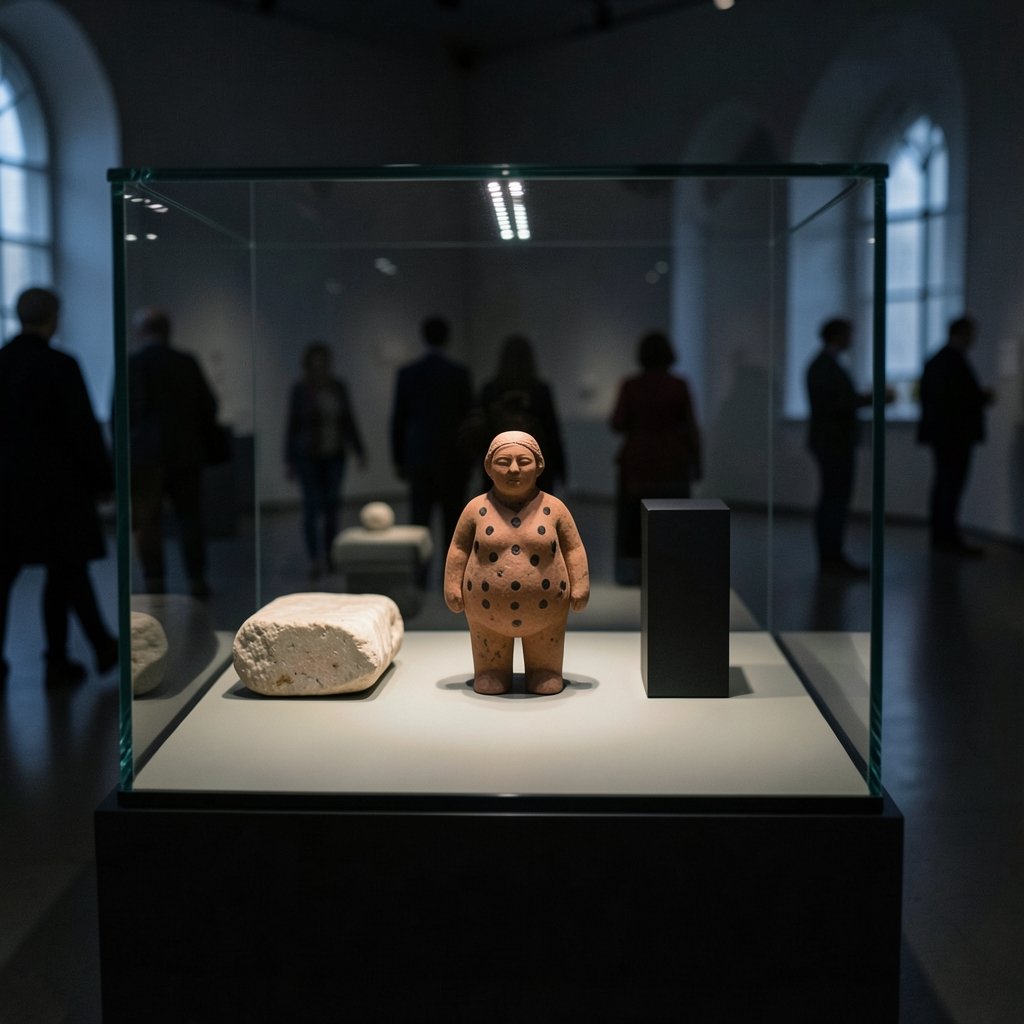
Before the Gebelein men made headlines, the standard evidence came from a group of predynastic female mummies, also from Gebelein, dated roughly 4000–3500 BCE. These bodies show dotted and linear tattoos across the torso and arms. They were discovered in 1896 and are now in the British Museum collection.
The interpretive leap came later. Scholars noticed that small female figurines from the same period carry similar dotted patterns on their bodies, and some of those figurines are posed in ways that were read as dancing. From that pairing grew the popular idea that tattooed women were dancers, musicians, or entertainers — a claim that shows up in museum labels, documentaries, and countless online articles.
That reading is contested. The figurines’ poses are ambiguous, the link between a clay figure and a living woman’s skin is inferential, and the tattoos themselves do not obviously depict performance. Some researchers argue the marks relate to fertility, protection, or status. Others note that we simply cannot know. The honest position is that predynastic female tattoos are well documented as marks; their social meaning is not.
Amunet and the Priestess Evidence
The most cited individual case is Amunet, a priestess of Hathor from the 11th Dynasty, dated roughly 2130–1991 BCE. Her mummy, found at Deir el-Bahri, carried dotted and linear tattoos on her body. The date range shifts depending on which source you consult, and the original excavation reports by Naville remain the primary reference.
Amunet matters because she is a named, titled individual rather than an anonymous body. Her tattoos sit on a woman with a religious role, which supports the argument that tattooing in this period had ritual or devotional significance rather than purely decorative function. It is a single case, and one case cannot carry a general theory — but it is a strong single case.
What New Kingdom Art Actually Shows
New Kingdom imagery, roughly 1550–1070 BCE, adds another layer. Figurines and tomb scenes depict tattooed dancers and musicians, often with motifs associated with Bes, the protective deity linked to households, childbirth, and music. These images are frequently cited as proof that tattooing was common among performers.
Here the evidence gets slippery. Art is not photography. A figurine of a tattooed dancer may depict real practice, an idealized type, or a symbolic convention with no direct counterpart in daily life. Egyptologists debate exactly this point, and the debate is not resolved. What the imagery does establish is that tattooed figures were recognizable to Egyptian audiences — the marks meant something to viewers, even if we cannot reconstruct precisely what.
Mummy Portraits and the Roman Period
In the Ptolemaic and Roman periods, roughly the 1st century BCE to the 3rd century CE, painted mummy portraits from Fayum and elsewhere sometimes show marks on the face and neck that modern viewers read as tattoos. The interpretation is uncertain. Paint can represent scarification, cosmetics, religious markings, or simply stylistic shading. Museum catalogues vary in how confidently they label these features.
This is a good place to practice caution. When a portrait shows a small mark on a cheek, the leap to “Roman-era Egyptians tattooed their faces” is tempting and frequently made online. The portraits themselves do not settle the question.
Coptic Tattoos and the Modern Tradition
Christian tattoo practice in Egypt has a better-documented recent history. Coptic Christians, and pilgrims traveling to Jerusalem, have maintained a tattoo tradition into the modern era. The best-known practitioners are the Razzouk family in Jerusalem, who have tattooed pilgrims for generations. Ethnographic studies and news features describe the practice, though these are secondary sources and should be treated as such.
The frequent claim that modern Coptic tattooing is a direct, unbroken continuation of ancient Egyptian practice is thinly documented. Continuity is often asserted rather than demonstrated. There may well be a thread connecting them, but the evidence for an unbroken chain across two millennia of religious transformation is weak. Treat continuity claims as plausible hypotheses, not established fact.
A Timeline at a Glance
| Period | Date Range | Key Evidence | Confidence |
|---|---|---|---|
| Predynastic female mummies | c. 4000–3500 BCE | Dotted and linear tattoos on torso and arms | High (marks), Low (meaning) |
| Gebelein male mummies | c. 3350–3017 BCE | Figurative tattoos: bull, sheep, baboon, S-motif | High |
| 11th Dynasty (Amunet) | c. 2130–1991 BCE | Named priestess with dotted and linear tattoos | High (marks), Moderate (context) |
| New Kingdom | c. 1550–1070 BCE | Figurines and tomb imagery of tattooed figures | Moderate (imagery), Low (practice) |
| Ptolemaic–Roman | 1st c. BCE–3rd c. CE | Marks on mummy portraits | Low |
| Coptic and modern | 4th c. CE onward | Pilgrim tattoo tradition, Razzouk family | Moderate (modern), Low (continuity) |
The Terminology Trap
One overlooked problem: ancient Egyptian words for tattoo are not securely identified. “Tattoo” itself is an outside label, an etic category imposed on a culture that may have divided the practice differently — by function, by body part, by ritual context. This matters because it shapes what we look for. If Egyptians did not have a single concept matching “tattoo,” then questions like “what did tattoos mean in ancient Egypt?” may be malformed from the start. The marks existed. The category is ours. (Tattoo)
Common Mistakes in Popular Retellings
Several errors recur so often they have become folklore.
Assuming tattooing was exclusively female. The Gebelein men disprove this. Both sexes were tattooed, at least in some periods.
Treating one mummy as representative. Amunet is one priestess. She cannot stand in for all Egyptian women, all religious professionals, or all periods.
Reading modern meanings backward. Protective, devotional, and decorative functions are all plausible, but projecting contemporary tattoo culture onto ancient skin is a category error.
Ignoring the sampling problem. Preserved tattooed skin survives only under specific conditions. The surviving sample is tiny, skewed toward elite burials and dry conditions, and almost certainly unrepresentative of the population.
Overstating continuity. The gap between New Kingdom practice and modern Coptic tattooing is enormous and poorly documented.
Practical Guidance for Researchers and Curious Readers
For anyone digging into this topic — students, writers, museum visitors, or the merely curious — a few habits pay off.
- Start with primary excavation reports, rather than summaries. Naville’s Deir el-Bahri publications and the British Museum’s collection records are the foundation for the Amunet and Gebelein cases.
- Check the dating method. Radiocarbon ranges, relative chronology, and stylistic dating carry different weights. A date presented without a method is a date to distrust.
- Separate the mark from the meaning. Physical evidence for pigment in skin is strong. Interpretations of what it signified are hypotheses.
- Read the peer-reviewed paper, rather than the press release alone. The 2018 Journal of Archaeological Science study on the Gebelein tattoos is the reference point; coverage of it often simplified the findings.
- Note the sample size. If a claim rests on one body, say so.
- Distrust confident museum labels. Labels reflect the state of debate when they were written, and debates move.
For readers who want to follow how digital publications handle cultural heritage topics, resources like Voozon Media cover media and culture reporting with an eye on sourcing.
Why the Evidence Is Thinner Than It Looks
Museums and documentaries present Egyptian tattoos as a settled story. It is not. The physical evidence is real but sparse: a handful of mummies, some figurines, some painted portraits. Each category of evidence carries its own interpretive problems. Mummies tell us marks existed but not what they meant. Art tells us marks were recognizable but not whether the images reflect reality. Portraits tell us almost nothing definitive.
The 2018 Gebelein study was a genuine advance because it applied new imaging to old material and produced a hard, verifiable result: figurative tattoos, on men, five thousand years ago. That is the model for how this field progresses — better methods applied to existing collections, not new speculation.
Conclusion
Egyptian tattoos are among the oldest documented body art in the world, and the Gebelein mummies place figurative tattooing in Egypt by roughly 3350 BCE. Predynastic women carried dotted and linear marks whose meaning remains genuinely unknown. Amunet, a priestess of Hathor, shows that tattooing reached named religious figures. New Kingdom art shows tattooed performers, though whether those images reflect lived practice is debated. Roman-era portraits offer tantalizing but inconclusive hints, and the modern Coptic tradition is real but its claimed ancient continuity is weakly supported.
What emerges is not a tidy narrative but a picture of a practice that was old, varied, and socially meaningful in ways we can only partly reconstruct. The marks are evidence. The meanings are arguments. Keeping those two categories separate is the single most useful habit anyone can bring to this subject — and the reason Egyptian tattoos remain one of the most misrepresented topics in ancient history.
Frequently Asked Questions
What is the oldest known Egyptian tattoo?
The oldest confirmed figurative tattoos come from two mummified men buried at Gebelein around 3350–3017 BCE. One had a bull and a Barbary sheep on his upper arm; the other had an S-shaped motif and a baboon. Older dotted and linear tattoos appear on predynastic female mummies dated roughly 4000–3500 BCE, but those are non-figurative marks.
Were Egyptian tattoos only worn by women?
No. That assumption dominated early scholarship because the first well-documented tattooed mummies were female. The Gebelein men, published in 2018, show that men were tattooed too, at least in the predynastic period. The practice varied by era, and the surviving sample is too small to support blanket claims about either sex.
What did ancient Egyptian tattoos mean?
Nobody knows for certain, and anyone who claims otherwise is oversimplifying. Proposed functions include protection, fertility, religious devotion, status marking, and decoration. Amunet’s religious title supports a devotional reading for her case, but a single mummy cannot define the practice across three thousand years. The marks are documented; the meanings are hypotheses.
Did Cleopatra have tattoos?
There is no reliable evidence that Cleopatra VII or any Ptolemaic ruler bore tattoos. Some Roman-era mummy portraits show facial marks that modern viewers interpret as tattoos, but the interpretation is uncertain and the portraits are not identified as royalty. Claims about Cleopatra’s tattoos are speculation, not history.
Is modern Coptic tattooing a direct continuation of ancient Egyptian practice?
The continuity claim is widely repeated but thinly documented. Coptic Christians and pilgrims to Jerusalem have maintained a tattoo tradition into the present, and the Razzouk family in Jerusalem is the best-known example. Whether that tradition descends unbroken from pharaonic practice across two millennia of religious change is unproven. It is a plausible hypothesis, not an established fact.
Why is the evidence for Egyptian tattoos so limited?
Tattooed skin survives only under specific conditions, so the sample is tiny and skewed toward elite burials in dry environments. Art and figurines raise separate problems because images may reflect ideals rather than reality. Ancient Egyptian words for tattoo are not securely identified either, which complicates the search for textual evidence. The field advances mainly through better imaging of existing museum collections.