
Duralux Waterproof Luxury Vinyl: Real Specs Guide 2026
 Abdul WadoodLast updated

Can a floor that claims to be waterproof still fail in a bathroom? Absolutely, and it happens more often than most buyers expect. The word “waterproof” on a luxury vinyl box tells you something about the core, but almost nothing about the seams, the subfloor, or the wear layer that decides how the floor looks in ten years. Duralux waterproof luxury vinyl sits in that crowded middle ground of the market, and the smart move is to stop reading the front of the box and start reading the technical data sheet.
This guide walks through what actually matters: construction, wear layer thickness, slip resistance, indoor air emissions, warranties, and the installation mistakes that quietly void coverage. It is written for people who want a floor that performs, not a slogan that sounds reassuring.
What “waterproof luxury vinyl” really means
Luxury vinyl plank and tile is a layered composite. A clear vinyl wear layer sits on top, a printed design layer sits beneath it, and a rigid or flexible vinyl core, often filled with limestone, gives the plank its body. A backing layer finishes the sandwich. When a manufacturer calls a product waterproof, the claim usually rests on a core that will not swell when wet, plus click or glued seams designed to keep surface water out of the joints. (Vinyl composition tile (VCT))
Here is the catch. There is no single standard in the US or the EU that defines the word waterproof for resilient flooring. It is a marketing and warranty term, not a certified property. Two products can both say waterproof while behaving very differently at a seam, on a stair nosing, or over a concrete slab that releases moisture vapor.
That does not make the claim dishonest. It makes it incomplete. A waterproof core genuinely helps in kitchens, laundry rooms, and basements where a spill is a matter of when, not if. But the core is one variable in a system, and the system includes the subfloor, the underlayment, the expansion gaps, and the installer’s patience.
The one number that predicts durability: wear layer thickness
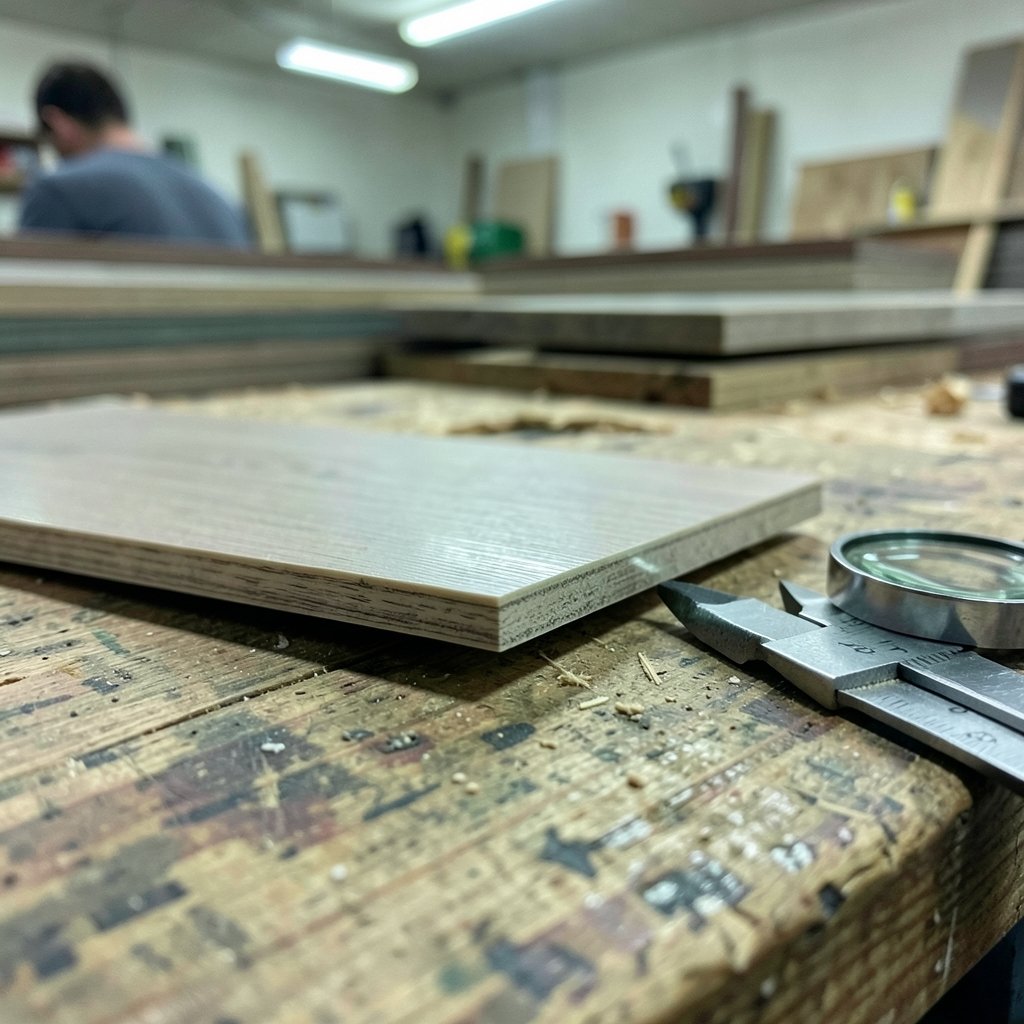
If a shopper remembers one specification, it should be the wear layer. This is the transparent top film that takes the abrasion, and it is quoted in mils, where one mil equals one thousandth of an inch, or roughly 0.0254 millimeters. The industry convention is straightforward:
| Wear layer | Typical use | Realistic expectation |
|---|---|---|
| 6 to 8 mil | Light residential, bedrooms, closets | Fine for adults, less so for large dogs |
| 12 mil | Standard residential, living areas | The sensible default for family homes |
| 20 mil and up | Commercial, heavy traffic | Corridors, shops, rental turnover |
A thick core with a thin wear layer is a floor that stays flat and scratches early. A thinner plank with a generous wear layer often outlasts it. Buyers who compare boxes by thickness alone, which is a common mistake, end up paying for rigidity they did not need and skipping the film that actually protects the design.
The same logic applies to the design layer. A deeper, more detailed print register hides scuffs and looks less repetitive across a large room. Cheap prints repeat every few planks, and the pattern repeat becomes obvious under afternoon sun. Before committing to a whole floor, lay several planks side by side on the floor and look for the repeat. It is the fastest reality check available.
Slip resistance is measured, not assumed
A waterproof floor in a bathroom or entryway raises an obvious question: is it slippery when wet? The honest answer is that slip resistance is a tested property, not a vibe. In the US, the standard test method for measuring slip resistance of footwear and flooring is ASTM F2913, the standard test method for measuring slip resistance, which reports results as a coefficient of friction.
Thresholds vary by application and jurisdiction, and a manufacturer should be able to supply test data for the specific SKU. What complicates the picture is that the US accessibility rules require accessible floor surfaces to be stable, firm, and slip resistant without setting a single numeric coefficient of friction, as set out in the ADA Standards maintained by the US Access Board. That gap is exactly why specifiers ask for test reports rather than adjectives.
In practice, texture does more work than gloss level. A wire-brushed or embossed surface gives water somewhere to go. A polished, smooth plank in a wet room is a gamble regardless of what the box says. If the floor is going into a bathroom, ask for the slip data first and the color range second.
Indoor air: the specs most buyers never ask about
Vinyl gets judged on water and scratches, then quietly ignored on air quality. That is a mistake, because flooring covers a lot of square footage and emissions add up.
In the US, composite wood products, including some flooring substrates, are regulated under TSCA Title VI, and the EPA’s formaldehyde emission standards for composite wood products explain what that rule covers and who must comply. Vinyl flooring emissions are more often reported through California’s indoor VOC testing method, and the CDPH Standard Method V1.2 for VOC emissions is the reference many manufacturers cite on their data sheets.
Phthalates are the other live issue. Some vinyl flooring has historically used phthalate plasticizers, and certain phthalates are restricted in the EU under REACH, with the ECHA list of substances restricted under REACH setting out the current scope. In the US, similar restrictions apply to children’s products. Whether a specific floor is phthalate-free has to come from the manufacturer in writing. A green leaf on the packaging is not a test report.
None of this is a reason to avoid vinyl. It is a reason to ask two questions before buying: which VOC test method was used, and what is the result? A supplier with good documentation answers in minutes. A supplier without it changes the subject.
Commercial specs: fire, smoke, and the fine print
For anyone specifying flooring in a commercial building, two more standards enter the room. Flooring in corridors and exits is often specified to ASTM E648, which measures critical radiant flux, and tested for smoke density under ASTM E662. The ASTM E648 critical radiant flux test method explains what the test measures and why it matters for egress paths.
These are test methods, not certifications. A product either has the numbers or it does not. When a project requires a fire rating, the data sheet is the only document that counts, and a distributor’s verbal assurance is worth nothing at inspection.
Reading the warranty like a lawyer
Warranty language is the manufacturer’s real durability claim, and it is usually split into separate buckets: wear, waterproofness, and installation. Read each one.
Wear coverage typically addresses abrasion of the wear layer. Waterproof coverage may exclude seam failures, and it very often excludes damage caused by subfloor moisture. Installation coverage may be voided entirely if the floor was laid over a slab without a moisture test. Those exclusions are where claims die.
A practical habit: download the warranty PDF before buying and search it for the words “exclude,” “void,” and “moisture.” If the document is hard to find, treat that as information too. The same discipline applies to any big purchase with a long tail of claims, whether it is flooring or a considered wardrobe built around buying better rather than buying more.
Installation mistakes that undo a good product
Most waterproof floor failures are installation failures. The product gets blamed; the subfloor, the gap, or the timeline deserves it.
- Skipping the moisture test. Concrete slabs release vapor. A plastic sheet test or a calcium chloride test takes a day and can save the whole floor. Many warranties require documented results.
- Ignoring expansion gaps. Vinyl moves with temperature. Planks butted tight to a wall can buckle in summer. Leave the gap the instructions specify and cover it with trim.
- Laying over an uneven subfloor. Flatness tolerances exist for a reason. High spots wear through the wear layer; low spots make click joints flex and eventually crack.
- Treating waterproof as flood-proof. Standing water at a seam for days is not the same as a spilled glass. Wipe up promptly, especially near walls and appliances.
- Using the wrong underlayment. Some click systems require a specific pad, and adding a thick generic one can stress the joints. Follow the manufacturer’s list.
A floor installed well and maintained simply will outlast a premium product installed badly. That is not a sales line; it is the pattern behind most complaints.
Where Duralux fits, and how to compare it fairly
Duralux appears in more than one market under more than one brand umbrella, so product-specific claims need checking against the exact SKU, technical data sheet, and warranty document. Treat any figure quoted online, including wear layer thickness, as unverified until the manufacturer confirms it.
That caution is not unique to this brand. It applies across the resilient flooring category, where the same wording gets reused across product lines. The way to compare fairly is to build a simple checklist and score every candidate the same way:
| What to check | Where to find it | Why it matters |
|---|---|---|
| Wear layer in mils | Technical data sheet | Predicts abrasion life |
| Core construction | Data sheet | Explains the waterproof claim |
| Slip test results | Test report | Matters in wet rooms |
| VOC and phthalate statements | Data sheet or declaration | Indoor air quality |
| Warranty exclusions | Warranty PDF | Defines real coverage |
| Installation requirements | Installation guide | Protects the warranty |
Run three products through that table and the differences stop being marketing and start being numbers. It is the same principle that separates genuine quality from a label in other categories, such as the quiet design choices that carry real value in luxury goods.
For buyers weighing a whole-home renovation, it also helps to think about how the floor fits daily life rather than how it photographs. A household with dogs, kids, and a back door onto a garden needs a different wear layer than a couple in an apartment. Matching the spec to the household is the entire game. The same fit-first thinking shows up in planning a multigenerational trip that works for every age, where the details decide the outcome.
Conclusion
Duralux waterproof luxury vinyl can be a sensible choice, but only when the decision rests on documents rather than adjectives. The waterproof claim describes a core, not a guarantee. The wear layer in mils predicts how the floor ages. Slip resistance, VOC emissions, phthalate content, and fire ratings are all measurable, and every one of them should come with a test report or a written statement. The warranty then tells you what the manufacturer will actually stand behind.
Buyers who ask for the data sheet, read the exclusions, and insist on a proper subfloor preparation get a floor that looks good in year ten. Buyers who trust the front of the box get a lesson in seam failures. The gap between those two outcomes is not budget. It is homework.
Frequently asked questions
Is Duralux waterproof luxury vinyl genuinely waterproof?
The core of a waterproof luxury vinyl plank is designed not to swell when exposed to water, and click or glued seams are meant to keep surface spills out of the joints. However, “waterproof” is not a standardized term for resilient flooring in the US or EU, and most warranties exclude standing water, seam failures, and subfloor moisture. Treat the claim as a description of the core, and confirm the details in the warranty document.
What wear layer thickness should I look for?
For most family homes, 12 mil is a sensible default. Light residential areas such as bedrooms can work with 6 to 8 mil, while heavy traffic and commercial spaces usually call for 20 mil and above. A thick plank with a thin wear layer will scratch earlier than a thinner plank with a generous one, so check the mil figure before the overall thickness.
Can I install waterproof vinyl in a bathroom?
Yes, provided the seams are installed correctly, the subfloor is flat and dry, and the product’s slip resistance suits a wet area. Ask for slip test data rather than relying on texture alone. Also check the warranty for bathroom exclusions, since some manufacturers limit coverage in rooms with standing water or require specific sealing at the perimeter.
Do I need to test the subfloor before installation?
In most cases, yes. Concrete slabs release moisture vapor, and many warranties require documented test results before installation. A simple plastic sheet test or a calcium chloride test takes about a day. Skipping it is one of the most common reasons a waterproof floor claim gets denied later.
How do I check indoor air quality claims?
Ask which VOC test method was used and what the result was, and request a written statement on phthalate content. Vinyl emissions are often reported through California’s indoor VOC testing method, and composite wood components fall under federal formaldehyde rules. A supplier with proper documentation will answer quickly; one without it will usually avoid the question.
Does a thicker plank mean a better floor?
Not necessarily. Plank thickness mostly affects rigidity and how the floor feels underfoot, while the wear layer controls how it resists scratches and abrasion. A 20 mil wear layer on a modest core often outperforms a thick plank with a thin film. Compare both numbers, plus the warranty exclusions, before deciding.