
Cars and Crocs: The Hidden Driving Risks in 2026
 Abdul WadoodLast updated

In 2023, a survey by the UK’s AA found that nearly one in five drivers admitted to getting behind the wheel in footwear they knew was unsuitable, including flip-flops, sliders, and clogs. Crocs, the foam clog that became a global phenomenon, sit right at the center of that debate. They’re comfortable, breathable, and beloved by nurses, chefs, and toddlers alike. But are they safe for driving? The answer is more nuanced than the internet’s endless memes suggest, and it involves everything from pedal grip to legal liability. This article unpacks the real relationship between cars and Crocs: the safety science, the legal gray areas, the practical tips that actually work, and the mistakes drivers make every day.
The Core Problem: Pedals and Foam Clogs
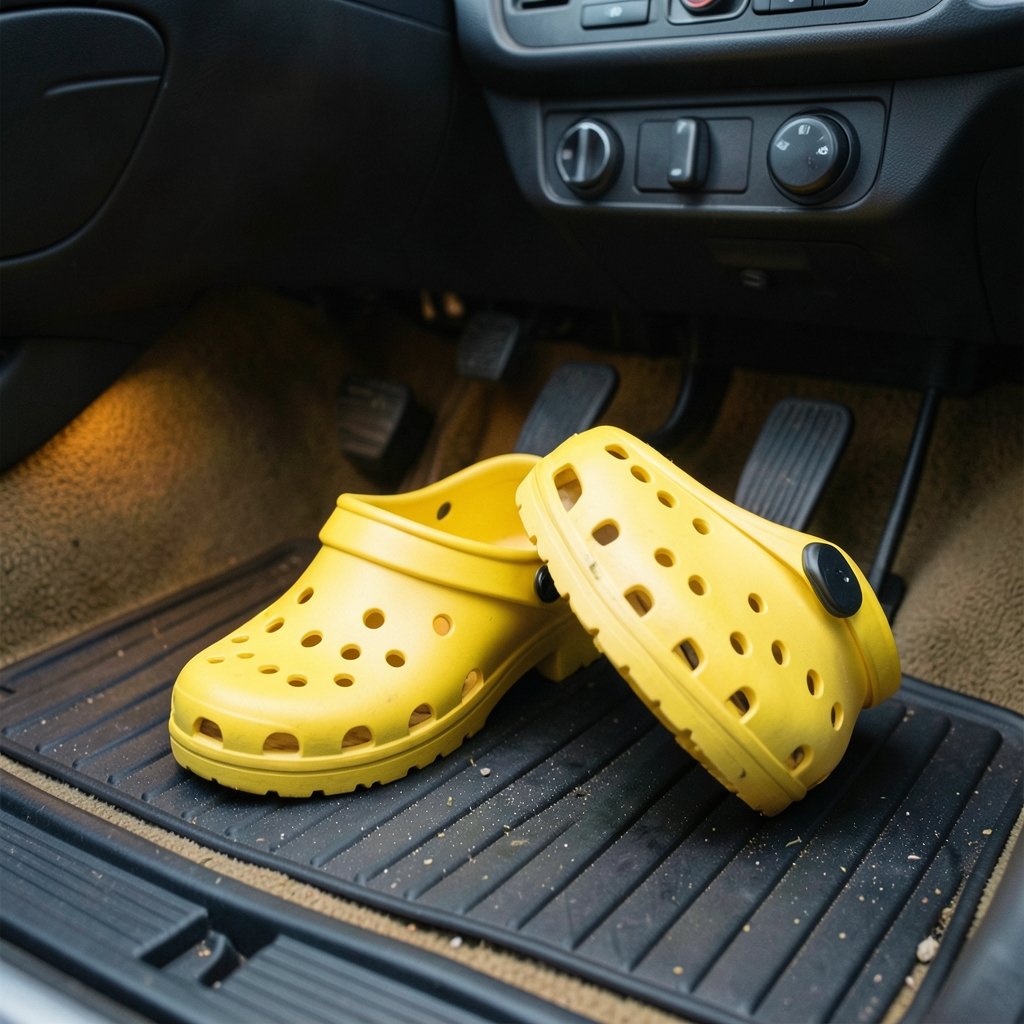
The fundamental issue with driving in Crocs is simple mechanics. A car’s pedals, especially in manual transmissions, require precise, modulated pressure. Crocs are designed to be loose, cushioned, and easy to slip on and off. That combination creates three specific risks:
- Heel slippage. The heel strap on classic Crocs is often worn forward (in “sport mode”) or not at all. Without it, the foot can slide off the pedal mid-press.
- Wide, rounded toes. The bulbous toe box can catch the edge of a brake or clutch pedal, causing a partial press when a full press is needed.
- Foam compression. The soft Croslite material compresses unevenly, deadening pedal feedback. Drivers report a “mushy” sensation that makes it harder to feel how hard they’re braking.
None of this means Crocs are illegal or catastrophic. It means they demand more attention than a proper driving shoe. The practical takeaway most driving instructors repeat: if you can’t feel the pedal through the sole, you’re driving with reduced control.
What the Law Actually Says
Here’s where a lot of drivers get confused. In most jurisdictions, including the UK and most US states, there is no specific law banning Crocs while driving. The rule is usually about control, not footwear. In the UK, for example, Rule 97 of the Highway Code states that drivers must have footwear and clothing that does not prevent them from using the controls safely. That’s a performance standard, not a dress code.
| Region | Specific Crocs ban? | Governing principle |
|---|---|---|
| United Kingdom | No | Footwear must allow safe control (Highway Code Rule 97) |
| United States | No (varies by state) | Reckless or unsafe driving standards |
| Australia | No | Driver must maintain proper control of vehicle |
| Canada | No | Provincial careless driving provisions |
The practical consequence matters more than the letter of the law. If you’re involved in a collision while wearing footwear a court deems unsuitable, insurers and lawyers can argue contributory negligence. That can affect a claim even when no law was broken. The legal risk is real, but it’s civil and situational rather than a straightforward traffic offense.
The Insurance Angle Nobody Mentions
Most drivers never read the fine print on their policy about footwear. Insurers generally don’t list Crocs by name, but many policies include clauses requiring the vehicle to be driven with due care. After a crash, an adjuster may ask what you were wearing. If the answer is “loose foam clogs with no heel strap,” that detail can become part of a liability assessment.
The practical advice from claims handlers is unglamorous but effective: keep a pair of closed, flat-soled shoes in the car. Changing shoes takes ten seconds and removes an entire category of argument. It’s the same logic behind keeping a spare pair of trainers in the boot, a habit many driving schools teach.
Why People Drive in Crocs Anyway
Comfort is the obvious answer, but there’s more to it. Crocs have become a cultural shorthand for casual ease, and that informality bleeds into driving habits. Short trips to the shops, school runs, and beach days are exactly when people don’t bother changing footwear. The risk compounds because short trips are also when drivers are most relaxed and least attentive.
There’s also a generational and lifestyle dimension. The clog has been embraced by healthcare workers finishing long shifts, parents juggling kids, and anyone who values slip-on convenience. Telling these drivers to “just wear proper shoes” misses the point. The better framing is practical: which Crocs, worn how, on what kind of drive.
A Practical Comparison: Crocs vs. Driving Shoes
Understanding why dedicated driving shoes exist helps clarify the Crocs trade-off.
| Feature | Classic Crocs | Driving shoes (moccasin style) |
|---|---|---|
| Sole thickness | Thick, cushioned foam | Thin, flexible rubber |
| Heel retention | Loose; strap optional | Snug, structured heel |
| Pedal feel | Muted | Direct |
| Breathability | High | Moderate |
| Quick change | Very easy | Requires lacing or tugging |
| Wet grip inside car | Can be slippery on pedals | Textured |
The pattern is clear. Crocs win on convenience and airflow; driving shoes win on control and feedback. For a five-minute drive to the corner shop, many drivers accept the trade-off. For highway driving, bad weather, or a manual gearbox, the calculus shifts hard toward proper footwear. (Crocodile)
What Actually Works in Practice
Drivers who insist on Crocs can reduce risk without abandoning the shoe entirely. These habits come up repeatedly in driving-instructor advice and road-safety guidance:
- Always use the heel strap. “Sport mode” exists for a reason. A secured heel dramatically reduces slippage.
- Choose a snug fit. A Croc that flops when you walk will flop on the pedals. Size down if you’re between sizes.
- Keep a spare pair in the car. Flat trainers or loafers stored under the seat solve the problem permanently.
- Avoid driving in wet Crocs. Foam gets slick, and a wet foot slides on rubber pedal covers.
- Skip them for manual cars. Clutch control demands feel that thick foam actively inhibits.
- Never drive barefoot as a “fix.” Some drivers kick off their Crocs entirely, which introduces its own control and injury risks.
The mistake people make most often is assuming that because the drive is short, the footwear doesn’t matter. Most collisions happen close to home, on familiar roads, during routine trips. The stakes don’t scale with distance.
The Cultural Phenomenon: Memes, Marketing, and Mixed Messages
Search “Crocs driving” and you’ll find a wall of jokes: Crocs on gear shifts, Crocs as makeshift cup holders, entire forums dedicated to “drive in sport mode” bravado. The humor is harmless, but it creates a false sense of normalcy. When a behavior is memed, it feels sanctioned.
Car culture has a long history of this. Flip-flops, bare feet, and high heels have all had their moments of casual acceptance before safety campaigns pushed back. Crocs are simply the latest entry. The interesting shift is that the clog’s mainstream embrace, from fashion runways to hospital wards, has made it more likely to appear in the driver’s seat, not less. Familiarity breeds complacency.
How Cars Themselves Are Adapting
Automakers haven’t ignored footwear. Pedal design has quietly evolved, with wider brake pedals, textured rubber covers, and dead-pedal footrests that give the left foot a stable anchor. Some EVs use one-pedal driving modes that reduce the need for constant pedal modulation, which slightly lowers the footwear stakes. But no pedal design fully compensates for a loose clog.
For readers who enjoy deep dives into how vehicle design shapes the driving experience, resources like the cars built around experience explore how manufacturers tune interiors, controls, and ergonomics for real-world drivers. The intersection of footwear and pedal layout is a small but telling example of that broader design conversation.
Crocs Behind the Wheel Around the World
Attitudes vary widely. In parts of Southeast Asia and Australia, where the clog is everyday wear and heat makes closed shoes miserable, driving in Crocs is common and rarely questioned. In northern Europe, where manual transmissions dominate and driving tests are strict, instructors are more likely to flag it. In the United States, the stick-shift share is small, which lowers the practical risk for most drivers but doesn’t eliminate it.
The common thread is that risk depends on context: transmission type, trip length, weather, and fit. A driver in an automatic on a dry day in a well-fitting strapped Croc faces far less risk than a manual driver in a loose, wet clog on a rainy night. Blanket rules are less useful than situational judgment.
What Driving Instructors Actually Recommend
The consensus among instructors is refreshingly practical. Most don’t demand a dedicated driving shoe; they ask for a thin, flat sole with a secured heel. That standard rules out most clogs for serious driving but allows them for short, low-risk trips with the strap engaged. Some instructors keep loaner shoes for students who show up in unsuitable footwear, a small detail that says a lot about how often it happens.
The deeper lesson is about preparation. Driving is a skill of small margins: reaction time, pedal precision, grip. Footwear is one of the few variables a driver fully controls before turning the key. Treating it as trivial is the actual mistake, whether the shoe is a Croc, a flip-flop, or a steel-toed boot. (Crocodile Facts)
The Bigger Picture: Comfort vs. Control
The Crocs-and-cars conversation is really a proxy for a larger question: how much convenience are drivers willing to trade for control? Modern cars are engineered to forgive small errors, with automatic braking, traction control, and pedal assist. That forgiveness can breed carelessness. The clog is a symbol of that tension, a comfortable shoe that asks the driver to pay a little more attention.
For anyone weighing vehicle choices alongside driving habits, Voozon Cars — reviews, comparisons & car guides offers breakdowns of how different models handle, which is useful context when matching a car to a driving style. And for a broader look at how everyday choices intersect with car ownership, Voozon Cars — reviews, comparisons & car guides – Voozon covers the practical side of life behind the wheel.
Conclusion
Crocs are not a driving death sentence, and the internet’s panic is overblown. But the casual dismissal of footwear as irrelevant is equally wrong. The evidence points to a middle path: strap them, fit them snugly, avoid them for manual cars and long or wet drives, and keep a spare pair of flat shoes in the car. The real risk isn’t the foam clog itself; it’s the complacency that comes with treating a short trip as risk-free. Drivers who understand the trade-off between comfort and control make better decisions, whether they’re wearing Crocs or not. The shoe is a choice. The attention is not optional.
Frequently Asked Questions
Is it illegal to drive in Crocs?
In most countries, no. The UK, US, Australia, and Canada generally don’t ban specific footwear. Instead, laws require drivers to maintain proper control of the vehicle. If footwear prevents safe control and contributes to a collision, it can factor into liability, but wearing Crocs alone is not a traffic offense.
Are Crocs safe for driving a manual car?
They’re riskier in a manual. Clutch control requires precise pedal feel, and the thick, compressible foam sole mutes feedback. Loose heels can also slip off the clutch mid-engagement. Drivers who must wear Crocs in a manual should always use the heel strap and choose the snuggest possible fit.
Can wearing Crocs affect an insurance claim?
Possibly. Insurers assess whether a driver exercised due care. If a crash occurs and the driver was wearing loose, unsuitable footwear, an adjuster may treat it as a contributing factor. It doesn’t automatically void coverage, but it can complicate a claim. Keeping spare shoes in the car avoids the issue entirely.
What shoes are best for driving?
Thin, flat-soled shoes with a secured heel and good pedal feel are ideal. Driving moccasins, loafers, and flat trainers all work well. The key features are a thin sole for feedback, a snug heel, and a surface that grips pedals without slipping.
Is it safer to drive barefoot than in Crocs?
Not necessarily, and most safety guidance discourages both. Bare feet can slip on pedals, offer no protection in a crash, and become painful on long drives. A proper flat shoe is the safer default. If you must choose between bare feet and strapped Crocs, the strapped clog is generally the more controlled option.
Why do people say “sport mode” for Crocs?
“Sport mode” is internet slang for wearing the heel strap forward, around the ankle, rather than folded across the top of the foot. The phrase spread through memes and social media. In driving terms, engaging the strap genuinely improves heel retention and reduces the risk of the shoe slipping off a pedal.