
How to Create a Low Impact Fitness Routine That Works
 Abdul WadoodLast updated

Most people assume “low impact” means “low reward.” That assumption costs them. Roughly 150 minutes of moderate activity per week is enough to meaningfully lower the risk of heart disease, type 2 diabetes, and several cancers, and none of it has to involve jumping. Walking counts. Swimming counts. Even housework counts toward the total. Low impact is not a watered-down version of real exercise. It is real exercise, chosen with care for your joints, your recovery, and your life outside the gym.
This guide covers how to build a routine that fits your body, how to progress without pounding your joints, and which mistakes quietly sabotage people who go low impact. It also covers the parts most guides skip: how to know when you’re actually working hard enough, and when the label “low impact” is a marketing trick rather than a training method.
What “low impact” actually means (and what it doesn’t)
Low impact describes exercise where at least one foot stays on the ground, or where your body isn’t absorbing repeated landing forces. Walking, cycling, swimming, rowing, and elliptical work all qualify. Running, jumping jacks, and plyometrics do not, because every landing sends a jolt through your ankles, knees, and spine.
Here’s the part that trips people up: low impact says nothing about intensity. A brisk hill walk can leave you breathless. A steady swim can push your heart rate into a hard-working zone. A slow, heavy strength set is low impact and brutally difficult. Impact and effort are two separate dials, and confusing them is the single most common mistake in this space.
There’s also no single official definition of “low impact.” Fitness marketing uses the term loosely, while clinical and coaching literature tends to tie it to joint loading. Treat any claim that low impact automatically means “gentle” or “easy” with suspicion.
Start with the guidelines, then shrink them to fit your week
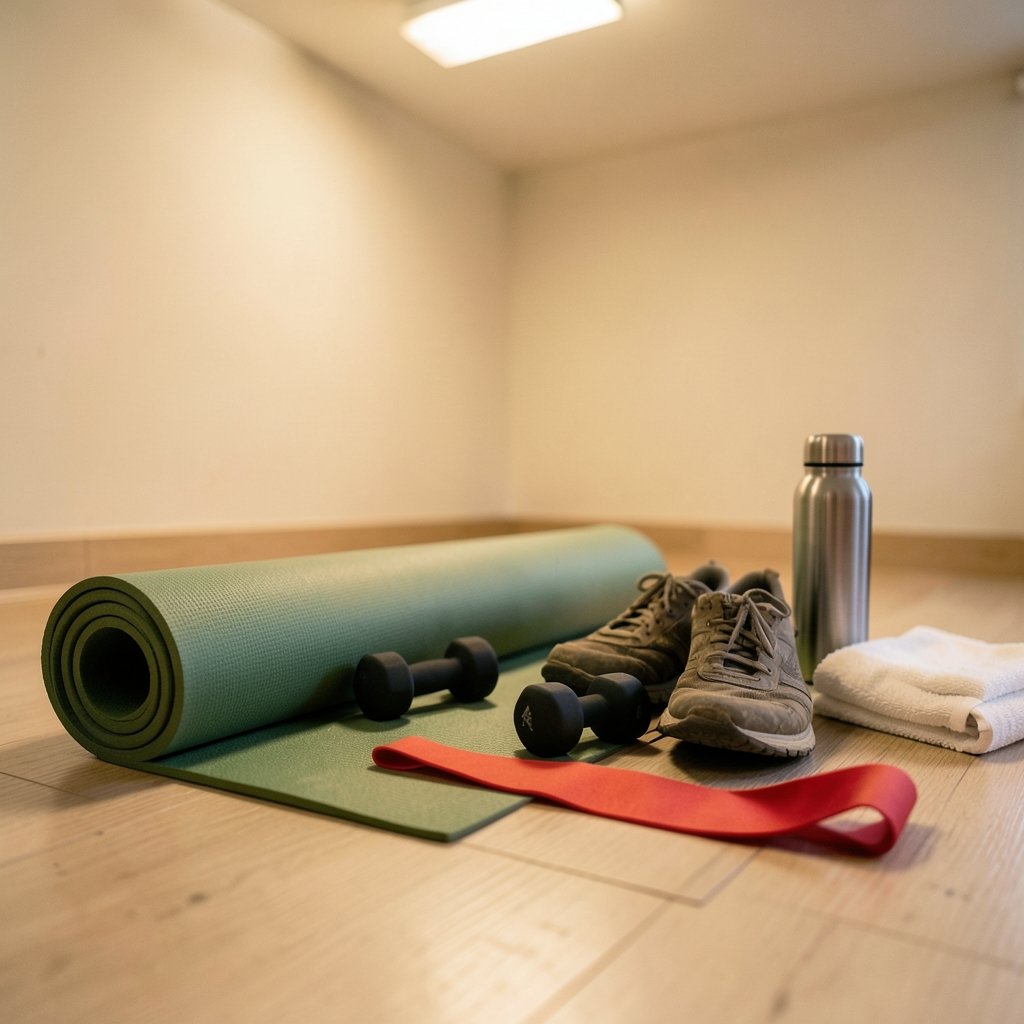
Public health guidance is refreshingly consistent across countries. Adults should aim for 150 to 300 minutes of moderate-intensity aerobic activity per week, or 75 to 150 minutes of vigorous work, plus muscle-strengthening on two or more days. The World Health Organization’s physical activity fact sheet makes the same case, and it adds a line worth taping to your fridge: some activity is better than none, and every move counts.
That last point matters enormously for beginners. The old rule that exercise only counted in blocks of ten minutes or more is gone. Short bouts add up. Three ten-minute walks around the block are not a compromise; they are the plan.
A practical starting structure looks like this:
| Day | Session | Duration | Impact level |
|---|---|---|---|
| Monday | Brisk walk | 25 min | Low |
| Tuesday | Bodyweight strength | 20 min | Low |
| Wednesday | Cycling or swim | 30 min | Low |
| Thursday | Walk + mobility | 20 min | Low |
| Friday | Strength | 20 min | Low |
| Saturday | Longer walk or hike | 40 min | Low |
| Sunday | Rest or easy stretch | 10 min | Very low |
That’s roughly 165 minutes of aerobic work plus two strength sessions. It hits the guidelines without a single jump.
Pick your cardio from the low-impact menu
The best low-impact cardio is the one you’ll actually repeat. Here’s how the main options compare.
| Activity | Joint load | Cardio benefit | Best for |
|---|---|---|---|
| Brisk walking | Very low | Moderate | Almost everyone; easiest to start |
| Cycling (outdoor or stationary) | Very low | High | People who want longer sessions |
| Swimming | None | High | Sore joints, back pain, hot climates |
| Rowing machine | Low | High | Full-body work in short sessions |
| Elliptical | Low | Moderate to high | Bad weather, knee sensitivity |
| Water aerobics | None | Moderate | Older adults, rehab, pregnancy |
Walking deserves special mention because it’s free, needs no equipment, and scales effortlessly. Add hills and it becomes genuinely hard work. Add a weighted vest later and it becomes a strength stimulus too.
If you’re managing a specific hair or scalp routine alongside training, note that sweat and frequent washing affect different hair types differently. Those with low porosity hair often find post-workout products sit on top rather than absorbing, so timing wash days around your hardest sessions saves a lot of frustration. (2a Hair Guide: What This Wavy Type Means for Your Routine)
Build strength without loading your joints
Strength training is where low-impact routines often fall short, and it shouldn’t. Muscle mass protects joints, supports metabolism, and matters more with every decade. The good news: you can build plenty of it without ever leaving the floor.
Focus on these movement patterns, two sets of eight to twelve reps each, twice a week:
- Squat pattern — chair squats, box squats, or slow bodyweight squats.
- Hinge pattern — hip bridges, glute bridges, or light Romanian deadlifts.
- Push — incline push-ups against a counter or wall.
- Pull — resistance band rows or seated cable rows.
- Carry — walking while holding a weight in each hand.
- Core — dead bugs, bird dogs, and planks.
The trick is progressive overload: gradually adding reps, resistance, or range of motion over weeks. A wall push-up becomes a counter push-up becomes a floor push-up. That progression is where the results live, and it’s completely impact-free.
Two mistakes show up constantly here. First, people add weight before they own the movement, which turns a clean squat into a wobbly one. Second, they train to failure every session. Leaving two or three reps in reserve keeps your joints fresh and your consistency intact.
Use the talk test instead of guessing at intensity
You don’t need a heart rate monitor to know if you’re working hard enough. Use the talk test:
- Easy: you can sing. This is warm-up pace.
- Moderate: you can talk in full sentences but not sing. This is your target for most sessions.
- Vigorous: you can manage a few words at a time. Use this sparingly at first.
Most people who think they’re exercising moderately are actually working easily, and most people who fear they’re “not doing enough” are right in the sweet spot. Check yourself mid-session. If you can chat comfortably through a whole walk, pick up the pace or find a hill.
The CDC’s physical activity basics recommends starting with small amounts and building gradually, which is exactly the right instinct. Going from zero to five hard sessions in a week is how people end up injured and discouraged by week three.
Progress in the right order
When a low-impact routine starts feeling easy, most people’s first move is to add intensity. That’s fine, but it’s not the only lever, and often not the best one.
Progress in this order:
- Frequency — add one more session per week.
- Duration — extend sessions by five to ten minutes.
- Consistency — hold the new schedule for two to three weeks before changing anything else.
- Intensity — add hills, pace, or resistance.
- Complexity — add single-leg variations, tempo changes, or new movements.
This sequence reduces injury risk because it stresses volume before it stresses tissues. Skipping straight to intensity is the classic path to shin splints, cranky knees, and a two-week unplanned break.
Warm up, cool down, and respect recovery
A five-minute warm-up raises tissue temperature and improves how movement feels. A brisk walk before strength work, or easy cycling before a swim, is plenty. Static stretching belongs after the session, not before it.
Recovery is where low-impact routines quietly outperform hard ones. Because joint stress stays low, most people can train more often without the accumulated wear that forces rest days. That said, muscle soreness still happens, especially after new strength work. Sleep, protein, and hydration do more for recovery than any gadget.
For anyone layering a grooming routine on top of training, sweat management matters. If you deal with frizz after workouts, a practical, science-backed frizz routine is worth setting up before you start training five days a week, not after.
Who benefits most from going low impact
Low-impact training isn’t a beginner-only lane. It’s often the better lane for several groups:
- Older adults, who benefit from the balance and strength work recommended alongside aerobic activity for those 65 and over.
- People returning from injury, who need to rebuild load tolerance gradually.
- Anyone with joint pain, arthritis, or back issues, where swimming and cycling often feel far better than running.
- People carrying extra body weight, for whom high-impact work can be uncomfortable early on.
- Pregnant exercisers, who often find water exercise and walking most comfortable.
- Busy people, because a 20-minute walk needs no gym, no shower logistics, and no recovery day.
The common thread is sustainability. A routine you can repeat for years beats a brutal one you abandon in six weeks.
Common mistakes that quietly derail low-impact routines
Mistake 1: Never increasing the challenge. After eight weeks, the same walk at the same pace stops producing change. Add hills, pace, or distance.
Mistake 2: Skipping strength work entirely. Cardio alone leaves muscle mass on the table. Two short sessions a week fix this.
Mistake 3: Confusing “low impact” with “no effort.” If you can hold a phone call through your entire session, it’s probably too easy to drive adaptation.
Mistake 4: Ignoring footwear. Cushioning and support matter more than most people think, especially for walkers covering serious distance.
Mistake 5: All-or-nothing thinking. A ten-minute walk on a chaotic day still counts. Short sessions are not failures; they’re maintenance.
Mistake 6: Copying someone else’s plan. A routine built for a 25-year-old runner won’t suit a 60-year-old with knee pain, and it shouldn’t try to.
A sample four-week starter plan
Keep it simple and repeatable.
- Week 1: Three 20-minute walks, one strength session, one mobility day.
- Week 2: Four 20-minute walks, two strength sessions, one mobility day.
- Week 3: Four 25-minute walks with one hill segment, two strength sessions.
- Week 4: Three walks, one longer 40-minute walk, two strength sessions, one easy swim or cycle.
By week four you’re near the 150-minute mark with two strength sessions in place. From there, the only question is what you enjoy enough to keep doing.
Conclusion
A low-impact fitness routine works because it removes the two biggest reasons people quit: pain and impracticality. The formula is unglamorous but effective. Hit roughly 150 minutes of moderate aerobic work per week, lift something heavy twice a week, progress gradually, and use the talk test to keep yourself honest. Walking, cycling, swimming, and bodyweight strength will carry you a very long way, and none of them will punish your knees for it. Start smaller than feels impressive. Build slower than feels necessary. Then keep going, which is the only part that actually matters.
Frequently Asked Questions
Is walking enough exercise to count as a real workout?
Yes, provided the pace is brisk enough. Walking at a moderate intensity, where you can talk but not sing, counts toward the 150-minute weekly target. Adding hills or increasing pace raises the training effect substantially. Walking is one of the most studied forms of activity for cardiovascular health, and it requires no equipment or recovery time.
How many days a week should a low-impact routine include?
Three to five aerobic sessions plus two strength sessions is a solid target for most adults. Beginners do better starting with three shorter sessions and adding one per week. Because joint stress stays low, frequency can climb faster than it would with running or jumping, but muscle soreness still needs respecting.
Can low-impact exercise help with weight loss?
It can, because weight management depends mostly on total energy expenditure and diet rather than impact level. A 30-minute brisk walk burns a meaningful number of calories, and it’s repeatable daily without fatigue. Strength work also supports lean mass, which helps over time. The advantage of low impact here is sustainability, not magic.
Is low-impact training suitable for older adults?
It’s often ideal. Guidance for adults 65 and over adds balance and strength work to the aerobic target, and low-impact formats like chair exercise, tai chi, walking, and water exercise fit that brief well. Anyone with existing joint conditions or balance concerns should check with a clinician before starting a new program.
How do I know when to increase the difficulty?
When your current routine feels comfortably manageable for two to three consecutive weeks, it’s time to progress. Add frequency first, then duration, then intensity. If you’re noticeably sore for more than two days or dreading sessions, you moved too fast and should step back a notch.
Does low impact mean I’ll lose fitness compared to running?
No. Cardiovascular fitness responds to intensity and duration, not to impact. Cyclists and swimmers routinely reach elite fitness levels with zero running. What changes is the specific adaptation: runners build more bone density in the legs, while low-impact athletes build comparable heart and lung capacity with far less joint wear. (Physical fitness)