
Citroën Cars: 2026 Guide to Bold Design & Comfort
 Abdul WadoodLast updated

In 1919, a French engineer named André Citroën did something few people thought possible: he built cars on a moving assembly line in Europe, years before the method became standard practice. The first model, the Type A, rolled out that same year, and it helped turn the automobile from a rich person’s toy into something a middle-class family could actually buy. More than a century later, Citroën is still making cars, now as one of the brands inside the giant Stellantis group. But the story of how it got there is far stranger, and more interesting, than most car histories.
How Citroën Changed the Car Business
Citroën’s early reputation rested on mass production. The company is widely credited with bringing large-scale assembly-line car manufacturing to Europe with the Type A in 1919. That was a genuine shift. Cars became cheaper, more standardized, and more widely available.
Then came the Traction Avant in 1934. This was a front-wheel-drive sedan with a low, streamlined body, and it stayed in production until 1957. Front-wheel drive is now the default layout for most family cars, but in the 1930s it was radical. The Traction Avant also nearly bankrupted the company. Michelin took control in the mid-1930s after the financial crisis, a takeover often dated to 1935, though sources differ on the exact terms.
That rescue mattered. It kept Citroën alive long enough to build the cars that made it famous.
The 2CV, the DS, and the Cars That Made Citroën Famous
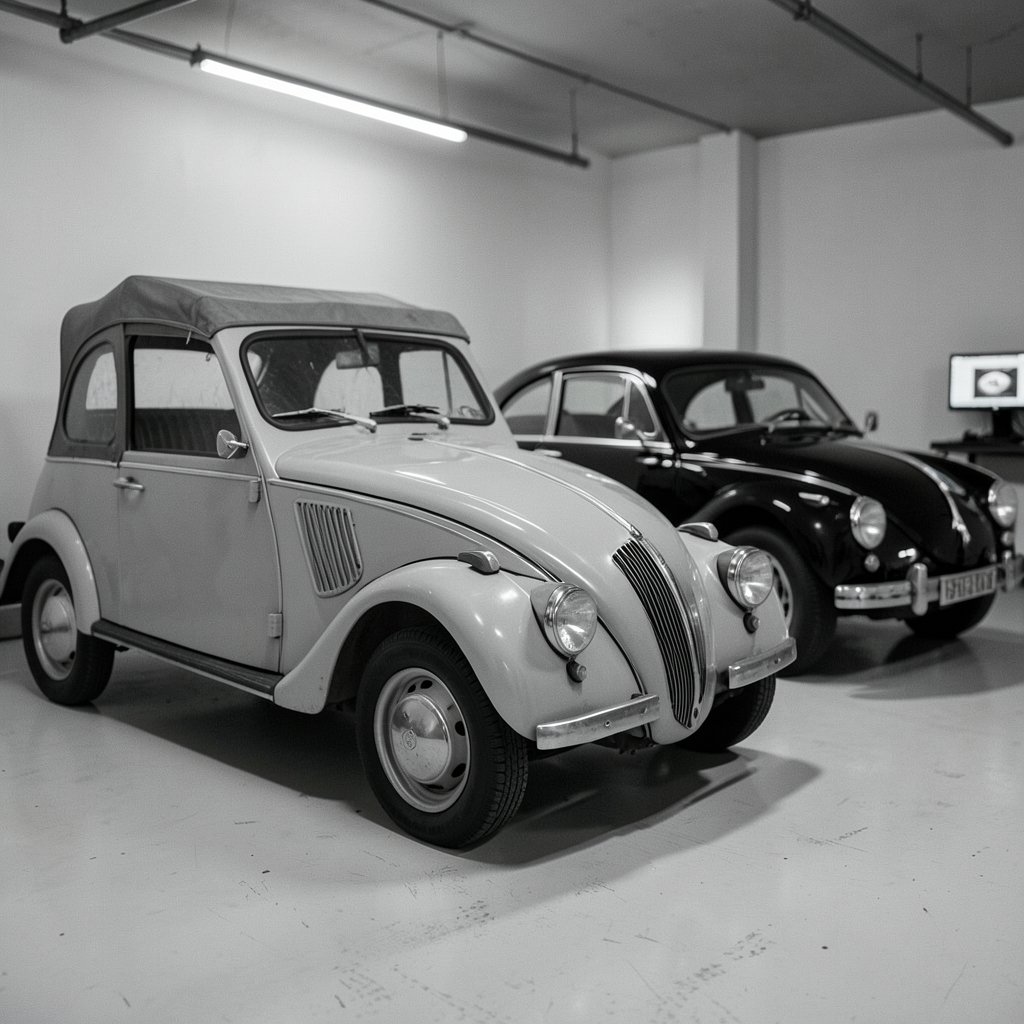
The 2CV: Simple, Slow, and Beloved
The 2CV appeared at the 1948 Paris Salon and stayed in production until 1990. It was designed as a cheap, rugged car for rural France, with a soft suspension and a tiny engine. It was not fast. It was not beautiful. It was, however, extraordinarily practical, and it became a cultural icon.
What made the 2CV work was a set of deliberate trade-offs:
- A very light body, which kept fuel use low
- Long-travel suspension that handled unpaved roads
- Simple mechanicals that were cheap to repair
- A canvas roof that saved weight and cost
The DS: Comfort as a Design Philosophy
The DS, launched in 1955, is the model most often cited as Citroën’s masterpiece. Its most famous feature was hydropneumatic suspension, a system that used gas and hydraulic fluid to smooth out road surfaces. The car could also raise and lower itself, which made wheel changes and rough terrain easier to handle.
The DS was not cheap, and it was not simple. But it set a direction the brand still follows: comfort and ride quality first, convention second.
Citroën’s Ownership Story, Explained
Citroën has changed hands more than once, and that history explains a lot about the cars it builds today.
| Period | Owner | What Changed |
|---|---|---|
| 1919–1935 | Independent (André Citroën) | Founded, mass production pioneered |
| c. 1935–1976 | Michelin | Financial rescue, Traction Avant and 2CV era |
| 1976–2021 | PSA Peugeot Citroën | Shared platforms with Peugeot |
| 2021–present | Stellantis | Part of a large multi-brand group |
PSA Peugeot Citroën was formed in 1976 when Peugeot took over Citroën. PSA then merged with Fiat Chrysler Automobiles to form Stellantis, completed in January 2021. Today Citroën operates as a brand within Stellantis, sharing engines, platforms, and electrical systems with sibling brands. (Citroën)
That shared engineering is a double-edged sword. It makes Citroën cars cheaper to build and easier to service. It also means the mechanical parts are often less distinctive than the badges suggest.
What Actually Sets Citroën Apart Today
Walk into a Citroën showroom and the pitch is consistent: comfort, value, and a slightly softer ride than rivals. The Advanced Comfort seats and suspension tuning are the brand’s main selling points. On longer drives, especially on worn road surfaces, that tuning is noticeable.
There are practical things buyers should know before committing:
- Test the ride on bad roads, not smooth ones. The comfort advantage shows up on patched asphalt and speed bumps, not on a dealer’s perfect test loop.
- Check the infotainment before you buy. Citroën’s systems have improved, but response speed and menu logic vary by model year.
- Ask about parts and service costs. Shared Stellantis parts usually help here, but confirm local dealer coverage.
- Look at the warranty terms carefully. Coverage differs by market and model.
- Drive a rival back to back. Comfort claims are relative, and a same-day comparison is the only fair test.
A common mistake is buying on styling alone. Citroën designs are distinctive, and that is a real draw. But the brand’s value case rests on comfort and price, so judge it on those terms.
The Practical Case for and Against Citroën
Citroën’s strengths are easy to list. The cars tend to be comfortable, well-priced, and practical, with generous cabin space for the money. The brand has a long record of engineering ambition, from front-wheel drive to hydropneumatic suspension.
The weaknesses are just as real:
- Resale value is often weaker than German or Japanese rivals.
- Interior materials can feel basic on lower trims.
- Brand perception varies sharply by country.
- Model lineups have shifted toward SUVs and crossovers, which dilutes the old quirkiness.
- Reliability records are mixed and vary by generation, so model-specific research matters.
For buyers who keep cars a long time and value ride comfort over badge prestige, that trade-off can work well. For buyers who trade in every three years, depreciation deserves serious thought.
Why the History Still Matters to Buyers
Citroën’s past explains the brand’s instincts; it is not nostalgia alone. The company has always been willing to try something odd if it solved a real problem. Front-wheel drive solved packaging and handling. Hydropneumatic suspension solved ride quality. The 2CV solved rural mobility on a budget.
That same instinct shows up today in things like suspension tuning and seat design. It also shows up in the brand’s willingness to sell on value rather than performance. Anyone comparing models across the Stellantis range will notice the pattern quickly.
For a broader look at how reviewers and buyers assess the current lineup, Voozon Cars — Reviews, Comparisons & Car Guides is a useful starting point. It helps to see how the comfort-first approach stacks up against more conventional rivals before you commit.
What to Check Before Buying a Used Citroën
Used Citroën shopping rewards preparation. A few checks catch most problems:
- Service history. Look for regular maintenance records rather than stamps alone. Gaps matter more than mileage.
- Suspension condition. Bounce tests and a road drive reveal worn components quickly.
- Electronics. Test every screen, sensor, and driver-assist feature. These are expensive to fix.
- Timing belt or chain schedule. Confirm what the specific model requires and whether it has been done.
- Corrosion and trim wear. Check sills, wheel arches, and door seals on older cars.
- Recall history. Ask the seller or dealer directly, and check the vehicle identification number.
The most common mistake is skipping the test drive on rough pavement. Citroën’s whole pitch is ride comfort, so test the thing that matters.
Citroën’s Design Philosophy in Plain Terms
Strip away the marketing and Citroën’s approach comes down to a few ideas. Cars should be comfortable before they are fast. They should be practical before they are prestigious. And they should offer something a little different from the obvious choice.
That philosophy has produced genuine icons and a few forgettable models. It has also survived four ownership eras, two financial crises, and a complete restructuring of the global car industry. Very few brands manage that.
The brand’s identity is also shaped by how it presents itself to buyers. The cars built around experience explores how experience-focused design shapes modern model choices, which is a useful frame for understanding why Citroën leans so hard on comfort.
Where Citroën Fits in the Modern Market
The global car market has consolidated. Stellantis owns a long list of brands, and each one needs a clear role. Citroën’s role is value and comfort. That means competing on price against budget-focused rivals and on ride quality against mainstream European brands.
The lineup has moved toward SUVs and crossovers, reflecting buyer demand. Smaller hatchbacks remain important in Europe, where the brand has its strongest base. Electric models are expanding across the range, built on shared group platforms.
For shoppers weighing options, Voozon Cars — Reviews, Comparisons & Car Guides – Voozon — Discover, Review & Explore offers side-by-side comparisons that make the value case easier to judge. It is worth reading before a dealership visit.
How Citroën Compares With Rivals
A quick comparison helps frame the decision.
| Factor | Citroën | Typical German Rival | Typical Japanese Rival |
|---|---|---|---|
| Ride comfort | Strong | Firm, sporty | Balanced |
| Purchase price | Competitive | Higher | Competitive |
| Resale value | Weaker | Strong | Strong |
| Interior materials | Basic to mid | Mid to premium | Mid |
| Design character | Distinctive | Conservative | Functional |
No column wins outright. The right choice depends on how long you keep the car and what you value most.
Conclusion
Citroën is a brand shaped by audacity and rescue. It brought assembly-line production to Europe in 1919, survived a near-collapse in the 1930s, and went on to build the 2CV and the DS, two cars that still define what the brand stands for. Today it operates inside Stellantis, selling comfort-focused, value-priced cars that trade badge prestige for ride quality.
For buyers, the practical advice is simple. Test the ride on bad roads. Check the service history. Compare resale values honestly. Then decide whether comfort and character are worth more to you than a stronger badge. For a lot of drivers, they are.
Frequently Asked Questions
Who founded Citroën and when?
André Citroën founded the company in 1919, and the first model, the Type A, went on sale that same year. The company is widely credited with bringing large-scale assembly-line car production to Europe.
When did Michelin take over Citroën?
Michelin took control in the 1930s after the company ran into serious financial trouble. The takeover is often dated to 1935, though sources vary on the exact date and terms.
What is the most famous Citroën model?
Two models usually share that title. The 2CV, produced from 1948 to 1990, is the people’s car icon. The DS, launched in 1955, is the engineering icon, famous for its hydropneumatic suspension.
Who owns Citroën now?
Citroën operates as a brand within Stellantis, the group formed when PSA Peugeot Citroën merged with Fiat Chrysler Automobiles. That merger was completed in January 2021.
How long was the Traction Avant in production?
The front-wheel-drive Traction Avant launched in 1934 and remained in production until 1957, an unusually long run for a single design.
Are Citroën cars good value?
They are generally competitive on purchase price and strong on ride comfort, but resale values tend to be weaker than German or Japanese rivals. Buyers who keep cars for many years often get better value than those who trade in frequently.
The brand’s future will be shaped by electrification and by Stellantis’ platform strategy. Citroën has already introduced electric versions of its core models, and more are planned as the group rolls out shared EV architectures. The challenge is preserving the comfort-first identity while using hardware common to many brands. Historically, Citroën’s best cars solved a real problem in an unconventional way. Whether the electric era produces another 2CV or DS will depend on how boldly the brand applies that instinct. For now, the sensible advice stands: judge a Citroën on comfort, price, and practicality, and verify each of those on a real road. (Citroën brand overview)